
1725 Mexico 8 Escudos Gold Cob (Luis I): Value & Rarity
The 1725 Mexico 8 Escudos Gold Cob : Value & Rarity is worth between $50,947 and $85,805 MXN depending on its grade of preservation.
Prices updated: August 2026
Viceroyalty · Mexico City Mint · Assayer J
Viceroyalty · Mexico City Mint · Assayer J
Design
Banxico
Reverse
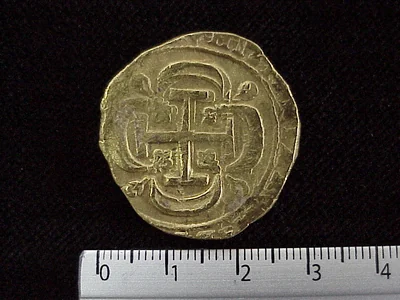
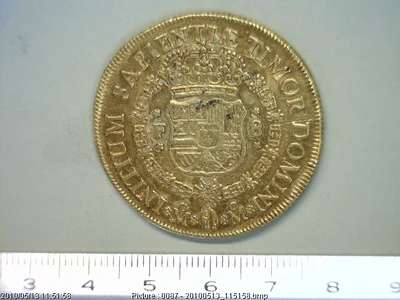
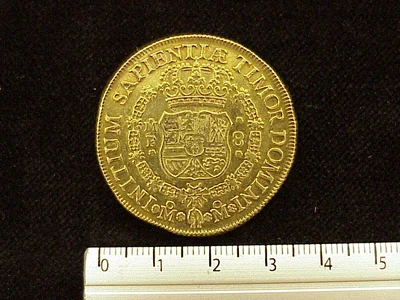
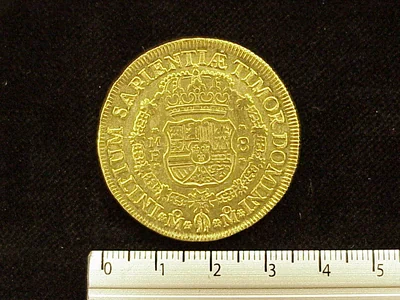
Reverse (per Numista cataloging): coat of arms of the Spanish monarchy (crowned Royal Shield) with the Latin legend HISPANIARVM ET INDIARVM REX ("King of the Spains and of the Indies"). The obverse bears the cross over shield with the legend LVDOVICVS I DEI G ("Luis I by the grace of God"), Mexico mint mark (Mo) and assayer mark J. It is a cob piece, irregular in shape due to hammer striking.
The 1725 Mexico 8 Escudos Gold Cob : Value & Rarity is worth between $50,947 and $85,805 MXN depending on its grade of preservation.
Prices updated: August 2026
How much is the 1725 Mexico 8 Escudos Gold Cob (Luis I): Value & Rarity worth?
The estimated value of the 1725 Mexico 8 Escudos Gold Cob (Luis I): Value & Rarity ranges from $50,947 (circulated, XF) up to $85,805 (official blister pack), with $73,129 as a reference for an uncirculated (UNC) piece. The estimate is based on the official mintage and the historical behavior of the family.
The real price depends on four factors: the grade of preservation (a circulated piece is worth the low end of the range; an uncirculated one, or one still in its official blister pack, the high end), the finish (satin vs mirror/proof), the rarity within the series based on the mintage, and the metal spot price on the day of the deal when the piece is silver or gold. Check the value-by-grade table above and compare with equivalent pieces before buying or selling.
Where to buy or sell this coin?
Browse the national directory of numismatic shops or the community forum to trade directly with other collectors.
Description
If you have a 1725 Mexico 8 escudos gold cob struck under Luis I, you are holding one of the rarest pieces in the entire colonial series. In 2026, its gold content alone puts the floor around 1,600 to 1,800 USD, but a genuine, certified example trades far above melt, into the thousands of dollars at international auction. The catch: authenticity is everything, and fakes are common.
What this coin actually is
This is an 8 escudos, the largest gold denomination of colonial Spanish America, struck at the Mexico City mint (mint mark Mo). It is a cob (in Spanish, macuquina): a hand-struck coin made by hammering a die onto a roughly cut piece of gold, not a machine-pressed round disc. Because of that, cobs have irregular shapes and the design almost never appears complete or centered.
Luis I is the reason this piece matters. He was king of Spain for only a few months in 1724 and died at 17, after which his father Felipe V returned to the throne. Coins dated 1725 in Luis I's name are a short posthumous issue, which is why they are so scarce.
Why it is genuinely rare
Most "old" coins are common and worth little. This one is the exception. Numista lists it with a rarity index of 97 out of 100, and several references note that no examples are known with a fully legible date. That separates it completely from a common Felipe V 8 escudos of the same era, which shows up regularly in auction lots.
Rarity here is not marketing. It comes from a real cause: an extremely brief reign and a tiny, short-lived mintage.
What it is worth
Two numbers matter, and they are very different.
The gold floor. The theoretical weight for this type is about 27 grams (our record lists 26.79 g). At the colonial fineness, that yields roughly 24 to 25 grams of pure gold. At 2026 metal prices that is a floor of about 1,600 to 1,800 USD, purely as melt. Note: because it is a cob, many surviving pieces circulated slightly underweight, so the exact gold content varies coin to coin.
The collector value. For a piece this rare, the gold is almost beside the point. A genuine, certified example sells well above melt, into the range of thousands of dollars at recognized international auctions. The final figure depends heavily on grade and, above all, on certified authenticity.
| Coin | Year | Mint | Metal | Gold floor (2026) | Collector range |
|---|---|---|---|---|---|
| 8 escudos, Luis I | 1725 | Mexico City (Mo) | Gold, high fineness | ~1,600-1,800 USD (melt) | Thousands of USD, certified |
A note on the fineness
Colonial Spanish escudos were struck at .917 fine (22 karat), the standard for the series. Numista records this type at .917. Our own record shows .875, which is close. Either way this is high-purity gold, not a low alloy. If a coin claiming to be this piece tests at low fineness, treat that as a warning sign.
How to tell if yours is genuine
With a coin at this value level, fraud in colonial gold is real and common. Do not rely on your own eye.
- Get it certified. The only serious path is professional grading through NGC, PCGS, or a recognized numismatic auction house that handles colonial gold. A raw, unattributed piece is a gamble.
- Check the weight and fineness. A genuine 8 escudos of this type is near 27 grams of high-fineness gold. Numbers that do not add up are the first tell of a fake.
- Look at the strike. Cobs are irregular and off-center by nature. The mint mark Mo and the assayer initial (assayer J for this variant) often appear incomplete because of the off-center hammer strike. Ironically, a partial strike is normal here, not a defect.
- Never buy without an appraisal. For a piece of this caliber, walking into a purchase or sale without expert examination is how people lose money.
Where to buy or sell one
Because of both its value and the counterfeiting risk, move a coin like this only through serious channels with expert appraisal. Start with the Pesoteca store directory, and for a piece at this price point, consider recognized numismatic auction houses that work with certified colonial gold. Compare it against the rest of the colonial escudos series to understand where it sits, and review our guide to selling inherited Mexican coins before you accept any offer.
Have a 1725 Luis I 8 escudos, or think you might? Post clear photos of both sides in the Pesoteca forum and we will help you judge whether it is worth certifying.
Historical context
Eight escudos cob in the name of Luis I, Mexico mint, assayer J, with no KM number assigned in the listing, dated 1725. The combination of assayer J on the Luis I ounce is the sister variant of assayer D of KM#58, both produced at the Mexico mint in the same year 1725 after the king's death. Luis I abdicated in January 1724 following the abdication of Felipe V and died of smallpox on August 31 of the same year, barely seven months after being crowned. The American mints kept their dies and continued striking in his name until Felipe V's formal order, resuming the throne, reached New Spain. In Mexico, Juan de Acuna, Marquis of Casafuerte (1722-1734), was in government. The ounce weighs approximately 27.06 grams and has a fineness of 0.916. The cob technique of shear-and-hammer planchets remained in use until 1732 at the Mexican Mint. The J variant is collectible for its rarity within a nominally short reign.
This piece belongs to the era
Colonial / Virreinato →Explore all the Mexican coins of this era, their historical context and how they connect to the monetary system of the period.
Value range of this piece
Market estimate: $50,947 - $85,805 MXN depending on the grade of preservation (typical range between a circulated and an uncirculated piece).
See the full breakdown by grade (VG, F, VF, EF, AU, MS-60, MS-63, MS-65) for the whole series →
Other denominations from 1725
Escudos Coloniales (oro) · Oro 0.875 (21k)
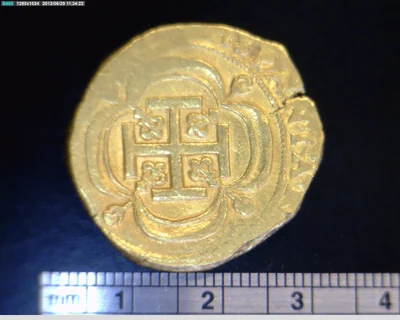
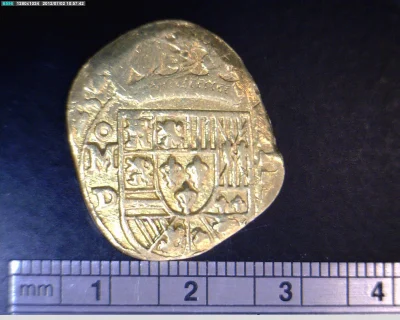
Same denomination, other years
8 escudos Oro 0.875 (21k) · Escudos Coloniales (oro)
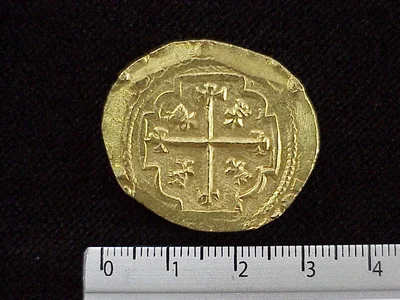
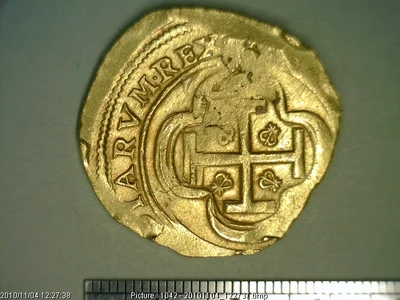
Frequently asked questions
How much is a 1725 Luis I 8 escudos worth?
As gold alone (about 24 to 25 grams of pure gold), the floor is roughly 1,600 to 1,800 USD at {{AÑO}} metal prices. But this is an extremely rare coin (rarity index 97 on Numista), so a genuine, certified example sells far above melt, into the thousands of dollars at international auction. The real value depends on grade and certified authenticity.
Is this coin really rare, or is that hype?
It is genuinely rare. Luis I reigned only a few months in 1724 and died at 17, so the 1725-dated coins in his name are a short posthumous issue. Numista lists a rarity index of 97 out of 100, and several references note no examples are known with a fully legible date. That is very different from a common Felipe V 8 escudos of the same era.
How can I tell if mine is genuine?
For a coin at this value, the only reliable path is professional certification through NGC, PCGS, or a recognized auction house that handles colonial gold. Check that the weight (near 27 grams) and fineness match a real high-purity gold escudo. Cobs are irregular and often off-center by nature, so a partial strike is normal, but never buy or sell without expert appraisal. Fraud in colonial gold is common.
Where can I sell a coin like this?
Move it only through serious channels with expert appraisal. Check the Pesoteca store directory at /tiendas, and for a piece of this value, consider recognized numismatic auction houses that specialize in certified colonial gold. Get it graded first, since a certified example commands far more than a raw one.
Conversation
0 comments
Sources
Images for informational and educational purposes, attributed to their original source. Reference values; the real price depends on the grade, the specific variant and demand.
Loading comments…