
1713 Mexico 8 Escudos Gold (Felipe V): Value & How to Sell
The 1713 Mexico 8 Escudos Gold : Value & How to Sell is worth between $51,613 and $86,926 MXN depending on its grade of preservation.
Prices updated: August 2026
Viceroyalty · Mexico City Mint · Assayer J
Viceroyalty · Mexico City Mint · Assayer J
The 1713 Mexico 8 Escudos Gold : Value & How to Sell is worth between $51,613 and $86,926 MXN depending on its grade of preservation.
Prices updated: August 2026
How much is the 1713 Mexico 8 Escudos Gold (Felipe V): Value & How to Sell worth?
The estimated value of the 1713 Mexico 8 Escudos Gold (Felipe V): Value & How to Sell ranges from $51,613 (circulated, XF) up to $86,926 (official blister pack), with $74,085 as a reference for an uncirculated (UNC) piece. The estimate is based on the official mintage and the historical behavior of the family.
The real price depends on four factors: the grade of preservation (a circulated piece is worth the low end of the range; an uncirculated one, or one still in its official blister pack, the high end), the finish (satin vs mirror/proof), the rarity within the series based on the mintage, and the metal spot price on the day of the deal when the piece is silver or gold. Check the value-by-grade table above and compare with equivalent pieces before buying or selling.
Where to buy or sell this coin?
Browse the national directory of numismatic shops or the community forum to trade directly with other collectors.
Description
If you inherited a 1713 Mexico 8 Escudos gold coin struck under Felipe V, here is the short answer: it is real gold, so it has a hard floor at melt value (roughly 0.764 troy ounces of gold), and a genuine, decently preserved example is worth several thousand US dollars. Well-graded or shipwreck-provenance pieces sell for far more at auction. This is one of the few old Mexican coins that is genuinely valuable, not just old.
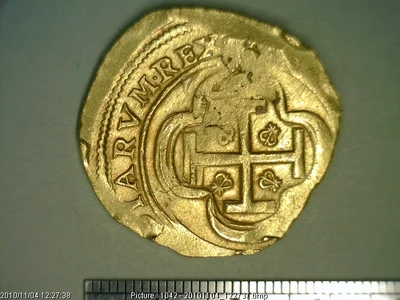
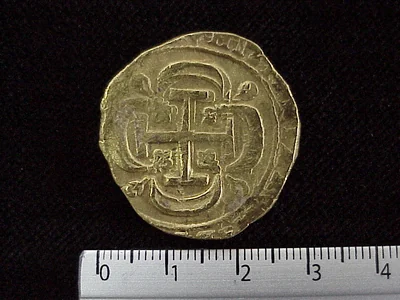
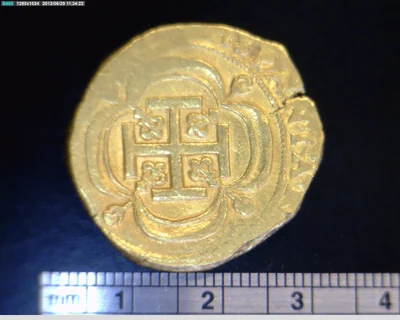
The 8 Escudos is the largest Spanish colonial gold coin, the piece collectors call the "doubloon." It was minted in Mexico City (Casa de Moneda de México) during the viceroyalty of New Spain, when Mexico was a Spanish colony. Felipe V was the first Bourbon king of Spain, and 1713 falls in his first reign. These are not modern commemoratives. They are 300-year-old gold coins, and that combination of age, gold content, and colonial history is what drives the price.
What you actually have
| Spec | Value |
|---|---|
| Denomination | 8 Escudos (gold) |
| Year | 1713 |
| Ruler | Felipe V (first reign, Bourbon dynasty) |
| Mint | Mexico City |
| Metal | Gold, 0.875 fine (21 karat) |
| Weight | 27.14 g |
| Gold content | approx. 0.764 troy oz |
| Diameter | 30 mm |
| Edge | plain (unmilled) |
Because it is 0.875 gold weighing 27.14 grams, the pure gold content is about 0.764 troy ounces. That is the melt floor. No genuine 1713 8 Escudos is worth less than the current spot value of that gold, and a collectible coin is always worth more than melt.
What a 1713 8 Escudos is worth in 2026
There is no single number, because condition and how the coin was struck matter enormously on colonial gold. Two broad categories exist for this era.
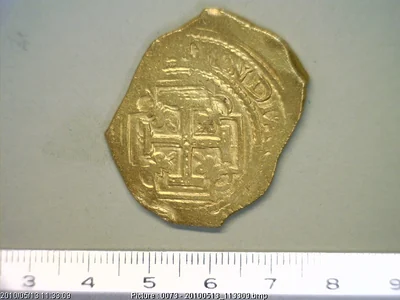
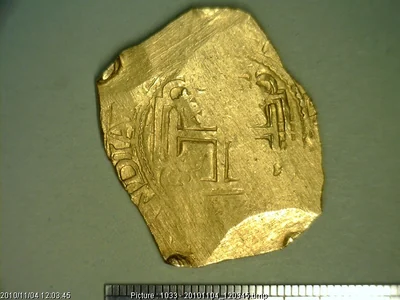
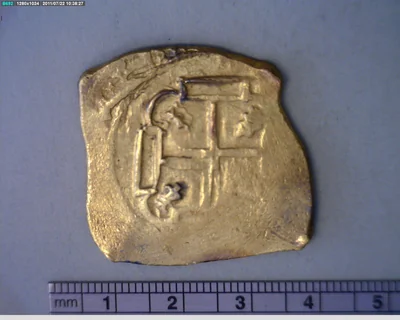
Cob (macuquina) type. Early 1713 Mexico 8 Escudos were often struck as "cobs," hand-hammered pieces with irregular shape and partial designs. A worn cob still sells in the low-to-mid thousands of US dollars on gold content and history alone. Cleaner examples with clear dates and full assayer marks command more.
Milled/round examples. Better-centered, more complete strikes bring higher prices, and any piece certified by NGC or PCGS in mint state can climb well into five figures.
As a working range: expect from roughly 2,000 US dollars for a heavily worn genuine cob up to 30,000 US dollars or more for a sharp, certified, high-grade example. Coins tied to a documented shipwreck (the 1715 Fleet and others carried Mexican gold) can sell for even more because of the provenance premium. Heritage Auctions and Stack's Bowers are the houses where these change hands publicly, and their archives are the best real-price reference you can check for a coin matching yours.
Is it rare?
Exact mintage figures for 1713 Mexico 8 Escudos are not documented, which is normal for colonial output. Rarity for these coins depends less on total mintage and more on survival and grade. Most that survived are worn cobs. A well-struck, high-grade 1713 with clear date and assayer initials is genuinely scarce, and that is where the strong money is.
How to tell if yours is genuine
Gold fakes are common on high-value colonial coins, and weight is the fastest tell.
- Weight. A genuine piece weighs 27.14 g. Fakes made in lower-purity gold or base metal almost always miss this. Weigh it on a jeweler's scale.
- Diameter. 30 mm.
- Edge. Plain, unmilled.
- Gold color and behavior. 21k gold has a specific warm tone; a magnet test rules out iron-core fakes (gold is not magnetic).
- Certification. For anything you believe is worth over a few thousand US dollars, get it graded by NGC or PCGS. Certified slabs are the insurance that protects both value and resale. Do not clean the coin. Cleaning colonial gold destroys value.
If your coin does not match the weight and diameter exactly, treat it as suspect until a professional confirms otherwise.
The myth to ignore
"It's 300 years old, it must be worth a fortune." Age alone does not do it. What makes the 1713 8 Escudos valuable is that it is a large gold coin (real intrinsic value) plus a scarce colonial type in demand with collectors. Plenty of old coins are worth pocket change. This one is worth real money because of gold and demand together, not age by itself.
Where to sell it
Because this is a precious-metal coin with real collector value, sell where you get a fair, verified appraisal:
- Major auction houses (Heritage, Stack's Bowers) for high-grade or provenance pieces. This is where records are set.
- A verified numismatic dealer from the Pesoteca shop directory, who can appraise it on the spot.
- The Pesoteca buy-and-sell forum, among collectors who know the type.
Before you sell, photograph the obverse, reverse, and edge, and get the coin authenticated or graded. Never dump a genuine gold 8 Escudos to the first Facebook buyer. Get at least two quotes.
Want a second opinion before you sell? Post clear photos and the weight of your 1713 8 Escudos in the Pesoteca forum and let collectors weigh in on grade and authenticity.
Related: Colonial Escudos gold series, the Colonial / Viceroyalty era, other Mexican 8 Escudos coins, and more coins from 1713.
Historical context
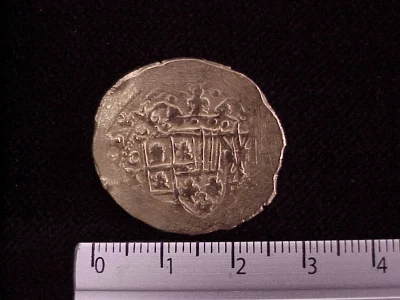
Eight escudos cob (macuquino) of Felipe V, first period, 1713, Mexico City Mint, assayer J. Krause assigns it the reference KM#R57.1, where the R indicates a documented restrike or re-coinage variant. The year 1713 is that of the treaties of Utrecht that recognized Felipe V as king of Spain on condition of renouncing his rights over France, the formal close of the War of the Spanish Succession. In New Spain, Fernando de Alencastre Norona y Silva, Duke of Linares (1711-1716), was governing. The full ounce theoretically weighs 27.06 grams with 0.916 fineness. Production follows the cob method: planchet cut with shears from the cast gold bar, heated, fixed dies, hammered. The 1713 combination with the J signature has cross-documentation with the KM#55.2 variant in four escudos, a sign that the J signature was customary in the capital workshop that year.
This piece belongs to the era
Colonial / Virreinato →Explore all the Mexican coins of this era, their historical context and how they connect to the monetary system of the period.
Value range of this piece
Market estimate: $51,613 - $86,926 MXN depending on the grade of preservation (typical range between a circulated and an uncirculated piece).
See the full breakdown by grade (VG, F, VF, EF, AU, MS-60, MS-63, MS-65) for the whole series →
Other denominations from 1713
Escudos Coloniales (oro) · Oro 0.875 (21k)
Same denomination, other years
8 escudos Oro 0.875 (21k) · Escudos Coloniales (oro)
Frequently asked questions
How much is a 1713 Mexico 8 Escudos gold coin worth?
It depends heavily on condition. As real 21k gold weighing 27.14 g, it never sells below its melt value (about 0.764 troy oz of gold). A worn but genuine example typically brings 2,000 US dollars or more, while a sharp, NGC- or PCGS-certified high-grade piece can reach 30,000 US dollars or higher. Shipwreck-provenance coins sell for even more. Get yours graded for a firm figure.
Is the 1713 8 Escudos rare?
Exact mintage is not documented, which is normal for Spanish colonial coinage. Rarity here comes from survival and grade rather than original output. Most survivors are worn hand-struck cobs, so a well-struck, high-grade 1713 with a clear date and assayer marks is genuinely scarce and commands the strongest prices.
How do I tell if my 1713 8 Escudos is genuine?
Weight is the fastest check: a real coin weighs 27.14 g and measures 30 mm with a plain edge. Fakes are usually made in lower-purity gold or base metal and miss the weight. Gold is not magnetic, so a magnet test rules out iron-core fakes. For anything worth over a few thousand US dollars, have it certified by NGC or PCGS. Never clean it.
Where can I sell a 1713 Mexico 8 Escudos gold coin?
For high-grade or shipwreck-provenance pieces, major auction houses like Heritage and Stack's Bowers set the records. Otherwise use a verified dealer from the Pesoteca shop directory or the Pesoteca buy-and-sell forum. Photograph the obverse, reverse, and edge, get it authenticated, and gather at least two quotes before selling.
Conversation
0 comments
Sources
Images for informational and educational purposes, attributed to their original source. Reference values; the real price depends on the grade, the specific variant and demand.
Loading comments…