
1714 Mexico 8 Escudos Gold (Felipe V): Value Guide
The 1714 Mexico 8 Escudos Gold : Value Guide is worth between $51,479 and $86,702 MXN depending on its grade of preservation.
Prices updated: August 2026
Viceroyalty · Mexico City Mint · Assayer J
Viceroyalty · Mexico City Mint · Assayer J
The 1714 Mexico 8 Escudos Gold : Value Guide is worth between $51,479 and $86,702 MXN depending on its grade of preservation.
Prices updated: August 2026
How much is the 1714 Mexico 8 Escudos Gold (Felipe V): Value Guide worth?
The estimated value of the 1714 Mexico 8 Escudos Gold (Felipe V): Value Guide ranges from $51,479 (circulated, XF) up to $86,702 (official blister pack), with $73,894 as a reference for an uncirculated (UNC) piece. The estimate is based on the official mintage and the historical behavior of the family.
The real price depends on four factors: the grade of preservation (a circulated piece is worth the low end of the range; an uncirculated one, or one still in its official blister pack, the high end), the finish (satin vs mirror/proof), the rarity within the series based on the mintage, and the metal spot price on the day of the deal when the piece is silver or gold. Check the value-by-grade table above and compare with equivalent pieces before buying or selling.
Where to buy or sell this coin?
Browse the national directory of numismatic shops or the community forum to trade directly with other collectors.
Description
If you inherited a heavy, irregular gold coin marked 1714 from Mexico, you may be holding a genuine piece of American colonial history worth thousands of dollars. The 8 Escudos of Felipe V, minted in Mexico City in 1714, contains 27.07 grams of 0.875 fine gold. Depending on condition, one sells anywhere from around 3,000 USD to well over 40,000 USD at auction. This is a real coin with real value, not a common piece.
What you actually have
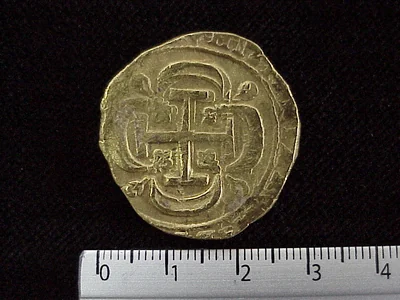
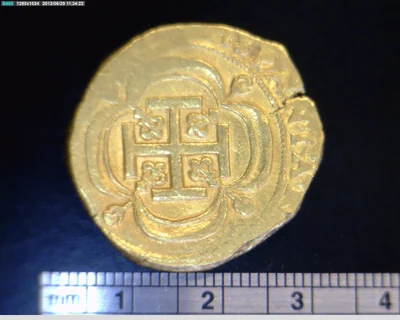
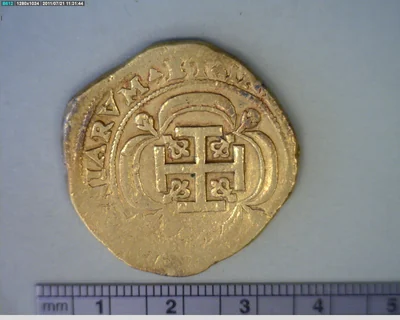
The 8 Escudos was the largest gold denomination struck in colonial Mexico, then called New Spain. Collectors and dealers often call it the "gold onza" or, because of how it was made, a cob (in Spanish, macuquina). Cobs were hand-struck on roughly cut gold blanks, which is why the shape is irregular and the design is rarely fully centered. That is normal for the type and not a defect.
Here are the hard specs, which also help you confirm authenticity:
- Metal: Gold, 0.875 fine (equivalent to 21 karat)
- Weight: 27.07 grams
- Diameter: 32 mm
- Edge: Plain (unmilled)
- Ruler: Felipe V, the first Bourbon king of Spain
- Catalog reference: KM#57.1 (Krause)
At current gold prices, the metal alone (the melt value) is worth roughly 2,000 to 2,300 USD, which sets a hard floor under the coin. No genuine example is worth less than its gold content. The numismatic premium on top of that is where the real money is.
What drives the value
Three things decide what a 1714 8 Escudos is worth: the grade (state of preservation), how well the mint mark and date are visible on the flan, and demand at the moment of sale. Because these were struck by hand, two coins of the same year can look very different. A piece where the date, the cross, and the pillars are all clearly readable commands a large premium over a worn or off-struck example.
| Feature | Detail |
|---|---|
| Denomination | 8 Escudos gold |
| Year | 1714 |
| Mint | Mexico City (New Spain) |
| Gold content | 27.07 g at 0.875 fine (about 23.7 g pure gold) |
| Melt value floor | roughly 2,000 to 2,300 USD |
| Typical collector range | about 3,000 to 40,000+ USD by grade |
Colonial Mexican gold cobs of this size regularly appear at Heritage Auctions and Stack's Bowers, and strong, clearly dated examples from the early Felipe V years have crossed well into five figures. Shipwreck-recovered cobs with documented provenance can carry an additional premium because buyers value the certificate and the story.
The myth to ignore
Online listings love to slap "extremely rare, priceless" on any old Spanish gold coin. Rarity here is real but specific. The 8 Escudos is genuinely scarce and valuable because of its size, gold content, and age, but a heavily worn or damaged example is still a few thousand dollars, not a million. If a seller quotes you a six or seven figure price, ask for the auction record that backs it. It almost never exists. Judge the coin on grade and gold, not on hype.
How to tell if yours is genuine
Counterfeits of Spanish colonial gold do exist, and most are underweight or made of the wrong alloy.
- Weigh it. A genuine 8 Escudos is 27.07 grams. A jeweler's scale that reads to 0.01 g will catch most fakes instantly. If it weighs noticeably less, be skeptical.
- Check the diameter. It should measure about 32 mm.
- Look at the color and wear. Genuine 0.875 gold has a rich, warm tone. Chinese counterfeit "gold" coins are often lower fineness or plated, and the weight gives them away.
- Get it certified. For a coin in this value range, professional grading from NGC or PCGS is the definitive proof. A certified, slabbed coin sells faster and for more, because the buyer no longer has to trust your word.
Hand-struck cobs will never look like a modern machine-struck coin. Irregular edges and a partial strike are expected and do not mean the coin is fake.
Where to sell it (and get a fair price)
Because this is a precious-metal coin with a real numismatic premium, do not dump it at a pawn shop that only pays melt. Your options, from safest to riskiest:
- A reputable auction house (Heritage, Stack's Bowers) if the coin is high grade or certified. This is where colonial gold reaches top dollar.
- A verified numismatic dealer. Get it appraised in person. Compare against our directory of trusted coin shops before you commit.
- The Pesoteca collector community. List it in the buy-and-sell forum, where buyers actually know what an 8 Escudos is.
- Online marketplaces (last resort). Fakes circulate heavily here. If you buy or sell this way, insist on photos of the edge and an exact weight reading.
Before selling, photograph the front (obverse), back (reverse), and edge in good light, and note the exact weight. For a broader sense of Mexican coin values, see our guide to the most valuable Mexican coins.
Got a 1714 8 Escudos or another colonial gold cob and unsure what it's really worth? Post clear photos and the weight in the Pesoteca forum and let collectors who handle these regularly weigh in.
Historical context
Eight escudos cob of Philip V, first period, 1714, Mexico mint, assayer J. Krause records the type as KM#57.1. The first full year after Utrecht: Philip V was consolidating the Spanish throne and the empire was reorganizing after thirteen years of dynastic war. In Mexico the Duke of Linares governed, viceroy until 1716. The ounce weighs approximately 27.06 grams and has a fineness of 0.916. Cob production continued: planchets cut with shears from the cast bar and hammered between fixed dies. The J mark in the field is that of the assayer responsible for guaranteeing the gold's fineness at the capital mint. 1714 pieces are material testimony to the beginning of the consolidated Bourbon regime in New Spain and precede by nearly two decades the reform to milled minting that would arrive in 1732.
This piece belongs to the era
Colonial / Virreinato →Explore all the Mexican coins of this era, their historical context and how they connect to the monetary system of the period.
Value range of this piece
Market estimate: $51,479 - $86,702 MXN depending on the grade of preservation (typical range between a circulated and an uncirculated piece).
See the full breakdown by grade (VG, F, VF, EF, AU, MS-60, MS-63, MS-65) for the whole series →
Other denominations from 1714
Escudos Coloniales (oro) · Oro 0.875 (21k)
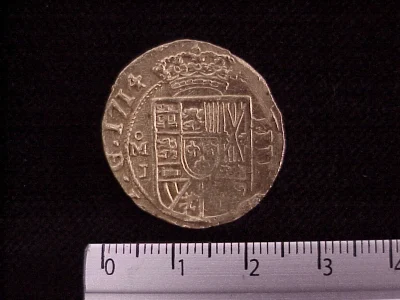
Same denomination, other years
8 escudos Oro 0.875 (21k) · Escudos Coloniales (oro)
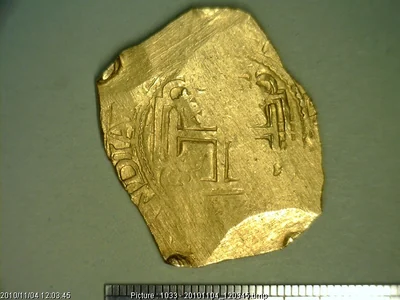
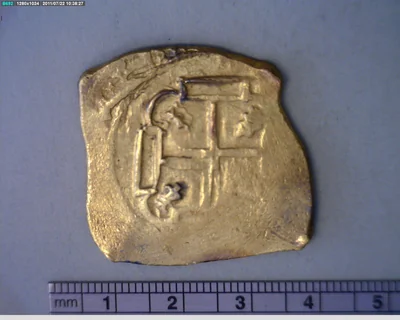
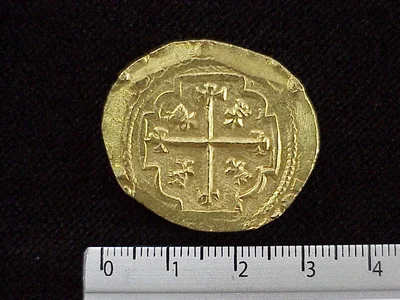
Frequently asked questions
How much is a 1714 Mexico 8 Escudos gold coin worth?
It depends heavily on grade. The gold content alone gives it a floor of roughly 2,000 to 2,300 USD at current prices. Genuine collector examples typically run from about 3,000 USD for worn pieces to over 40,000 USD for well-struck, clearly dated, high-grade coins. A certified example from NGC or PCGS always sells for more than an uncertified one.
Is the 1714 8 Escudos rare?
Yes, it is genuinely scarce. It was the largest colonial gold denomination and was reserved for major trade, so far fewer survive than smaller silver coins of the era. That said, scarce does not mean priceless. Value is set by grade and gold content, not by hype. Be skeptical of any listing claiming a six or seven figure price without an auction record to prove it.
How can I tell if my 1714 8 Escudos is genuine?
Start with weight and size: a real one is 27.07 grams and about 32 mm across. Most counterfeits are underweight or made of lower-fineness metal, so a precise scale catches them fast. The irregular shape and partial strike are normal for a hand-struck cob and do not mean it is fake. For a coin this valuable, professional grading by NGC or PCGS is the definitive confirmation.
Where can I sell a 1714 8 Escudos gold coin?
For a high-grade or certified coin, a major auction house like Heritage or Stack's Bowers reaches the top prices. Otherwise, get it appraised by a verified dealer from the Pesoteca directory, or list it in the Pesoteca buy-and-sell forum among collectors who know the type. Avoid pawn shops that only pay melt, and be cautious on open marketplaces where fakes are common.
Conversation
0 comments
Sources
Images for informational and educational purposes, attributed to their original source. Reference values; the real price depends on the grade, the specific variant and demand.
Loading comments…