
1734 Mexico 8 Escudos Gold Coin (Felipe V): Value Guide
The 1734 Mexico 8 Escudos Gold Coin : Value Guide is worth between $51,460 and $86,670 MXN depending on its grade of preservation.
Prices updated: August 2026
Viceroyalty · Mexico City Mint · Assayer MF
Viceroyalty · Mexico City Mint · Assayer MF
The 1734 Mexico 8 Escudos Gold Coin : Value Guide is worth between $51,460 and $86,670 MXN depending on its grade of preservation.
Prices updated: August 2026
How much is the 1734 Mexico 8 Escudos Gold Coin (Felipe V): Value Guide worth?
The estimated value of the 1734 Mexico 8 Escudos Gold Coin (Felipe V): Value Guide ranges from $51,460 (circulated, XF) up to $86,670 (official blister pack), with $73,866 as a reference for an uncirculated (UNC) piece. The estimate is based on the official mintage and the historical behavior of the family.
The real price depends on four factors: the grade of preservation (a circulated piece is worth the low end of the range; an uncirculated one, or one still in its official blister pack, the high end), the finish (satin vs mirror/proof), the rarity within the series based on the mintage, and the metal spot price on the day of the deal when the piece is silver or gold. Check the value-by-grade table above and compare with equivalent pieces before buying or selling.
Where to buy or sell this coin?
Browse the national directory of numismatic shops or the community forum to trade directly with other collectors.
Description
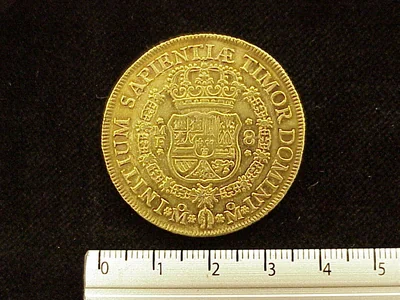
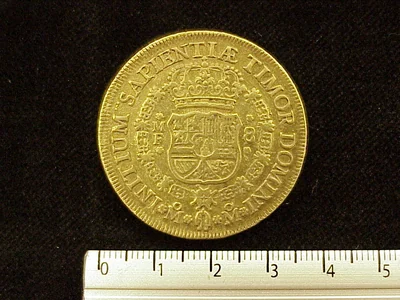
Found a heavy gold Mexican coin dated 1734 with a Spanish king's name on it? You may be holding a colonial 8 Escudos struck in Mexico City under Felipe V. In 2026, these run anywhere from a few thousand dollars for a worn, damaged piece to well over 100,000 USD for a sharp, certified example. The gold alone gives it a hard floor, and the age gives it a serious collector premium.
Quick answer: what a 1734 Mexico 8 Escudos is worth
This is a real gold coin, not a token or a medal. It contains about 24.4 grams of pure gold, so even at melt it is never worth pocket change. But an 8 Escudos from the early 1700s is worth far more than its metal to collectors, because these pieces survived nearly three centuries and most are damaged, cleaned, or lost to the sea.
A realistic range in 2026:
- Heavily worn or damaged (details grade): roughly 3,000 to 6,000 USD, close to the collector floor above melt.
- Circulated but honest (VF to XF): roughly 6,000 to 20,000 USD depending on eye appeal and strike.
- High grade or certified Mint State: 30,000 to well over 100,000 USD, with the rarest die varieties and shipwreck-provenanced pieces going higher at major US auctions.
The single biggest factor is condition and whether the coin is certified by NGC or PCGS. A raw coin someone eyeballed at a flea market is worth a fraction of the same coin in a graded holder.
What exactly is this coin?
The 8 Escudos was the largest gold denomination of the Spanish colonial system, the coin English speakers later nicknamed the "doubloon." Yours was struck in the Mexico City Mint (Casa de Moneda de México) during the first reign of Felipe V, the first Bourbon king of Spain.
Key specs, exactly as recorded:
| Attribute | Detail |
|---|---|
| Denomination | 8 Escudos (gold) |
| Year | 1734 (single year type) |
| Metal | Gold, .875 fine (21 karat) |
| Weight | 27.06 grams (about 24.4 g pure gold) |
| Diameter | 36 mm |
| Edge | Diagonally reeded |
| Mint | Mexico City |
| Assayer | MF |
The weight and diameter matter for a reason we will come back to: they are your first authenticity check.
Why these command real money
Three things drive the price, and "it's old" is not one of them on its own.
Gold content sets the floor. With roughly 24.4 grams of pure gold, this coin can never fall below bullion value. That is the safety net a modern collectible coin does not have.
Genuine scarcity of nice pieces. Early Bourbon 8 Escudos circulated hard, were melted, and many that survive came from shipwrecks and show saltwater damage. A problem-free, well-struck example is genuinely rare, and rarity plus demand is what pushes prices into five figures.
Provenance and pedigree. Coins recovered from documented shipwrecks or from famous old collections carry a premium at US auctions. Heritage Auctions and Stack's Bowers regularly sell colonial Mexican gold, and grade is what separates a coin worth 5,000 USD from one worth 60,000.
The myth to ignore
A lot of sellers will tell you any 1734 gold coin is a museum piece "worth millions." It is not. No standard 1734 Mexico 8 Escudos has hammered anywhere near a million dollars. The genuinely valuable ones are the finest certified survivors and rare die varieties, and even those trade in the tens of thousands, not the millions. If someone quotes you a million-dollar figure, they are either guessing or selling something.
The reverse myth is just as costly: assuming a worn or ex-jewelry piece is "just gold." A cleaned, holed, or bent 8 Escudos still carries a collector premium over melt. Do not sell it to a scrap gold buyer by the gram.
How to tell if yours is genuine
Gold fakes are common, and most fail on the numbers.
- Weigh it. A genuine piece weighs 27.06 grams. Chinese counterfeits are usually struck in lower-purity metal and come in light or heavy. If the weight is off by more than a small tolerance, be suspicious.
- Measure it. Diameter should be 36 mm, edge diagonally reeded. A smooth or wrong edge is a red flag.
- Check the color and wear. Real 21 karat gold has a specific tone, and honest wear looks different from cast-in "wear" on a fake.
- Get it certified. For a coin worth thousands, submit it to NGC or PCGS. Their holder is the only authentication a serious US buyer fully trusts, and it typically raises the price it will bring.
Never buy an 8 Escudos sight unseen. Always get photos of both faces and the edge, plus the seller's own weight reading.
Where to sell it (and get real money)
Because this is a high-value gold coin, sell where informed buyers compete:
- Certify first. An NGC or PCGS grade removes the buyer's doubt and usually pays for itself.
- Major US auction houses. Heritage Auctions and Stack's Bowers handle colonial Mexican gold and reach international bidders. This is where the top prices happen.
- Established coin dealers who know world gold, not a local scrap-gold shop.
- Verified specialists in the Pesoteca shop directory and the Pesoteca buy-and-sell forum, where collectors evaluate before you commit.
Photograph the obverse, reverse, and edge in good light before you talk to anyone, and check the value range on this page so you know when an offer is low.
This coin belongs to the Colonial Escudos gold series within the Viceroyalty / Colonial era. You can also browse other Mexican 8 Escudos and more coins from 1734.
Think you have a 1734 8 Escudos, or an early Bourbon gold coin you can't identify? Post clear photos of both sides and the edge in the Pesoteca forum and let collectors help you pin down the grade and value before you sell.
Historical context
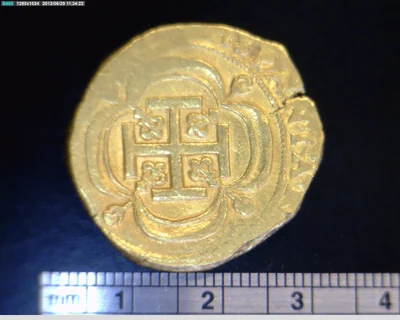
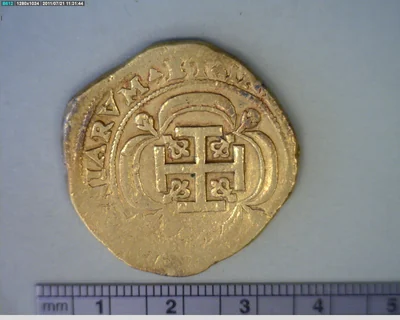
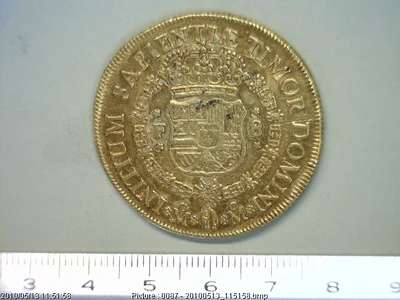
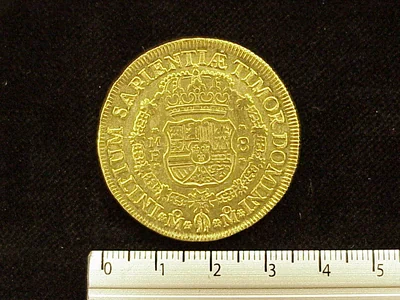
Eight escudos, Felipe V second period, 1734, Mexico mint, assayer MF. Krause references the type as KM#148 within the pillar catalog. That year Juan de Acuña, Marquis of Casafuerte, viceroy of New Spain since 1722, died. He was succeeded by Juan Antonio de Vizarron y Eguiarreta, archbishop of Mexico, as interim viceroy from 1734 to 1740. The MF signature combination is common at the capital's mint during this stage: two assayers sharing a working die, just as the administrative records of the Mint note. The ounce theoretically weighs 27.06 grams with a fineness of 0.916. The piece is a pillar type struck by mill, already with a standardized round planchet. The reverse shows the two crowned Pillars of Hercules over the sea and the bands with the legend PLVS VLTRA, iconography that would be kept in the series until the change to busts in 1747.
This piece belongs to the era
Colonial / Virreinato →Explore all the Mexican coins of this era, their historical context and how they connect to the monetary system of the period.
Value range of this piece
Market estimate: $51,460 - $86,670 MXN depending on the grade of preservation (typical range between a circulated and an uncirculated piece).
See the full breakdown by grade (VG, F, VF, EF, AU, MS-60, MS-63, MS-65) for the whole series →
Same denomination, other years
8 escudos Oro 0.875 (21k) · Escudos Coloniales (oro)
Frequently asked questions
How much is a 1734 Mexico 8 Escudos worth?
It depends almost entirely on condition. In {{AÑO}}, a heavily worn or damaged example runs roughly 3,000 to 6,000 USD, a solid circulated coin (VF to XF) around 6,000 to 20,000 USD, and a high-grade or certified Mint State piece can bring 30,000 to well over 100,000 USD at major US auctions. Certified coins always sell for more than raw ones.
Is the 1734 8 Escudos rare?
It is a single-year type struck in 1734, and genuinely nice examples are scarce. Many survivors circulated heavily or came from shipwrecks with saltwater damage, so problem-free, well-struck pieces are hard to find and command strong premiums. Rare die varieties, which only NGC or PCGS experts distinguish, can push value even higher.
Where can I sell a 1734 Mexico 8 Escudos?
Get it certified by NGC or PCGS first, then sell where informed buyers compete: major US auction houses like Heritage or Stack's Bowers, established world-gold dealers, or verified specialists in the [Pesoteca shop directory](/tiendas) and the [buy-and-sell forum](/foro/compra-venta). Avoid selling it to a scrap-gold buyer by the gram, since the collector value far exceeds melt.
How do I know if my 1734 8 Escudos is genuine?
Start with the numbers: a real piece weighs 27.06 grams, measures 36 mm, and has a diagonally reeded edge. Counterfeits, often from China, tend to be struck in lower-purity gold and come in off-weight, so the scale usually gives them away. For any coin worth thousands, submit it to NGC or PCGS. Their holder is the authentication US buyers trust most.
Conversation
0 comments
Sources
Images for informational and educational purposes, attributed to their original source. Reference values; the real price depends on the grade, the specific variant and demand.
Loading comments…