
1725 4 Escudos Luis I Gold Coin: Value & Real Prices
The 1725 4 Escudos Luis I Gold Coin: Value & Real Prices is worth between $25,521 and $42,983 MXN depending on its grade of preservation.
Prices updated: August 2026
Viceroyalty · Mexico City Mint · Assayer D
Viceroyalty · Mexico City Mint · Assayer D
The 1725 4 Escudos Luis I Gold Coin: Value & Real Prices is worth between $25,521 and $42,983 MXN depending on its grade of preservation.
Prices updated: August 2026
How much is the 1725 4 Escudos Luis I Gold Coin: Value & Real Prices worth?
The estimated value of the 1725 4 Escudos Luis I Gold Coin: Value & Real Prices ranges from $25,521 (circulated, XF) up to $42,983 (official blister pack), with $36,633 as a reference for an uncirculated (UNC) piece. The estimate is based on the official mintage and the historical behavior of the family.
The real price depends on four factors: the grade of preservation (a circulated piece is worth the low end of the range; an uncirculated one, or one still in its official blister pack, the high end), the finish (satin vs mirror/proof), the rarity within the series based on the mintage, and the metal spot price on the day of the deal when the piece is silver or gold. Check the value-by-grade table above and compare with equivalent pieces before buying or selling.
Where to buy or sell this coin?
Browse the national directory of numismatic shops or the community forum to trade directly with other collectors.
Description
If you inherited a small, heavy gold coin dated 1725 with the name Luis I on it, you have a genuinely early piece of colonial American gold, and it is worth real money. Even a worn example carries a floor at its gold content, and rare, high-grade survivors of this one-year type have sold for thousands of dollars at major auctions.
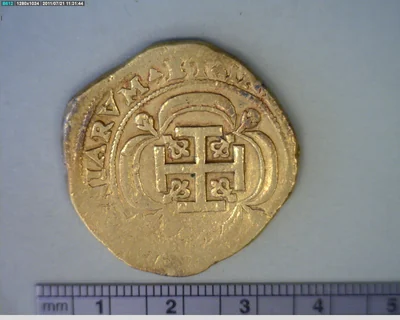
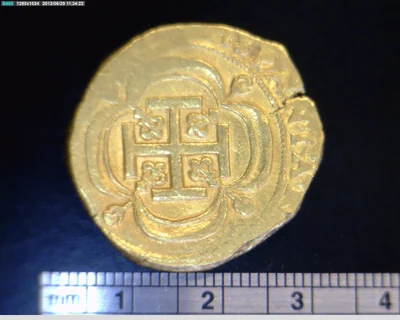
This is not a common pocket coin. The 4 Escudos of Luis I, dated 1725, was struck at the Mexico City Mint (Casa de Moneda de México) during the brief reign of Luis I of Spain, who ruled for only a few months in 1724 before dying of smallpox. Coins carrying his name were struck for a very short window, which is exactly why collectors chase them.
What it is, in plain terms
An "escudo" was the standard Spanish colonial gold denomination. The 4 escudos is a mid-size gold piece, smaller than the famous 8 escudos (the "doubloon" of pirate lore) but still a substantial gold coin. This one was struck in Mexico when it was the colonial Viceroyalty of New Spain, so it is Mexican-minted Spanish colonial gold, one of the most collected categories in the world market.
Key specifications, which you should verify on your own coin before anything else:
- Weight: 13.42 grams
- Diameter: 20.96 mm
- Metal: Gold, 0.875 fine (21 karat)
- Actual gold content: roughly 11.74 grams of pure gold
- Year: 1725 (one-year presence for the Luis I name at this denomination)
- Mint: Mexico City (look for the "M" or "Mo" mintmark)
What it's actually worth
Two separate things drive the value: the gold inside it, and the collector premium on top.
The gold floor. With about 11.74 grams (0.377 troy ounces) of pure gold, this coin will never be worth less than its melt value. At current bullion levels that alone is several hundred dollars. That is your absolute minimum, the price a coin dealer would pay for a badly damaged or unverifiable piece.
The collector premium. Because this is a genuinely old, short-reign colonial type, an authenticated example in collectible condition sells for far more than melt. Prices for early Mexican colonial 4 escudos run from roughly 1,000 dollars for well-worn but genuine pieces into the several-thousand-dollar range for sharp, problem-free examples. Certified high-grade survivors of scarce dates and reigns can reach five figures at auction.
| Condition | What it looks like | Approximate value (USD) |
|---|---|---|
| Heavily worn / damaged | Flat detail, scratches, or mount marks | Melt value (a few hundred dollars) |
| Circulated, genuine | Readable design, honest wear | ~1,000 to 3,000 |
| High grade, certified | Sharp detail, NGC/PCGS holdered | Several thousand and up |
These are ranges for the type. Your exact figure depends on grade, eye appeal, and whether the coin is authenticated. For colonial gold, certification matters more than for almost any other category, because fakes are common.
Grade is everything for a coin this old
Hand-struck colonial coins vary wildly. Two coins of the same date can differ by thousands of dollars based on strike quality, centering, and surface preservation. Before you assume a number, learn how condition is judged in our coin grading guide, and understand where this piece fits in the broader colonial gold escudos series.
Do not clean it. Cleaning an old gold coin strips its surface and can cut its value in half. Leave it exactly as you found it.
How to tell if yours is genuine
Colonial gold is one of the most heavily faked areas in numismatics, so verify before you celebrate or sell.
- Weigh it. A genuine coin weighs 13.42 grams. Counterfeits, especially the gold-plated or low-fineness fakes coming out of overseas workshops, almost always miss the correct weight. A cheap 0.01 gram scale will expose most fakes instantly.
- Measure the diameter. It should be about 20.96 mm.
- Check the metal. Real 0.875 gold has a specific density. Dealers use a nondestructive specific-gravity test.
- Get it certified. For anything you believe is worth more than a few hundred dollars, submit it to NGC or PCGS. Their sealed, graded holder is the strongest guarantee of authenticity and the fastest way to sell for full value.
If the weight or diameter is off, you likely have a replica or a fantasy piece, no matter how convincing the design looks.
Where to sell it (US and international)
Because this is precious metal, only deal with people who let you verify the coin first.
- Major auction houses. Heritage Auctions and Stack's Bowers handle Mexican colonial gold regularly and reach serious international buyers. Best route for a certified, higher-value coin.
- Established coin dealers who handle world and ancient gold. Get more than one offer.
- The Pesoteca community. List it or ask for opinions in the Pesoteca buy-and-sell forum among collectors who actually know this series.
Avoid dumping it on a general marketplace to the first bidder. A verified colonial gold coin is worth taking the time to price correctly. Photograph the front, back, and edge before you talk to any buyer.
Think you have a 4 Escudos Luis I 1725, or an early colonial gold coin you can't identify? Post clear photos of both sides and the edge in the Pesoteca forum and let collectors who specialize in this era help you pin down what it is and what it's worth.
Historical context
Four escudos cob in the name of Luis I, Mexico mint, assayer D, dated 1725. Krause references the type as KM#A31, with the letter A indicating a supplement variant in the catalog. Luis I is the shortest reign in Spanish history: Philip V abdicated in his favor in January 1724, Luis reigned barely seven months and died of smallpox on August 31, 1724. However, some pieces continued to be struck in 1725 in his name due to administrative delay between Spain and the American mints. In New Spain, Juan de Acuña, Marquis of Casafuerte, governed as viceroy from November 1722 until his death in 1734. Half-ounce of gold with a theoretical weight near 13.53 grams and a fineness of 0.916. Like every cob, it was produced by hammering between fixed dies over planchets shear-cut. The piece is rare precisely because of the brevity of the nominal reign: collectors pursue the Mexican Luis I coins as a documented political variant.
This piece belongs to the era
Colonial / Virreinato →Explore all the Mexican coins of this era, their historical context and how they connect to the monetary system of the period.
Value range of this piece
Market estimate: $25,521 - $42,983 MXN depending on the grade of preservation (typical range between a circulated and an uncirculated piece).
See the full breakdown by grade (VG, F, VF, EF, AU, MS-60, MS-63, MS-65) for the whole series →
Other denominations from 1725
Escudos Coloniales (oro) · Oro 0.875 (21k)
Frequently asked questions
How much is a 1725 4 Escudos Luis I worth?
It depends heavily on condition. Even a worn, genuine example has a floor at its gold content (roughly 11.74 grams of pure gold, several hundred dollars). Circulated authenticated pieces generally run about 1,000 to 3,000 USD, and sharp certified examples can reach five figures at auction. Get it graded by NGC or PCGS for an accurate figure.
Is the 1725 4 Escudos Luis I rare?
Yes, comparatively. Luis I ruled Spain for only a few months in 1724, so coins carrying his name were struck in a very short window, and 1725 is a one-year date for this piece. That short production run is exactly what makes it collectible beyond its gold value. Genuine, well-preserved examples are hard to find.
How do I tell if my 1725 4 Escudos is genuine?
Start with the specs: it should weigh 13.42 grams and measure about 20.96 mm. Colonial gold is heavily faked, and most counterfeits miss the correct weight or come in low fineness. A precise scale exposes most fakes. For anything you think is valuable, submit it to NGC or PCGS for certified authentication.
Where can I sell a 1725 4 Escudos Luis I gold coin?
For a certified, higher-value coin, use a major auction house like Heritage Auctions or Stack's Bowers, which handle Mexican colonial gold and reach international buyers. Established world-coin dealers are another option. For opinions and collector buyers, post it in the [Pesoteca buy-and-sell forum](/foro/compra-venta). Always let buyers verify weight and photos of both sides and the edge first.
Conversation
0 comments
Sources
Images for informational and educational purposes, attributed to their original source. Reference values; the real price depends on the grade, the specific variant and demand.
Loading comments…