
1720 Mexico 8 Escudos Gold Doubloon (Felipe V): Value Guide
The 1720 Mexico 8 Escudos Gold Doubloon : Value Guide is worth between $51,479 and $86,702 MXN depending on its grade of preservation.
Prices updated: August 2026
Viceroyalty · Mexico City Mint · Assayer J
Viceroyalty · Mexico City Mint · Assayer J
The 1720 Mexico 8 Escudos Gold Doubloon : Value Guide is worth between $51,479 and $86,702 MXN depending on its grade of preservation.
Prices updated: August 2026
How much is the 1720 Mexico 8 Escudos Gold Doubloon (Felipe V): Value Guide worth?
The estimated value of the 1720 Mexico 8 Escudos Gold Doubloon (Felipe V): Value Guide ranges from $51,479 (circulated, XF) up to $86,702 (official blister pack), with $73,894 as a reference for an uncirculated (UNC) piece. The estimate is based on the official mintage and the historical behavior of the family.
The real price depends on four factors: the grade of preservation (a circulated piece is worth the low end of the range; an uncirculated one, or one still in its official blister pack, the high end), the finish (satin vs mirror/proof), the rarity within the series based on the mintage, and the metal spot price on the day of the deal when the piece is silver or gold. Check the value-by-grade table above and compare with equivalent pieces before buying or selling.
Where to buy or sell this coin?
Browse the national directory of numismatic shops or the community forum to trade directly with other collectors.
Description
If you inherited a heavy gold coin dated 1720 from Mexico with a Spanish king's name on it, you are holding one of the most valuable coin types the New World ever produced. A 1720 Mexico 8 Escudos in gold, struck under Felipe V, is worth thousands of dollars at minimum, and exceptional examples have sold for well over 100,000 USD. This is not a coin worth a few dollars. It is real bullion plus real numismatic history.
Here in 2026, this is what you actually need to know: what it is, what it is worth, how to tell if it is genuine, and where to sell it without getting cheated.
What you actually have
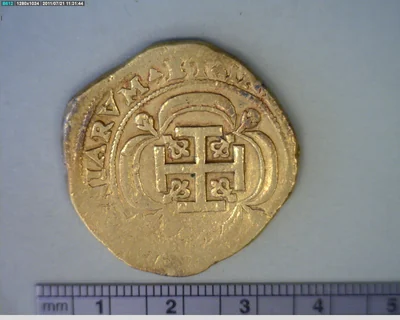
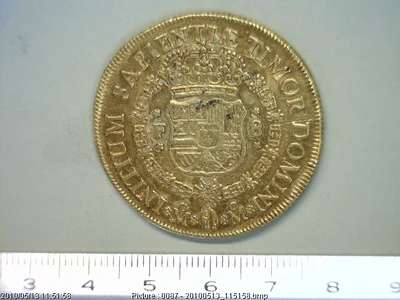
The 8 Escudos was the largest gold denomination in the Spanish colonial system, the coin English speakers later called the "doubloon." It was struck at the Mexico City Mint (Casa de Moneda de México), which was one of the empire's main producers of high-value gold. Yours dates to the reign of Felipe V, the first Bourbon king of Spain.
The specifications matter, because they are your first authenticity test:
- Metal: gold
- Weight: 27.07 grams (just under one troy ounce)
- Diameter: 30 mm
- Edge: plain (unmilled), typical of the hand-struck technique of that era
- Catalog reference: KM#57.2
At current gold prices, the metal alone (roughly 0.87 troy ounces of gold at colonial fineness) gives this coin a hard floor of a few thousand dollars in USD before any collector premium. That premium is where the real money lives.
What a 1720 8 Escudos is worth in 2026
Be honest with yourself about condition first, because it drives everything. Early 18th-century gold coins were struck by hand, so weak strikes, off-center designs, and clipping are common. A worn, damaged, or ex-jewelry piece sits closer to its gold value. A sharp, problem-free example with full detail commands multiples of melt.
What we see in the market:
| Condition | Approximate value (USD) |
|---|---|
| Damaged, mounted, or heavily worn | Roughly gold melt, about 2,000 to 3,000 |
| Circulated, honest wear, no problems | 3,500 to 8,000 |
| Choice / lightly circulated | 8,000 to 25,000 |
| Uncirculated / high grade certified | 25,000 to 100,000+ |
Colonial 8 escudos from Mexico regularly cross the auction block at Heritage Auctions and Stack's Bowers. Top-grade Mexico City gold escudos of the early Bourbon period have realized five and six figures in USD, particularly shipwreck-provenance pieces and coins graded by NGC or PCGS. The exact figure for your specific date and grade depends on strike quality and certification.
A note on the "I" in the listing name: this refers to the assayer mark on the coin, not a separate variety worth extra by itself. Assayer marks help experts pin down the exact issue, but they do not turn an ordinary coin into a rarity on their own.
The myth to kill: "old gold coin = automatic fortune"
Age alone does not make a coin priceless. A 300-year-old gold coin that has been drilled, soldered into a bezel, polished, or heavily worn is worth its gold and little more. Conversely, provenance and grade can push a clean example far past its metal value. What drives the number is the same short list every time: survival in good condition, strike quality, authenticity, and whether it is certified. Do not assume a fortune; verify it.
Be especially skeptical of "1720" gold coins bought cheaply online or found in estate lots labeled as souvenirs. Modern reproductions and outright counterfeits of Spanish colonial doubloons are everywhere, from museum-shop replicas to deliberate fakes made to deceive.
How to tell if yours is genuine
Start with the physical facts, because fakes almost always fail them:
- Weigh it. A genuine 8 escudos weighs 27.07 grams. Chinese counterfeits and low-karat replicas rarely hit that weight in real gold. If it is significantly light or heavy, be suspicious.
- Measure it. Diameter should be about 30 mm.
- Check the edge. It should be plain, not reeded or milled.
- Look for damage. A solder line, drill hole, or filed edge tells you it was jewelry, which crushes numismatic value.
- Get it certified. For any piece worth more than a few hundred dollars, professional grading from NGC or PCGS is the ultimate safeguard. It confirms authenticity, assigns a grade, and dramatically improves what a buyer will pay.
If you plan to sell above a few thousand dollars, the cost of certification pays for itself many times over.
Where to sell (and get real money)
Because this coin carries high value, sell where the buyers actually are and where authenticity is checked:
- Major auction houses (Heritage, Stack's Bowers) for high-grade or certified pieces. This is where world-class colonial gold reaches full price.
- Established coin dealers who handle world and colonial gold. Expect them to weigh it and inspect it in front of you.
- A verified numismatic shop from the Pesoteca directory if you want an in-person appraisal without paying a middleman markup.
- The Pesoteca buy-and-sell forum to reach collectors directly.
Before you sell, photograph the obverse, reverse, and edge in good light, and record the exact weight. Never hand over a valuable gold coin, or accept one, without the piece and its weight in front of you. Avoid dumping it on a general marketplace at the first offer, that is where sellers of genuine gold lose the most money.
If you are not sure what you have, post clear photos and the weight in the Pesoteca forum and let collectors and experts weigh in before you accept any offer. What would a coin this old and this heavy be worth to you: melt, or a real collector premium?
Historical context
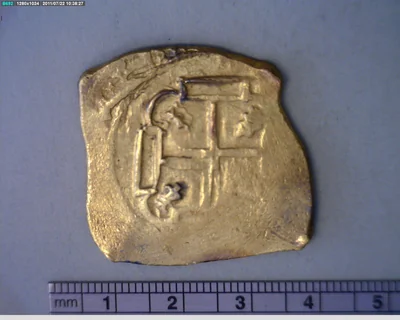
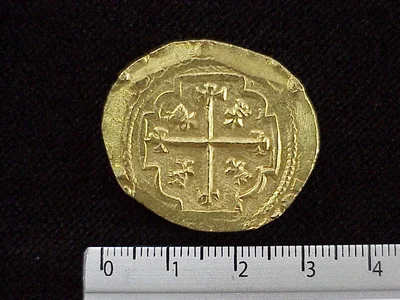
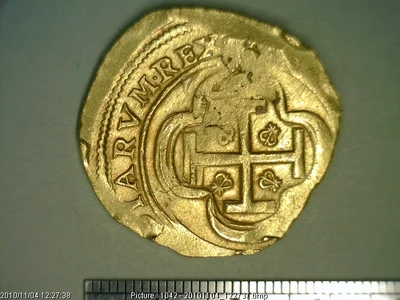
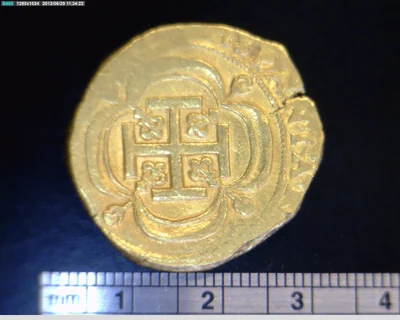
Eight escudos cob, Felipe V first period, 1720, Mexico mint, assayer J. Krause references the type as KM#57.2, distinguished from KM#57.1 by die variation within the same assayer. In 1720 New Spain was governed by Baltasar de Zúñiga Guzmán Sotomayor y Sarmiento, Marquis of Valero, viceroy from 1716 to 1722. That year there were matlazahuatl epidemics in the central region and a military campaign against the Apaches in the north. The full ounce weighs 27.06 theoretical grams at .916 fineness. Production is still cob: sheared planchet, fixed dies, hammered. Twelve years remained before the technical reform that would introduce the mill and the round planchet. Pieces of the J signature in the 1710-1720 decade form a coherent series that documents a long-serving assayer at the capital workshop during the first period of Felipe V.
This piece belongs to the era
Colonial / Virreinato →Explore all the Mexican coins of this era, their historical context and how they connect to the monetary system of the period.
Value range of this piece
Market estimate: $51,479 - $86,702 MXN depending on the grade of preservation (typical range between a circulated and an uncirculated piece).
See the full breakdown by grade (VG, F, VF, EF, AU, MS-60, MS-63, MS-65) for the whole series →
Same denomination, other years
8 escudos Oro 0.875 (21k) · Escudos Coloniales (oro)
Frequently asked questions
How much is a 1720 Mexico 8 Escudos gold coin worth?
It depends heavily on condition. The gold alone gives it a floor of roughly 2,000 to 3,000 USD. A clean circulated example runs 3,500 to 8,000 USD, and high-grade certified pieces have sold from 25,000 to over 100,000 USD at Heritage and Stack's Bowers. Get it graded by NGC or PCGS for an accurate figure.
Is the 1720 8 Escudos rare?
Early 18th-century Mexico City gold doubloons are genuinely scarce, especially in problem-free condition. Many survivors were mounted as jewelry, worn heavily, or lost, so clean examples with full detail are the ones that command premiums. Age alone is not enough; grade and authenticity drive the value.
How can I tell if my 1720 8 Escudos is genuine?
Weigh and measure it first: a real one is 27.07 grams and about 30 mm with a plain edge. Counterfeits, often low-karat fakes, usually fail the weight test. Look for solder marks or drill holes that indicate former jewelry. For any valuable piece, certification from NGC or PCGS is the definitive proof of authenticity.
Where can I sell a 1720 Mexico 8 Escudos?
For high-grade or certified coins, major auction houses like Heritage and Stack's Bowers reach the strongest buyers. For a quick in-person appraisal, use an established world-gold dealer or a verified shop from the [Pesoteca directory](/tiendas). You can also reach collectors directly through the [Pesoteca buy-and-sell forum](/foro/compra-venta). Always sell with the coin and its weight in front of the buyer.
Conversation
0 comments
Sources
Images for informational and educational purposes, attributed to their original source. Reference values; the real price depends on the grade, the specific variant and demand.
Loading comments…