
1737 Mexico 8 Escudos Gold (Felipe V): Value & How to Sell
The 1737 Mexico 8 Escudos Gold : Value & How to Sell is worth between $51,308 and $86,414 MXN depending on its grade of preservation.
Prices updated: August 2026
Viceroyalty · Mexico City Mint · Assayer MF
Viceroyalty · Mexico City Mint · Assayer MF
The 1737 Mexico 8 Escudos Gold : Value & How to Sell is worth between $51,308 and $86,414 MXN depending on its grade of preservation.
Prices updated: August 2026
How much is the 1737 Mexico 8 Escudos Gold (Felipe V): Value & How to Sell worth?
The estimated value of the 1737 Mexico 8 Escudos Gold (Felipe V): Value & How to Sell ranges from $51,308 (circulated, XF) up to $86,414 (official blister pack), with $73,648 as a reference for an uncirculated (UNC) piece. The estimate is based on the official mintage and the historical behavior of the family.
The real price depends on four factors: the grade of preservation (a circulated piece is worth the low end of the range; an uncirculated one, or one still in its official blister pack, the high end), the finish (satin vs mirror/proof), the rarity within the series based on the mintage, and the metal spot price on the day of the deal when the piece is silver or gold. Check the value-by-grade table above and compare with equivalent pieces before buying or selling.
Where to buy or sell this coin?
Browse the national directory of numismatic shops or the community forum to trade directly with other collectors.
Description
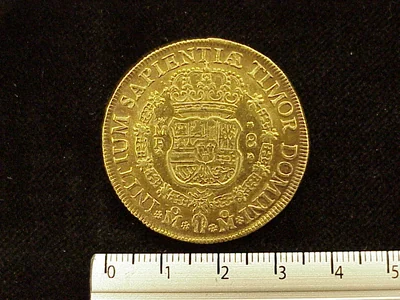
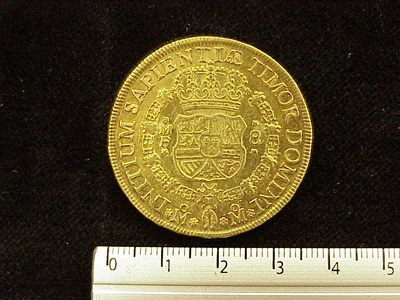
If you inherited or found a 1737 Mexico 8 Escudos in gold, you are holding a serious piece. This is not a common coin worth a few dollars. Genuine examples of this colonial gold cob and milled series trade from the low thousands to well over 100,000 USD in top condition, driven almost entirely by grade, strike quality, and authenticity. Here is what yours is actually worth and how to prove it is real.
What This Coin Is
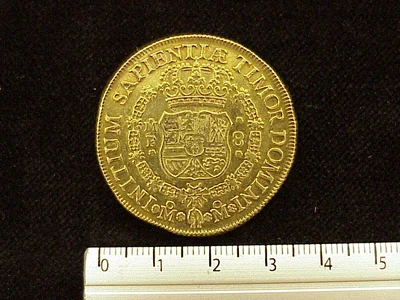
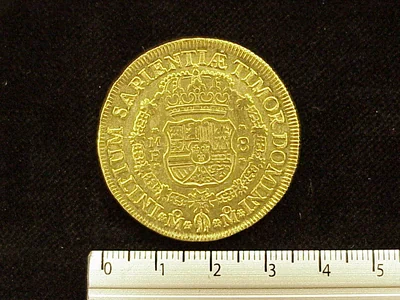
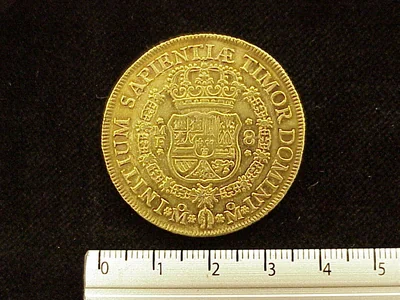
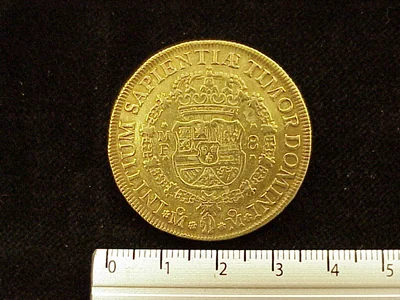
The 8 Escudos was the largest gold coin of Spanish colonial Mexico, struck at the Mexico City Mint (Casa de Moneda de México) under Felipe V of the Bourbon dynasty. Your 1737 example carries the assayer mark MF and was produced during the viceroyalty of New Spain, when Mexico was part of the Spanish Crown.
Collectors often call the early 8 Escudos a "doubloon." It was real money made of real gold, and that gold content sets a hard floor under the value no matter what.
Exact specifications (verify yours against these):
| Spec | Value |
|---|---|
| Denomination | 8 Escudos (gold) |
| Year | 1737 (single year of this issue) |
| Weight | 26.98 grams |
| Diameter | 37 mm |
| Fineness | .875 gold (21 karat) |
| Edge | Diagonal reeded |
| Mint | Mexico City |
| Assayer | MF |
| Ruler | Felipe V, Bourbon dynasty |
That 26.98 grams at .875 fine means roughly 23.6 grams of pure gold, about 0.76 troy ounces. At current gold prices, the metal alone is worth well over 1,500 USD. That is your absolute minimum, and no genuine example ever sells below its melt value.
What It Is Actually Worth in USD
Unlike modern bullion coins, an 18th-century 8 Escudos is a scarce, hand-era piece where condition drives everything. Prices at international auction (Heritage, Stack's Bowers, and Spanish houses like Aureo & Calicó) break down roughly like this:
| Condition | Approximate value (USD) |
|---|---|
| Heavily worn / damaged (still genuine gold) | 1,500 to 2,500 (near melt) |
| Circulated, clear detail (VF) | 2,500 to 5,000 |
| Lightly circulated (XF/AU) | 5,000 to 12,000 |
| Uncirculated / Mint State, certified | 12,000 to 40,000+ |
| Finest known, top grade | 100,000+ in exceptional cases |
These are ranges, not a fixed quote. Two 1737 examples can differ by tens of thousands of dollars based on strike centering, luster, and how clean the fields are. The Mexico City 8 Escudos of Felipe V is a respected series among world-coin collectors, and strong pieces have real, active demand.
A word of caution on inflated claims: no, a worn 8 Escudos is not "worth a million dollars." That figure gets thrown around online and it is nonsense for a typical circulated piece. The seven-figure results you read about belong to a handful of ultra-rare American gold rarities, not standard-date colonial escudos.
How to Tell If Yours Is Genuine
Gold this valuable attracts counterfeiters, and most fakes fail on the basics.
- Weigh it. A genuine coin weighs 26.98 grams. Fakes, especially the gold-plated tungsten and low-karat casts coming out of overseas workshops, almost always miss this. If your coin is significantly under or over weight, it is not right.
- Measure it. Diameter should be 37 mm.
- Check the edge. It should show a diagonal reeded pattern. Cast fakes often have a mushy or seamed edge.
- Look at the strike. Genuine examples have sharp, deliberate detail in the cross, shield, and legends. Cast counterfeits look soft and grainy under magnification.
- Get it certified. For any coin worth more than about 2,000 USD, submit it to NGC or PCGS. Third-party grading is the definitive proof of authenticity and the single best thing you can do before selling. A certified, encapsulated coin also sells faster and for more.
Do not clean the coin. Polishing or scrubbing gold destroys collector value and can knock thousands off the price.
Are There Valuable Die Varieties?
1737 is a single-year issue, so there are no year-to-year variants to hunt. There can be minor die varieties (letter positions, small striking differences) that specialists at NGC and PCGS distinguish. Genuine mint errors (off-center strikes, die rotations, doubling) can add value, but be skeptical: most "errors" people spot on colonial gold are post-mint damage, corrosion, or handling marks, not factory errors. If you think yours has something unusual, have it examined before assuming a premium.
Where to Sell It
Because this is a high-value precious-metal coin, sell where the buyers know the series and where you get paid fairly:
- International auction houses (Heritage Auctions, Stack's Bowers, Aureo & Calicó) are the right venue for certified or high-grade examples. They reach the world-coin collectors who pay the strongest prices.
- Established coin dealers who handle world and colonial gold will make offers on the spot. Expect them to buy below retail so they can resell.
- Verified numismatic shops in the Pesoteca directory, listed by city, will appraise it in person without middleman markups.
- The Pesoteca buy-and-sell forum connects you directly with collectors.
Before you sell anything, photograph the obverse, reverse, and edge, and get it certified if it is worth more than a couple thousand dollars. Avoid dumping it to the first buyer on social media. A coin like this deserves a real appraisal.
This piece belongs to the Colonial Escudos gold series and the Colonial / Viceroyalty era. You can also browse other Mexican 8 Escudos and other coins dated 1737.
Think you have one? Post clear photos of both sides and the edge in the Pesoteca forum and let the community help you confirm what it is before you sell.
Historical context
Eight escudos Felipe V second period, 1737, Mexico mint, assayer MF. Krause references the type as KM#148. The year 1737 is the epicenter of the matlazahuatl epidemic that had been affecting New Spain since 1736 and would extend until 1739. It was also the year the Virgin of Guadalupe was sworn as patroness of Mexico City, precisely in gratitude for the reduction in deaths attributed to her intercession. The viceroy was Juan Antonio de Vizarrón y Eguiarreta, archbishop of Mexico, interim viceroy since 1734. The ounce weighs 27.06 theoretical grams at the .916 fineness typical of the pillar type. It was produced by mill with a round planchet, with a reverse of crowned pillars and PLVS VLTRA banners. Pieces of this year are collectible for the symbolic weight of the documented religious and epidemic context.
This piece belongs to the era
Colonial / Virreinato →Explore all the Mexican coins of this era, their historical context and how they connect to the monetary system of the period.
Value range of this piece
Market estimate: $51,308 - $86,414 MXN depending on the grade of preservation (typical range between a circulated and an uncirculated piece).
See the full breakdown by grade (VG, F, VF, EF, AU, MS-60, MS-63, MS-65) for the whole series →
Same denomination, other years
8 escudos Oro 0.875 (21k) · Escudos Coloniales (oro)
Frequently asked questions
How much is a 1737 Mexico 8 Escudos gold coin worth?
It depends almost entirely on condition. A worn but genuine example sits near its gold melt value, roughly 1,500 to 2,500 USD. Circulated pieces with clear detail run 2,500 to 5,000 USD, lightly circulated examples reach 5,000 to 12,000 USD, and certified Uncirculated coins bring 12,000 to 40,000 USD or more. Exceptional top-grade pieces have sold well into six figures.
Is the 1737 8 Escudos rare?
It is a scarce 18th-century colonial gold coin, not a common piece. As a single-year issue from the Mexico City Mint under Felipe V, high-grade survivors are genuinely limited and command strong prices among world-coin collectors. Worn examples are more available but still valuable for their gold content.
How do I know if my 1737 8 Escudos is genuine?
Weigh it (26.98 grams), measure it (37 mm), and check for a diagonal reeded edge. Most fakes fail on weight because they use lower-karat or plated metal. The strike on a real coin is sharp, not soft or grainy. For anything worth over about 2,000 USD, submit it to NGC or PCGS for certification, which is the definitive proof of authenticity.
Where can I sell a 1737 Mexico 8 Escudos?
For a certified or high-grade coin, international auction houses like Heritage or Stack's Bowers reach the collectors who pay the most. Established world-coin dealers and verified shops in the Pesoteca directory will appraise it in person. Photograph the obverse, reverse, and edge, get it graded if it is valuable, and avoid selling to the first buyer on social media.
Conversation
0 comments
Sources
Images for informational and educational purposes, attributed to their original source. Reference values; the real price depends on the grade, the specific variant and demand.
Loading comments…