
8 Escudos 1736 Felipe V Gold: What It's Worth
The 8 Escudos 1736 Felipe V Gold: What It's Worth is worth between $51,308 and $86,414 MXN depending on its grade of preservation.
Prices updated: August 2026
Viceroyalty · Mexico City Mint · Assayer MF
Viceroyalty · Mexico City Mint · Assayer MF
The 8 Escudos 1736 Felipe V Gold: What It's Worth is worth between $51,308 and $86,414 MXN depending on its grade of preservation.
Prices updated: August 2026
How much is the 8 Escudos 1736 Felipe V Gold: What It's Worth worth?
The estimated value of the 8 Escudos 1736 Felipe V Gold: What It's Worth ranges from $51,308 (circulated, XF) up to $86,414 (official blister pack), with $73,648 as a reference for an uncirculated (UNC) piece. The estimate is based on the official mintage and the historical behavior of the family.
The real price depends on four factors: the grade of preservation (a circulated piece is worth the low end of the range; an uncirculated one, or one still in its official blister pack, the high end), the finish (satin vs mirror/proof), the rarity within the series based on the mintage, and the metal spot price on the day of the deal when the piece is silver or gold. Check the value-by-grade table above and compare with equivalent pieces before buying or selling.
Where to buy or sell this coin?
Browse the national directory of numismatic shops or the community forum to trade directly with other collectors.
Description
If you have a 1736 Mexico 8 Escudos of Felipe V, you are holding a genuine piece of colonial gold, and it has real value. Even a worn, damaged example carries a floor of over 1,500 USD from its gold content alone. Clean, certified examples routinely sell for several thousand dollars, and the finest known pieces climb into five figures at auction.
This is not a common coin worth pocket change. It is a Spanish colonial gold cob-era piece, struck at the Mexico City Mint under the Bourbon king Felipe V. Below is what drives its value in 2026, real price ranges, and how to check what yours is worth before you sell.
What This Coin Actually Is
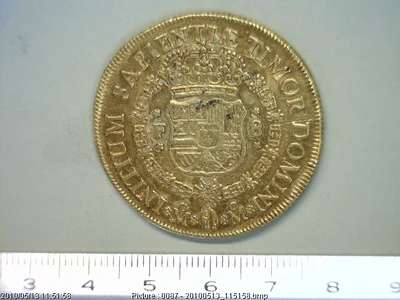
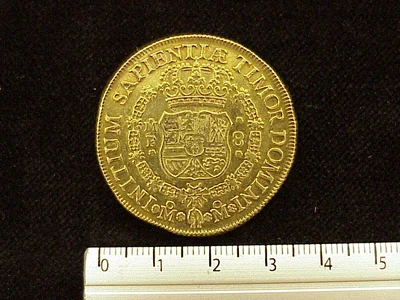
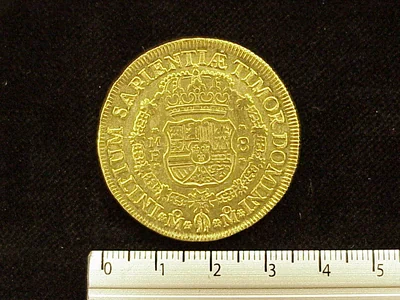
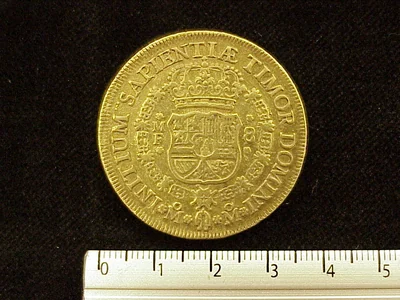
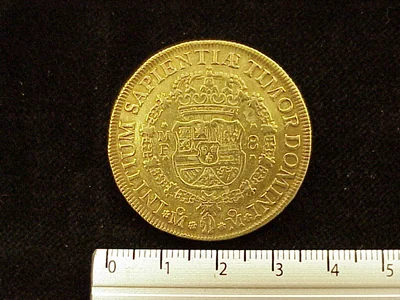
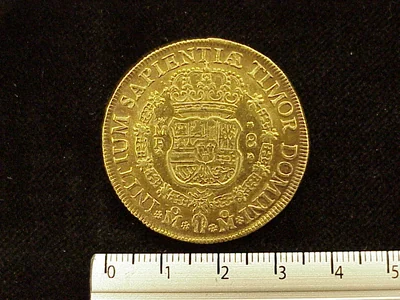
The 8 Escudos was the largest gold denomination of the Spanish colonial system, often called a "doubloon" in English. This 1736 example was minted in New Spain (colonial Mexico) during the first reign of Felipe V, the first Bourbon king of Spain.
The hard specifications, memorize these, because they are how you spot a fake:
- Metal: Gold, .875 fine (roughly 21 to 22 karat)
- Weight: 26.98 grams
- Diameter: 37 mm
- Edge: Diagonally reeded
- Mint: Casa de Moneda de México (Mexico City)
- Assayer: MF (the assayer's initials, found in the legend)
At 26.98 grams of .875 gold, this coin contains about 0.759 troy ounces of pure gold. That number sets the absolute floor on its value: no matter how beat up, it is worth its melt price. As of recent gold levels, that floor sits comfortably above 1,500 USD, and it moves with the gold market.
What It's Worth in 2026
Value on colonial gold like this comes from three things: gold content (the floor), condition, and eye appeal. Because these are hand-struck pieces from the 18th century, most surviving examples show weak strikes, off-center flans, and circulation wear. Truly sharp, well-centered examples are scarce and command strong premiums.
| Condition | Realistic Value (USD) |
|---|---|
| Damaged, holed, or mount-removed | Around melt, 1,500 to 1,800 |
| Circulated, problem-free | 2,000 to 3,500 |
| Choice / lightly circulated | 3,500 to 7,000 |
| High grade, certified (AU/UNC) | 8,000 and up |
These ranges reflect what pieces of this type and era bring at Heritage Auctions and Stack's Bowers, the two houses where Spanish colonial gold most often changes hands. Exact figures for a single date swing with the specific coin's grade, so treat these as guideposts, not guarantees.
One honest note: mintage figures for individual dates of colonial 8 Escudos are not reliably documented. Any site quoting an exact 1736 mintage is guessing. What matters for value is not a mintage number, it is how many survived and in what condition, which is why grade drives everything here.
Why Grade Matters So Much
With modern coins, a small grade bump means a small price bump. With 18th-century colonial gold, the jump can be enormous. A problem-free, well-centered strike of this coin can be worth two or three times an average circulated example, and a certified Uncirculated piece can be worth many times more.
That is also why certification is worth the cost on a coin like this. A grade from NGC or PCGS (the two internationally trusted grading services) does two things: it confirms the coin is genuine, and it sets a market-recognized grade that buyers will pay for. On a coin worth several thousand dollars, spending 40 to 80 USD on certification usually pays for itself.
How to Tell If Yours Is Genuine
Colonial gold is faked, and the fakes almost always fail on the physical basics:
- Weigh it. A genuine coin weighs 26.98 grams. Counterfeits are frequently underweight or made of lower-purity gold, which changes the weight. A jeweler's or coin scale settles this fast.
- Measure it. 37 mm diameter. Off-size is a red flag.
- Check the edge. It should show diagonal reeding, not a smooth or plain edge.
- Look at the strike character. Genuine colonial gold shows the crude, hand-struck look of the period. Machine-perfect surfaces on a supposed 1736 coin are suspicious.
If your coin passes weight and diameter and you are considering selling above a few thousand dollars, send it to NGC or PCGS. Their authentication is the definitive answer, and a certified genuine coin sells faster and higher.
Where to Sell It
Because this is a high-value precious-metal coin, do not dump it with the first buyer on a Facebook group. Your best options:
- A major auction house (Heritage, Stack's Bowers) if the coin is high grade or certified. They reach global collectors of Spanish colonial gold, where the strongest prices are.
- An established coin dealer who works with world and colonial gold. They can appraise it in person and often buy on the spot.
- The Pesoteca buy-and-sell forum to reach collectors directly, and the Pesoteca dealer directory to find a verified shop near you.
Before selling anything, photograph the obverse, reverse, and edge in good light, and know your gold-content floor so no one lowballs you below melt.
This coin belongs to the Colonial Escudos gold series and the broader Colonial / Viceroyalty era. If you want to compare it against related pieces, see other Mexican 8 Escudos and other coins from 1736.
Have one sitting in a drawer and want a read on the grade before you sell? Post clear photos of both sides and the edge in the Pesoteca forum and let collectors who buy this series tell you what you actually have.
Historical context
Eight escudos Felipe V second period, 1736, Mexico mint, assayer MF. Krause references the type as KM#148 within the pillar (columnario) catalog. In 1736 the great matlazahuatl epidemic broke out in New Spain, an exanthematic typhus that claimed hundreds of thousands of lives until 1739, mainly among the indigenous population of the Bajio and the center of the country. The viceroy was Juan Antonio de Vizarron y Eguiarreta, archbishop of Mexico, who governed as interim from 1734. The ounce weighs 27.06 grams at a fineness of 0.916. Produced by mill press, with a round planchet and the crowned Pillars of Hercules over the sea on the reverse, iconography of the pillar system that replaced the cob. The edge could come treated with an inscription or mechanical device that hindered clipping, the main defense against fraud in Bourbon New Spain.
This piece belongs to the era
Colonial / Virreinato →Explore all the Mexican coins of this era, their historical context and how they connect to the monetary system of the period.
Value range of this piece
Market estimate: $51,308 - $86,414 MXN depending on the grade of preservation (typical range between a circulated and an uncirculated piece).
See the full breakdown by grade (VG, F, VF, EF, AU, MS-60, MS-63, MS-65) for the whole series →
Same denomination, other years
8 escudos Oro 0.875 (21k) · Escudos Coloniales (oro)
Frequently asked questions
How much is a 1736 Felipe V 8 Escudos worth?
It has a gold-content floor above 1,500 USD even when damaged. Problem-free circulated examples bring roughly 2,000 to 3,500 USD, choice pieces 3,500 to 7,000, and certified high-grade coins 8,000 USD and up at auction. Grade drives the price on this coin more than anything else.
Is the 1736 8 Escudos rare?
Exact mintage for the date is not reliably documented, so rarity is measured by surviving examples and condition, not a mintage number. Worn examples exist in the market, but well-struck, well-centered pieces are genuinely scarce and command large premiums.
How do I tell if my 8 Escudos is genuine?
Start with the physical specs: it must weigh 26.98 grams, measure 37 mm, and show diagonal reeding on the edge. Fakes are usually underweight or off-size because they use lower-purity gold. If yours passes and is worth several thousand dollars, send it to NGC or PCGS for definitive authentication.
Where can I sell a 1736 8 Escudos?
For high-grade or certified coins, a major auction house like Heritage or Stack's Bowers reaches global colonial-gold collectors and the best prices. For quicker sales, use an established world-coin dealer or the Pesoteca buy-and-sell forum. Always know your gold-content floor first so no one buys it below melt value.
Conversation
0 comments
Sources
Images for informational and educational purposes, attributed to their original source. Reference values; the real price depends on the grade, the specific variant and demand.
Loading comments…