
4 Escudos Felipe V 1714 (Mexico City Gold): Value Guide
The 4 Escudos Felipe V 1714 : Value Guide is worth between $25,597 and $43,111 MXN depending on its grade of preservation.
Prices updated: August 2026
Viceroyalty · Mexico City Mint · Assayer J
Viceroyalty · Mexico City Mint · Assayer J
The 4 Escudos Felipe V 1714 : Value Guide is worth between $25,597 and $43,111 MXN depending on its grade of preservation.
Prices updated: August 2026
How much is the coin 4 Escudos Felipe V 1714 (Mexico City Gold): Value Guide worth?
The estimated value of the coin 4 Escudos Felipe V 1714 (Mexico City Gold): Value Guide ranges from $25,597 (circulated, XF) up to $43,111 (official blister pack), with $36,742 as a reference for an uncirculated (UNC) piece. The estimate is based on the official mintage and the historical behavior of the family.
The real price depends on four factors: the grade of preservation (a circulated piece is worth the low end of the range; an uncirculated one, or one still in its official blister pack, the high end), the finish (satin vs mirror/proof), the rarity within the series based on the mintage, and the metal spot price on the day of the deal when the piece is silver or gold. Check the value-by-grade table above and compare with equivalent pieces before buying or selling.
Where to buy or sell this coin?
Browse the national directory of numismatic shops or the community forum to trade directly with other collectors.
Description
If you found a 1714 gold coin with a Spanish king's name on it, you may be holding a genuine piece of colonial Mexican gold. The 4 escudos of Felipe V (KM#55.2) is real 22-karat gold, and even the most worn examples carry a floor value in the low thousands of dollars from their gold content alone. The best-preserved pieces sell for far more. Here is how to tell what yours is worth in 2026.
The fast answer: what is it and what is it worth
The 4 escudos of Felipe V, struck in 1714 at the Mexico City Mint (Casa de Moneda de México), is a gold coin from Spain's colonial period in Mexico. "Escudos" was the gold denomination of the Spanish empire; 4 escudos was a high-value coin used for large transactions and hoarding, not everyday spending.
Key specs, exactly as cataloged:
- Weight: 13.46 grams
- Diameter: 17 mm
- Metal: gold (colonial 22-karat standard, roughly .917 fine)
- Edge: plain
- Catalog reference: KM#55.2
- Type: early cob / columnar colonial gold, hand-struck
Because it is real gold, this coin has two separate values. The melt value is the price of the gold it contains, which moves with the international gold market and sets a hard floor. At 13.46 grams of roughly .917 fine gold, that is about 12.3 grams of pure gold, worth well over 1,000 USD at recent gold prices no matter the condition. The numismatic value is what collectors will pay above melt for its age, rarity, and preservation, and this is where a good example pulls away from the pack.
Why this coin actually commands a premium
Unlike most old coins that people assume are worth a fortune (they usually aren't), colonial Mexican gold has genuine, steady demand. Three things drive the price:
-
It is early 18th-century colonial gold. Felipe V was the first Bourbon king of Spain, taking the throne after the War of the Spanish Succession. The Mexico City Mint was one of the empire's main gold and silver producers, and its escudos circulated across the Atlantic trade. Coins from this era are scarce and sought after.
-
It was hand-struck. These were made one at a time with hand dies, so no two are identical. Legends, centering, and strike quality vary from coin to coin. A sharp, well-centered strike with clear lettering is worth a large multiple of a weak, off-center one.
-
Grade is everything. Condition, strike clarity, centering, and the absence of tooling, mounting, or cleaning decide the final number. A certified example in high grade can be worth several times a raw, average piece.
Honest range: expect a genuine, average circulated example to trade from roughly 1,500 to 4,000 USD, driven largely by gold content and eye appeal. Exceptional, sharply struck, or certified high-grade pieces sell well into five figures at specialist auction. We avoid quoting a single fixed price because for hand-struck colonial gold, two coins of the same date can differ enormously.
Value at a glance
| Coin | Year | Metal / weight | Catalog | Typical value range (USD) |
|---|---|---|---|---|
| 4 Escudos Felipe V | 1714 | Gold, 13.46 g (~.917) | KM#55.2 | ~1,500 to 4,000 circulated; five figures for top certified examples |
Melt value is the floor. Everything above it depends on grade and demand.
The myth: "it's 300 years old, so it must be worth millions"
Age alone does not make a coin worth millions. Plenty of 300-year-old coins are worth only their metal. What makes this piece valuable is a specific combination: it is gold (so it can never fall below melt), it comes from a respected colonial mint, and there is a real, active collector base for Spanish colonial gold. That is a solid, four-figure-plus coin, not a lottery ticket. Be skeptical of any listing claiming a common colonial escudo is worth a small fortune without a certified grade to back it up.
How to tell if yours is genuine
Gold fakes are common, and most fail on the basics:
- Weigh it. A genuine piece is 13.46 grams. Counterfeits, often struck in lower-purity gold or base metal, almost always miss the weight. A scale accurate to 0.01 g is your first and best test.
- Measure it. Diameter should be about 17 mm. Cast copies are frequently too thick or too fat.
- Check the edge and surfaces. The edge is plain. Look for signs of mounting (a coin worn as jewelry loses value), tooling, or artificial cleaning.
- Get it certified. For a piece of this value, third-party grading by NGC or PCGS is the definitive protection. A certified holder confirms authenticity and locks in a grade, which is exactly what buyers pay a premium for.
If you are buying rather than selling, never pay four figures without seeing the weight and clear photos of both sides and the edge.
Where to sell it (and get a fair price)
Because this is high-value gold, sell it where the buyer knows colonial numismatics:
- Specialist auction houses. Heritage Auctions and Stack's Bowers regularly handle Spanish colonial gold and reach the buyers who pay top numismatic prices. Best for a genuine, high-grade or certified example.
- Established coin dealers who deal in world and colonial gold. Get more than one offer; a dealer will typically pay somewhat below auction to resell.
- Verified numismatic shops and collector communities. In our directory and forum, you can reach collectors directly and check current asking ranges before you sell.
Whatever route you choose: photograph the obverse, reverse, and edge, know the exact weight, and never dump it on the first buyer. For a coin worth this much, the cost of certification pays for itself.
Have a 1714 escudo (or any old gold coin you can't identify)? Post clear photos of both sides and the edge, plus the weight, in the Pesoteca forum and the community will help you pin down the grade and a realistic figure.
Historical context
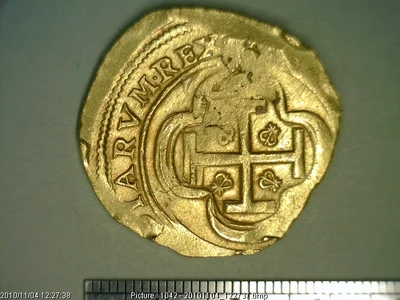
Four escudos cob of Felipe V, first period, 1714, Mexico City mint, assayer J. Krause records the type as KM#55.2, distinguishing it from KM#55.1 precisely by the J initial in the field. Felipe V was passing through the first year after Utrecht and the empire was emerging from the War of the Spanish Succession. The viceroy in office was Fernando de Alencastre Noroña y Silva, Duke of Linares (1711-1716). Half ounce of gold with a theoretical weight near 13.53 grams and .916 fineness. The cob is produced by cutting the planchet with shears from the cast bar and hammering between fixed dies, a technique New Spain maintained until the introduction of mill (screw-press) minting in 1732. Pieces from this final stretch of the cob system have a collector value higher than their weight in gold, precisely because they are material witnesses to the technological change approaching at the capital mint.
This piece belongs to the era
Colonial / Virreinato →Explore all the Mexican coins of this era, their historical context and how they connect to the monetary system of the period.
Value range of this piece
Market estimate: $25,597 - $43,111 MXN depending on the grade of preservation (typical range between a circulated and an uncirculated piece).
See the full breakdown by grade (VG, F, VF, EF, AU, MS-60, MS-63, MS-65) for the whole series →
Other denominations from 1714
Escudos Coloniales (oro) · Oro 0.875 (21k)
Frequently asked questions
How much is a 1714 Felipe V 4 escudos worth?
It has two values. As gold, it never drops below melt: about 12.3 grams of pure gold, worth over 1,000 USD at recent prices. As a collectible, an average genuine example typically ranges from roughly 1,500 to 4,000 USD, while sharply struck or certified high-grade pieces reach five figures at specialist auction. Condition and strike quality drive the final number.
Is the 1714 Felipe V 4 escudos rare?
Early 18th-century Mexico City colonial gold is genuinely scarce and has steady collector demand. Because each coin was hand-struck, no two are identical, so a sharp, well-centered example is far scarcer, and more valuable, than a weak or damaged one. It is a solid four-figure-plus coin, not a common piece worth only face value.
How can I tell if my 4 escudos is genuine?
Start with weight and size: a real one is 13.46 grams and about 17 mm. Most fakes are struck in lower-purity or base metal and fail the weight test right away. Check the plain edge for mounting or tooling, and avoid cleaned coins. For a piece of this value, certification by NGC or PCGS is the definitive proof of authenticity.
Where can I sell a 1714 Felipe V gold escudo?
Sell where buyers know colonial gold. Specialist auction houses like Heritage or Stack's Bowers reach the collectors who pay top numismatic prices, especially for certified examples. Established world-coin dealers offer quick sales below auction level. Photograph the obverse, reverse, and edge, know the exact weight, and get more than one offer before selling.
Conversation
0 comments
Sources
Images for informational and educational purposes, attributed to their original source. Reference values; the real price depends on the grade, the specific variant and demand.
Loading comments…