
8 Escudos Carlos II 1697 (Mexico Gold): Value & Real Prices
The 8 Escudos Carlos II 1697 : Value & Real Prices is worth between $51,594 and $86,894 MXN depending on its grade of preservation.
Prices updated: August 2026
Viceroyalty · Mexico City Mint · Assayer L
Viceroyalty · Mexico City Mint · Assayer L
The 8 Escudos Carlos II 1697 : Value & Real Prices is worth between $51,594 and $86,894 MXN depending on its grade of preservation.
Prices updated: August 2026
How much is the 8 Escudos Carlos II 1697 (Mexico Gold): Value & Real Prices worth?
The estimated value of the 8 Escudos Carlos II 1697 (Mexico Gold): Value & Real Prices ranges from $51,594 (circulated, XF) up to $86,894 (official blister pack), with $74,058 as a reference for an uncirculated (UNC) piece. The estimate is based on the official mintage and the historical behavior of the family.
The real price depends on four factors: the grade of preservation (a circulated piece is worth the low end of the range; an uncirculated one, or one still in its official blister pack, the high end), the finish (satin vs mirror/proof), the rarity within the series based on the mintage, and the metal spot price on the day of the deal when the piece is silver or gold. Check the value-by-grade table above and compare with equivalent pieces before buying or selling.
Where to buy or sell this coin?
Browse the national directory of numismatic shops or the community forum to trade directly with other collectors.
Description
If you inherited or found a 1697 8 Escudos of Carlos II, here is the honest answer first: this is a real gold coin from colonial Mexico, and it is worth serious money. Even a worn, genuine example carries a hard floor of well over 1,500 USD in gold content alone, and certified high-grade pieces trade in the thousands. This is not a common coin you dismiss, but it is also one where fakes are everywhere, so read the authentication section before you sell anything.
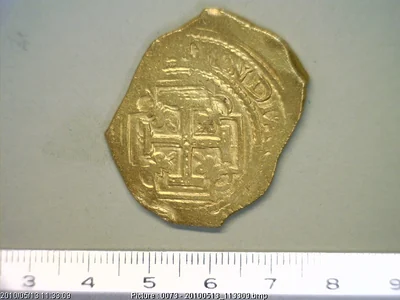
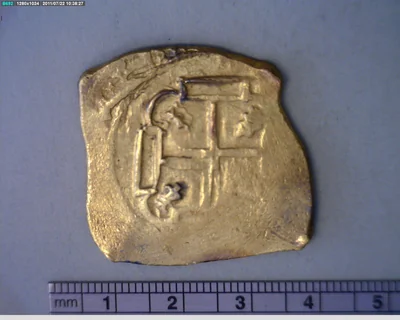
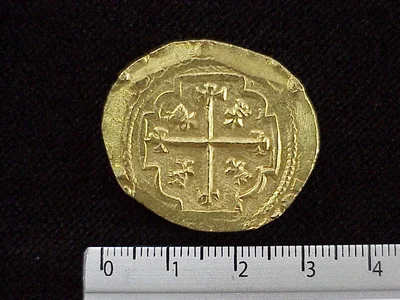
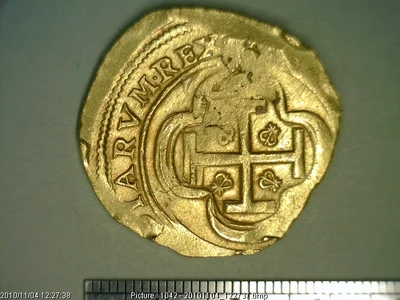
The 8 Escudos was the largest gold denomination of the Spanish colonial system, struck at the Mexico City mint (the "Ceca México") during the reign of Carlos II. The 1697 date puts it near the end of his reign. Collectors in the US often call these pieces "gold cobs" or "colonial gold doubloons." This is part of the Colonial Escudos (gold) series.
What it actually is
This is the eight-escudo gold piece, the heavyweight of the pre-independence Mexican coinage. Nothing about it is modern or commemorative. It circulated as real money across the Spanish empire and was the coin that filled treasure galleons.
| Spec | Value |
|---|---|
| Denomination | 8 Escudos |
| Year | 1697 |
| Mint | Mexico City (Ceca México) |
| Assayer | L |
| Metal | Gold, .875 fine (21 karat) |
| Weight | 27.13 grams |
| Diameter | 37 mm |
| Edge | Plain (unmarked) |
| Era | Colonial / Viceroyalty |
At .875 fineness, the coin holds roughly 23.7 grams of pure gold, close to 0.76 troy ounces. That is what sets the floor under its value regardless of how worn it is.
What it's worth in 2026
Two different values apply to this coin, and confusing them is the most common mistake.
Melt value (the floor). At current gold prices, the raw metal alone puts a hard minimum on the coin. With about 0.76 troy ounces of gold, even a battered, damaged, or heavily worn example is worth well over 1,500 USD just as metal. No genuine 1697 8 Escudos should ever sell below its gold content.
Numismatic value (the real number). For colonial gold this size, the metal is almost never the whole story. Genuine, well-struck examples with a clear date and assayer, and a full portrait or shield, routinely sell in the low-to-mid thousands of USD. Pieces certified by NGC or PCGS in higher grades push higher still, and standout examples with strong provenance or full mint detail can reach five figures. Because early cob and milled colonial gold varies so much in strike and preservation, there is no single price: a worn but honest coin might bring 2,000 to 4,000 USD, while a sharp certified piece can command several times that.
If you have one, do not judge it against a modern bullion coin. Condition, sharpness of the date, centering, and certification drive the difference between the floor and the ceiling.
The myth to ignore
Because it is old and made of gold, people assume any 1697 8 Escudos is automatically worth a fortune, or worse, they assume theirs is fake because it looks crude. Colonial gold coins were struck by hand and are supposed to look irregular. Crude does not mean fake. What kills value is not roughness, it is damage: mount marks from being worn as jewelry, cleaning, holes, and heavy corrosion. A cleaned or holed example loses a large chunk of its collector premium and drops toward melt.
How to tell if yours is genuine
This coin is faked constantly, mostly with lower-purity gold sourced from overseas casts. Two quick checks catch most fakes:
- Weight. A genuine piece weighs 27.13 grams. If your coin is meaningfully lighter or heavier, be suspicious. Underweight almost always means lower gold content or a cast copy.
- Diameter. It should measure about 37 mm. Off-size pieces are a red flag.
Those two numbers eliminate the crude fakes, but a good counterfeit can hit weight and size. For a coin worth this much, the only real insurance is third-party certification. Send it to NGC or PCGS, or take it to a formal numismatic dealer with an in-house expert before you accept any offer. The certification fee is trivial compared to the coin's value, and a slabbed, graded example sells faster and for more. Use the coin grading guide to understand what the grade means for your price.
Where to sell it
Because this is high-value precious metal, sell only where the piece can be examined and where you get a real appraisal:
- Verified numismatic shops in the Pesoteca dealer directory, which value the coin on the spot.
- The Pesoteca buy-and-sell forum among collectors who know colonial gold.
- For maximum realized price on a certified example, a major auction house that handles world and colonial gold.
Whatever route you choose, photograph the obverse, reverse, and edge, and confirm the weight in front of any buyer. Avoid dumping it to the first Facebook offer. A coin at this level deserves at least a second opinion.
Think you have a genuine 1697 8 Escudos, or want a read on the grade before you sell? Post clear photos of both sides and the edge in the Pesoteca forum and let collectors weigh in.
Historical context
Eight escudos cob of Carlos II dated 1697, Mexico mint, assayer L. Krause references the type as KM#56 within the cob catalog of Carlos II. In 1697 the viceregal administration changed: Juan de Ortega y Montanez, bishop of Michoacán, closed his term as interim viceroy and José Sarmiento de Valladares, count of Moctezuma, took office as titleholder in December 1696 and governed throughout 1697. This is the exact political setting in which this cob gold ounce was hammered. The theoretical weight is close to 27.06 grams with the 0.916 fineness typical of the period. The planchet was cut with shears from a cast bar, heated and struck between fixed dies that engraved the Habsburg shield on one side and the Cross of Jerusalem on the other. Surviving pieces rarely retain the complete legend due to the irregular edge characteristic of the cob.
This piece belongs to the era
Colonial / Virreinato →Explore all the Mexican coins of this era, their historical context and how they connect to the monetary system of the period.
Value range of this piece
Market estimate: $51,594 - $86,894 MXN depending on the grade of preservation (typical range between a circulated and an uncirculated piece).
See the full breakdown by grade (VG, F, VF, EF, AU, MS-60, MS-63, MS-65) for the whole series →
Same denomination, other years
8 escudos Oro 0.875 (21k) · Escudos Coloniales (oro)
Frequently asked questions
How much is a 1697 8 Escudos Carlos II worth?
It depends heavily on condition and authenticity. The gold content alone puts a floor of well over 1,500 USD on any genuine example. Honest, worn pieces typically bring 2,000 to 4,000 USD, while sharp examples certified by NGC or PCGS can reach five figures. Get it graded before selling for an accurate value.
Is the 1697 8 Escudos rare?
Colonial Mexican 8 Escudos gold is genuinely scarce, and 1697 was struck at the Mexico City mint with assayer L. Exact surviving numbers are not documented, but any authentic, undamaged example is a serious collector coin. Damage from cleaning, mounting, or holes greatly reduces both rarity value and price.
How do I know if my 1697 8 Escudos is genuine?
Start with weight and size: a real coin weighs 27.13 grams and measures about 37 mm. Most fakes use lower-purity gold and fail the weight test. Crude, irregular striking is normal for hand-struck colonial gold and does not mean fake. For a coin worth this much, certification by NGC or PCGS is the definitive check.
Where can I sell a 1697 8 Escudos Carlos II?
Sell only where the coin can be examined: a verified shop in the [Pesoteca dealer directory](/tiendas), the [Pesoteca buy-and-sell forum](/foro/compra-venta), or a major auction house for certified pieces. Photograph the obverse, reverse, and edge, confirm the weight with the buyer, and never accept the first offer without a second opinion.
Conversation
0 comments
Sources
Images for informational and educational purposes, attributed to their original source. Reference values; the real price depends on the grade, the specific variant and demand.
Loading comments…