
8 Escudos Carlos III 1760: Value of the Gold Colonial Coin
The 8 Escudos Carlos III 1760: Value of the Gold Colonial Coin is worth between $51,365 and $86,510 MXN depending on its grade of preservation.
Prices updated: August 2026
Viceroyalty · Mexico City Mint · Assayer MM
Viceroyalty · Mexico City Mint · Assayer MM
The 8 Escudos Carlos III 1760: Value of the Gold Colonial Coin is worth between $51,365 and $86,510 MXN depending on its grade of preservation.
Prices updated: August 2026
How much is the 8 Escudos Carlos III 1760: Value of the Gold Colonial Coin worth?
The estimated value of the 8 Escudos Carlos III 1760: Value of the Gold Colonial Coin ranges from $51,365 (circulated, XF) up to $86,510 (official blister pack), with $73,730 as a reference for an uncirculated (UNC) piece. The estimate is based on the official mintage and the historical behavior of the family.
The real price depends on four factors: the grade of preservation (a circulated piece is worth the low end of the range; an uncirculated one, or one still in its official blister pack, the high end), the finish (satin vs mirror/proof), the rarity within the series based on the mintage, and the metal spot price on the day of the deal when the piece is silver or gold. Check the value-by-grade table above and compare with equivalent pieces before buying or selling.
Where to buy or sell this coin?
Browse the national directory of numismatic shops or the community forum to trade directly with other collectors.
Description
If you inherited an 8 Escudos gold coin dated 1760, you are holding real money. This is not a token or a copper piece that turns out to be worth a dollar. It contains almost a full ounce of gold, so it has a hard floor at melt value, and genuine, well-preserved examples sell for thousands of US dollars at auction in 2026.
What this coin actually is
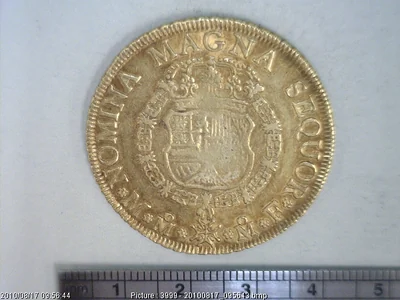
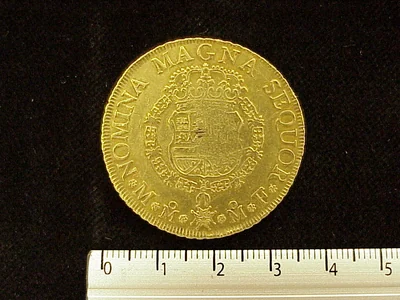
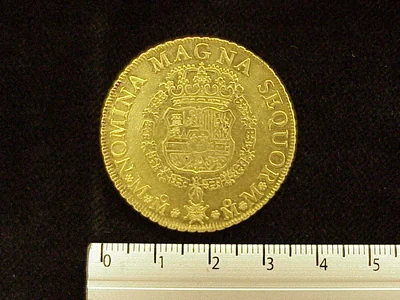
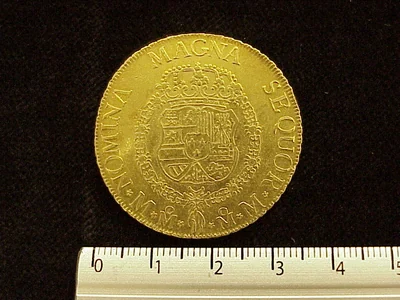
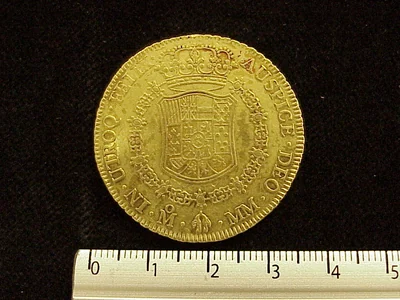
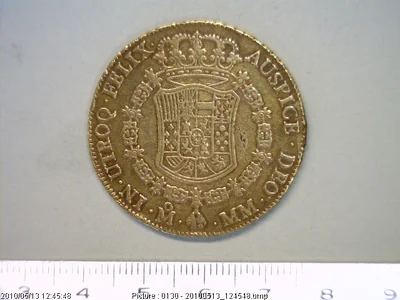
The 8 Escudos was the largest gold coin of the Spanish colonial system, struck in Mexico City when the country was still New Spain under the Spanish Crown. The 1760 issue was minted early in the reign of Carlos III (Charles III). Collectors and the market usually call this large gold denomination a "doubloon," and this is the classic doubloon of colonial Mexico.
The hard specs, which matter for both value and authentication:
- Metal: gold, 0.875 fine (21 karat)
- Weight: 27.01 grams
- Diameter: 36 mm
- Edge: chain-pattern (cord) edge
- Mint: Casa de Moneda de México (Mexico City mint)
- Assayer: MM
At 27.01 grams of 0.875 gold, the coin holds roughly 0.76 troy ounces of pure gold. That gold content alone gives it a bullion floor of well over 1,500 US dollars at current gold prices, before any collector premium.
What it's worth
Two things drive the price: the gold inside it, and the numismatic premium for age, rarity, and condition. For an 18th-century colonial gold coin, the premium is usually substantial.
| Item | Detail |
|---|---|
| Denomination | 8 Escudos (gold) |
| Year | 1760 |
| Gold content | ~0.76 oz pure gold |
| Bullion floor | 1,500+ USD (moves with gold spot) |
| Circulated, genuine | roughly 2,000 to 4,000 USD |
| Higher grade / choice | several thousand USD and up |
These figures are ranges, not a fixed quote. A worn but authentic example trades near its gold value plus a modest collector premium. A sharp, problem-free coin with strong detail and no repairs can bring multiples of melt. Condition is everything with colonial gold: two coins of the same date and mint can differ by thousands of dollars based purely on grade and surfaces.
Because it is a hand-struck early coin, expect some irregularity in the strike. That is normal and does not by itself hurt value. What hurts value is mounting damage (a lot of these were worn as jewelry), harsh cleaning, rim filing, or added solder marks. Any of those can cut the price sharply.
Is it rare?
Official mintage numbers for individual colonial-era dates like this are not reliably documented. The honest answer is that early Carlos III Mexico City 8 Escudos are scarce but not unicorns. They come to market regularly through the major US auction houses. Rarity within this type is driven less by the date and more by survival in good condition, since many were melted, mounted, or heavily circulated over 260 years.
Beware of the "it's from 1760, it must be worth a fortune" assumption. Age alone does not make a coin priceless. A cleaned, damaged, or ex-jewelry example is worth close to its gold content and little more. The premiums we quote above are for genuine, uncleaned, undamaged pieces.
How to tell if yours is genuine
Gold fakes of Spanish colonial coins exist, and the weight is your first and best filter.
- Weigh it. A real one is 27.01 grams. Many counterfeits are struck in lower-purity or lower-density metal and will miss the target weight. If your coin is meaningfully off from 27 grams, treat it as suspect.
- Measure it. Diameter should be about 36 mm.
- Check the edge. This issue has a chain/cord edge pattern. A plain smooth edge is a red flag.
- Look for mount or solder marks. Filed rims, solder blobs, or a suspiciously bright loop scar suggest it was jewelry, which affects value even if genuine.
- Get it certified. For a coin in this price range, professional grading is the definitive safeguard. NGC and PCGS authenticate, grade, and seal the coin so any buyer trusts it instantly. That certification typically pays for itself when you sell.
If you plan to buy or sell above a few thousand dollars, do not skip the certification step. It removes the biggest risk for both sides.
Where to sell it
Because this is a real gold coin with international demand, you have good options:
- Major US auction houses (Heritage, Stack's Bowers) reach serious world-coin buyers and get the strongest prices for high-grade or certified pieces.
- Verified numismatic dealers in the Pesoteca shop directory can value the coin in person and pay on the spot.
- The Pesoteca buy-and-sell forum connects you directly with collectors.
Whichever route you choose, photograph the obverse, reverse, and edge, and note the exact weight. Never sell to the first offer sight-unseen, and never accept a price near pure melt for a genuine, undamaged colonial coin. It's worth more than its gold.
This piece belongs to the Colonial Gold Escudos series and the broader Colonial / Viceroyalty era. You can also browse other Mexican 8 Escudos and more coins from 1760.
Have one in a drawer or an old jewelry box? Post clear photos of both sides and the edge, plus the weight, in the Pesoteca forum and the community will help you tell melt from a real collector piece.
Historical context
Eight escudos Carlos III, 1760, Mexico mint, assayer MM, Krause KM#153. First numismatic year of Carlos III in New Spain. Carlos III ascended the Spanish throne in August 1759 after the death of his brother Fernando VI, and since he had already governed Naples and Sicily from 1734, he brought Italian reformist experience. In Mexico, Agustín de Ahumada y Villalón, Marquis of las Amarillas, governed until he died in office in February 1760. He was succeeded by Francisco Cajigal de la Vega as interim, and then by Joaquín de Montserrat, Marquis of Cruillas, in October. A year of multiple political transition. The ounce weighs 27.06 grams with 0.916 fineness. Krause KM#153 is the first pillar type of Carlos III with the MM signature at the capital mint. The MM signature appears on the reverse as the assayers' mark, a tradition that would continue until the introduction of the royal bust in 1772. The piece numismatically inaugurates the reign that would drive the deepest Bourbon reforms in New Spain.
This piece belongs to the era
Colonial / Virreinato →Explore all the Mexican coins of this era, their historical context and how they connect to the monetary system of the period.
Value range of this piece
Market estimate: $51,365 - $86,510 MXN depending on the grade of preservation (typical range between a circulated and an uncirculated piece).
See the full breakdown by grade (VG, F, VF, EF, AU, MS-60, MS-63, MS-65) for the whole series →
Same denomination, other years
8 escudos Oro 0.875 (21k) · Escudos Coloniales (oro)
Frequently asked questions
How much is an 8 Escudos Carlos III 1760 worth?
It depends heavily on condition, but there is a floor because it's gold. The coin holds about 0.76 oz of pure gold, giving it a bullion value above 1,500 USD at current prices. Genuine circulated examples typically bring roughly 2,000 to 4,000 USD, and sharp, problem-free coins can sell for several thousand or more. Cleaned, damaged, or ex-jewelry pieces trade closer to their gold value.
Is the 1760 8 Escudos rare?
It's scarce but not impossibly rare. Official mintage figures for individual colonial dates aren't reliably documented, and these early Carlos III Mexico City doubloons do come to market through the major auction houses. Real rarity within this type comes from survival in high grade, since many were melted, mounted as jewelry, or heavily circulated over the last 260 years.
How do I tell if my 8 Escudos is genuine?
Start with the scale: a real one weighs 27.01 grams and measures about 36 mm, with a chain-pattern edge. Many fakes miss the correct weight because they use lower-density metal. Watch for filed rims or solder marks that signal it was worn as jewelry. For a coin worth thousands, certification by NGC or PCGS is the definitive proof of authenticity and grade.
Where can I sell an 8 Escudos Carlos III 1760?
For the strongest price on a high-grade or certified coin, use a major US auction house like Heritage or Stack's Bowers. For a faster sale, a verified dealer in the Pesoteca shop directory can appraise and pay on the spot, or list it in the Pesoteca buy-and-sell forum. Always photograph both sides and the edge and note the exact weight, and never accept a price near pure melt for a genuine, undamaged example.
Conversation
0 comments
Sources
Images for informational and educational purposes, attributed to their original source. Reference values; the real price depends on the grade, the specific variant and demand.
Loading comments…