
8 Escudos Fernando VI 1753 Gold Coin: Value & How to Sell
The 8 Escudos Fernando VI 1753 Gold Coin: Value & How to Sell is worth between $51,327 and $86,446 MXN depending on its grade of preservation.
Prices updated: August 2026
Viceroyalty · Mexico City Mint · Assayer MF
Viceroyalty · Mexico City Mint · Assayer MF
The 8 Escudos Fernando VI 1753 Gold Coin: Value & How to Sell is worth between $51,327 and $86,446 MXN depending on its grade of preservation.
Prices updated: August 2026
How much is the 8 Escudos Fernando VI 1753 Gold Coin: Value & How to Sell worth?
The estimated value of the 8 Escudos Fernando VI 1753 Gold Coin: Value & How to Sell ranges from $51,327 (circulated, XF) up to $86,446 (official blister pack), with $73,675 as a reference for an uncirculated (UNC) piece. The estimate is based on the official mintage and the historical behavior of the family.
The real price depends on four factors: the grade of preservation (a circulated piece is worth the low end of the range; an uncirculated one, or one still in its official blister pack, the high end), the finish (satin vs mirror/proof), the rarity within the series based on the mintage, and the metal spot price on the day of the deal when the piece is silver or gold. Check the value-by-grade table above and compare with equivalent pieces before buying or selling.
Where to buy or sell this coin?
Browse the national directory of numismatic shops or the community forum to trade directly with other collectors.
Description
If you inherited an 1753 Fernando VI 8 escudos, you own a genuine colonial gold coin, and that alone gives it a hard floor. This piece contains 26.99 grams of 0.875 fine gold, roughly 0.68 troy ounces of pure gold. At current bullion prices that metal value alone runs well over 1,500 US dollars, and a collectible example in strong condition can sell for several times that. This is one of the few old Mexican coins where the money is real.
What you actually have
The 8 escudos was the largest gold coin of the Spanish colonial system, struck in Mexico City while Nueva España was under the Spanish Crown. This specific issue dates to 1753, the reign of Fernando VI of the Bourbon dynasty. US collectors sometimes know coins of this type as "doubloons."
The hard specs, which you should verify on your own coin:
- Metal: gold, 0.875 fine (21 karat)
- Weight: 26.99 grams
- Diameter: 36 mm
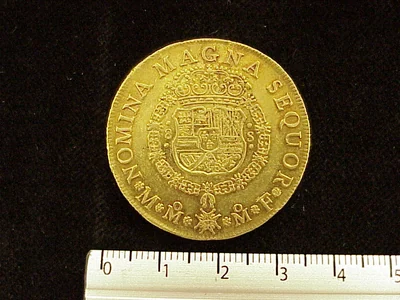
- Edge: reeded and incuse (lettered)
- Mint: Casa de Moneda de México (Mexico City)
- Assayer: MF
- Year: 1753 (single-year strike for this exact combination)
Because the coin is nearly two thirds of an ounce of gold, it can never be worthless. That is the first thing to understand before anyone quotes you a lowball price.
What it's worth in 2026
Value splits into two layers: the gold floor and the collector premium.
The gold floor is simple. About 0.68 troy ounces of pure gold means the melt value tracks the daily spot price. No matter how worn the coin is, a legitimate dealer cannot honestly offer you less than that metal is worth on the day.
The collector premium is where an authentic, well-preserved 1753 8 escudos pulls ahead of a plain bullion coin. Colonial gold with good detail, original surfaces, and a certified grade sells at auction for meaningfully more than melt. Heavily circulated or damaged pieces trade closer to their gold content.
| Condition | What it means | Approximate value (USD) |
|---|---|---|
| Heavily worn / damaged | Detail flattened, scratches, ex-jewelry | Near gold melt (roughly 1,500 to 1,900) |
| Circulated, honest wear | Design clear, no major damage | Gold value plus a modest premium |
| Choice / high grade, certified | Strong detail, NGC or PCGS holder | Several thousand, driven by grade and eye appeal |
Colonial 8 escudos in top certified grades have brought five figures at major US auctions such as Heritage and Stack's Bowers, but those are exceptional coins with premium eye appeal and pedigree. A typical inherited example is far more likely to sit in the mid three to low four figures. Do not let a random buyer tell you "it's just old," and do not expect a jackpot without a certified high grade behind it.
How to tell if yours is genuine
Counterfeits of colonial gold exist, and the weight almost always gives them away. A real 1753 8 escudos weighs 26.99 grams. Fakes are commonly struck in lower-purity gold or gold-plated base metal, so they miss the weight, the diameter, or both.
Quick checks you can do at home:
- Weigh it. Use a jewelry scale. Anything far off 26.99 grams is a red flag.
- Measure it. It should be about 36 mm across.
- Check the edge. This issue has a reeded, incuse (lettered) edge. A smooth or crudely cast edge is a warning sign.
- Look at the surfaces. Cast fakes often show a grainy, soft texture and seams.
Before you buy or sell anything at this value level, get it certified. NGC and PCGS are the two grading services US collectors trust. A certified holder confirms authenticity, locks in a grade, and typically raises what a buyer will pay. For a coin worth well over a thousand dollars, the grading fee pays for itself.
Mintage and varieties
The exact mintage for this specific 1753 issue is not documented in a firm official figure, which is common for colonial strikes. That does not automatically make it ultra-rare, and it does not make it a lottery ticket either. Survivors, condition, and demand set the price, not the absence of a mintage number.
Because 1753 is a single strike year for this combination, there are no year varieties within this issue. There can be minor die varieties (letter positions, small striking differences) that specialists identify, but for most inherited coins those distinctions do not move the price. What moves the price is grade and authenticity.
Where to sell it
At this value, sell where the buyer can verify the coin in front of them and pay fair market:
- A reputable coin dealer or auction house. In the US, established firms and major auction houses handle colonial gold regularly and will pay closer to real value than a pawn shop or a jewelry "we buy gold" counter.
- The Pesoteca buy/sell forum, where collectors of Mexican coins trade directly.
- The Pesoteca dealer directory to find a verified shop that appraises on the spot.
Avoid selling to the first offer on social media, and never mail a valuable gold coin without insurance and tracking. Photograph the front, back, and edge, and get it graded before you accept any offer.
This coin belongs to the Colonial Escudos gold series and the broader Colonial / Viceroyalty era. You can also browse other 8 escudos issues and other coins dated 1753.
Have one sitting in a drawer and not sure what grade it is? Post clear photos of the front, back, and edge in the Pesoteca forum and let collectors weigh in before you sell.
Historical context
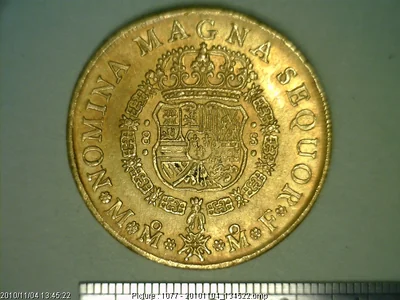
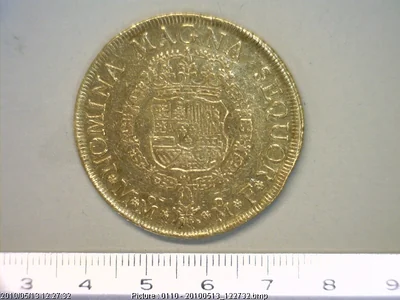
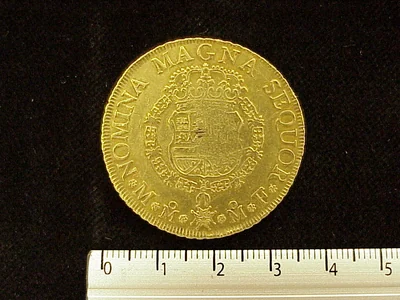
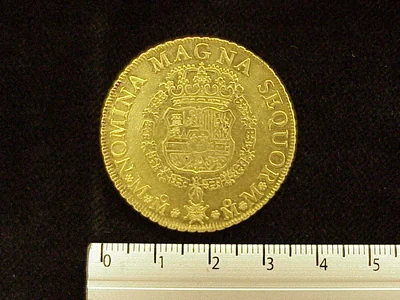
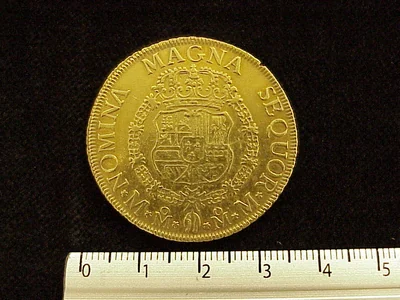
Eight escudos, Fernando VI, 1753, Mexico mint, assayer MF, Krause KM#151. That year the Concordat with the Holy See was signed in Madrid, reinforcing royal patronage over the Spanish Church and guaranteeing the crown the appointment of most ecclesiastical benefices. In New Spain the Count of Revillagigedo continued as viceroy (1746-1755), in the final phase of his government. Krause references KM#151 as the second pillar type of Fernando VI in force between 1752 and 1755. The ounce weighs 27.06 theoretical grams with a fineness of 0.916. Produced by mill with a standardized round flan. The reverse keeps the classic pillar design with the crowned Pillars of Hercules and PLVS VLTRA. MF signature of the capital's workshop assayers, a mark sustained through more than a decade of work at the mint. The Royal Tribunal of Accounts of Mexico kept a precise record that year of the gold production sent to the peninsula. The piece is representative of the mint's stable cycle in the mid-18th century, when the mill already operated with consolidated precision.
This piece belongs to the era
Colonial / Virreinato →Explore all the Mexican coins of this era, their historical context and how they connect to the monetary system of the period.
Value range of this piece
Market estimate: $51,327 - $86,446 MXN depending on the grade of preservation (typical range between a circulated and an uncirculated piece).
See the full breakdown by grade (VG, F, VF, EF, AU, MS-60, MS-63, MS-65) for the whole series →
Same denomination, other years
8 escudos Oro 0.875 (21k) · Escudos Coloniales (oro)
Frequently asked questions
How much is an 8 Escudos Fernando VI 1753 worth?
It has a hard floor at its gold content, about 0.68 troy ounces of pure gold, which is well over 1,500 US dollars at current spot prices. A heavily worn example sells near melt, an honest circulated coin brings melt plus a premium, and a high-grade certified example can reach several thousand dollars. For a firm number, have your specific coin graded by NGC or PCGS.
Is the 8 Escudos Fernando VI 1753 rare?
There is no firm official mintage figure for this exact issue, which is common for colonial gold and does not by itself make it ultra-rare. Value depends far more on condition and demand than on scarcity. A well-preserved, certified example is genuinely sought after; a worn one trades mainly on its gold content.
How do I tell if my 8 Escudos Fernando VI 1753 is genuine?
Weigh and measure it first: a real coin is 26.99 grams and about 36 mm across, with a reeded, incuse (lettered) edge. Fakes are usually lower-purity or plated and miss the weight. For a coin worth this much, send it to NGC or PCGS for certification, which confirms authenticity and sets the grade.
Where can I sell an 8 Escudos Fernando VI 1753?
Sell through a reputable coin dealer or an established auction house that handles colonial gold, or connect with collectors in the Pesoteca buy/sell forum. Get the coin graded first, photograph the front, back, and edge, and skip the pawn shop and cash-for-gold counters, which pay closer to scrap than collector value.
Conversation
0 comments
Sources
Images for informational and educational purposes, attributed to their original source. Reference values; the real price depends on the grade, the specific variant and demand.
Loading comments…