
1809 Mexican 8 Reales with Countermarks: Value & Silver
The 1809 Mexican 8 Reales with Countermarks: Value & Silver is worth between $720 and $3,030 MXN depending on its grade of preservation.
Prices updated: August 2026
Independence · Mexico City Mint · Assayer TH
Independence · Mexico City Mint · Assayer TH
The 1809 Mexican 8 Reales with Countermarks: Value & Silver is worth between $720 and $3,030 MXN depending on its grade of preservation.
Prices updated: August 2026
How much is the 1809 Mexican 8 Reales with Countermarks: Value & Silver worth?
The estimated value of the 1809 Mexican 8 Reales with Countermarks: Value & Silver ranges from $720 (circulated, XF) up to $3,030 (official blister pack), with $2,190 as a reference for an uncirculated (UNC) piece. The estimate is based on the official mintage and the historical behavior of the family.
The real price depends on four factors: the grade of preservation (a circulated piece is worth the low end of the range; an uncirculated one, or one still in its official blister pack, the high end), the finish (satin vs mirror/proof), the rarity within the series based on the mintage, and the metal spot price on the day of the deal when the piece is silver or gold. Check the value-by-grade table above and compare with equivalent pieces before buying or selling.
Where to buy or sell this coin?
Browse the national directory of numismatic shops or the community forum to trade directly with other collectors.
Description
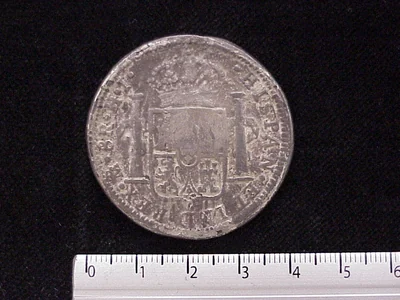
Most old Spanish colonial coins are worth their silver plus a modest collector premium, but the 1809 Mexico City 8 Reales carries real history in your hand. A common circulated example trades in the range of 50 to 150 dollars. Add genuine, identifiable countermarks and a high grade, and the same coin can climb into the hundreds or more.
If you inherited one of these heavy silver coins, here is the straight answer on what drives its value, how to tell if it is real, and where to sell it.
What you actually have
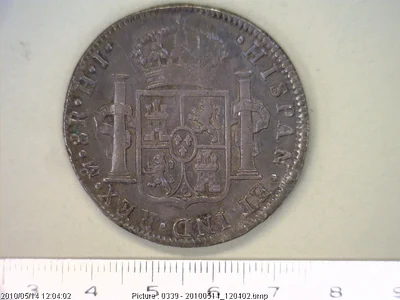
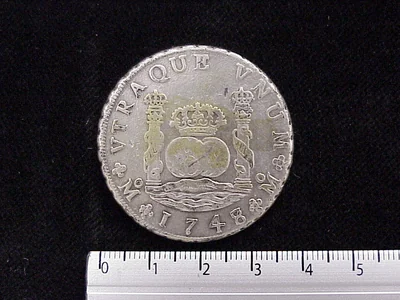
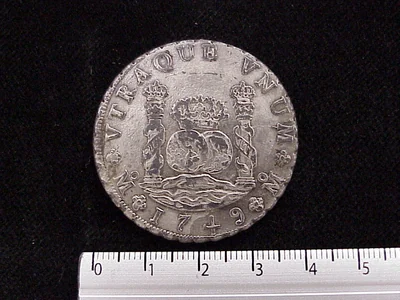
This is an 8 Reales, the famous "Spanish dollar" or "piece of eight" struck in Mexico City (then Nueva España, colonial New Spain) in 1809 under Spanish rule. It was the world's trade coin for centuries and circulated everywhere from China to the early United States.
The hard specs, which never change:
- Metal: silver, .900 fine (90 percent pure silver)
- Weight: 26.15 grams
- Diameter: 38 mm
- Edge: incuse (patterned, not smooth)
- Mint: Mexico City (Casa de Moneda de México)
- Assayer: TH
- Date: 1809
The countermarks (in Spanish, resellos or contramarcas) are the key feature here. These are small stamps punched into the coin after it left the mint, applied by another government or authority to approve the coin for circulation in their territory. A countermarked 8 Reales tells you where the coin traveled after 1809.
What it is worth
Value splits into two parts: the silver floor and the collector premium.
Silver floor. At 26.15 grams of .900 silver, the coin contains roughly 0.756 troy ounces of pure silver. That sets a hard bottom under the price that moves with the silver spot market. No genuine example sells below its melt value.
Collector premium. This is where the range widens. Grade, eye appeal, and the specific countermark decide the number.
| Type | Condition | Typical value (USD) |
|---|---|---|
| 1809 8 Reales, no countermark | Worn (Good to Fine) | 40 to 90 |
| 1809 8 Reales, no countermark | Higher grade (XF to AU) | 100 to 300+ |
| 1809 8 Reales, common countermark | Any grade | 60 to 200 |
| 1809 8 Reales, rare/documented countermark | Verified | Several hundred to 1,000+ |
The ranges are honest, not exact quotes, because a countermarked coin is only as valuable as the market's ability to identify the mark. A generic worn stamp adds little. A verified countermark from a documented issuing authority (some Asian or Caribbean marks are collected in their own right) can add serious money on top of the base coin.
The countermark myth
A countermarked silver coin looks damaged to an untrained eye, and some sellers dump them cheap. Others swing the opposite way and claim any stamp makes the coin "priceless." Neither is true.
What matters is whether the countermark is genuine and identifiable. Fake countermarks added later to boost value are common. A real, attributable mark from a known issuing authority adds a premium; an unreadable or fabricated one adds nothing and can actually hurt the sale.
How to tell if yours is genuine
Start with the physical checks, since counterfeits usually fail on weight and dimensions.
- Weigh it. A genuine coin is 26.15 grams. Anything meaningfully lighter or heavier is a red flag.
- Measure it. 38 mm across.
- The ping test. Balance the coin on a fingertip and tap it gently. Real .900 silver rings with a clear, sustained high tone. Fakes made of base metal or plated copies sound dull and short.
- Look at the edge. It should be incuse (patterned), not smooth or seamed.
These tests catch obvious fakes but not skilled ones, and they do not tell you if a countermark is authentic. For a coin worth more than a couple hundred dollars, professional grading is the only real insurance. Send it to NGC or PCGS, the two major US grading services. A certified coin in a sealed holder sells faster and for more, and their experts will confirm both the coin and the countermark.
Where to sell it
You have a few solid options in the US market:
- Established coin dealers. A reputable dealer will appraise it on the spot. World and colonial coins are a specialty, so look for one who handles them.
- Major auction houses. For a rare countermark or a high grade, Heritage Auctions or Stack's Bowers reach the collectors who pay the most for colonial silver.
- Collector marketplaces. Vetted numismatic groups and forums put you in front of buyers who understand what a countermark is worth.
Wherever you sell, photograph the obverse, the reverse, and the edge in good light, and note the exact weight. Buyers of precious-metal coins expect to verify before paying, and clear photos of the countermark are what separate a low offer from a strong one.
Avoid selling for melt value alone unless the coin is badly worn. A common online marketplace is also where the most counterfeits circulate, so if you buy or trade there, insist on edge and weight photos.
Related pages
This coin belongs to the 8 Reales colonial series. You can also browse the wider Colonial / Viceroyalty era, other Mexican 8 Reales, and other coins dated 1809.
Got one of these in a box of inherited coins and not sure if the countermark is real? Post clear photos of both sides and the edge in the Pesoteca forum and let collectors who know colonial silver take a look before you sell.
Historical context
This piece belongs to the category of counterstamps and countermarks applied to already-struck pieces of eight, a practice used by both insurgents and royalists during the War of Independence.
The government of New Spain in 1809 was in the hands of Pedro de Garibay and then Francisco Javier de Lizana y Beaumont, interim governments during the dynastic crisis.
The piece belongs to the category of counterstamps and countermarks, punches applied to already-struck pieces of eight to officially revalidate them, move them to another jurisdiction, or mark them with an insurgent or royalist symbol. Each counterstamp carries a political reading: the crowned M of Morelos, the Zongolica seal, the M.V.A., and other families documented by colonial catalogs.
The declared minting origin is: counterstamp on a previously struck piece of eight. The TH initials accompanying the counterstamp identify the official or commander who authorized the remarking of the prior piece.
The Krause catalog references this piece under KM#200, useful for cross-checking the entry against international auction listings.
A year of provisional issue during the dynastic crisis, with the Mexico City mint continuing its work under interim authorities.
This piece belongs to the era
Colonial / Virreinato →Explore all the Mexican coins of this era, their historical context and how they connect to the monetary system of the period.
Value range of this piece
Market estimate: $720 - $3,030 MXN depending on the grade of preservation (typical range between a circulated and an uncirculated piece).
See the full breakdown by grade (VG, F, VF, EF, AU, MS-60, MS-63, MS-65) for the whole series →
Other denominations from 1809
8 Reales Coloniales · Plata 0.900
Same denomination, other years
8 reales Plata 0.900 · 8 Reales Coloniales
Frequently asked questions
How much is an 1809 Mexican 8 Reales with countermarks worth?
It depends heavily on grade and the countermark. A worn example without a special mark runs roughly 40 to 90 dollars, close to its silver value. Higher grades reach 100 to 300 dollars or more, and a verified rare countermark can push the coin into the several-hundred to over-1,000 dollar range. Certified coins graded by NGC or PCGS always sell for more than raw ones.
How do I tell if my 1809 8 Reales is genuine?
A real one weighs 26.15 grams and measures 38 mm. If yours is off on either, be suspicious. Balance it on a fingertip and tap it: genuine .900 silver rings with a clear, sustained high tone, while fakes sound dull and short. The edge should be incuse (patterned), not smooth. For anything valuable, professional grading by NGC or PCGS is the only sure verification, and they will also confirm whether the countermark is authentic.
Where can I sell an 1809 Mexican 8 Reales?
Reputable coin dealers who handle world and colonial coins will appraise and buy it directly. For a rare countermark or a high grade, auction houses like Heritage or Stack's Bowers reach the top buyers. Vetted collector forums and numismatic groups are also strong. Always show the obverse, reverse, edge, and exact weight, and never dump a genuine coin at the first lowball offer.
Are the countermarks on this coin valuable or just damage?
It depends. A countermark is a small stamp added after the coin was minted, applied by an authority to approve it for circulation in their territory. A genuine, identifiable mark from a documented issuer can add a real premium. An unreadable, generic, or faked mark adds little and can even lower the sale. The difference is whether experts can attribute it, which is one reason NGC or PCGS certification helps.
Conversation
0 comments
Sources
Images for informational and educational purposes, attributed to their original source. Reference values; the real price depends on the grade, the specific variant and demand.
Loading comments…