
1809 Mexico 8 Reales Ferdinand VII: Value & Prices
The 1809 Mexico 8 Reales Ferdinand VII: Value & Prices is worth between $740 and $3,114 MXN depending on its grade of preservation.
Prices updated: August 2026
Viceroyalty · Mexico City Mint · Assayer HJ
Viceroyalty · Mexico City Mint · Assayer HJ
The 1809 Mexico 8 Reales Ferdinand VII: Value & Prices is worth between $740 and $3,114 MXN depending on its grade of preservation.
Prices updated: August 2026
How much is the 1809 Mexico 8 Reales Ferdinand VII: Value & Prices worth?
The estimated value of the 1809 Mexico 8 Reales Ferdinand VII: Value & Prices ranges from $740 (circulated, XF) up to $3,114 (official blister pack), with $2,251 as a reference for an uncirculated (UNC) piece. The estimate is based on the official mintage and the historical behavior of the family.
The real price depends on four factors: the grade of preservation (a circulated piece is worth the low end of the range; an uncirculated one, or one still in its official blister pack, the high end), the finish (satin vs mirror/proof), the rarity within the series based on the mintage, and the metal spot price on the day of the deal when the piece is silver or gold. Check the value-by-grade table above and compare with equivalent pieces before buying or selling.
Where to buy or sell this coin?
Browse the national directory of numismatic shops or the community forum to trade directly with other collectors.
Description
Most 1809 Mexican 8 reales coins are worth between USD 30 and USD 150 in typical circulated condition. That is real money, but not a fortune, and the value comes from two things: the silver inside and the grade. Here is what your coin is actually worth and how to check it.
If you inherited or found one of these large silver dollars with a stern-looking bust and "FERDIN VII" around the rim, you have a genuine piece of colonial history struck in Mexico City in 1809. It is real silver. The question is how much that silver, plus any collector premium, adds up to today.
What this coin is
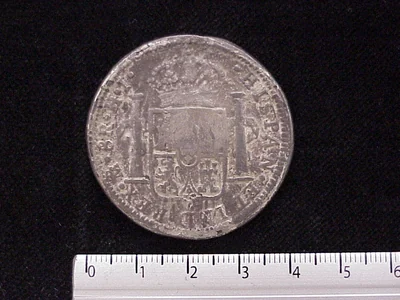
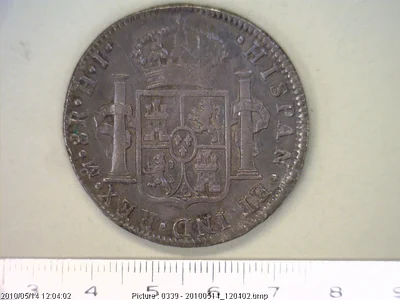
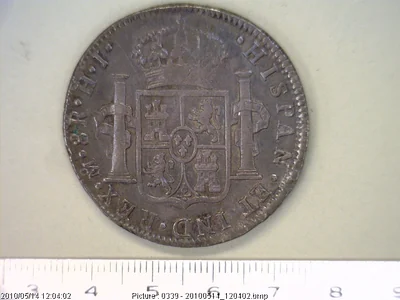
The 8 reales was the Spanish colonial silver dollar, the direct ancestor of the US dollar. This one carries the portrait of Ferdinand VII (Fernando VII in Spanish), King of Spain, and was minted at the Mexico City mint (the "Mo" mint mark) during the Viceroyalty, before Mexico became independent. The assayer initials on this issue are HJ.
Real specifications (verify yours against these):
- Weight: 26.87 grams
- Diameter: 40 mm
- Metal: Silver, .900 fine (90% pure silver)
- Edge: Incuse (recessed lettering/design on the edge)
- Year: 1809, Mexico City mint
That gives it roughly 0.778 troy ounces of pure silver, so it always has a floor value tied to the silver spot price. Even a worn, common example will never be worth less than its melt value.
What it is actually worth
Because silver moves daily, the melt value shifts, but the collector value follows a clear pattern by condition.
| Condition | What it looks like | Approx. value (USD) |
|---|---|---|
| Heavily worn / holed / cleaned | Flat details, scratches, shiny from cleaning | Melt value, about USD 25 to 35 |
| Good circulated (VF) | Portrait and legends readable, honest wear | USD 40 to 90 |
| Lightly circulated (XF/AU) | Sharp details, minor rub | USD 100 to 250 |
| Mint state (certified UNC) | Full detail, no wear, graded by NGC/PCGS | USD 300 to 900+ |
Two warnings that cost people money:
- Cleaning destroys value. A wiped or polished coin loses its natural surface and the premium collectors pay. Never clean an old silver coin. A dirty original coin beats a shiny cleaned one every time.
- The bust type matters. Very early Ferdinand VII issues used an "imaginary" or armored bust before the real royal portrait arrived from Spain. Certain die varieties command higher prices, but only a certified grader can confirm them. For most owners, the standard 1809 is the standard 1809.
The myth: "it's over 200 years old, so it's worth a fortune"
Age alone does not make a coin valuable. These 8 reales were struck by the millions and traded worldwide for decades, so plenty survive. What drives real premiums is grade (an untouched mint-state example) and, occasionally, a rare die variety verified by NGC or PCGS. A common circulated 1809 in average shape is a nice historical piece worth tens of dollars, not thousands. Anyone telling you a worn one is worth a small fortune is guessing or selling.
How to check what yours is worth
Weigh and measure it first. A genuine coin weighs 26.87 grams and measures 40 mm. If yours is noticeably light or the wrong size, it may be a replica or a lower-silver counterfeit. Period counterfeits and modern fakes both exist for this series.
Do the ping test. Balance the coin on a fingertip and tap it lightly with another coin. Real .900 silver rings with a clear, high, sustained tone. A fake or base-metal copy sounds dull and short.
Grade honestly. Compare your coin to a grading guide before assuming it is "mint." If it has been in a drawer for a century, it is almost certainly circulated. Our Mexican coin grading guide walks through the levels.
Certify high-value pieces. If your coin looks sharp with little to no wear, sending it to NGC or PCGS is worth it. A certified grade both confirms authenticity and unlocks the top of the price range. A raw "looks uncirculated" coin sells for far less than the same coin in a graded holder.
Where to sell it
For a coin this size and value, sell where buyers can verify it in person or through a trusted channel:
- A verified dealer from the Pesoteca shop directory can value it on the spot and pay fair market rather than a lowball offer.
- The Pesoteca buy/sell forum connects you with collectors who actually want colonial 8 reales.
- US-based auction houses (Heritage, Stack's Bowers) handle high-grade or rare-variety examples and reach international bidders.
Wherever you sell, photograph the front, back, and edge clearly, and note the exact weight. Serious buyers ask for all three. Avoid dumping it to the first offer on general marketplaces, where fakes are common and prices are lowest.
This coin belongs to the broader colonial 8 reales series. If you have a full run of dates or an unusual variety, the collection can be worth considerably more than the pieces sold one by one.
Have one in hand and not sure what grade it is? Post clear photos of both sides and the edge in the Pesoteca forum and let collectors weigh in before you sell.
Historical context
This piece belongs to the reign of Fernando VII of Spain (1808-1833). Son of Carlos IV. In 1808 he was forced to abdicate to Napoleon, and was held captive until 1814. Under his reign almost all of the American colonies were lost.
The government of New Spain in 1809 was in the hands of Pedro de Garibay and later Francisco Javier de Lizana y Beaumont, interim governments during the dynastic crisis.
The numismatic type of the piece is bust, introduced in 1772 under Carlos III. The obverse shows the king's portrait in the neoclassical style and the reverse the crowned royal shield with the Order of the Golden Fleece. The edge is laureate or corded and all examples were struck on a screw press, with Latin legends spelling out the monarch's titles and dignities.
The Mexico mint had migrated to the bust pattern in 1772. Under Carlos III and Carlos IV the highest annual production of struck silver in the viceroyalty was recorded, fueling trade with the Philippines via the Manila Galleon and the payment of the situado to the Antilles. The assayer's initials declared on the piece are HJ, an official of the Royal Treasury charged with certifying the silver fineness (0.930 and later 0.903) per the viceregal standard.
The Krause catalog references this piece under KM#110, useful for cross-checking the entry against international auction listings.
A provisional year of issue during the dynastic crisis, with the Mexico mint continuing operations under interim authorities.
This piece belongs to the era
Colonial / Virreinato →Explore all the Mexican coins of this era, their historical context and how they connect to the monetary system of the period.
Value range of this piece
Market estimate: $740 - $3,114 MXN depending on the grade of preservation (typical range between a circulated and an uncirculated piece).
See the full breakdown by grade (VG, F, VF, EF, AU, MS-60, MS-63, MS-65) for the whole series →
Other denominations from 1809
8 Reales Coloniales · Plata 0.900
Same denomination, other years
8 reales Plata 0.900 · 8 Reales Coloniales
Frequently asked questions
How much is an 1809 Mexico 8 reales Ferdinand VII worth?
In average circulated condition, roughly USD 40 to 90. A worn or cleaned example is worth close to its silver melt value, about USD 25 to 35. A sharp, lightly circulated coin runs USD 100 to 250, and a certified mint-state example can reach USD 300 to 900 or more. Grade and original surfaces drive the price, so never clean it.
Is the 1809 8 reales rare?
Not especially. These colonial silver dollars were struck in large numbers and circulated worldwide, so many survive in circulated grades. Rarity and high value come from truly uncirculated examples and specific die varieties confirmed by NGC or PCGS. A common circulated 1809 is a historical piece worth tens of dollars, not a rare treasure.
How can I tell if my 1809 8 reales is genuine?
A real one weighs 26.87 grams and measures 40 mm in .900 silver. Check those first: wrong weight or size points to a fake. Try the ping test, balance it on a fingertip and tap it lightly; genuine silver rings clear and long while fakes sound dull and short. For a valuable example, certification by NGC or PCGS is the definitive proof of authenticity.
Where can I sell an 1809 8 reales for the best price?
Use a verified dealer from the Pesoteca shop directory for an on-the-spot valuation, or the Pesoteca buy/sell forum to reach collectors who want colonial 8 reales. High-grade or rare-variety coins do best at established auction houses like Heritage or Stack's Bowers. Always share clear photos of both sides and the edge, plus the exact weight, and avoid selling to the first lowball offer.
Conversation
0 comments
Sources
Images for informational and educational purposes, attributed to their original source. Reference values; the real price depends on the grade, the specific variant and demand.
Loading comments…