
8 Reales Fernando VI 1748: What It's Worth Today
The 8 Reales Fernando VI 1748: What It's Worth Today is worth between $731 and $3,078 MXN depending on its grade of preservation.
Prices updated: August 2026
Viceroyalty · Mexico City Mint · Assayer MF
Viceroyalty · Mexico City Mint · Assayer MF
The 8 Reales Fernando VI 1748: What It's Worth Today is worth between $731 and $3,078 MXN depending on its grade of preservation.
Prices updated: August 2026
How much is the 8 Reales Fernando VI 1748: What It's Worth Today worth?
The estimated value of the 8 Reales Fernando VI 1748: What It's Worth Today ranges from $731 (circulated, XF) up to $3,078 (official blister pack), with $2,225 as a reference for an uncirculated (UNC) piece. The estimate is based on the official mintage and the historical behavior of the family.
The real price depends on four factors: the grade of preservation (a circulated piece is worth the low end of the range; an uncirculated one, or one still in its official blister pack, the high end), the finish (satin vs mirror/proof), the rarity within the series based on the mintage, and the metal spot price on the day of the deal when the piece is silver or gold. Check the value-by-grade table above and compare with equivalent pieces before buying or selling.
Where to buy or sell this coin?
Browse the national directory of numismatic shops or the community forum to trade directly with other collectors.
Description
If you inherited or found an 8 reales Fernando VI dated 1748, here is the straight answer: a worn, circulated example typically sells in the range of 150 to 400 USD, while a sharp, high-grade certified piece can reach several thousand dollars. This is genuine Spanish colonial silver struck in Mexico City, and it has real value both as a collector coin and as bullion.
Don't let the word "colonial" make you assume automatic riches. Most surviving examples are heavily circulated and worth a few hundred dollars, not a fortune. What separates a 300 USD coin from a 3,000 USD coin is condition, authenticity, and eye appeal. Below is what actually drives the number.
What this coin is
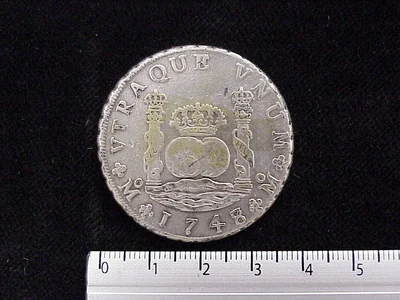
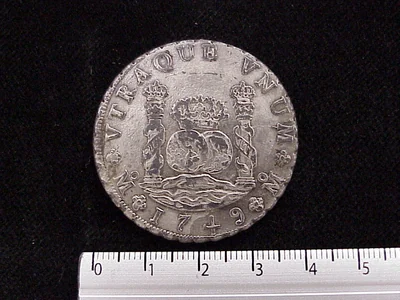
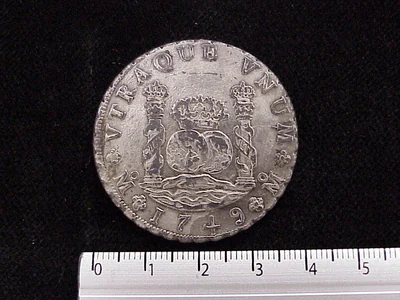
The 8 reales was the standard large silver coin of the Spanish colonial world, the ancestor of the modern silver dollar. Yours was struck in 1748 during the reign of Fernando VI (Ferdinand VI of Spain), at the Mexico City mint (the oldest mint in the Americas), with assayer mark MF. It belongs to the colonial 8 reales series.
These coins circulated across the globe, from Europe to Asia, which is why they show up in inheritances and old collections far outside Mexico.
The specs (verify yours against these)
| Spec | Value |
|---|---|
| Denomination | 8 Reales |
| Year | 1748 (single date) |
| Mint | Mexico City |
| Assayer | MF |
| Metal | Silver .900 fine |
| Weight | 26.56 grams |
| Diameter | 40 mm |
| Edge | Laurel (decorated) |
If your coin does not match the weight and diameter closely, that is your first warning sign. Genuine .900 silver at 26.56 grams is heavy and dense for its size.
What it's worth by condition
Value on colonial 8 reales moves sharply with grade. Rough guidance in USD:
| Condition | Approximate value (USD) |
|---|---|
| Heavily worn / damaged | 100 to 200 |
| Circulated, clear details | 200 to 500 |
| Lightly circulated, strong detail | 500 to 1,200 |
| Uncirculated / certified high grade | 1,500 and up |
These are ranges, not fixed prices. Colonial coins vary enormously in strike quality, and problems like cleaning, holes, mounts, or corrosion can cut the value in half or more. A coin that has been polished to look shiny is worth less than the same coin left original, which surprises most first-time sellers.
Because it is .900 silver weighing 26.56 grams, this coin also has a bullion floor: it will never be worth less than its silver melt value, roughly 0.77 troy ounces of pure silver. That is the safety net under the numismatic price.
How to tell if yours is genuine
Colonial silver is faked, so check before you celebrate.
- Weigh it and measure it. Should hit 26.56 grams and 40 mm. Underweight or thin usually means a fake or a low-silver copy.
- Look at the edge. A genuine piece has a laurel (decorated) edge. A plain or seam-lined edge is a red flag.
- The ping test. Real silver rings with a high, sustained tone when balanced on a fingertip and tapped gently. Fakes sound dull and short.
- Get it certified for anything valuable. If you think you have a high-grade or scarce example, submitting it to NGC or PCGS is the definitive answer. A certified coin also sells for more and faster.
Use the Mexican coin grading guide to place your coin on the condition scale before you get a quote.
Where to sell it
For a coin in this value range, your best options are a verified dealer or the collector market:
- A verified numismatic shop from the Pesoteca directory will appraise it on the spot and pay based on real grade.
- The Pesoteca buy-and-sell forum puts you in front of collectors who actually want colonial silver.
Photograph the front, back, and edge in good light before you show it to anyone. Because this is precious metal, only deal with buyers who can verify weight in front of you, and never accept the first lowball offer on a general marketplace. If your piece grades high or looks certified-worthy, get it graded first; the fee pays for itself.
Have a Fernando VI 8 reales sitting in a drawer and not sure what grade it is? Post clear photos in the Pesoteca forum and let collectors weigh in before you sell.
Historical context
This piece belongs to the reign of Ferdinand VI of Spain (1746-1759). Son of Philip V. His reign was marked by neutrality in the European conflicts and by enlightened reforms in Spain and the Indies.
The government of New Spain in 1748 was in the hands of Juan Francisco de Güemes y Horcasitas, Count of Revillagigedo, the first viceregal term of the Güemes family.
The piece's numismatic type is pillar (columnario), officially introduced in New Spain in 1732. The reverse shows two crowned globes between the Pillars of Hercules with the motto PLVS VLTRA, and for the first time the coin was struck on a screw press with a laureate edge, which reduced the fraudulent clipping of silver and made the pillar real the most trusted trade coin of its time.
The Mexico mint formally introduced the mechanized striking of pillar reales in 1732, and from then on the crowned Mo mark was accompanied by the assayer's initials. Production was enormous, exported as money of account to the Philippines, China, Protestant Europe, and the 13 English colonies. The assayer initials declared on the piece are MF, an official of the Royal Treasury charged with certifying the silver fineness (0.930 and later 0.903) under viceregal standard.
The Krause catalog references this piece under KM#104.1, useful for cross-checking the record against international auction listings.
This was the year of the signing of the Peace of Aix-la-Chapelle that ended the War of the Austrian Succession, with New Spain relatively on the sidelines.
This piece belongs to the era
Colonial / Virreinato →Explore all the Mexican coins of this era, their historical context and how they connect to the monetary system of the period.
Value range of this piece
Market estimate: $731 - $3,078 MXN depending on the grade of preservation (typical range between a circulated and an uncirculated piece).
See the full breakdown by grade (VG, F, VF, EF, AU, MS-60, MS-63, MS-65) for the whole series →
Other denominations from 1748
8 Reales Coloniales · Plata 0.900
Same denomination, other years
8 reales Plata 0.900 · 8 Reales Coloniales
Frequently asked questions
How much is an 8 reales Fernando VI 1748 worth?
It depends heavily on condition. A heavily worn example runs about 100 to 200 USD, a clearly detailed circulated coin 200 to 500 USD, and an uncirculated or certified high-grade piece can reach 1,500 USD and up. As .900 silver, it always holds a bullion floor. For a precise number, have your exact coin appraised by a verified dealer.
Is the 8 reales Fernando VI 1748 rare?
It is scarce but not extremely rare. These circulated worldwide for decades, so many survive, mostly in worn condition. The rarity that commands premiums is high grade: a well-preserved, uncirculated 1748 example is genuinely hard to find and that is where the strong prices come from.
How do I tell if my 8 reales Fernando VI 1748 is genuine?
Weigh it (should be 26.56 grams) and measure it (40 mm). Check for the laurel decorated edge. Do the ping test: real silver rings high and long, fakes sound dull and short. For anything you think is valuable, certification by NGC or PCGS is the definitive confirmation and raises the resale value.
Where can I sell an 8 reales Fernando VI 1748?
The safest routes are a verified numismatic shop from the Pesoteca directory, which appraises it on the spot, or the Pesoteca buy-and-sell forum among collectors. Photograph the front, back, and edge, check the grade first, and avoid dumping it to the first buyer on a general marketplace where fakes are common.
Conversation
0 comments
Sources
Images for informational and educational purposes, attributed to their original source. Reference values; the real price depends on the grade, the specific variant and demand.
Loading comments…