
8 Reales Fernando VII 1809: Silver Value & Prices
The 8 Reales Fernando VII 1809: Silver Value & Prices is worth between $740 and $3,114 MXN depending on its grade of preservation.
Prices updated: August 2026
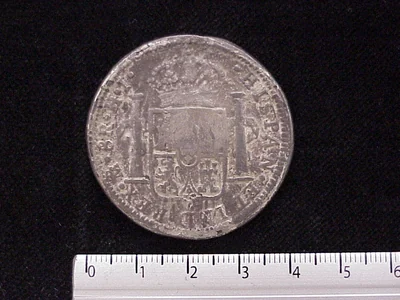
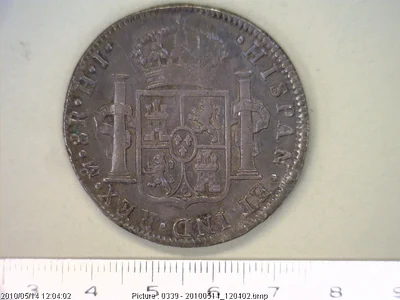
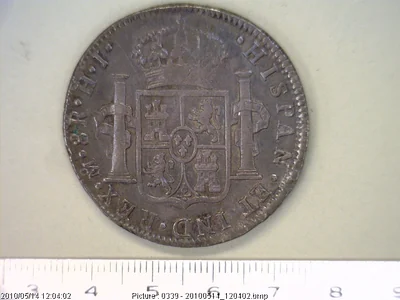
First type; armored bust.
First type; armored bust.
The 8 Reales Fernando VII 1809: Silver Value & Prices is worth between $740 and $3,114 MXN depending on its grade of preservation.
Prices updated: August 2026
How much is the 8 Reales Fernando VII 1809: Silver Value & Prices worth?
The estimated value of the 8 Reales Fernando VII 1809: Silver Value & Prices ranges from $740 (circulated, XF) up to $3,114 (official blister pack), with $2,251 as a reference for an uncirculated (UNC) piece. The estimate is based on the official mintage and the historical behavior of the family.
The real price depends on four factors: the grade of preservation (a circulated piece is worth the low end of the range; an uncirculated one, or one still in its official blister pack, the high end), the finish (satin vs mirror/proof), the rarity within the series based on the mintage, and the metal spot price on the day of the deal when the piece is silver or gold. Check the value-by-grade table above and compare with equivalent pieces before buying or selling.
Where to buy or sell this coin?
Browse the national directory of numismatic shops or the community forum to trade directly with other collectors.
Description
If you inherited an old Spanish-Mexican silver dollar dated 1809 with a portrait, you likely have an 8 Reales of Fernando VII struck at the Mexico City mint. Most examples trade from about 40 to 150 USD, driven mainly by the silver in the coin. High-grade or scarce first-year pieces can bring several hundred dollars or more.
What you actually have
The 8 Reales was the workhorse silver coin of the Spanish Empire, and for a long stretch it was the most widely circulated trade coin on the planet. The Mexico City mint (ceca de México) was the largest producer of them anywhere. Your 1809 piece belongs to the reign of Fernando VII, king of Spain, and to the first design type showing an armored bust of the king.
Catalog reference: KM#110. Look for the letters HJ on the coin. Those are the initials of the assayer (the mint official responsible for certifying the fineness of the silver), which help confirm the piece and the year.
Technical specs (keep these to check yours)
- Metal: silver, 0.900 fineness
- Weight: 26.87 g
- Diameter: 40 mm
- Edge: incuse (impressed lettering/design, not a plain smooth rim)
- Mint: Mexico City
- Assayer: HJ
- Catalog: KM#110
How much is it worth in USD?
Start with the metal. At 26.87 g of 0.900 silver, the coin contains roughly 0.778 troy ounces of pure silver. That gives every genuine example a floor value tied to the silver spot price, which is why no real 1809 8 Reales is "worth nothing." Even a heavily worn, cleaned example is worth its silver.
Above the melt floor, condition (grade) drives everything. This is not an ultra-rare coin: millions of 8 Reales were struck across the series. What people pay depends on how sharp the design is and whether the surfaces are original.
| Grade | Condition | Typical value (USD) |
|---|---|---|
| Good / Very Good | Heavy wear, still identifiable | 30 to 50 |
| Fine / Very Fine | Moderate wear, clear detail | 50 to 120 |
| Extremely Fine | Light wear, strong detail | 120 to 300 |
| About Uncirculated / Mint State | Little to no wear | 300 to 1,000+ |
These are broad market ranges for the type. A first-year 1809 in a certified high grade sits at the upper end. A cleaned or damaged coin sits below the range, closer to melt.
Why it is not "worth millions"
Old and valuable are not the same thing. The 8 Reales was made in enormous quantities for over a century, so survivors are common in worn grades. The value comes from silver content plus modest collector demand, not scarcity. If a listing or video tells you this coin is worth thousands in average condition, treat that as clickbait. The real money is only in top certified grades or verified varieties.
How to check what yours is worth
- Weigh and measure it. Use a jewelry scale and a caliper. A genuine piece should be close to 26.87 g and 40 mm. Fakes often miss the weight because base metals differ in density.
- Check the edge. The edge should be incuse. A plain smooth edge is a red flag for a cast counterfeit.
- Inspect the details. Look at the assayer initials (HJ), the mint mark, and the engraving style. Colonial silver is heavily counterfeited, so compare against verified reference images.
- Grade it honestly. More wear means less value. Never clean the coin; cleaning removes the original surface and can cut value in half.
- Get a second opinion. For anything you think might be high grade or a variety, post clear photos of the obverse, reverse, and edge in the Pesoteca forum so collectors can weigh in. For real money, consider third-party grading by NGC or PCGS.
Errors and varieties
Genuine mint errors (off-center strikes, die rotation, doubled strikes) can multiply value if they are verifiable. Most "errors" shared online are actually post-mint damage: dings, scratches, and corrosion, not factory mistakes. If you think you have a real error, get it reviewed before assuming it is worth a premium.
Where to sell it
Because this is a precious-metal coin, sell where the buyer inspects and weighs the piece in front of you. A verified coin dealer from the Pesoteca directory can appraise it on the spot without a middleman markup. The Pesoteca buy-and-sell forum connects you directly with collectors. Photograph the coin (obverse, reverse, and edge), check the ranges above, and do not dump it to the first Facebook offer.
Got an 1809 8 Reales in the drawer? Weigh it, photograph both sides, and post it in the Pesoteca forum to find out where your example lands.
Historical context
This piece belongs to the reign of Ferdinand VII of Spain (1808-1833). Son of Charles IV. In 1808 he was forced to abdicate to Napoleon, and was held captive until 1814. Under his reign almost all the American colonies were lost.
The government of New Spain in 1809 was in the hands of Pedro de Garibay and later Francisco Javier de Lizana y Beaumont, interim governments during the dynastic crisis.
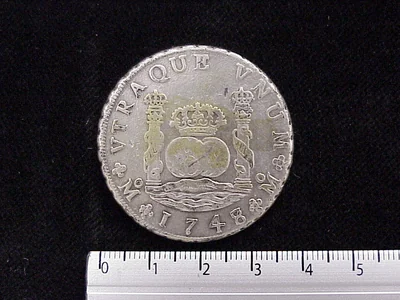
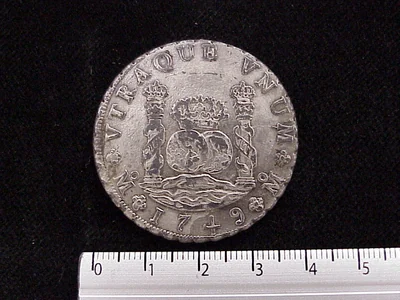
The numismatic type of the piece is bust, introduced in 1772 under Charles III. The obverse shows the portrait of the king in neoclassical fashion and the reverse the royal coat of arms crowned with the Golden Fleece. The edge is laureate or corded and all specimens were struck on a screw press, with Latin legends that spelled out the monarch's titles and dignities.
The Mexico mint had migrated to the bust standard in 1772. Under Charles III and Charles IV the greatest annual production of minted silver in the viceroyalty was recorded, feeding trade with the Philippines via the Manila Galleon and the payment of the situado to the Antilles. The dies were signed by the assayer of the Mexico mint active in the period, an official charged by the Royal Treasury with certifying that the silver fineness met the viceregal standard.
Colonial catalogs trace this piece within the families of the Mexico Real de a ocho, with prices that respond to rarity by year and assayer signature.
Provisional year of issue during the dynastic crisis, with the Mexico mint continuing operations under interim authorities.
This piece belongs to the era
Colonial / Virreinato →Explore all the Mexican coins of this era, their historical context and how they connect to the monetary system of the period.
Value range of this piece
Market estimate: $740 - $3,114 MXN depending on the grade of preservation (typical range between a circulated and an uncirculated piece).
See the full breakdown by grade (VG, F, VF, EF, AU, MS-60, MS-63, MS-65) for the whole series →
Other denominations from 1809
8 Reales Coloniales · Plata 0.900
Same denomination, other years
8 reales Plata 0.900 · 8 Reales Coloniales
Frequently asked questions
How much is an 1809 8 Reales Fernando VII worth?
Most examples sell for about 40 to 150 USD, with the value anchored by the roughly 0.778 troy ounces of silver in the coin. Worn or cleaned pieces sit near melt value, while a first-year 1809 in certified Extremely Fine or Mint State can bring 300 to 1,000 USD or more.
Is the 1809 8 Reales rare?
No, not in worn grades. Millions of 8 Reales were struck at the Mexico City mint, so common examples are easy to find. Value comes from silver content plus modest collector demand. Genuine high grades and verified varieties are where the scarcity, and the premium, actually lives.
Where can I sell my 1809 8 Reales?
The safest options are a [verified coin dealer from the Pesoteca directory](/tiendas), who can weigh and appraise it in person, or the [Pesoteca buy-and-sell forum](/foro/compra-venta) among collectors. Photograph the obverse, reverse, and edge, and check the price ranges above before you sell.
How do I tell if my 1809 8 Reales is genuine?
Weigh it (should be about 26.87 g) and measure the diameter (about 40 mm) with a caliper. Confirm the edge is incuse, not plain smooth. Check the assayer initials HJ, the mint mark, and the engraving style against verified images. Be suspicious of any offer far below the silver value.
Conversation
0 comments
Loading comments…