
8 Reales Felipe V (1713): What This Colonial Silver Coin Is Worth
The 8 Reales Felipe V : What This Colonial Silver Coin Is Worth is worth between $724 and $3,048 MXN depending on its grade of preservation.
Prices updated: August 2026
The 8 Reales Felipe V : What This Colonial Silver Coin Is Worth is worth between $724 and $3,048 MXN depending on its grade of preservation.
Prices updated: August 2026
How much is the 8 Reales Felipe V (1713): What This Colonial Silver Coin Is Worth worth?
The estimated value of the 8 Reales Felipe V (1713): What This Colonial Silver Coin Is Worth ranges from $724 (circulated, XF) up to $3,048 (official blister pack), with $2,203 as a reference for an uncirculated (UNC) piece. The estimate is based on the official mintage and the historical behavior of the family.
The real price depends on four factors: the grade of preservation (a circulated piece is worth the low end of the range; an uncirculated one, or one still in its official blister pack, the high end), the finish (satin vs mirror/proof), the rarity within the series based on the mintage, and the metal spot price on the day of the deal when the piece is silver or gold. Check the value-by-grade table above and compare with equivalent pieces before buying or selling.
Where to buy or sell this coin?
Browse the national directory of numismatic shops or the community forum to trade directly with other collectors.
Description
If you inherited or found an 8 Reales Felipe V dated 1713, you own a piece of the original "Spanish dollar," the coin that circulated worldwide for centuries. In worn but genuine condition it typically trades from around 100 to 400 USD; sharp, high-grade examples can reach several thousand. The metal alone (about 26.3 grams of .900 silver) gives it a floor of roughly 18 to 20 USD at melt.
That spread is real, and grade is what moves you across it. Below is what the coin actually is, what drives the price, and how to check yours before you sell.
What you actually have
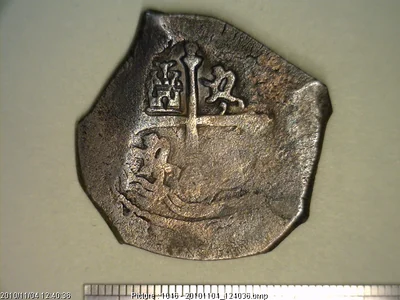
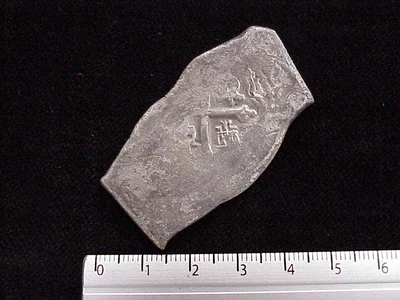
This is an 8 Reales struck in 1713 at the Casa de Moneda de México (the Mexico City Mint) under King Felipe V, the first Bourbon king of Spain. The catalog reference is KM#47. During this period Mexico was the busiest silver mint in the Spanish Empire, and its 8 Reales became the most widely circulated trade coin on earth, the direct ancestor of the US dollar sign and the term "piece of eight."
Key specs to verify against your coin:
- Metal: silver, .900 fine
- Weight: 26.3 grams
- Diameter: 34 mm
- Edge: plain (not reeded or lettered)
- Assayer initial: J (the mint official who certified the silver purity)
Early Bourbon 8 Reales from this window come in two broad styles: crude, irregularly struck "cobs" (cut and hammered by hand) and later milled pieces. The 1713 date sits in the transitional cob era, so many genuine examples look rough, off-round, and unevenly struck. That is normal and does not mean it is fake or worthless.
What it is worth in 2026
There is no single price. Three things set the number: whether it is genuine, how much detail survives (grade), and whether it is a plain type or a scarce assayer/date variety. Here is the honest range for a genuine, common example.
| Condition | What it looks like | Approx. value (USD) |
|---|---|---|
| Melt / heavily worn | Smooth, corroded, weak legends | 18 to 60 |
| Circulated (Fine to VF) | Readable date, shield and cross clear | 100 to 400 |
| High grade / choice cob | Full strike, sharp detail, good silver | 800 to 3,000+ |
| Certified rare variety | Scarce assayer, shipwreck pedigree, top pop | 3,000 and up |
Shipwreck coins matter here. Many colonial 8 Reales on the market were recovered from wrecks like the 1715 Fleet or the Nuestra Señora de Atocha. A documented shipwreck pedigree can add a premium, but it can also mean saltwater corrosion that lowers the grade. Certification tells you which.
Be realistic. The internet is full of "colonial silver worth a fortune" claims. Most surviving 8 Reales are common in worn grades and sell for a few hundred dollars at most. The four-figure and five-figure prices belong to sharp, certified, scarce pieces, not to an average worn coin from a drawer.
How to tell if yours is genuine
Counterfeits of Spanish colonial silver are everywhere, including modern cast copies and old-time forgeries. Run these checks before you spend money on grading:
- Weigh it. A genuine full-weight coin lands near 26.3 grams. A cob can be slightly light from clipping, but a piece far under (or over) is suspect.
- Measure it. Diameter should be about 34 mm. Cast fakes are often the wrong size or thickness.
- Check the edge. It should be plain. A reeded or lettered edge on a 1713 is wrong.
- Look at the surface. Cast counterfeits show a grainy, soapy texture and sometimes a seam around the rim. Struck coins have crisp, metallic detail.
- Read the assayer and mint marks. Genuine pieces carry a consistent style for the M mint mark and the J assayer. Mismatched or blobby lettering is a red flag.
- The magnet test. Silver is not magnetic. If it sticks, it is not silver.
If it passes these and looks scarce or high grade, send it to NGC or PCGS for authentication and grading. A certified coin sells faster and for more, and it removes the buyer's doubt.
Where to sell it
Sell where the buyer can see the coin in hand and verify the weight before money changes hands.
- A verified numismatic shop from the Pesoteca directory will appraise it on the spot, city by city, without a middleman markup.
- The Pesoteca buy-and-sell forum puts you in front of collectors who know exactly what a 1713 8 Reales is.
- For a high-grade or certified piece, a major auction house (Heritage, Stack's Bowers) reaches the international bidders who pay the top figures.
Photograph the obverse, reverse, and edge in good light before listing. Never accept an offer far below the silver value, and never ship first to a stranger. If someone lowballs you at melt on a clearly collectible coin, walk away.
Have a 1713 8 Reales or another colonial silver piece and want a read on the grade before you sell? Post clear photos of both sides on the Pesoteca forum and let collectors weigh in.
Historical context
This piece belongs to the reign of Felipe V of Spain (1700-1746). First king of the House of Bourbon in Spain, grandson of Louis XIV of France. His first period of reign (1700-1724) lasted until his abdication in favor of Luis I.
The government of New Spain in 1713 was in the hands of Fernando de Alencastre, duke of Linares, the close of the cycle of the War of Succession.
The numismatic type of the piece is cob, also called hammer-cut coin. The planchets were cut with shears from a silver bar and struck between manual dies, so no cob has an edge or a perfectly circular shape. It circulated as a reference trade coin throughout the Atlantic for more than two centuries.
The Mexico mint had been striking cobs almost uninterruptedly since the sixteenth century. The last years before the pillar reform of 1732 saw an increase in the volume of registered silver, driven by European demand and by the mines of Zacatecas and Guanajuato. The dies were signed by the Mexico mint assayer active in the period, an official charged by the Royal Treasury with certifying that the silver fineness met the viceregal standard.
The colonial catalogs trace this piece within the families of the Mexican piece of eight, with prices that respond to rarity by year and assayer signature.
Year of the signing of the Treaty of Utrecht, which consolidated Felipe V on the Spanish throne in exchange for territorial losses.
This piece belongs to the era
Colonial / Virreinato →Explore all the Mexican coins of this era, their historical context and how they connect to the monetary system of the period.
Value range of this piece
Market estimate: $724 - $3,048 MXN depending on the grade of preservation (typical range between a circulated and an uncirculated piece).
See the full breakdown by grade (VG, F, VF, EF, AU, MS-60, MS-63, MS-65) for the whole series →
Other denominations from 1713
8 Reales Coloniales · Plata 0.900
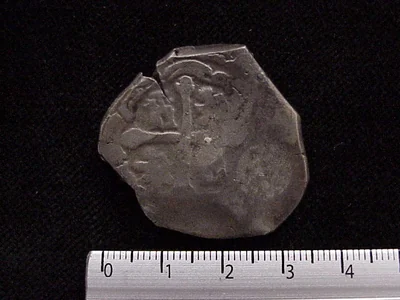
Same denomination, other years
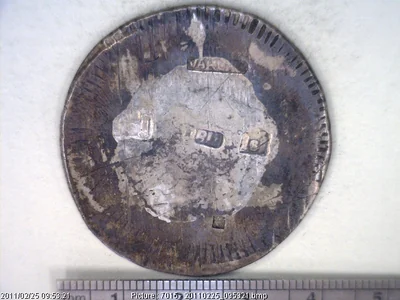
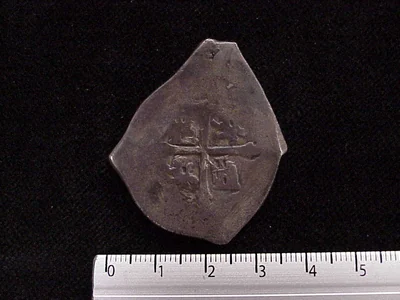
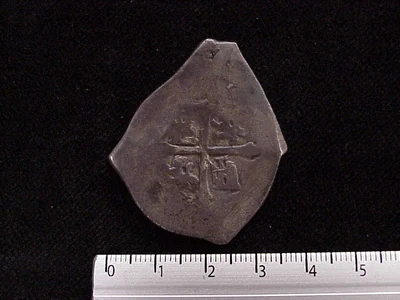
8 reales Plata 0.900 · 8 Reales Coloniales
Frequently asked questions
How much is an 8 Reales Felipe V 1713 worth?
A genuine, worn example generally sells for 100 to 400 USD, with heavily corroded pieces near their melt value of about 18 to 20 USD (26.3 grams of .900 silver). Sharp, high-grade, or certified coins can reach 800 to several thousand dollars. Grade, authenticity, and any shipwreck pedigree set the final figure.
Is the 1713 8 Reales rare?
In worn grades it is fairly common; the Mexico Mint produced enormous quantities of 8 Reales, and many survived, including shipwreck recoveries. What is scarce is a genuine example in sharp, high grade or with a rare assayer variety. Those command the big prices, while average circulated coins stay in the low hundreds.
Where can I sell my 8 Reales Felipe V 1713?
Sell to a [verified numismatic shop in the Pesoteca directory](/tiendas) for an on-the-spot appraisal, or list it on the [Pesoteca buy-and-sell forum](/foro/compra-venta) among collectors. For a certified high-grade piece, a major auction house reaches international bidders. Photograph both sides and the edge, and never ship before payment.
How do I tell if my 1713 8 Reales is genuine?
Weigh it (about 26.3 grams) and measure the diameter (about 34 mm), and confirm a plain edge. Silver is not magnetic, so it should not stick to a magnet. Cast fakes show a grainy surface and often a rim seam. If it passes these checks and looks valuable, submit it to NGC or PCGS for authentication.
Conversation
0 comments
Loading comments…