
1708 Mexico 8 Reales Felipe V: Value & Real Prices
The 1708 Mexico 8 Reales Felipe V: Value & Real Prices is worth between $725 and $3,055 MXN depending on its grade of preservation.
Prices updated: August 2026
Viceroyalty · Mexico City Mint
Viceroyalty · Mexico City Mint
The 1708 Mexico 8 Reales Felipe V: Value & Real Prices is worth between $725 and $3,055 MXN depending on its grade of preservation.
Prices updated: August 2026
How much is the 1708 Mexico 8 Reales Felipe V: Value & Real Prices worth?
The estimated value of the 1708 Mexico 8 Reales Felipe V: Value & Real Prices ranges from $725 (circulated, XF) up to $3,055 (official blister pack), with $2,208 as a reference for an uncirculated (UNC) piece. The estimate is based on the official mintage and the historical behavior of the family.
The real price depends on four factors: the grade of preservation (a circulated piece is worth the low end of the range; an uncirculated one, or one still in its official blister pack, the high end), the finish (satin vs mirror/proof), the rarity within the series based on the mintage, and the metal spot price on the day of the deal when the piece is silver or gold. Check the value-by-grade table above and compare with equivalent pieces before buying or selling.
Where to buy or sell this coin?
Browse the national directory of numismatic shops or the community forum to trade directly with other collectors.
Description
If you inherited or found a 1708 Mexico 8 Reales with the name Felipe V on it, the honest range is wide: from a couple hundred dollars for a worn, circulated piece to several thousand dollars for a certified high-grade example. What decides the number is grade, authenticity, and the current silver price, in that order. Age alone does not make it a fortune.
The 8 Reales was the workhorse silver coin of colonial Spanish America, struck at the Mexico City mint (the Casa de Moneda de México). During the reign of Felipe V, these pieces circulated worldwide and were the basis for what later became the Spanish dollar and, by extension, the US dollar. That history is why collectors want them, but it is not a blank check on price.
What it is, in plain terms
This is a large silver coin from the Spanish colonial period (the Virreinato, or Viceroyalty of New Spain). Here are the exact specs, which double as your first authenticity check:
- Denomination: 8 Reales
- Year: 1708
- Mint: Mexico City (Casa de Moneda de México)
- Metal: Silver, .900 fine (90 percent silver)
- Weight: 26.36 grams
- Diameter: 41 mm
- Edge: plain (unmilled)
If your coin does not match that weight and diameter closely, be skeptical before you get excited or spend money.
What it is actually worth in 2026
There is no single price. A colonial 8 Reales lives on two floors at once: its silver melt value and its collector value. The silver alone (roughly 0.76 troy ounces of pure silver in a full-weight piece) gives it a hard bottom that moves with the spot price. Collector demand pushes it well above that when the coin is genuine and well preserved.
Early colonial 8 Reales, especially the crude hand-struck "cob" style pieces of this era, can vary enormously. Two coins from the same year can differ by a factor of ten based on strike quality, wear, and whether they have been cleaned or damaged.
| Condition | Approx. value range (USD) |
|---|---|
| Heavily worn / damaged / cleaned | 150 to 400 |
| Circulated, clear detail | 400 to 1,200 |
| High grade, sharp strike | 1,500 to 5,000+ |
| Certified NGC/PCGS top grade | Several thousand and up |
These are working ranges for the type, not a guaranteed quote on your specific coin. Exceptional early Mexico City pieces in strong grades have brought four and five figures at Heritage Auctions and Stack's Bowers, but those are the standouts, not the norm.
The myth to kill first
A "300-year-old silver coin" sounds like it should be worth a fortune. Most are not. Colonial 8 Reales were minted in enormous quantities over decades and survive in large numbers. What separates a 250 dollar coin from a 5,000 dollar coin is condition and eye appeal, not age. A coin that has been polished, harshly cleaned, or holed to hang on a chain loses most of its collector premium and drops toward melt value.
The mintage for this specific 1708 issue is not cleanly documented, which is common for the period. Do not trust any site that quotes an exact mintage figure as if it were official; for colonial pieces those numbers usually do not exist.
How to tell if yours is genuine
Counterfeits of colonial 8 Reales are common because the coins are valuable and the designs are crude enough to fake. Run these checks before you buy or sell:
- Weigh it. A genuine full-weight piece is near 26.36 grams. Modern cast fakes are often off.
- Measure it. About 41 mm across.
- Ping test. Real .900 silver rings with a clear, sustained high tone when balanced on a fingertip and tapped. Fakes tend to sound dull and short.
- Look for casting seams on the edge and mushy, soft detail, both signs of a cast counterfeit.
- Get it certified. For anything you think is worth more than a few hundred dollars, professional grading from NGC or PCGS is the definitive answer. They authenticate and grade in one step, and a certified coin sells for more and faster.
If you want a second opinion before spending on grading, check our conservation grading guide to estimate where your coin sits, and compare it against the wider colonial 8 Reales series.
Where to sell it
Because this is a precious-metal coin, you have a guaranteed floor: someone will always buy it for the silver. But you want collector value, not melt value, so sell where collectors are:
- A verified numismatic dealer who values it in person and pays fairly. Browse the Pesoteca shop directory to find one near you.
- The Pesoteca buy-and-sell forum, where collectors deal directly: compra-venta.
- Major auction houses (Heritage, Stack's Bowers) if your coin is certified and genuinely high grade. Their fees are worth it for top pieces.
Before you list, photograph the obverse, reverse, and edge in good light, note the weight, and check the ranges above. Avoid dumping it on the first social-media offer, that is where undervalued coins go to disappear.
Have a 1708 8 Reales in hand and not sure which grade bracket it falls in? Post clear photos of both sides and the edge on the Pesoteca forum and let the community weigh in before you sell.
Historical context
This piece belongs to the reign of Philip V (first period) of Spain (1700-1746). The first king of the House of Bourbon in Spain, grandson of Louis XIV of France. His first period of reign (1700-1724) ran until his abdication in favor of Luis I.
The government of New Spain in 1708 was led by Francisco Fernández de la Cueva, Duke of Alburquerque, the first Bourbon viceroy, with early reforms at the mint.
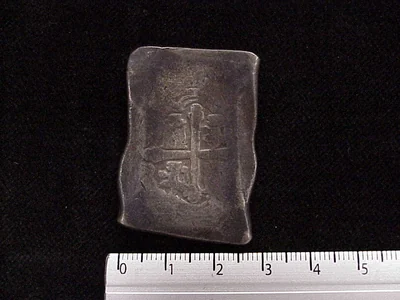
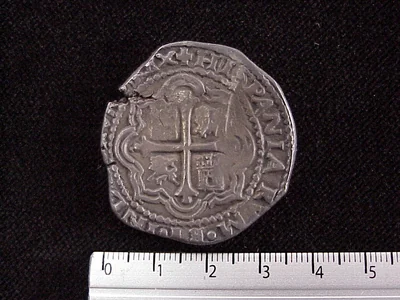
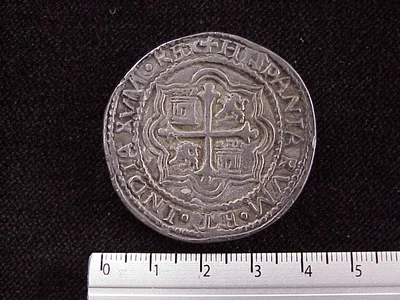
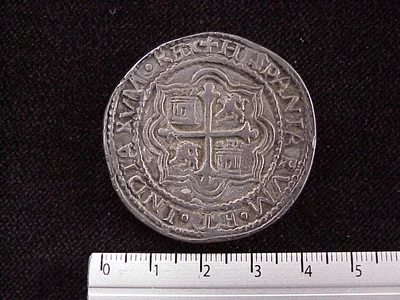
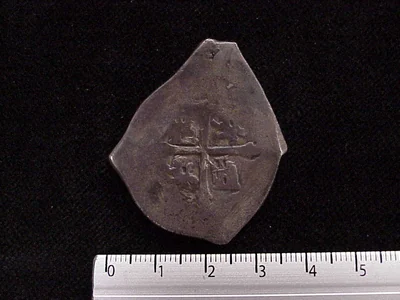
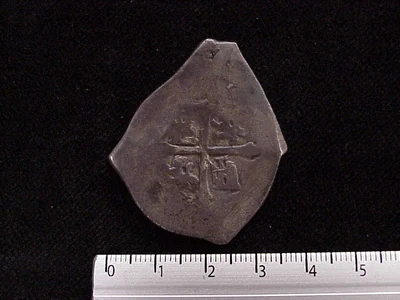
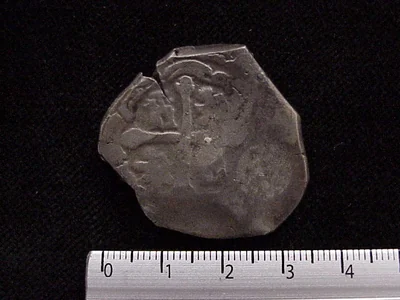
The numismatic type of the piece is cob (macuquina), also called hammer-cut coin. The planchets were clipped with shears from a silver bar and struck between hand dies, so no cob has a milled edge or a perfectly circular shape. It circulated as the reference trade coin across the Atlantic for more than two centuries.
The Mexico City mint had been striking cobs almost continuously since the 16th century. The final years before the 1732 pillar reform saw an increase in the volume of registered silver, driven by European demand and by the mines of Zacatecas and Guanajuato. The dies were signed by the Mexico City mint assayer active in the period, the official charged by the Royal Treasury with certifying that the silver fineness met the viceregal standard.
The Krause catalog references this piece under KM#47, useful for cross-checking the listing against international auction records.
A year in the midst of the War of the Spanish Succession (1701-1714) between Bourbons and Habsburg supporters.
This piece belongs to the era
Colonial / Virreinato →Explore all the Mexican coins of this era, their historical context and how they connect to the monetary system of the period.
Value range of this piece
Market estimate: $725 - $3,055 MXN depending on the grade of preservation (typical range between a circulated and an uncirculated piece).
See the full breakdown by grade (VG, F, VF, EF, AU, MS-60, MS-63, MS-65) for the whole series →
Other denominations from 1708
8 Reales Coloniales · Plata 0.900
Same denomination, other years
8 reales Plata 0.900 · 8 Reales Coloniales
Frequently asked questions
How much is a 1708 Mexico 8 Reales worth?
It depends heavily on grade and authenticity. A worn or cleaned example runs roughly 150 to 400 dollars, near its silver value. A clear circulated piece brings 400 to 1,200 dollars, and a sharp high-grade or certified coin can reach several thousand. For a precise number on your exact coin, get it appraised or certified by NGC or PCGS.
Is the 1708 8 Reales rare?
It is old and desirable but not truly scarce as a type. Colonial 8 Reales were minted in large numbers over many years and survive widely. Value comes from condition, not age. The exact mintage for this specific 1708 issue is not officially documented, which is normal for the colonial period, so be wary of sites quoting an exact figure.
Where can I sell a 1708 Mexico 8 Reales?
Sell where collectors are: a verified dealer from the Pesoteca shop directory who appraises it in person, the Pesoteca buy-and-sell forum, or a major auction house like Heritage or Stack's Bowers if your coin is certified and high grade. Photograph the obverse, reverse, and edge, note the weight, and skip the first lowball social-media offer.
How do I know if my 1708 8 Reales is genuine?
A real piece weighs about 26.36 grams and measures roughly 41 mm. Silver rings with a clear, sustained tone when tapped, while cast fakes sound dull and often show seams and soft detail. For anything you believe is worth more than a few hundred dollars, professional certification from NGC or PCGS is the definitive check.
Conversation
0 comments
Sources
Images for informational and educational purposes, attributed to their original source. Reference values; the real price depends on the grade, the specific variant and demand.
Loading comments…