
8 Reales Felipe V 1714: Value of This Colonial Silver Coin
The 8 Reales Felipe V 1714: Value of This Colonial Silver Coin is worth between $613 and $2,581 MXN depending on its grade of preservation.
Prices updated: August 2026
Viceroyalty · Mexico City Mint
Viceroyalty · Mexico City Mint
The 8 Reales Felipe V 1714: Value of This Colonial Silver Coin is worth between $613 and $2,581 MXN depending on its grade of preservation.
Prices updated: August 2026
How much is the 8 Reales Felipe V 1714: Value of This Colonial Silver Coin worth?
The estimated value of the 8 Reales Felipe V 1714: Value of This Colonial Silver Coin ranges from $613 (circulated, XF) up to $2,581 (official blister pack), with $1,865 as a reference for an uncirculated (UNC) piece. The estimate is based on the official mintage and the historical behavior of the family.
The real price depends on four factors: the grade of preservation (a circulated piece is worth the low end of the range; an uncirculated one, or one still in its official blister pack, the high end), the finish (satin vs mirror/proof), the rarity within the series based on the mintage, and the metal spot price on the day of the deal when the piece is silver or gold. Check the value-by-grade table above and compare with equivalent pieces before buying or selling.
Where to buy or sell this coin?
Browse the national directory of numismatic shops or the community forum to trade directly with other collectors.
Description
If you inherited an 8 Reales Felipe V dated 1714, here is the honest answer: most circulated colonial silver like this trades from roughly 100 to 500 USD, but strong, certified examples climb into the low thousands. It is not a million-dollar coin, but it is real Spanish colonial silver struck at the Mexico City mint, and it has value. Here is how to figure out exactly what yours is worth.
What this coin actually is
The 8 reales was the workhorse silver coin of the Spanish Empire, the original "piece of eight" that circulated worldwide. Yours was struck in 1714 in Mexico City (the Ceca México) under King Felipe V, the first Bourbon king of Spain. It belongs to the Colonial 8 Reales series, coins minted during the Viceroyalty period, long before modern Mexico existed.
This is genuine precious metal, which gives it a price floor. Even the most worn example is worth at least its silver content.
Specifications (check yours against these)
| Feature | Specification |
|---|---|
| Denomination | 8 Reales |
| Year | 1714 (single year of issue) |
| Mint | Mexico City (Ceca México) |
| Ruler | Felipe V |
| Metal | Silver .900 fine |
| Weight | 22.27 grams |
| Diameter | 40 mm |
| Edge | Plain (unmarked) |
If your coin does not weigh close to 22.27 grams or measure about 40 mm, treat it as suspect until proven otherwise. Colonial silver is one of the most heavily counterfeited categories out there.
What it is worth in 2026
Value on colonial silver comes down to three things: how much detail survives (grade), whether it is authentic and certified, and the current silver spot price that sets the floor.
- Heavily worn / low grade: roughly 100 to 300 USD. At this level you are mostly paying for the silver plus a modest collector premium.
- Mid-grade circulated with clear devices: roughly 300 to 800 USD.
- High grade or professionally certified (NGC / PCGS): from around 1,000 USD into the low thousands, depending on eye appeal and how sharp the strike is.
Early 1700s Mexico City 8 reales can carry meaningful premiums when they are well struck and problem-free, because die quality and survival rates from this period vary enormously. A cleaned, holed, or corroded coin loses most of that premium and falls back toward melt value.
How to tell if yours is genuine
Counterfeits of colonial 8 reales are common, so verify before you get excited or before you pay anyone.
- Weigh and measure it. It should be near 22.27 grams and 40 mm. Cast fakes are often off on both.
- The ping test. Real silver rings with a high, sustained tone when you balance it on a fingertip and tap it gently. Base-metal fakes sound dull and short.
- Look at the edge and surfaces. Casting seams, a greasy sheen, or soft mushy detail are red flags.
- Get it certified. For anything you believe is worth more than a few hundred dollars, professional grading from NGC or PCGS is the only definitive proof of authenticity and grade. That certification also makes it far easier to sell at full value.
Errors and varieties
Because this is a single-year issue, there are no date varieties to chase. There can be minor die varieties (letter placement, small striking differences) that only specialists distinguish. Genuine mint errors (off-center strikes, die rotation, doubled strikes) can add real money, but be careful: most "errors" people spot are actually post-mint damage, corrosion, or wear, which lowers value rather than raising it. If you think you have a true error, post clear photos in the Pesoteca forum for a second opinion.
Where to sell it (US and international)
- Certified auction houses. For a high-grade or certified piece, houses like Heritage Auctions and Stack's Bowers regularly move Spanish colonial silver to a worldwide buyer base and get top dollar.
- Established coin dealers. A reputable dealer who handles world and colonial coins can appraise and buy on the spot. Expect a wholesale offer below retail, which is normal.
- Verified numismatic shops. Use the Pesoteca dealer directory to find vetted buyers by location instead of gambling on a random buyer.
- Collector marketplaces. The Pesoteca buy/sell forum connects you directly with collectors. Photograph the obverse, reverse, and edge, list the weight, and check the value ranges above before you set a price.
One rule for precious-metal coins: never ship or hand over before payment clears, and only deal with buyers who will show you the coin and its weight in return. Do not dump it on the first low offer that comes in on social media.
Think you might have one of these, or need help reading the grade? Post your photos in the Pesoteca forum and let the community weigh in before you sell.
Historical context
This piece belongs to the reign of Philip V I of Spain (1700-1746). The first Bourbon king in Spain, grandson of Louis XIV of France. His first period of reign (1700-1724) lasted until his abdication in favor of Louis I.
The government of New Spain in 1714 was in the hands of Fernando de Alencastre, Duke of Linares, after the Treaty of Utrecht.
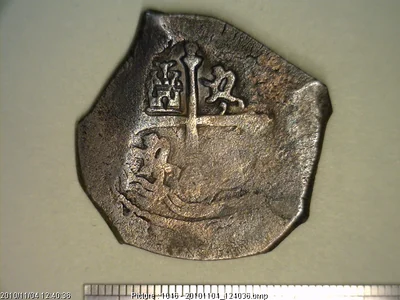
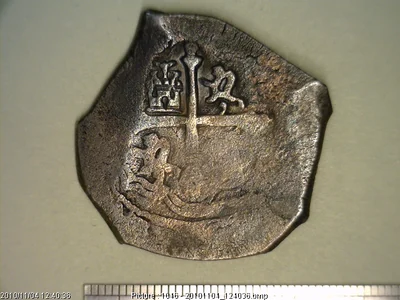
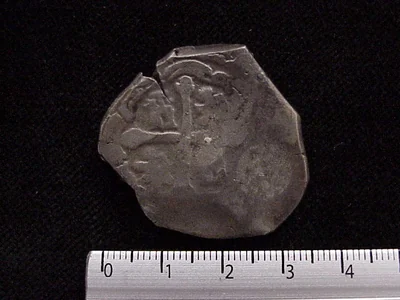
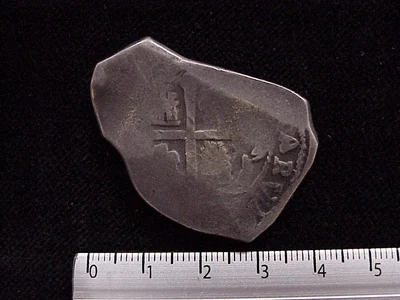
The numismatic type of the piece is cob (macuquina), also called hammer-cut coin. The planchets were cut with shears from a silver bar and struck between manual dies, which is why no cob has a true edge or a perfectly circular shape. It circulated as a benchmark commercial coin across the whole Atlantic for more than two centuries.
The Mexico City mint had been striking cobs almost uninterruptedly since the 16th century. The final years before the 1732 pillar reform saw an increase in the volume of registered silver, pushed by European demand and by the mines of Zacatecas and Guanajuato. The dies were signed by the Mexico City mint assayer active in the period, an official charged by the Royal Treasury with certifying that the silver fineness met the viceregal standard.
The Krause catalog references this piece under KM#47, useful for cross-checking the record with international auction listings.
It was the year of the fall of Barcelona and the effective close of the War of the Spanish Succession.
This piece belongs to the era
Colonial / Virreinato →Explore all the Mexican coins of this era, their historical context and how they connect to the monetary system of the period.
Value range of this piece
Market estimate: $613 - $2,581 MXN depending on the grade of preservation (typical range between a circulated and an uncirculated piece).
See the full breakdown by grade (VG, F, VF, EF, AU, MS-60, MS-63, MS-65) for the whole series →
Other denominations from 1714
8 Reales Coloniales · Plata 0.900
Same denomination, other years
8 reales Plata 0.900 · 8 Reales Coloniales
Frequently asked questions
How much is an 8 Reales Felipe V 1714 worth?
It depends heavily on grade. Heavily worn examples run roughly 100 to 300 USD, mid-grade circulated pieces 300 to 800 USD, and high-grade or NGC/PCGS-certified coins from around 1,000 USD into the low thousands. Genuine silver gives it a floor at melt value, so even the worst example is worth something. For a precise number, have your specific coin appraised by a reputable dealer or grading service.
Is the 8 Reales Felipe V 1714 rare?
It is scarce but not a headline rarity. It was struck for a single year, 1714, at the Mexico City mint, and survival quality varies widely because it circulated as everyday money. Well-struck, problem-free, and certified examples are genuinely hard to find and command the strongest prices. Cleaned, holed, or corroded coins are common and worth far less.
How can I tell if my 8 Reales Felipe V 1714 is genuine?
Start with weight and size: it should be near 22.27 grams and 40 mm. Try the ping test, real silver rings with a high, sustained tone while fakes sound dull. Check for casting seams or soft, mushy detail on the surfaces. For anything you believe is worth more than a few hundred dollars, NGC or PCGS certification is the definitive proof of authenticity.
Where can I sell an 8 Reales Felipe V 1714?
For high-grade or certified coins, auction houses like Heritage or Stack's Bowers reach a worldwide buyer base. Established world-coin dealers will buy on the spot. You can also use the Pesoteca dealer directory to find vetted local buyers, or list it in the Pesoteca buy/sell forum with clear photos of the obverse, reverse, and edge plus the weight. Never hand over the coin before payment clears.
Conversation
0 comments
Sources
Images for informational and educational purposes, attributed to their original source. Reference values; the real price depends on the grade, the specific variant and demand.
Loading comments…