
1712 Felipe V 8 Reales Cob (Macuquina): Value Guide
The 1712 Felipe V 8 Reales Cob : Value Guide is worth between $741 and $3,118 MXN depending on its grade of preservation.
Prices updated: August 2026
The 1712 Felipe V 8 Reales Cob : Value Guide is worth between $741 and $3,118 MXN depending on its grade of preservation.
Prices updated: August 2026
How much is the 1712 Felipe V 8 Reales Cob (Macuquina): Value Guide worth?
The estimated value of the 1712 Felipe V 8 Reales Cob (Macuquina): Value Guide ranges from $741 (circulated, XF) up to $3,118 (official blister pack), with $2,254 as a reference for an uncirculated (UNC) piece. The estimate is based on the official mintage and the historical behavior of the family.
The real price depends on four factors: the grade of preservation (a circulated piece is worth the low end of the range; an uncirculated one, or one still in its official blister pack, the high end), the finish (satin vs mirror/proof), the rarity within the series based on the mintage, and the metal spot price on the day of the deal when the piece is silver or gold. Check the value-by-grade table above and compare with equivalent pieces before buying or selling.
Where to buy or sell this coin?
Browse the national directory of numismatic shops or the community forum to trade directly with other collectors.
Description
If you inherited a crude, irregular silver coin dated 1712 with a cross on one side and a Spanish shield on the other, you likely have a Felipe V 8 reales cob struck in Mexico City. The good news: it is real silver, 90% fine, so it always has a floor value. The realistic range runs from roughly 100 USD for a worn, off-center piece to several thousand USD for a full, well-struck example with a clear date and assayer.
What you actually have
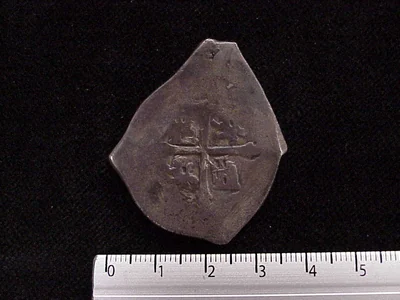
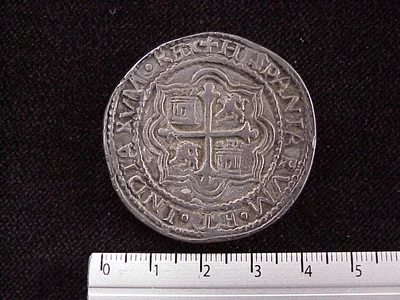
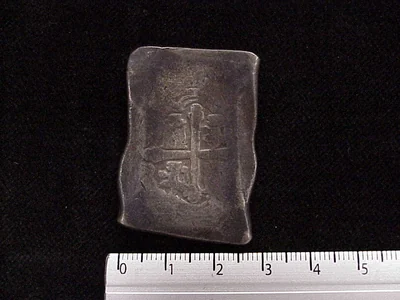
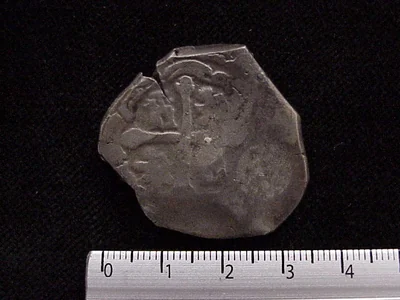
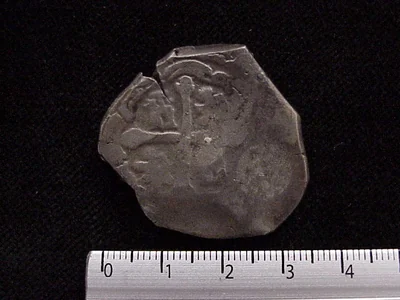
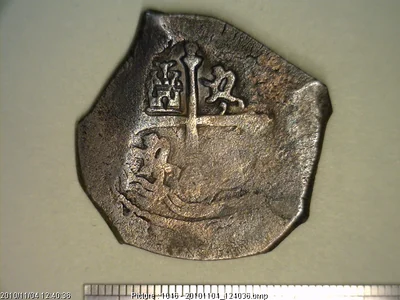
This is a cob (in Spanish, macuquina), a hand-struck colonial coin made before mechanical presses arrived. Instead of the neat round coins you know, cobs were cut from a silver bar, hammered by hand, and left deliberately irregular in shape. The metal content, not the shape, was what mattered at the time.
Specifics for the 1712 Felipe V 8 reales:
- Denomination: 8 reales (the famous "piece of eight," the Spanish silver dollar)
- Ruler: Felipe V, first Bourbon king of Spain, on the throne from 1700
- Mint: Mexico City (Casa de Moneda de México)
- Silver fineness: 0.900 (90% pure silver)
- Weight: 26.91 grams
- Diameter: 37 mm
- Type: "Primera época" (first-period) cob, made before the screw press was introduced in 1732
How much is a 1712 Felipe V 8 reales worth in 2026?
Value on these cobs swings hard on two things: how much of the design survives (especially the date and the assayer's mark) and the shape of the flan. A round, well-centered piece with a legible date is far rarer than a chopped, worn one, because the striking process itself produced mostly imperfect coins.
| Condition | What you see | Approximate value (USD) |
|---|---|---|
| Heavily worn / no date | Silver present, design mostly gone | 60 to 150 |
| Average cob | Partial design, date weak or partial | 200 to 600 |
| Clear date and assayer | Full legend readable, decent centering | 800 to 2,500 |
| Full flan, sharp strike | Round, well-centered, high detail | 3,000 and up |
The silver alone is worth roughly 20 to 25 USD at current bullion prices (about 0.78 troy ounces of pure silver). That is your absolute floor. No genuine 1712 cob should sell below its melt value, so treat any "bargain" far under that as a warning sign.
What drives the price
A legible date and assayer mark. Collectors pay a premium for cobs where you can actually read "1712" and identify the assayer initial. Many cobs are undated or the date is off the edge of the flan, which cuts value sharply.
Centering and completeness. Because the flan was irregular, a nearly round, well-centered example is genuinely scarce and commands a large premium over a typical chopped cob.
Certification. A cob graded and slabbed by NGC or PCGS sells for more and, just as important, is easier to sell because the buyer trusts it is authentic. Counterfeits of colonial cobs are common, so third-party grading matters here more than for most modern coins.
How to tell if yours is genuine
Colonial cobs are heavily faked, so run these checks before you get excited:
- Weigh it. A genuine 8 reales cob should weigh close to 26.91 grams. Use a jewelry scale. A coin far lighter or heavier is suspect (though worn examples can be slightly under).
- Check the diameter and silver look. Around 37 mm, with the warm gray tone of aged silver, not the bright white of a cast fake.
- Look at the edges. Real cobs were cut from a bar and show hammered, irregular edges, not a smooth cast seam.
- Study the engraving style. The cross, shield, and legend should look hand-punched and slightly uneven. Cast copies show mushy, soft detail and sometimes tiny bubbles in the surface.
- When in doubt, get it certified. For a coin potentially worth thousands, NGC or PCGS certification pays for itself.
Where to sell it
For a piece this old and this fakeable, sell where buyers know cobs:
- A verified numismatic dealer who can weigh and evaluate the coin in person and pay you on the spot.
- The Pesoteca buy-and-sell forum, where collectors who actually want colonial silver will bid on it.
- A major auction house (Heritage, Stack's Bowers) if you have a high-grade, certified example that could bring several thousand dollars.
Before you sell, photograph the obverse, reverse, and edge in good light, and compare your coin against the value range above. Avoid dumping it to the first Facebook offer, and never sell below the silver melt value.
If you want to date and value colonial silver generally, our guides on the Spanish colonial 8 reales and on how coin grading affects price are worth reading next.
Have a 1712 (or nearby year) Felipe V cob and can't read the date or assayer? Post clear photos of both sides and the edge in the Pesoteca forum and let the community help you pin down exactly what you have.
Historical context
This piece belongs to the reign of Felipe V of Spain (1700-1746). First king of the House of Bourbon in Spain, grandson of Louis XIV of France. His first period of reign (1700-1724) lasted until his abdication in favor of Luis I.
The government of New Spain in 1712 was in the hands of Fernando de Alencastre, Duke of Linares, who was strengthening coastal defenses against English privateering.
The numismatic type of the piece is a cob (macuquina), also called a hammer-cut coin. The planchets were clipped with shears from a silver bar and struck between hand-held dies, so no cob has an edge or perfectly circular shape. It circulated as a reference trade coin throughout the Atlantic for more than two centuries.
The Mexico City Mint had been striking cobs almost uninterruptedly since the 16th century. The final years before the pillar reform of 1732 saw an increase in the volume of registered silver, driven by European demand and by the mines of Zacatecas and Guanajuato. The dies were signed by the Mexico City Mint assayer active in the period, the official charged by the Royal Treasury with certifying that the silver's fineness met the viceregal standard.
The colonial catalogs trace this piece within the families of the Mexico City Real de a ocho, with prices that respond to rarity by year and assayer's signature.
A year in which the War of the Spanish Succession was advancing toward its close with negotiations that would lead to the Treaty of Utrecht.
This piece belongs to the era
Colonial / Virreinato →Explore all the Mexican coins of this era, their historical context and how they connect to the monetary system of the period.
Value range of this piece
Market estimate: $741 - $3,118 MXN depending on the grade of preservation (typical range between a circulated and an uncirculated piece).
See the full breakdown by grade (VG, F, VF, EF, AU, MS-60, MS-63, MS-65) for the whole series →
Other denominations from 1712
8 Reales Coloniales · Plata 0.900
Same denomination, other years
8 reales Plata 0.900 · 8 Reales Coloniales
Frequently asked questions
How much is a 1712 Felipe V 8 reales cob worth?
It depends almost entirely on condition and whether the date is legible. A worn, off-center example runs about 60 to 150 USD, an average cob 200 to 600 USD, and a piece with a clear date and assayer 800 to 2,500 USD. Full, well-struck examples sell for 3,000 USD and up. The silver floor is roughly 20 to 25 USD.
Is the 1712 Felipe V 8 reales rare?
The type is not extremely rare, but well-preserved examples are. Because these cobs were hand-struck on irregular flans, most survive worn, off-center, or without a readable date. A round, well-centered coin with a clear 1712 date and assayer mark is genuinely scarce and worth a large premium.
Where can I sell a 1712 Felipe V 8 reales?
Sell through a verified numismatic dealer who can weigh and evaluate it in person, or the Pesoteca buy-and-sell forum among collectors. For a high-grade certified example, a major auction house like Heritage or Stack's Bowers is best. Photograph both sides and the edge first, and never sell below the silver melt value.
How can I tell if my 1712 Felipe V cob is genuine?
Weigh it (a real one is close to 26.91 grams) and measure it (about 37 mm). Genuine cobs have hammered, irregular edges and hand-punched, slightly uneven engraving, while cast fakes show soft detail and sometimes surface bubbles. Colonial cobs are heavily counterfeited, so for a valuable piece, get it certified by NGC or PCGS.
Conversation
0 comments
Loading comments…