
8 Escudos Fernando VI 1752: Colonial Gold Coin Value
The 8 Escudos Fernando VI 1752: Colonial Gold Coin Value is worth between $51,251 and $86,318 MXN depending on its grade of preservation.
Prices updated: August 2026
Viceroyalty · Mexico City Mint · Assayer MF
Viceroyalty · Mexico City Mint · Assayer MF
The 8 Escudos Fernando VI 1752: Colonial Gold Coin Value is worth between $51,251 and $86,318 MXN depending on its grade of preservation.
Prices updated: August 2026
How much is the 8 Escudos Fernando VI 1752: Colonial Gold Coin Value worth?
The estimated value of the 8 Escudos Fernando VI 1752: Colonial Gold Coin Value ranges from $51,251 (circulated, XF) up to $86,318 (official blister pack), with $73,566 as a reference for an uncirculated (UNC) piece. The estimate is based on the official mintage and the historical behavior of the family.
The real price depends on four factors: the grade of preservation (a circulated piece is worth the low end of the range; an uncirculated one, or one still in its official blister pack, the high end), the finish (satin vs mirror/proof), the rarity within the series based on the mintage, and the metal spot price on the day of the deal when the piece is silver or gold. Check the value-by-grade table above and compare with equivalent pieces before buying or selling.
Where to buy or sell this coin?
Browse the national directory of numismatic shops or the community forum to trade directly with other collectors.
Description
If you inherited or found an 8 Escudos Fernando VI dated 1752, you own real colonial gold, not a novelty. This coin contains roughly 0.71 troy ounces of gold, so it has a hard floor tied to the bullion market before any collector premium is added. Genuine, mid-grade examples typically trade in the low thousands of US dollars, and top-grade certified pieces can go well beyond that.
This is not a coin worth "a few dollars." It is a large gold piece from the Spanish colonial period in Mexico (then called Nueva España), struck at the Mexico City Mint under King Fernando VI of the Bourbon dynasty. The combination of gold weight, age, and demand from both bullion buyers and colonial collectors keeps prices firm.
What you actually have
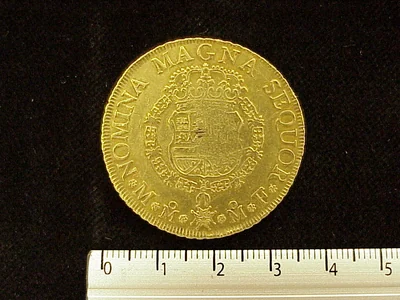
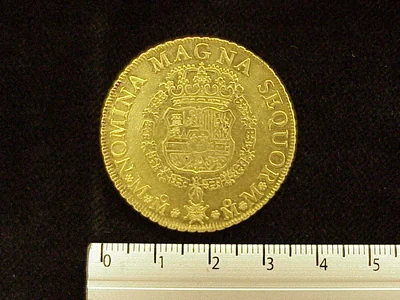
The 8 Escudos was the largest standard gold denomination of the Spanish colonial system, often called the "onza" or, in English collecting circles, the colonial "doubloon." Here are the exact specifications, which matter for both value and authentication:
| Feature | Detail |
|---|---|
| Denomination | 8 Escudos (gold) |
| Year | 1752 (single year on this issue) |
| Ruler | Fernando VI, Bourbon dynasty |
| Mint | Mexico City Mint (Casa de Moneda) |
| Assayer mark | MF |
| Metal | Gold, .875 fine (21 karat) |
| Weight | 26.95 grams |
| Diameter | 36 mm |
| Edge | Incuse (patterned) |
| Gold content | Approx. 0.71 troy oz pure gold |
That gold content is the key number for US owners. At current gold prices, the metal alone is worth well over one thousand US dollars. A genuine coin never sells below that melt value, and collector demand pushes the real number higher.
What it's worth in 2026
Value on colonial 8 Escudos depends on three things: authenticity, grade (state of preservation), and eye appeal. We see the following broad tiers at auction and in the trade:
- Melt / heavily worn or damaged: roughly the bullion value, meaning the gold content in US dollars at spot. This is the floor.
- Circulated but genuine and problem-free: typically 1,500 to 3,000 US dollars depending on wear and market conditions.
- High grade, sharp detail, certified: several thousand US dollars and up, with the best examples selling to specialist collectors.
Colonial gold from Mexico City in nice grade has a steady following at Heritage Auctions and Stack's Bowers, where certified 8 Escudos of this era regularly clear the low-to-mid four figures in US dollars. Exact prices swing with the gold market and with how many collectors are bidding on a given date.
One honest note: 1752 is the only year this specific issue was struck, so there are no year-to-year varieties to chase. There can be minor die varieties (letter positions, small striking differences) that specialists at NGC or PCGS distinguish, but for most owners, a genuine coin is a genuine coin.
How to tell if yours is genuine
This coin gets counterfeited because gold pieces are worth faking. The good news: the specs make fakes easy to catch.
- Weigh it. A real one weighs 26.95 grams. Chinese counterfeits are almost always underweight or made of lower-grade metal, and the scale usually gives them away instantly.
- Measure it. It should be 36 mm across.
- Check the edge. The genuine coin has an incuse (pressed-in) edge pattern. A plain or crudely tooled edge is a red flag.
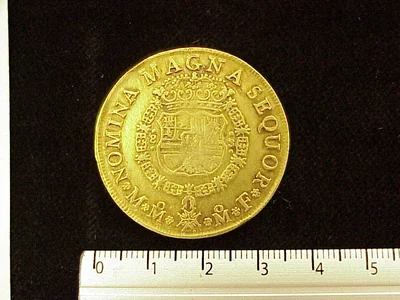
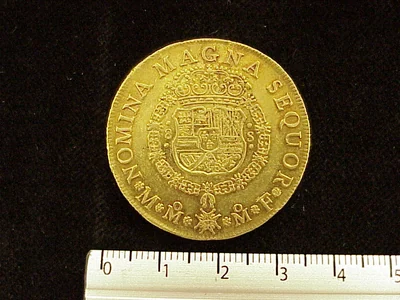
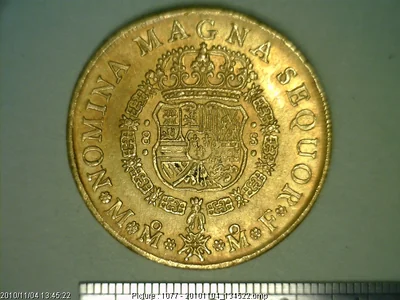
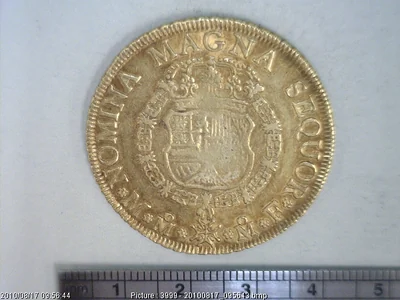
- Look for the details. Correct assayer mark (MF), correct mint mark for Mexico City, and sharp, period-correct lettering.
If your coin is off on weight or diameter, treat it as suspect. For any piece you believe is worth more than a few hundred dollars, professional certification through NGC or PCGS is the definitive insurance. A certified, graded coin also sells faster and for more.
Where to sell it
Because this is a precious-metal coin with a real collector market, you have options, but you want a buyer who will pay the collector premium, not just melt value:
- Specialist auction houses (Heritage, Stack's Bowers) for high-grade or certified examples. They reach the collectors who pay top prices for colonial gold.
- Verified numismatic dealers through the Pesoteca dealer directory, which lets you get an in-person appraisal without a middleman markup.
- The Pesoteca buy/sell forum, where you deal directly with collectors who know what this coin is.
Before selling, photograph the obverse (front), reverse (back), and edge, and get the weight on an accurate scale. Never sell to the first person who offers you "melt" if the coin is problem-free, and be cautious with open marketplaces where counterfeits circulate. Verify the coin in hand before any money changes hands.
For more context on this series, see our pages on Colonial Escudos gold coins, the broader Colonial / Viceroyalty era, other 8 Escudos issues, and coins dated 1752.
Have an 8 Escudos and not sure if the weight and edge check out? Post clear photos of both sides and the edge in the Pesoteca forum and let collectors who handle colonial gold weigh in before you sell.
Historical context
Eight escudos, Fernando VI, 1752, Mexico mint, assayer MF, Krause KM#151. Krause distinguishes KM#151 from KM#150 by a variation of the reverse die or the royal bust, a sign of iconographic adjustment within the same reign. In 1752 Ensenada organized the Southern Squadron on the peninsula and banned the export of silver coinage to reinforce the circulating supply. In New Spain the Count of Revillagigedo continued as viceroy. The ounce weighs 27.06 grams with 0.916 fineness. Milled with a round planchet. The pillar reverse was retained with the crowned Pillars of Hercules and the PLVS VLTRA bands, iconography of the strong royal system in force since 1732. The MF signature of the assayers guarantees the fineness in the field. Pieces from 1752 open the second pillar type of Fernando VI (KM#151) that would continue until 1755.
This piece belongs to the era
Colonial / Virreinato →Explore all the Mexican coins of this era, their historical context and how they connect to the monetary system of the period.
Value range of this piece
Market estimate: $51,251 - $86,318 MXN depending on the grade of preservation (typical range between a circulated and an uncirculated piece).
See the full breakdown by grade (VG, F, VF, EF, AU, MS-60, MS-63, MS-65) for the whole series →
Same denomination, other years
8 escudos Oro 0.875 (21k) · Escudos Coloniales (oro)
Frequently asked questions
How much is an 8 Escudos Fernando VI 1752 worth?
It depends heavily on grade and authenticity. The floor is the gold value, roughly 0.71 troy oz of pure gold, which is well over one thousand US dollars at current prices. Genuine, problem-free circulated examples typically sell for 1,500 to 3,000 US dollars, and high-grade certified pieces bring several thousand US dollars or more at major auctions.
Is the 8 Escudos Fernando VI 1752 rare?
It was struck only in 1752 at the Mexico City Mint, so there are no year varieties to collect. Exact mintage figures are not officially documented. It is a genuinely scarce colonial gold coin, and its value comes from a combination of that scarcity, its age, and its substantial gold content.
How can I tell if my 8 Escudos Fernando VI 1752 is genuine?
Weigh and measure it first. A real one weighs 26.95 grams and measures 36 mm, with an incuse (pressed-in) edge pattern and the assayer mark MF. Counterfeits are usually underweight or lower-grade metal, so the scale often exposes them. For any coin you think is worth serious money, certification through NGC or PCGS is the definitive confirmation.
Where can I sell an 8 Escudos Fernando VI 1752?
For high-grade or certified examples, specialist auction houses like Heritage or Stack's Bowers reach the collectors who pay top prices. For a quicker sale, use a verified dealer through the Pesoteca directory or the Pesoteca buy/sell forum. Always photograph both sides and the edge and confirm the weight before selling, and avoid buyers who only offer melt value on a problem-free coin.
Conversation
0 comments
Sources
Images for informational and educational purposes, attributed to their original source. Reference values; the real price depends on the grade, the specific variant and demand.
Loading comments…