
8 Escudos Carlos III 1764: Gold Coin Value & Facts
The 8 Escudos Carlos III 1764: Gold Coin Value & Facts is worth between $51,308 and $86,414 MXN depending on its grade of preservation.
Prices updated: August 2026
Viceroyalty · Mexico City Mint · Assayer MM
Viceroyalty · Mexico City Mint · Assayer MM
The 8 Escudos Carlos III 1764: Gold Coin Value & Facts is worth between $51,308 and $86,414 MXN depending on its grade of preservation.
Prices updated: August 2026
How much is the 8 Escudos Carlos III 1764: Gold Coin Value & Facts worth?
The estimated value of the 8 Escudos Carlos III 1764: Gold Coin Value & Facts ranges from $51,308 (circulated, XF) up to $86,414 (official blister pack), with $73,648 as a reference for an uncirculated (UNC) piece. The estimate is based on the official mintage and the historical behavior of the family.
The real price depends on four factors: the grade of preservation (a circulated piece is worth the low end of the range; an uncirculated one, or one still in its official blister pack, the high end), the finish (satin vs mirror/proof), the rarity within the series based on the mintage, and the metal spot price on the day of the deal when the piece is silver or gold. Check the value-by-grade table above and compare with equivalent pieces before buying or selling.
Where to buy or sell this coin?
Browse the national directory of numismatic shops or the community forum to trade directly with other collectors.
Description
If you inherited or found an 8 Escudos Carlos III dated 1764, you are holding a real gold coin, not a token. This is a full ounce of colonial Spanish gold struck at the Mexico City Mint, and even a worn, genuine example is worth well into the thousands of dollars. The exact figure depends on grade and authenticity, and this page tells you how to check both.
What it's worth right now
The 8 Escudos is a large gold coin: 26.98 grams, .917 fine gold (about 22 karat), which is roughly 0.795 troy ounces of pure gold. That gives it a hard floor. At current gold prices, the metal alone is worth well over 1,800 USD. No genuine 8 Escudos of this type trades below its melt value.
The numismatic value climbs from there:
- Heavily worn / damaged (genuine): close to gold melt value, roughly 1,800 to 2,500 USD.
- Circulated but clean, readable bust and legends: commonly 2,500 to 5,000 USD.
- Choice, sharp strike, minimal wear: 6,000 to 12,000+ USD.
- Certified Mint State (NGC or PCGS MS): the top of the series, often 15,000 USD and up for the best examples.
These are ranges, not guarantees. A colonial gold coin's price swings hard on eye appeal, the sharpness of Carlos III's portrait, and whether it has been cleaned, mounted as jewelry, or repaired. Cleaning and old solder marks knock value down fast.
What this coin actually is
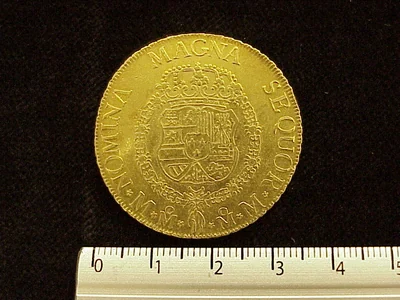
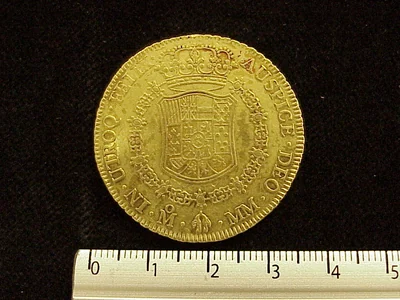
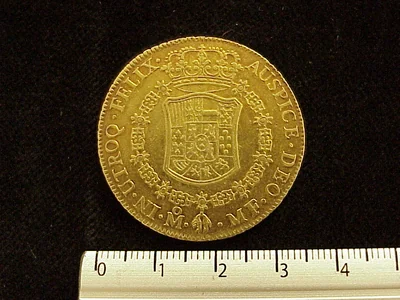
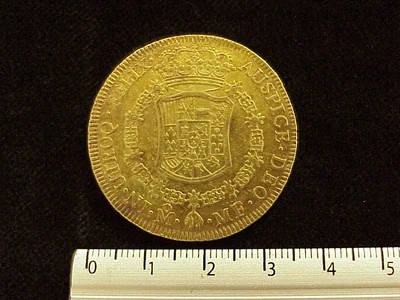
The 8 Escudos was the largest gold denomination of the Spanish colonial system, popularly called an onza de oro (a gold ounce). Under King Carlos III, who took the Spanish throne in 1759, the design shifted to show the monarch's portrait (the busto, or bust) instead of the older shield-and-pillars motif. The 1764 piece is an early example of that portrait type.
Key facts, exactly as recorded:
| Attribute | Detail |
|---|---|
| Denomination | 8 Escudos (gold onza) |
| Ruler | Carlos III of Spain |
| Year | 1764 |
| Mint | Mexico City (the most productive mint in the Spanish empire) |
| Weight | 26.98 g |
| Diameter | 35.91 mm |
| Edge | Chain-pattern edge (characteristic of this gold type) |
| Catalog reference | KM#155 |
The chain-pattern edge is not decoration. It was an anti-clipping and anti-counterfeiting feature, and it is one of the first things an expert checks on a genuine piece.
How to tell if yours is genuine
Gold fakes exist, and the 8 Escudos is a prime target because a real one is worth so much. Three checks catch most of them:
- Weigh it. A genuine piece weighs 26.98 grams. Fakes are almost always underweight or made of lower-purity gold to save money. A jewelry or coin-shop scale settles this in seconds.
- Measure it. Diameter should be 35.91 mm. Off-size means walk away.
- Check the edge. The chain-pattern edge is hard to fake convincingly. A plain or mushy edge is a red flag.
If your coin passes weight and size and the value is real money, do not stop there. Send it to NGC or PCGS for certification. A certified holder is the single best protection against fakes and the fastest way to sell at full price. Colonial gold is exactly the kind of coin where third-party grading pays for itself.
What drives the price up (and down)
Age alone does not make this coin rare. It is valuable for three concrete reasons: it is nearly a full ounce of gold, it is a genuine 18th-century colonial issue with steady collector demand, and high-grade survivors are scarce. What separates a 2,500 USD example from a 12,000 USD example is condition: a sharp, unworn portrait of Carlos III, full legends, original surfaces, and no cleaning or repairs.
Be honest with yourself about condition before you shop it around. A coin that has been polished to look "shiny" is worth less than the same coin left alone. Never clean an old gold coin. It only removes value.
Where to sell or appraise it
Because this is a high-value gold coin, do not dump it on the first buyer on social media. Your best options:
- Certify it first (NGC or PCGS) if you plan to get top dollar. A graded coin sells faster and higher.
- Auction houses that handle world gold (Heritage Auctions, Stack's Bowers) are where serious colonial gold reaches serious buyers.
- A verified numismatic dealer who will weigh and examine the coin in front of you and quote on the spot.
For buyers and sellers, you can use the Pesoteca dealer directory to find a verified shop by city, or the Pesoteca buy-and-sell forum to reach collectors directly. Always photograph the obverse, reverse, and edge, and confirm the weight before any money changes hands. For a gold coin, verify before you pay.
If you want a second opinion on your specific piece, post clear photos of both faces and the edge in the Pesoteca forum. Is your 1764 8 Escudos a family heirloom or something you just came across, and do you plan to keep it or sell?
Historical context
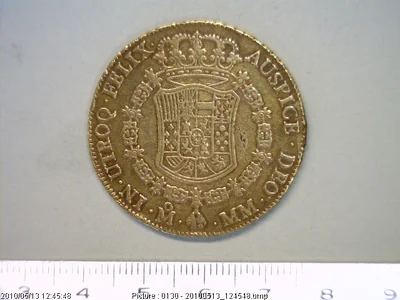
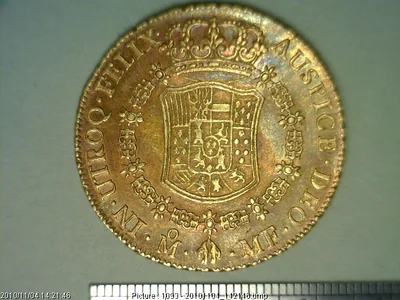
Eight escudos Carlos III, 1764, Mexico mint, assayer MM, Krause KM#155. First full postwar year after the Treaty of Paris of 1763. Carlos III launched the program of Bourbon reforms that included the military strengthening of the Americas and the new intendant ordinances that would arrive later. In New Spain the Marquis of Cruillas remained viceroy while the general inspection under visitor José de Galvez was being organized, arriving officially in 1765. The onza weighs 27.06 grams with a fineness of 0.916. Produced by mill press on a round planchet. The classic pillar reverse remained without significant changes. The MM assayers' mark appears in the field. Krause groups 1764 within the ongoing KM#155. The piece is a testament to a year of quiet imperial reorganization that set the stage for the great reforms of the years that followed.
This piece belongs to the era
Colonial / Virreinato →Explore all the Mexican coins of this era, their historical context and how they connect to the monetary system of the period.
Value range of this piece
Market estimate: $51,308 - $86,414 MXN depending on the grade of preservation (typical range between a circulated and an uncirculated piece).
See the full breakdown by grade (VG, F, VF, EF, AU, MS-60, MS-63, MS-65) for the whole series →
Same denomination, other years
8 escudos Oro 0.875 (21k) · Escudos Coloniales (oro)
Frequently asked questions
How much is an 8 Escudos Carlos III 1764 worth?
A genuine one is worth thousands of dollars because it contains about 0.795 troy ounces of gold, giving it a floor above 1,800 USD at metal value alone. Worn genuine examples run roughly 1,800 to 5,000 USD, sharp examples 6,000 to 12,000 USD, and certified Mint State pieces 15,000 USD and up. Grade and condition decide the exact figure, so get it appraised or certified for a precise number.
Is the 8 Escudos Carlos III 1764 rare?
It is scarce, especially in high grade. It was the largest gold denomination of the Spanish colonial system, struck at the Mexico City Mint, and few survive with a sharp, unworn portrait of Carlos III. Circulated examples appear at auction periodically, but truly high-grade survivors are uncommon and command the top prices in the series.
How do I tell if my 8 Escudos Carlos III 1764 is genuine?
Run three checks. It should weigh exactly 26.98 grams, measure 35.91 mm across, and have the distinctive chain-pattern edge. Fakes are usually underweight or made of lower-purity gold, so the scale gives them away fast. For a coin worth this much, send it to NGC or PCGS for certification, which is the definitive proof of authenticity and the best way to sell at full value.
Where can I sell an 8 Escudos Carlos III 1764?
For a high-value gold coin, certify it with NGC or PCGS first, then sell through a world-gold auction house like Heritage or Stack's Bowers, or a verified dealer who will weigh and examine it in front of you. You can find a trusted shop in the [Pesoteca dealer directory](/tiendas) or reach collectors on the [Pesoteca buy-and-sell forum](/foro/compra-venta). Photograph the obverse, reverse, and edge, and never sell to the first anonymous online offer.
Conversation
0 comments
Sources
Images for informational and educational purposes, attributed to their original source. Reference values; the real price depends on the grade, the specific variant and demand.
Loading comments…