
8 Escudos Carlos III 1765: Gold Coin Value Guide
The 8 Escudos Carlos III 1765: Gold Coin Value Guide is worth between $51,365 and $86,510 MXN depending on its grade of preservation.
Prices updated: August 2026
Viceroyalty · Mexico City Mint · Assayer MF
Viceroyalty · Mexico City Mint · Assayer MF
The 8 Escudos Carlos III 1765: Gold Coin Value Guide is worth between $51,365 and $86,510 MXN depending on its grade of preservation.
Prices updated: August 2026
How much is the 8 Escudos Carlos III 1765: Gold Coin Value Guide worth?
The estimated value of the 8 Escudos Carlos III 1765: Gold Coin Value Guide ranges from $51,365 (circulated, XF) up to $86,510 (official blister pack), with $73,730 as a reference for an uncirculated (UNC) piece. The estimate is based on the official mintage and the historical behavior of the family.
The real price depends on four factors: the grade of preservation (a circulated piece is worth the low end of the range; an uncirculated one, or one still in its official blister pack, the high end), the finish (satin vs mirror/proof), the rarity within the series based on the mintage, and the metal spot price on the day of the deal when the piece is silver or gold. Check the value-by-grade table above and compare with equivalent pieces before buying or selling.
Where to buy or sell this coin?
Browse the national directory of numismatic shops or the community forum to trade directly with other collectors.
Description
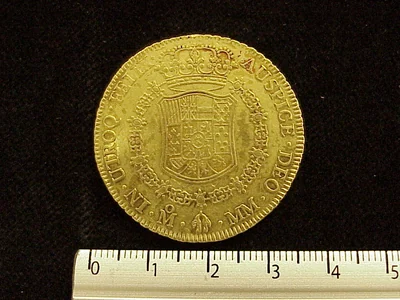
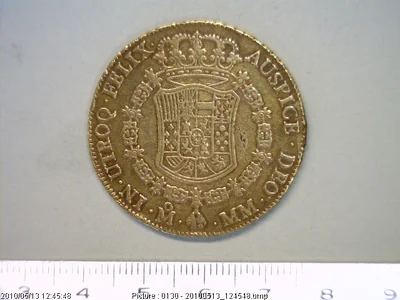
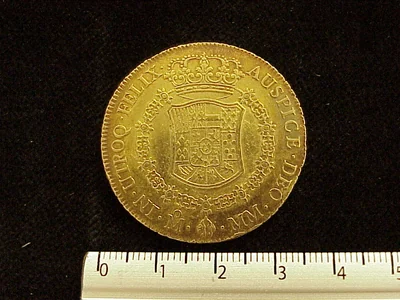
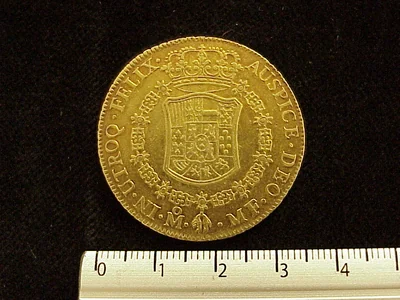
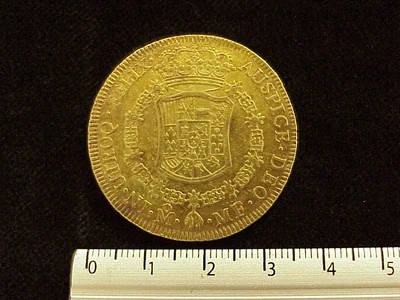
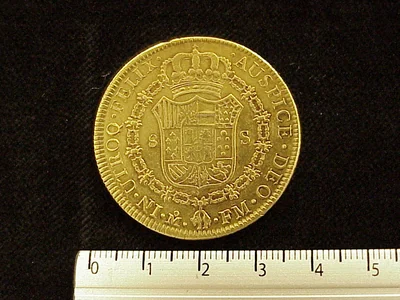
If you inherited an 8 Escudos Carlos III dated 1765, you have a real gold coin, not a common pocket piece. This is nearly a full ounce of gold (27.01 grams, 22 karat), so it has a hard floor at melt value and, in good condition, sells for several thousand US dollars. In 2026, that combination of gold weight plus colonial rarity is what puts money in your pocket.
Quick answer: what it's worth
The 8 Escudos (called an onza, Spanish for "ounce") from 1765 struck at the Mexico City Mint is one of the largest gold coins of Spanish colonial America. Because it contains 0.7975 troy ounces of pure gold, its value never drops below the current gold spot price for that weight, a floor that alone runs into the low four figures in USD at current gold prices.
Above that floor, condition (grade) is everything. A worn, cleaned, or scratched example sells close to melt. A sharp, original coin with a clean portrait of Carlos III and full legends sells at a strong premium to melt. Certified pieces graded by NGC or PCGS bring the highest and most reliable prices, because buyers pay for proof of authenticity and grade.
What you actually have
| Attribute | Detail |
|---|---|
| Denomination | 8 Escudos (gold onza) |
| Date | 1765 |
| Mint | Mexico City (México) |
| Ruler | Carlos III of Spain |
| Weight | 27.01 grams |
| Diameter | 35.58 mm |
| Gold fineness | 0.9167 (22 karat), roughly 0.7975 oz pure gold |
| Edge | Chain / cord edge (anti-clipping device) |
| Catalog reference | KM#155 |
The chain edge is not decoration. Colonial mints milled the edge to make it obvious if someone shaved gold off the rim, a common form of theft at the time. That edge is also one of your best authenticity checks, which we cover below.
This is a "busto" (bust) type coin: the portrait of the king on the obverse and the Spanish royal arms on the reverse. The onza was the highest gold denomination in circulation in New Spain and was used for large transactions and for storing wealth, moving through Europe and Asia via the Manila galleon trade. Mexico City was the empire's main producer of precious metal, which is why so much colonial gold carries its mark.
Why 1765 matters
1765 falls in the early years of Carlos III's reign, which began in 1759. Early-date bust gold tends to draw more interest from collectors who specialize in colonial Spanish and Mexican gold, so an early year like this can carry a collector premium on top of the gold value, but only if the coin is genuine and reasonably well preserved.
There are no yearly sub-varieties inside this single issue, but experts sometimes identify die varieties (minor lettering position, small striking differences). For most owners this makes little difference. Grade and authenticity move the price far more than a minor die variety.
What drives the price (and what doesn't)
- Gold content: the permanent floor. Even a beaten-up example is worth its melt value.
- Grade / condition: the single biggest premium factor. Sharp detail on the portrait and legends, original surfaces, no cleaning.
- Authenticity proof: an NGC or PCGS holder can double or triple what a raw (uncertified) coin brings, because it removes the buyer's risk.
- What does NOT help: being "old." Age alone adds almost nothing here. Colonial gold is desirable because of the gold and the collector base, not because 1765 is a long time ago.
Beware the "it's worth a fortune because it's centuries old" story. A cleaned or damaged 8 Escudos is worth its gold, period. The difference between melt and a strong collector price is condition and certification, not the date on the coin.
How to tell if yours is genuine
Gold fakes exist, and this is a high-value target, so verify before you celebrate or sell.
- Weigh it. It must weigh 27.01 grams. Most counterfeits from overseas use lower-purity metal and miss the weight. A cheap digital scale catches many fakes instantly.
- Measure it. Diameter should be 35.58 mm. Off measurements are a red flag.
- Check the edge. The chain/cord edge should be present and consistent. Modern casts often botch the edge.
- Look for cast texture. Genuine struck coins have crisp detail; cast fakes look soft, grainy, or have a seam.
- Get it certified. For a coin at this value, professional grading by NGC or PCGS is the definitive answer. It confirms authenticity and grade in one step, and it raises resale value.
If you plan to buy or sell above a few hundred dollars, the cost of certification or a professional appraisal is small insurance against a costly mistake.
Where to sell (and buy)
For a gold coin this valuable, sell where buyers trust the transaction:
- A verified numismatic dealer from the Pesoteca directory, who can appraise it on the spot.
- The Pesoteca buy/sell forum, among collectors who know the series.
- Established coin dealers and auction houses, especially for certified high-grade examples.
Photograph the obverse, reverse, and edge before you list it, and confirm the weight. Only deal with buyers who let you verify the coin before payment. Avoid dumping it to the first offer on general marketplaces, where both lowball prices and counterfeits are common.
Want a second opinion on your 1765 onza before you sell it? Post clear photos of both sides and the edge on the Pesoteca forum and let collectors weigh in on grade and authenticity.
Historical context
Eight escudos Charles III, 1765, Mexico City mint, assayer MF, Krause KM#155. The signature changes: MF replaces MM in the field, a sign of the rotation of assayers in the capital workshop. That year José de Gálvez arrived in Mexico as visitor general of the kingdom, commissioned by Charles III to carry out the most exhaustive inspection of the 18th century in New Spain. Gálvez would carry forward fundamental reforms: the creation of the intendancies, the expulsion of the Society of Jesus in 1767, and the reorganization of taxation. In the viceroyalty the Marquis of Cruillas continued until 1766. The onza weighs 27.06 grams with .916 fineness. Produced by mill press with a round planchet, classic pillar reverse. Krause keeps KM#155 for 1765 with the signature variation. Pieces of this year are witnesses to the start of the most intense Bourbon reformist cycle in the history of New Spain.
This piece belongs to the era
Colonial / Virreinato →Explore all the Mexican coins of this era, their historical context and how they connect to the monetary system of the period.
Value range of this piece
Market estimate: $51,365 - $86,510 MXN depending on the grade of preservation (typical range between a circulated and an uncirculated piece).
See the full breakdown by grade (VG, F, VF, EF, AU, MS-60, MS-63, MS-65) for the whole series →
Same denomination, other years
8 escudos Oro 0.875 (21k) · Escudos Coloniales (oro)
Frequently asked questions
How much is an 8 Escudos Carlos III 1765 worth in USD?
It has a floor at its gold melt value (about 0.7975 troy ounces of pure gold, which runs into the low four figures in USD at current prices), and a well-preserved or certified example sells for a strong premium above that. Grade drives the number: worn coins sell near melt, sharp NGC or PCGS certified coins bring the most.
Is the 1765 8 Escudos rare?
Early-date Carlos III bust gold from the Mexico City Mint is genuinely collectible, and 1765 is an early year that draws specialist interest. That said, condition matters more than rarity here. A cleaned or damaged example is worth its gold; a sharp, original, or certified coin commands the real premium.
How can I tell if my 8 Escudos Carlos III 1765 is genuine?
It must weigh 27.01 grams and measure 35.58 mm; most counterfeits miss the weight because they use lower-purity metal. Check that the chain/cord edge is present and that detail is crisp rather than soft or grainy. For a coin this valuable, professional grading by NGC or PCGS is the definitive authenticity check.
Where can I sell an 8 Escudos Carlos III 1765?
Sell through a verified dealer from the Pesoteca directory, the Pesoteca buy/sell forum, or an established coin auction house, especially if the coin is certified. Photograph the obverse, reverse, and edge, confirm the weight, and only deal with buyers who let you verify the coin before payment.
Conversation
0 comments
Sources
Images for informational and educational purposes, attributed to their original source. Reference values; the real price depends on the grade, the specific variant and demand.
Loading comments…