
8 Reales Felipe III 1610 (Cob): What It's Worth Today
The 8 Reales Felipe III 1610 : What It's Worth Today is worth between $737 and $4,653 MXN depending on its grade of preservation.
Prices updated: August 2026
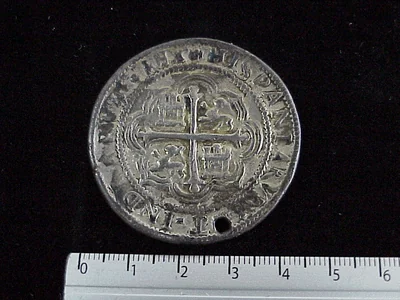
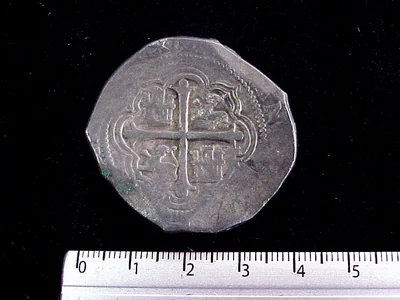
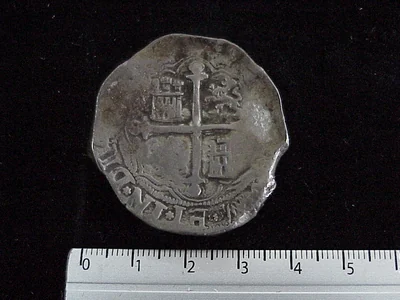
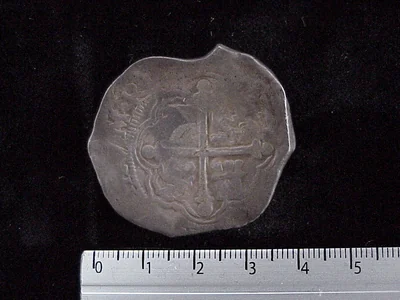
Round; shield over row of pearls; date recut.
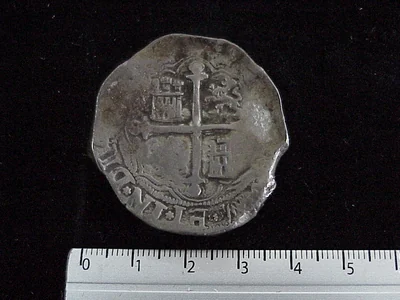
Round; shield over row of pearls; date recut.
The 8 Reales Felipe III 1610 : What It's Worth Today is worth between $737 and $4,653 MXN depending on its grade of preservation.
Prices updated: August 2026
How much is the 8 Reales Felipe III 1610 (Cob): What It's Worth Today worth?
The estimated value of the 8 Reales Felipe III 1610 (Cob): What It's Worth Today ranges from $737 (circulated, XF) up to $4,653 (official blister pack), with $3,229 as a reference for an uncirculated (UNC) piece. The estimate is based on the official mintage and the historical behavior of the family.
The real price depends on four factors: the grade of preservation (a circulated piece is worth the low end of the range; an uncirculated one, or one still in its official blister pack, the high end), the finish (satin vs mirror/proof), the rarity within the series based on the mintage, and the metal spot price on the day of the deal when the piece is silver or gold. Check the value-by-grade table above and compare with equivalent pieces before buying or selling.
Where to buy or sell this coin?
Browse the national directory of numismatic shops or the community forum to trade directly with other collectors.
Description
If you inherited a lumpy, irregular silver coin dated 1610 with a Spanish coat of arms, you may have a 8 Reales cob (macuquina) of Felipe III, struck by hand at the Mexico City Mint. A genuine one in average condition typically trades from a few hundred dollars up, and clean, well-dated examples can reach several thousand USD at auction. This is the original "piece of eight," the coin that financed empires and still has a real silver floor under it.
In 2026, these early Mexican silver cobs remain among the most sought-after colonial pieces for US and international collectors, precisely because a fully legible date and mint mark on a 400-year-old hand-struck coin is genuinely scarce.
Quick answer: is it worth money?
Yes, if it's real. Even a heavily worn, water-damaged specimen carries value from its silver content alone. The coin contains .900 fine silver and weighs 26.77 grams, which puts a bullion floor of roughly 20 to 25 USD under almost any example (melt value moves with the silver spot price). Everything above that floor is driven by how much of the design, date, and assayer's initial you can actually read.
- Low-grade, date barely visible: roughly 150 to 400 USD
- Full readable date and mint mark, decent relief: roughly 500 to 1,500 USD
- Well-centered, sharp, certified by NGC or PCGS: several thousand USD
Those are honest ranges for genuine pieces. Cobs are graded differently from modern coins because they were never meant to be round or perfectly struck, so eye appeal and legibility matter more than a flawless surface.
What this coin actually is
A macuquina (English collectors call it a "cob," from the Spanish cabo de barra, meaning "end of the bar") is a hand-hammered coin. Mint workers cut a chunk of silver from a cast bar, trimmed it to the correct weight, then struck it between two dies with a hammer. That's why every one is a different shape, off-center, and irregular around the edges. The weight and fineness were controlled by law, so the silver content is consistent even when the shape is not.
The 8 Reales was the largest silver denomination, the famous real de a ocho or "piece of eight" that became the standard trade coin across the Americas, Asia, and Europe. It's the direct ancestor of the US dollar sign and the origin of the term "two bits."
Specifications
| Attribute | Detail |
|---|---|
| Ruler | Felipe III (reigned 1598 to 1621) |
| Date | 1610 |
| Mint | Mexico City (colonial Casa de Moneda) |
| Type | 8 Reales cob (macuquina), hand-struck |
| Metal | Silver, .900 fine |
| Weight | 26.77 grams |
| Diameter | 42 mm (irregular) |
Why the date and assayer matter so much
On most surviving Felipe III cobs, the weak, off-center strike wiped out part of the legend. A coin where you can clearly read 1610 and the assayer's initial (the mint official who guaranteed the silver) is worth a large multiple of one where those details are gone. When buyers pay four figures for these, they are paying for legibility as much as for the coin itself.
Be aware that mint marks and assayer letters on cobs are subtle and easy to misread. If you can photograph yours clearly, the identification is usually straightforward for someone who handles them regularly.
The reality check: fakes are everywhere
This is one of the most heavily reproduced coins in the world. There are museum replicas, tourist souvenirs, and outright counterfeits made to deceive. Before you get excited about a five-figure valuation:
- Weigh it. A jeweler's scale should read close to 26.77 grams. A modern replica is often lighter or made of base metal.
- Test the silver. Genuine .900 silver has a specific density and a soft, non-magnetic feel. If a magnet grabs it, it's fake.
- Look at the strike. Real cobs show crude, hand-struck detail with genuine wear in the recesses. Cast copies have soft, mushy detail and often a seam around the edge.
- Be suspicious of anything sold well below silver value. No honest seller gives away a real 8 Reales for the price of scrap.
When in doubt, submit it to NGC or PCGS for authentication and grading. A certified genuine cob sells for far more than an uncertified one because the buyer isn't taking the counterfeit risk.
The myth to ignore
"It's from 1610, so it must be worth a fortune." Age alone doesn't do that. Millions of pieces of eight were struck over two centuries, and a worn, illegible example with no visible date is a minor silver coin, not a windfall. What moves the price is a readable date, a clear mint mark, an identified assayer, strong eye appeal, and third-party certification. A common cob in rough shape is worth its silver plus a modest collector premium, and that's the honest answer.
How to check and sell yours
Start by photographing the obverse (shield side), the reverse (cross side), and the edge in good light. Weigh it and measure it. Compare against the specs above. Then get a real opinion before you sell.
- For a hands-on appraisal, use a verified numismatic shop from the Pesoteca directory, sorted by city, where they can put the coin on a scale in front of you.
- To reach collectors directly, post in the Pesoteca buy-and-sell forum, where people who actually collect colonial silver will bid.
- If you suspect a genuine mint error or an unusual variant, share clear photos in the Pesoteca forum first. Most "errors" people post are post-mint damage (corrosion, scrapes, dings), not factory errors, but real ones do exist and can add value.
Because this is a precious-metal coin, only deal with buyers who inspect the piece and confirm its weight. Verify before you pay, and never dump it on the first social-media offer.
Wondering if the assayer's initial on your 1610 8 Reales is one of the scarcer ones? Post your photos in the forum and let the community read it for you.
Historical context
This piece belongs to the reign of Philip III of Spain (1598-1621). He succeeded his father Philip II. His government, delegated to the Duke of Lerma, coincided with the beginning of the so-called economic decline of the Hispanic Monarchy.
The government of New Spain in 1610 was in the hands of Fray Garcia Guerra, archbishop and viceroy for a brief period.
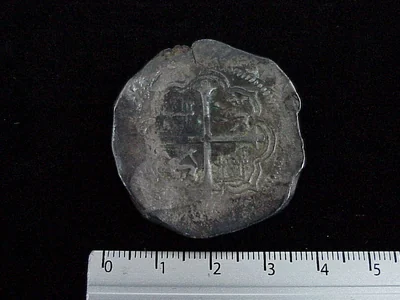
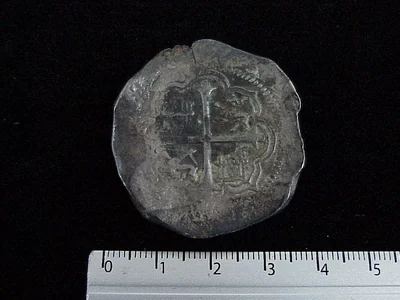
The numismatic type of the piece is cob (macuquina), also called hammer-cut coin. The blanks were cut with shears from a silver bar and struck between manual dies, so no cob has an edge or a perfectly circular shape. It circulated as the reference trade coin across the Atlantic for more than two centuries.
The Mexico mint (crowned Mo mark) operated from 1535 as the first mint of America. During the 17th century it struck cobs almost uninterruptedly, being the main issuing point of minted silver in the Spanish empire. The dies were signed by the assayer of the Mexico mint active in the period, an official charged by the Royal Treasury with certifying that the silver fineness met the viceregal standard.
Colonial catalogs trace this piece within the families of the Mexico Real de a ocho, with prices that respond to rarity by year and assayer signature.
Year in which viceroy Fray Garcia Guerra died in Mexico after a fall from a horse.
This piece belongs to the era
Colonial / Virreinato →Explore all the Mexican coins of this era, their historical context and how they connect to the monetary system of the period.
Value range of this piece
Market estimate: $737 - $4,653 MXN depending on the grade of preservation (typical range between a circulated and an uncirculated piece).
See the full breakdown by grade (VG, F, VF, EF, AU, MS-60, MS-63, MS-65) for the whole series →
Other denominations from 1610
8 Reales Coloniales · Plata 0.900
Same denomination, other years
8 reales Plata 0.900 · 8 Reales Coloniales
Frequently asked questions
How much is an 8 Reales Felipe III 1610 worth?
A genuine example ranges from about 150 to 400 USD when worn with a faint date, 500 to 1,500 USD with a clearly readable date and mint mark, and several thousand USD when sharp, well-centered, and certified by NGC or PCGS. The silver content alone (26.77 grams of .900 fine) sets a floor of roughly 20 to 25 USD depending on the spot price.
Is the 1610 8 Reales cob rare?
Common as a type, since millions of pieces of eight were struck, but genuinely scarce with a fully legible 1610 date, mint mark, and assayer's initial on a well-struck flan. That legibility is what separates a modest silver coin from a four-figure collector piece.
Where can I sell my 8 Reales Felipe III 1610?
For an in-person valuation, use a verified numismatic shop from the Pesoteca directory, sorted by city, where they weigh and appraise it on the spot. To reach collectors directly, list it in the Pesoteca buy-and-sell forum. Photograph the obverse, reverse, and edge first, and never accept the first low offer on social media.
How can I tell if my 1610 8 Reales is genuine?
Weigh it on a jeweler's scale (it should read near 26.77 grams), confirm it's non-magnetic, and check the diameter against the specs. Real cobs show crude hand-struck detail with wear in the recesses; cast fakes look soft and mushy and may have an edge seam. For any high-value piece, submit it to NGC or PCGS for authentication.
Conversation
0 comments
Loading comments…