
8 Reales Felipe IV 1623 (Spanish Silver Cob): Value & Prices
The 8 Reales Felipe IV 1623 : Value & Prices is worth between $744 and $4,700 MXN depending on its grade of preservation.
Prices updated: August 2026
Viceroyalty · Mexico City Mint
Viceroyalty · Mexico City Mint
The 8 Reales Felipe IV 1623 : Value & Prices is worth between $744 and $4,700 MXN depending on its grade of preservation.
Prices updated: August 2026
How much is the 8 Reales Felipe IV 1623 (Spanish Silver Cob): Value & Prices worth?
The estimated value of the 8 Reales Felipe IV 1623 (Spanish Silver Cob): Value & Prices ranges from $744 (circulated, XF) up to $4,700 (official blister pack), with $3,261 as a reference for an uncirculated (UNC) piece. The estimate is based on the official mintage and the historical behavior of the family.
The real price depends on four factors: the grade of preservation (a circulated piece is worth the low end of the range; an uncirculated one, or one still in its official blister pack, the high end), the finish (satin vs mirror/proof), the rarity within the series based on the mintage, and the metal spot price on the day of the deal when the piece is silver or gold. Check the value-by-grade table above and compare with equivalent pieces before buying or selling.
Where to buy or sell this coin?
Browse the national directory of numismatic shops or the community forum to trade directly with other collectors.
Description
If you inherited or found a large silver coin marked "8 R" with a Spanish shield and the name Felipe IV, you have a piece of colonial Mexican silver from 1623. Most circulated examples sell in the range of a few hundred dollars. Well-preserved and certified pieces climb into the thousands. Here is what actually drives that number, and how to check yours.
The 8 reales was the workhorse silver coin of the Spanish Empire, struck at the Mexico City mint (Casa de Moneda de México) when Mexico was the Virreinato de Nueva España, the Viceroyalty of New Spain. This is the coin American colonists later called the "Spanish dollar" or "piece of eight." It is one of the most historically important silver coins in the world, which is exactly why fakes and misattributions are common.
What you actually have
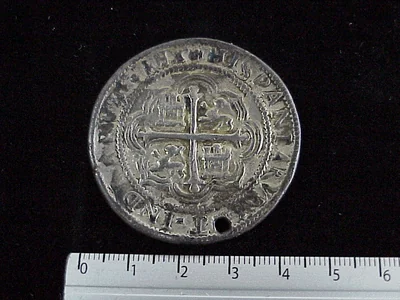
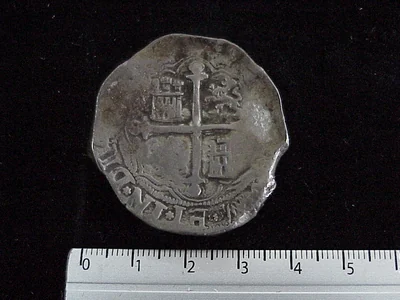
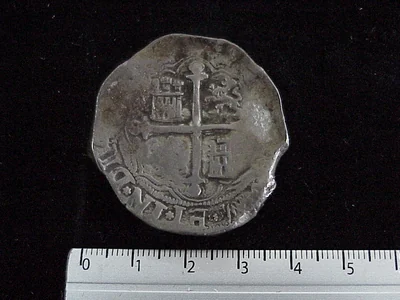
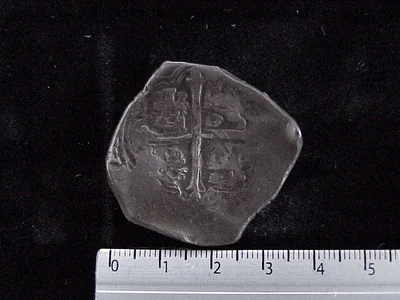
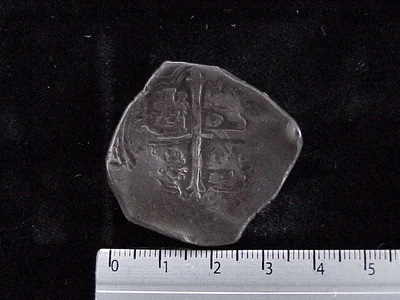
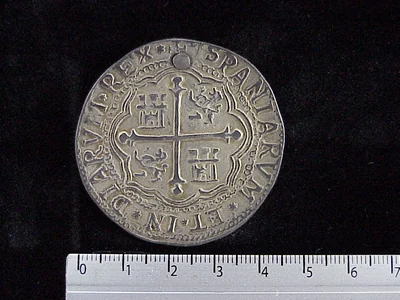
The 1623 date puts this piece in the reign of Felipe IV. Coins from this era are almost always cobs (from the Spanish cabo de barra), meaning they were hand-struck from cut pieces of a silver bar. They are irregular in shape, rarely perfectly round, and the design is often partly off the flan. That irregularity is normal and expected for the period. A perfectly round, machine-sharp "1623 8 reales" is a red flag for a modern fake or a much later restrike.
Specifications
| Detail | Value |
|---|---|
| Denomination | 8 reales |
| Year | 1623 |
| Ruler | Felipe IV |
| Mint | Mexico City (Ceca México) |
| Metal | Silver, .900 fine |
| Weight | 27.04 grams |
| Diameter | 40 mm |
| Edge | Plain (unmilled) |
| Series | Colonial 8 reales |
Note on cobs: the 27.04 gram figure is the standard for the type. Real cobs often weigh slightly under this because silver was clipped or lost to wear over four centuries. A coin that weighs dramatically more or less, or that shows a modern milled (reeded) edge, is not right for 1623.
What it is worth in USD
Value is driven by four things: authenticity, grade, how much of the design and date is visible, and the silver content. Because these were hand-struck, two genuine 1623 coins can differ wildly in price depending on how complete the strike is.
| Condition | Approximate value (USD) |
|---|---|
| Heavily worn / partial date, uncertified | 100 to 300 |
| Clear shield and legible assayer marks | 300 to 800 |
| Strong strike, full design elements, certified | 1,000 to 3,000+ |
| Exceptional, sea-salvage documented or high grade | Several thousand and up |
These are ranges, not a guaranteed offer. A cob with a fully readable date and mint mark is worth far more than one where you have to guess the year, even in the same broad condition. If the date is only partly visible, honest sellers describe it as "1623 attributed" rather than confirmed.
The silver floor
At roughly 27 grams of .900 silver, this coin contains close to 0.78 troy ounces of pure silver. That gives it a bullion floor: even a badly damaged, non-collectible example is worth its melt value in silver, which moves with the spot price. For a genuine cob, though, the collector premium almost always beats melt, so never sell one for scrap.
The myth to avoid
Colonial 8 reales get inflated stories online, with claims of pieces "worth a fortune." A few genuinely are, particularly rare-date cobs and documented shipwreck salvage from wrecks like the Atocha, which command strong premiums with provenance paperwork. But a typical worn, unprovenanced 1623 cob is a few hundred dollars, not a life-changing sum. Anyone quoting you tens of thousands for an ordinary example is either mistaken or selling something.
How to tell if yours is genuine
- Weigh it. Standard is 27.04 grams. Genuine survivors often run slightly light. Wildly off means fake.
- Measure it. About 40 mm across at the widest point on an irregular flan.
- Check the edge. It should be plain and irregular, never machine-reeded.
- Look at the shape. Real cobs are irregular and hand-cut. Perfectly round is suspicious.
- The ring test. Genuine silver gives a clear, sustained high tone when balanced on a fingertip and tapped lightly. Fakes sound dull and short. This is a hint, not proof.
- Get it certified. For any coin you think is worth more than a few hundred dollars, submission to NGC or PCGS is the definitive answer on authenticity and grade. Both grade Spanish colonial cobs.
Before you do anything, compare your coin against the colonial 8 reales series and use the Mexican coin grading guide to place your piece in the right condition tier.
Where to sell it
Given the value and the number of fakes in circulation, sell where authenticity is verified:
- A verified numismatic dealer from the Pesoteca shop directory, who can appraise it on the spot and knows colonial cobs.
- The Pesoteca buy-and-sell forum, where collectors can review clear photos of the obverse, reverse, and edge before any deal.
- For a genuine high-grade example, a specialist auction house that handles world coins will reach buyers who pay top prices for certified colonial silver.
Avoid dumping it on general marketplaces at the first offer. A certified 1623 8 reales in strong condition is exactly the kind of coin an informed buyer will pay a premium for, so it pays to verify before you sell.
Have a colonial 8 reales you can't fully read? Post clear photos of both sides and the edge in the Pesoteca forum and let collectors help you pin down the date and assayer.
Historical context
This piece belongs to the reign of Felipe IV of Spain (1621-1665). King during the Thirty Years' War and the separation of Portugal. His favorite was the Count-Duke of Olivares.
The government of New Spain in 1623 was in the hands of Diego Carrillo de Mendoza, marquis of Gelves, in open conflict with archbishop Pérez de la Serna.
The numismatic type of the piece is cob (macuquina), also called hammer-struck coin. The planchets were clipped with shears from a silver bar and struck between manual dies, so no cob has an edge or a perfectly circular shape. It circulated as a reference trade coin throughout the Atlantic for more than two centuries.
The Mexico mint (crowned Mo mark) operated from 1535 as the first mint in America. During the 17th century it struck cobs almost without interruption, being the main point of issue of struck silver in the Spanish empire. The dies were signed by the Mexico mint assayer active in the period, an official charged by the Royal Treasury with certifying that the silver fineness met the viceregal standard.
Colonial catalogs trace this piece within the families of the Mexico Real de a ocho, with prices that respond to rarity by year and assayer's signature.
Year of the open clash between viceroy Marquis of Gelves and archbishop Pérez de la Serna, which would end in the riot of 1624.
This piece belongs to the era
Colonial / Virreinato →Explore all the Mexican coins of this era, their historical context and how they connect to the monetary system of the period.
Value range of this piece
Market estimate: $744 - $4,700 MXN depending on the grade of preservation (typical range between a circulated and an uncirculated piece).
See the full breakdown by grade (VG, F, VF, EF, AU, MS-60, MS-63, MS-65) for the whole series →
Same denomination, other years
8 reales Plata 0.900 · 8 Reales Coloniales
Frequently asked questions
How much is an 8 Reales Felipe IV 1623 worth?
It depends heavily on authenticity, grade, and how much of the date and design are visible. A heavily worn, uncertified genuine cob typically runs 100 to 300 USD. A clear example with legible marks brings 300 to 800 USD, and a strong, certified piece can reach 1,000 to 3,000 USD or more. Documented shipwreck-salvage examples go higher. Get a firm valuation from a dealer who handles colonial cobs.
How do I tell if my 8 Reales Felipe IV 1623 is genuine?
The standard is 27.04 grams and about 40 mm across, with a plain (unmilled) edge. Genuine coins from this era are hand-struck cobs, so they are irregular in shape, not perfectly round. A machine-reeded edge or a flawless circular coin is a red flag. The silver ring test gives a clue, but the definitive answer is certification by NGC or PCGS, both of which grade Spanish colonial cobs.
Is the 8 Reales Felipe IV 1623 rare and valuable?
Colonial 8 reales are historically significant and always find buyers, but a typical worn 1623 cob is worth a few hundred dollars, not a fortune. Value jumps for coins with a fully legible date and mint mark, high certified grades, or documented shipwreck provenance. Ignore online claims of ordinary examples being worth tens of thousands.
Where can I sell an 8 Reales Felipe IV 1623?
Sell where authenticity is checked: a verified dealer from the Pesoteca shop directory who can appraise it in person, the Pesoteca buy-and-sell forum among collectors, or a specialist world-coin auction house for a high-grade certified piece. Photograph the obverse, reverse, and edge, and never accept the first lowball offer on a general marketplace.
Conversation
0 comments
Sources
Images for informational and educational purposes, attributed to their original source. Reference values; the real price depends on the grade, the specific variant and demand.
Loading comments…