
8 Reales Felipe III 1609 (Mexico City Mint): Value Guide
The 8 Reales Felipe III 1609 : Value Guide is worth between $754 and $4,763 MXN depending on its grade of preservation.
Prices updated: August 2026
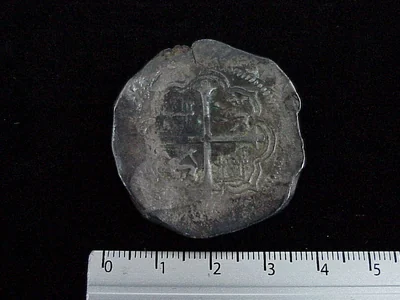
Over assayer A/F
Over assayer A/F
The 8 Reales Felipe III 1609 : Value Guide is worth between $754 and $4,763 MXN depending on its grade of preservation.
Prices updated: August 2026
How much is the 8 Reales Felipe III 1609 (Mexico City Mint): Value Guide worth?
The estimated value of the 8 Reales Felipe III 1609 (Mexico City Mint): Value Guide ranges from $754 (circulated, XF) up to $4,763 (official blister pack), with $3,305 as a reference for an uncirculated (UNC) piece. The estimate is based on the official mintage and the historical behavior of the family.
The real price depends on four factors: the grade of preservation (a circulated piece is worth the low end of the range; an uncirculated one, or one still in its official blister pack, the high end), the finish (satin vs mirror/proof), the rarity within the series based on the mintage, and the metal spot price on the day of the deal when the piece is silver or gold. Check the value-by-grade table above and compare with equivalent pieces before buying or selling.
Where to buy or sell this coin?
Browse the national directory of numismatic shops or the community forum to trade directly with other collectors.
Description
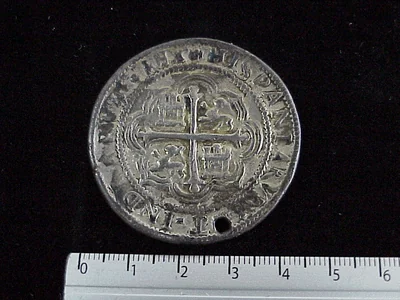
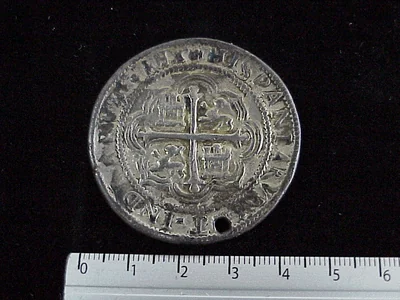
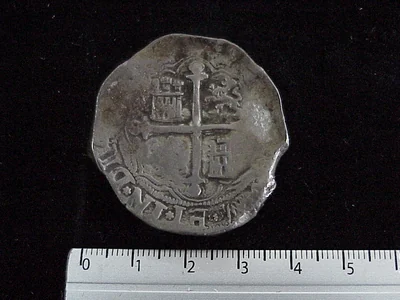
If you inherited an old, crudely round silver coin marked with a Spanish shield and a cross, and it reads 1609, you may be holding a cob 8 reales of Felipe III struck at the Mexico City Mint. These are genuinely old (over 400 years) and made of real silver, but age alone does not make one a fortune. Most fall between a few hundred and a few thousand US dollars depending on condition, strike quality, and whether it is authenticated.
This is the coin the world called the Spanish dollar or "pieces of eight." For centuries it was the most widely circulated trade coin on the planet, and the Mexico City Mint (Casa de Moneda de México) was its largest producer. That is exactly why value is about the individual piece, not the type: millions were struck, so a worn, questionable example is worth far less than a clean, certified one.
What you actually have
- Denomination: 8 reales (the largest standard silver coin of the era)
- Ruler: Felipe III (Philip III of Spain), reign 1598 to 1621
- Date: 1609
- Mint: Mexico City (the "oM" mint mark)
- Assayer: initial A (the official who certified the silver's fineness)
- Metal: silver, .900 fine
- Weight: 27.4 g
- Diameter: 38 mm
- Edge: plain, no lettering
- Catalog reference: Type 48, number 119
Because these were hand-struck cobs (irregular, hammered planchets rather than perfect discs), no two are identical. Full dates and complete legends are uncommon, and a legible 1609 date adds real premium. Many cobs show only partial dates or none at all.
What it is worth in 2026
Value for early Mexico City cobs is driven by four things: how much of the design and date is visible, the quality of the strike, authentication, and eye appeal (no corrosion, no cleaning, no saltwater damage). A heavily worn or corroded example trades close to its silver content. A well-struck, certified piece with a readable date sells for multiples of that.
| Condition | What you typically see | Approximate value (USD) |
|---|---|---|
| Low grade / corroded / partial date | Worn cob, weak or no date | 150 to 400 |
| Circulated, identifiable, decent shield | Clear mint and assayer, partial date | 400 to 1,200 |
| High grade, full 1609 date, certified | Strong strike, NGC/PCGS holdered | 1,500 to 5,000+ |
These are market ranges, not a guaranteed price for your specific coin. Shipwreck cobs (recovered from documented wrecks like the Atocha) can carry their own premium when they come with recovery paperwork. A raw coin with no certification and an uncertain date sits at the low end until it is authenticated.
The silver floor
Even the roughest genuine example has a floor: its metal. At 27.4 g of .900 silver, the coin holds roughly 0.79 troy ounces of pure silver. That means its melt value tracks the live silver spot price, and any legitimate buyer starts from that number. If someone offers you less than melt for a real silver coin, walk away. To understand how bullion sets a baseline, see our guide to silver Mexican coins.
Beware: fakes are everywhere on this type
Colonial Spanish silver is one of the most heavily counterfeited areas in all of numismatics. Modern cast copies, tourist replicas, and "aged" fakes flood online marketplaces. Before you buy or celebrate, run these checks:
- Weigh it on a jeweler's scale. A genuine coin is close to 27.4 g. Lightweight or overweight pieces are red flags.
- Measure the diameter with calipers against the 38 mm spec (remember cobs are irregular, so this is a range).
- Look at the strike. Real cobs were hammered; the design flows into the irregular edge. Cast fakes often show a seam, bubbles, or a soft, mushy surface.
- Check the mint mark and assayer. A genuine 1609 Mexico piece should show the Mexico mint and assayer A.
- Distrust bargains. An offer far below the metal value almost always means it is fake or stolen.
When in doubt, get it authenticated by NGC or PCGS before spending real money. A certified holder resolves the authenticity and grade question in one step and is what serious buyers want to see.
Errors and varieties
Genuine mint errors on cobs (off-center strikes, double strikes, die rotation, recognized varieties) can multiply value when verified. But most "errors" people spot on colonial silver are post-mint damage: corrosion, edge knocks, and saltwater pitting, not factory mistakes. If you think you have a real error, post clear photos in the Pesoteca forum and let the community weigh in before you assume it is valuable.
How to check and sell yours
- Photograph it cleanly: front (obverse), back (reverse), and edge, in good light with no glare.
- Do not clean it. Cleaning a colonial silver coin can cut its value sharply. Buyers pay for original surfaces.
- Weigh and measure it and compare to the specs above.
- Get a value from a verified dealer in the Pesoteca shop directory, who can appraise it in person, or list it in the buy/sell forum among collectors.
- Avoid dumping it to the first Facebook offer. Sell only to someone who inspects the coin and its weight, and always verify before you pay.
For context on other early Mexico City strikings and how mint marks and assayers affect value, browse our broader Mexican coin value guides.
Historical context
This piece belongs to the reign of Philip III of Spain (1598-1621). He succeeded his father Philip II. His government, delegated to the Duke of Lerma, coincided with the start of the so-called economic decline of the Hispanic Monarchy.
The government of New Spain in 1609 was in the hands of Luis de Velasco y Castilla, Marquis of Salinas, in his second viceregal term, succeeded that year by Fray García Guerra.
The numismatic type of the piece is a cob, also called a hammer-cut coin. The flans were trimmed with shears from a silver bar and struck between hand-held dies, so no cob has an edge or a perfectly circular shape. It circulated as the reference trade coin throughout the Atlantic for more than two centuries.
The Mexico City mint (crowned Mo mark) operated from 1535 as the first mint in the Americas. During the 17th century it struck cobs almost without interruption, being the main point of issue of struck silver in the Spanish empire. The dies were signed by the Mexico City mint assayer active in the period, the official charged by the Royal Treasury with certifying that the silver fineness met the viceregal standard.
The colonial catalogs trace this piece within the families of the Mexico City piece of eight, with prices that respond to rarity by year and assayer's signature.
The year in which Fray García Guerra began his government duties after the retirement of Viceroy Velasco.
This piece belongs to the era
Colonial / Virreinato →Explore all the Mexican coins of this era, their historical context and how they connect to the monetary system of the period.
Value range of this piece
Market estimate: $754 - $4,763 MXN depending on the grade of preservation (typical range between a circulated and an uncirculated piece).
See the full breakdown by grade (VG, F, VF, EF, AU, MS-60, MS-63, MS-65) for the whole series →
Other denominations from 1609
8 Reales Coloniales · Plata 0.900
Same denomination, other years
8 reales Plata 0.900 · 8 Reales Coloniales
Frequently asked questions
How much is an 8 Reales Felipe III 1609 worth?
A genuine 1609 Mexico City 8 reales of Felipe III typically runs from about 150 to 400 USD when worn or corroded, 400 to 1,200 USD when circulated but identifiable, and 1,500 to 5,000 USD or more for a high-grade, certified example with a full readable date. Even a rough piece holds a floor near its silver melt value (about 0.79 troy ounces of pure silver).
Is the 1609 8 reales rare?
The type is not rare (the Mexico City Mint produced these Spanish silver dollars in huge numbers), but condition is. A well-struck cob with a fully legible 1609 date, no corrosion, and no cleaning is genuinely scarce and commands a strong premium. Worn, partial-date examples are common and priced closer to their silver content.
How can I tell if my 8 Reales Felipe III 1609 is genuine?
Weigh it (should be near 27.4 g) and measure the diameter (around 38 mm, though cobs are irregular) on a jeweler's scale and calipers, then compare to the specs. Look for a hammered strike, the Mexico mint mark, and assayer initial A. Cast fakes show seams, bubbles, or soft mushy detail. Colonial silver is heavily counterfeited, so get it certified by NGC or PCGS before spending real money.
Where can I sell an 8 Reales Felipe III 1609?
The safest options are a verified dealer from the Pesoteca shop directory, who can appraise and value it in person, or the Pesoteca buy/sell forum among collectors. Photograph the obverse, reverse, and edge, and check the value range in this guide before selling. Because it is precious metal, deal only with buyers who inspect the coin and its weight, and avoid selling to the first online offer.
Conversation
0 comments
Loading comments…