
8 Reales Columnario Carlos III 1760-1772 (Pillar Dollar)
The 8 Reales Columnario Carlos III 1760-1772 is worth between $745 and $3,137 MXN depending on its grade of preservation.
Prices updated: August 2026
Last Pillar Dollar · Charles III · Transition to the Bust type in 1772
Last Pillar Dollar · Charles III · Transition to the Bust type in 1772
Design
Banxico
Reverse
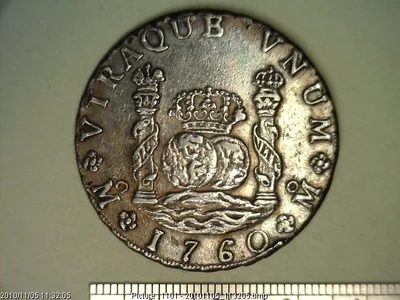
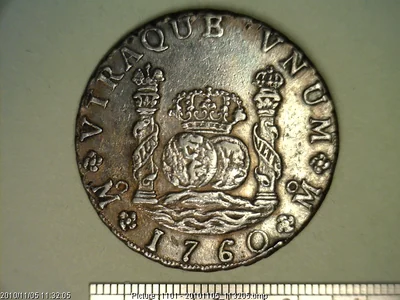
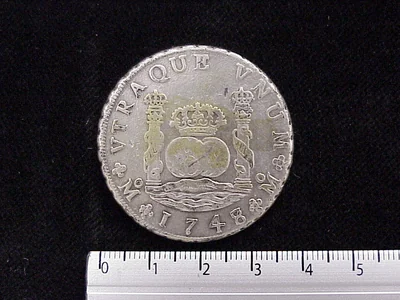
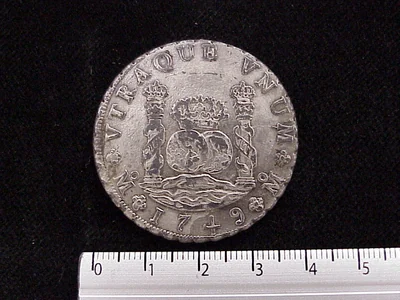
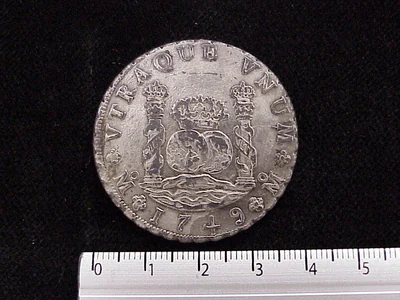
Two crowned hemispheres (Old World + New World) flanked by the two Pillars of Hercules with banners reading "PLUS ULTRA". Inscription "VTRAQUE VNUM" (both are one) above the hemispheres. Year of minting at the base between the columns. Value "8 R" below the year.
Obverse
Crowned coat of arms of the Habsburg-Bourbon dynasty. Inscription "CAROLUS III D G HISPAN ET IND REX". Mint mark "Mo" (Mexico) and assayer's initials "MM/MF".
The 8 Reales Columnario Carlos III 1760-1772 is worth between $745 and $3,137 MXN depending on its grade of preservation.
Prices updated: August 2026
How much is the 8 Reales Columnario Carlos III 1760-1772 (Pillar Dollar) worth?
The estimated value of the 8 Reales Columnario Carlos III 1760-1772 (Pillar Dollar) ranges from $745 (circulated, XF) up to $3,137 (official blister pack), with $2,267 as a reference for an uncirculated (UNC) piece. The estimate is based on the official mintage and the historical behavior of the family.
The real price depends on four factors: the grade of preservation (a circulated piece is worth the low end of the range; an uncirculated one, or one still in its official blister pack, the high end), the finish (satin vs mirror/proof), the rarity within the series based on the mintage, and the metal spot price on the day of the deal when the piece is silver or gold. Check the value-by-grade table above and compare with equivalent pieces before buying or selling.
Where to buy or sell this coin?
Browse the national directory of numismatic shops or the community forum to trade directly with other collectors.
Description
If you inherited or found a large silver coin marked "8 R" with two crowned pillars and a Spanish coat of arms, you may have a Columnario, also called a Pillar Dollar. The good news: even a worn, genuine example is worth real money, from roughly 150 USD at the low end to several thousand for sharp, high-grade pieces. Here is how to tell what yours is worth and where to sell it.
What this coin actually is
The 8 Reales Columnario of Carlos III (1760-1772) was struck at the Mexico City Mint (the "Mo" mintmark) during the Spanish colonial period. It was the first machine-struck (screw-press) Mexican 8 Reales, replacing the crude, irregular hand-hammered "cob" coinage (macuquina) that came before it. That upgrade in quality is part of why collectors chase this series.
Catalog reference: KM 105. This is the only Columnario type for Carlos III before the design switched to the Bust (Busto) type in 1772.
Specifications (verify yours against these)
| Spec | Value |
|---|---|
| Denomination | 8 Reales |
| Metal | Silver, approximately 0.900 fine |
| Weight | 27.07 g |
| Diameter | 38 mm |
| Mint | Mexico City (Mo) |
| Dates | 1760-1772 |
| Catalog | KM 105 |
A jeweler's scale and a caliper are your first authenticity check. A genuine piece should land close to 27.07 g and 38 mm. Weight or diameter that is off is a red flag.
What drives the value
Three things decide the price on a Columnario:
- Grade (condition). This is the single biggest factor. A heavily worn coin trades near its silver value plus a collector premium. A crisp, well-struck example with full detail on the pillars and hemispheres can be worth many times more.
- Silver content (the floor). With 27.07 g at about 0.900 fine, the coin carries roughly 0.78 troy ounces of pure silver. That gives it a melt-value floor that moves with the silver market. No genuine Columnario is "worth nothing."
- Date, assayer, and eye appeal. The assayer initials changed within the series: MM (Manuel Asorín) from 1760-1769, and MF (Manuel Asorín with Francisco Antonio de la Peña) from 1769-1772. These variations are still cataloged under KM 105, but certain dates and combinations are scarcer and draw stronger bids.
Realistic value ranges (USD)
Because condition swings the price so widely, honest ranges beat a fake exact figure:
- Well-worn, genuine, common date: roughly 150 to 350 USD.
- Mid-grade with clear detail: roughly 350 to 900 USD.
- High grade, sharp strike, certified: commonly 1,500 USD and up, with the finest examples of scarcer dates reaching several thousand at major auctions.
Grading and certification matter here. A coin slabbed by NGC or PCGS with a stated grade will command more, and it removes the authenticity doubt that scares off buyers.
The myth: "it's 250 years old, so it must be worth a fortune"
Age alone does not make a coin rare. Millions of Spanish colonial 8 Reales were struck and used as world trade currency, from the Americas to Asia. Plenty survive. A common-date Columnario in low grade is a few hundred dollars, not a life-changing sum. What pushes prices high is condition and a scarce date/assayer combination, not the calendar.
Also beware: this series is heavily counterfeited. Cast copies, altered dates, and modern fakes are everywhere. Never buy or sell on trust alone.
How to tell if yours is genuine
- Weigh and measure it. Compare against 27.07 g and 38 mm.
- Check the strike. Screw-press coins show sharp, raised detail, not the soft, blurry look of a cast fake. Look at the two crowned pillars, the twin globes (hemispheres), and the crowned arms.
- Read the mintmark and assayer. Confirm the "Mo" mint and the correct MM or MF initials for the year.
- Suspect any deal well below silver value. If a buyer offers less than the metal is worth, walk away. If a seller prices a "rare" one suspiciously cheap, assume it's fake until proven otherwise.
- When in doubt, get it certified through NGC or PCGS before a big sale.
Where to sell (and buy) safely
For a coin of this value, sell where the piece is inspected and priced fairly:
- A verified numismatic shop from the Pesoteca directory, which can appraise it on the spot.
- The Pesoteca buy-and-sell forum, where collectors deal directly.
Before you sell, photograph the obverse, reverse, and edge in good light, and check the range in this guide so you know your floor. Avoid dumping it to the first offer on social media. Because this is a precious-metal coin, only deal with someone who will show you the piece and its weight, and verify before any money changes hands.
Think you have a Columnario but can't read the assayer or aren't sure it's real? Post clear photos of both sides in the Pesoteca forum and let collectors weigh in before you sell.
Historical context
Carlos III took the throne in 1759 and introduced deep Bourbon reforms in the colonial administration. Pillar coinage continued with the Carlos III die until 1772, when the pragmatic sanction of May 29, 1772 established the change of design to the king's Bust on the obverse, ending 40 years of the Pillar type. The Columnario 1772 Mo-MF piece is the last of the series and is therefore highly sought after by collectors. After 1772 the format shifted to the Carlos III Bust (KM 106), which would be minted until 1789. The Pillar series as a whole was struck at the Mexico Mint (Mo mint mark) between 1732 and 1772 under three monarchs: Felipe V, Fernando VI and Carlos III. It is considered the monetary standard of world trade in the 18th century for its purity and consistency. Mexican pieces circulated in Asia (with frequent Chinese chopmarks over the die), in the Thirteen North American Colonies (they served as the basis for the U.S. dollar) and throughout Europe. Today they are a central object of world numismatic collecting, especially for their role as the forerunner of the international Spanish Dollar / Pillar Dollar.
This piece belongs to the era
Colonial / Virreinato →Explore all the Mexican coins of this era, their historical context and how they connect to the monetary system of the period.
Value range of this piece
Market estimate: $745 - $3,137 MXN depending on the grade of preservation (typical range between a circulated and an uncirculated piece).
See the full breakdown by grade (VG, F, VF, EF, AU, MS-60, MS-63, MS-65) for the whole series →
Other denominations from 1760
8 Reales Coloniales · Plata 0.900
Same denomination, other years
8 reales Plata 0.900 · 8 Reales Coloniales
Frequently asked questions
How much is an 8 Reales Columnario Carlos III (1760-1772) worth?
It depends almost entirely on condition. A worn but genuine common-date coin runs roughly 150 to 350 USD, mid-grade examples 350 to 900 USD, and high-grade certified pieces commonly 1,500 USD and up, with the finest scarce dates reaching several thousand at auction. The silver content (about 0.78 troy ounces of pure silver) sets a floor no genuine coin drops below.
Is the Columnario Pillar Dollar rare?
Not by age alone. Spanish colonial 8 Reales were struck in huge numbers and used as world trade money, so many survive. What makes a specific coin valuable is high grade, a sharp strike, and a scarce date or assayer combination (MM 1760-1769, MF 1769-1772), not the fact that it's over 250 years old.
Where can I sell my 8 Reales Columnario?
For a coin this valuable, sell where it's inspected and priced fairly: a verified numismatic shop from the Pesoteca directory that appraises on the spot, or the Pesoteca buy-and-sell forum where collectors deal directly. Photograph the obverse, reverse, and edge first, and consider NGC or PCGS certification before a big sale. Don't sell to the first social-media offer.
How do I tell if my Columnario is genuine?
Weigh and measure it: a real one is close to 27.07 g and 38 mm. Check for the sharp, raised detail of a screw-press strike rather than the soft look of a cast fake, and confirm the 'Mo' mintmark and the correct MM or MF assayer initials for the year. This series is heavily counterfeited, so any price far below the coin's silver value is a warning sign. When in doubt, get it certified.
Conversation
0 comments
Sources
Images for informational and educational purposes, attributed to their original source. Reference values; the real price depends on the grade, the specific variant and demand.
Loading comments…