
8 Reales Carlos III 1760: Value Guide
The 8 Reales Carlos III 1760: Value Guide is worth between $740 and $3,114 MXN depending on its grade of preservation.
Prices updated: August 2026
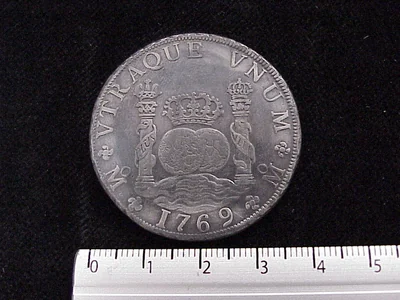
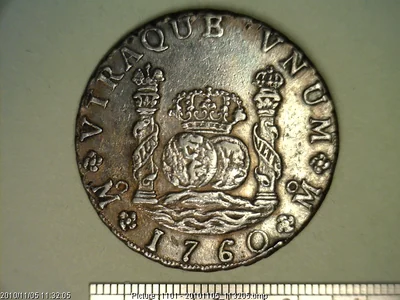
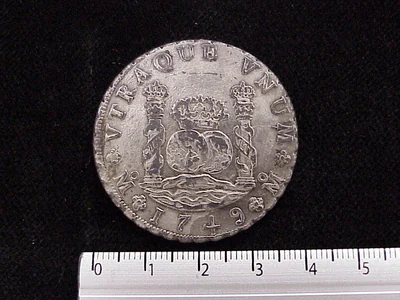
Pillar Dollar.
Pillar Dollar.
The 8 Reales Carlos III 1760: Value Guide is worth between $740 and $3,114 MXN depending on its grade of preservation.
Prices updated: August 2026
How much is the 8 Reales Carlos III 1760: Value Guide worth?
The estimated value of the 8 Reales Carlos III 1760: Value Guide ranges from $740 (circulated, XF) up to $3,114 (official blister pack), with $2,251 as a reference for an uncirculated (UNC) piece. The estimate is based on the official mintage and the historical behavior of the family.
The real price depends on four factors: the grade of preservation (a circulated piece is worth the low end of the range; an uncirculated one, or one still in its official blister pack, the high end), the finish (satin vs mirror/proof), the rarity within the series based on the mintage, and the metal spot price on the day of the deal when the piece is silver or gold. Check the value-by-grade table above and compare with equivalent pieces before buying or selling.
Where to buy or sell this coin?
Browse the national directory of numismatic shops or the community forum to trade directly with other collectors.
Description
If you inherited an old, heavy silver coin marked "CAROLUS III" and "1760," you have a genuine piece of history that carries real money value. A worn 8 Reales from this era typically brings 150 to 400 USD, while sharp, high-grade examples have sold for several thousand dollars at auction. It is not a coin worth millions, but it is far from pocket change.
Here is what you actually have, what drives the price, and how to check yours in 2026.
What this coin is
The 8 Reales was the silver "dollar" of its day, the most widely circulated trade coin on the planet for centuries. Yours was struck at the Mexico City Mint (the Casa de Moneda de México), which was the busiest silver mint in the Spanish Empire. This particular type shows King Carlos III of Spain, dated 1760, with the assayer initials MM (the official who certified the silver purity).
Quick specs to confirm you have the right coin:
- Metal: Silver, 0.900 fine (90% silver)
- Weight: 26.87 grams
- Diameter: 38 mm
- Edge: Laureate (a decorative leaf pattern, not smooth)
- Catalog reference: KM#104
A note on the date: 1760 was the first year of Carlos III's reign, and early strikes of a new king are watched closely by collectors. If your coin genuinely reads 1760 and is well preserved, it is worth having appraised rather than sold quickly.
What it's worth in USD
Value on a colonial 8 Reales comes down to three things: how much wear the coin shows (its grade), whether it is authentic, and the base value of the silver inside it. That silver content sets a hard floor. At roughly 0.777 troy ounces of pure silver, the melt value alone keeps any genuine example above about 20 to 25 USD, and no honest buyer should offer you less than that.
Above melt, condition drives everything.
| Condition (grade) | What it looks like | Typical value (USD) |
|---|---|---|
| Heavily worn / "cull" | Flat details, edge nicks, possible corrosion | 30 to 120 |
| Fine to Very Fine | Clear portrait, readable legends, honest circulation wear | 150 to 400 |
| Extremely Fine | Sharp details, light wear on high points | 400 to 900 |
| About Uncirculated / Mint State | Little to no wear, original luster | 1,000 to several thousand |
Those ranges assume a genuine, problem-free coin. Cleaning, holes, mounts (for jewelry), or heavy corrosion cut the value sharply, sometimes down to melt. A high-grade, certified example of an early Carlos III 8 Reales can reach four figures at auction, but that is the exception, not the rule.
The myth to ignore
A "very old" coin is not automatically worth a fortune. The Mexico City Mint produced 8 Reales in enormous quantities, which is exactly why they turned up all over the world in colonial trade. Common dates in worn condition are worth low hundreds at best. What separates a 300-dollar coin from a 3,000-dollar coin is grade and eye appeal, not age alone. Anyone telling you an average circulated example is worth thousands is either mistaken or trying to buy something else from you.
Are there valuable errors or varieties?
Genuine mint errors (off-center strikes, die rotation, double strikes) can multiply the value of a colonial coin when they are real and verifiable. Be careful, though: most "errors" people find are post-mint damage, meaning dents, scratches, and corrosion that happened after the coin left the mint. That damage lowers value, it does not raise it. If you think you have a true error, get a second opinion before you celebrate.
How to check what yours is worth
- Weigh and measure it. Use a jewelry scale and a caliper. A genuine coin should be close to 26.87 g and 38 mm. A piece that is significantly light or the wrong diameter is a red flag.
- Look at the edge. This type has a laureate (leafed) edge, not a smooth or plain one. Cast counterfeits often get the edge wrong.
- Check the mint mark and assayer. Confirm the Mexico City mint mark and the MM assayer initials. Counterfeits of Spanish colonial silver are common, so these details matter.
- Do not clean it. Cleaning a colonial coin can wipe out hundreds of dollars in value. Leave the toning as it is.
- Get it graded if it looks high-end. For a coin that appears to have little wear, professional grading by NGC or PCGS confirms authenticity and can significantly increase what a buyer will pay.
Where to sell it
For the best outcome, sell to people who understand what colonial silver is worth. A verified numismatic shop from the Pesoteca directory can appraise it on the spot, and the Pesoteca buy-and-sell forum connects you directly with collectors. Photograph the front, back, and edge before you list it, and compare offers against the ranges above. Because this is a precious-metal coin, only deal with a buyer who will show you the piece and its weight in person, and never dump it on the first social-media bidder.
Not sure which grade your coin falls into? Post clear photos of both sides on the Pesoteca forum and let the community weigh in before you sell.
Historical context
This piece belongs to the reign of Carlos III of Spain (1759-1788). An enlightened king, he promoted the so-called Bourbon Reforms that reorganized administration and the treasury in New Spain.
The government of New Spain in 1760 was in the hands of Francisco Cajigal de la Vega, governing the viceroyalty on an interim basis.
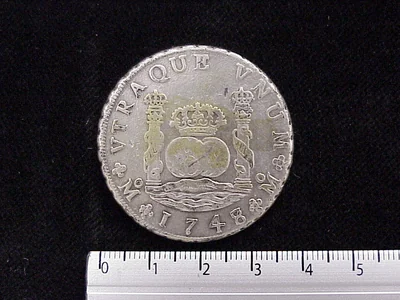
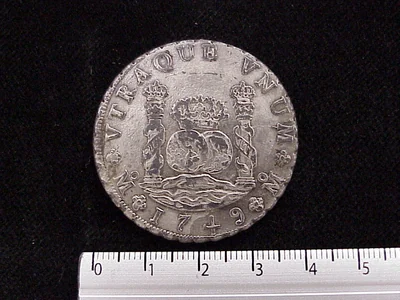
The numismatic type of the piece is pillar (columnario), officially introduced in New Spain in 1732. The reverse shows two crowned globes between the Pillars of Hercules with the motto PLVS VLTRA, and for the first time the coin was struck on a screw press with a laureate edge, which reduced fraudulent clipping of silver and made the pillar dollar the most trusted trade coin of its time.
The Mexico mint formally introduced the mechanized minting of pillar reales in 1732, and from then on the crowned Mo mark was accompanied by the assayer's initials. Production was enormous, exported as trade currency to the Philippines, China, Protestant Europe, and the 13 English colonies. The dies were signed by the Mexico mint assayer active in the period, an official charged by the Royal Treasury with certifying that the silver fineness met the viceregal standard.
Colonial catalogs trace this piece within the families of the Mexico Real de a ocho, with prices that respond to rarity by year and assayer's signature.
Year of succession in Spain: Fernando VI died and Carlos III took the throne, coming from Naples.
This piece belongs to the era
Colonial / Virreinato →Explore all the Mexican coins of this era, their historical context and how they connect to the monetary system of the period.
Value range of this piece
Market estimate: $740 - $3,114 MXN depending on the grade of preservation (typical range between a circulated and an uncirculated piece).
See the full breakdown by grade (VG, F, VF, EF, AU, MS-60, MS-63, MS-65) for the whole series →
Other denominations from 1760
8 Reales Coloniales · Plata 0.900
Same denomination, other years
8 reales Plata 0.900 · 8 Reales Coloniales
Frequently asked questions
How much is a 1760 Carlos III 8 Reales worth?
Most circulated examples sell for 150 to 400 USD, and even a heavily worn coin stays above its silver melt value of about 20 to 25 USD. Sharp, high-grade or certified pieces can reach 1,000 USD or more at auction. Condition and authenticity drive the price far more than age.
Is the 1760 Carlos III 8 Reales rare?
The Mexico City Mint struck 8 Reales in huge numbers, so worn common examples are not rare and sell for low hundreds. Rarity and top prices come from high grade, sharp original detail, and verified mint errors, not from age alone. 1760 being the first year of Carlos III's reign does add collector interest.
Where can I sell my 1760 Carlos III 8 Reales?
The safest options are a verified shop from the Pesoteca directory (/tiendas), which appraises it in person, or the Pesoteca buy-and-sell forum (/foro/compra-venta) for collector-to-collector sales. Photograph the front, back, and edge, and compare offers to the value ranges above before selling. Since it is silver, only deal with a buyer who inspects and weighs the coin in front of you.
How can I tell if my 1760 Carlos III 8 Reales is genuine?
Weigh and measure it: a real coin is close to 26.87 grams and 38 mm, with a laureate (leafed) edge, not a smooth one. Confirm the Mexico City mint mark and the MM assayer initials. Counterfeits of Spanish colonial silver are common, so be suspicious of any coin that is underweight or of any offer far below the silver's value.
Conversation
0 comments
Loading comments…