
8 Reales Carlos III 1761 (Pillar Dollar): Value & Prices
The 8 Reales Carlos III 1761 : Value & Prices is worth between $742 and $3,123 MXN depending on its grade of preservation.
Prices updated: August 2026
Viceroyalty · Mexico City Mint · Assayer MM
Viceroyalty · Mexico City Mint · Assayer MM
The 8 Reales Carlos III 1761 : Value & Prices is worth between $742 and $3,123 MXN depending on its grade of preservation.
Prices updated: August 2026
How much is the 8 Reales Carlos III 1761 (Pillar Dollar): Value & Prices worth?
The estimated value of the 8 Reales Carlos III 1761 (Pillar Dollar): Value & Prices ranges from $742 (circulated, XF) up to $3,123 (official blister pack), with $2,257 as a reference for an uncirculated (UNC) piece. The estimate is based on the official mintage and the historical behavior of the family.
The real price depends on four factors: the grade of preservation (a circulated piece is worth the low end of the range; an uncirculated one, or one still in its official blister pack, the high end), the finish (satin vs mirror/proof), the rarity within the series based on the mintage, and the metal spot price on the day of the deal when the piece is silver or gold. Check the value-by-grade table above and compare with equivalent pieces before buying or selling.
Where to buy or sell this coin?
Browse the national directory of numismatic shops or the community forum to trade directly with other collectors.
Description
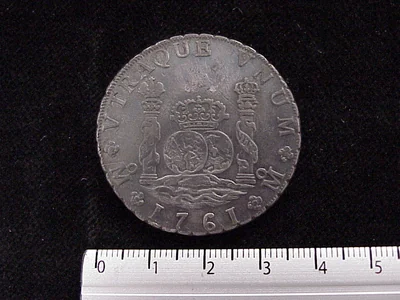
If you inherited an 8 Reales Carlos III dated 1761, you have a genuine piece of world trade history that also happens to contain real silver. This is the famous Pillar Dollar (columnario in Spanish), struck at the Mexico City mint. A worn but genuine example is worth roughly 80 to 200 USD. A sharp, high-grade certified coin can bring several thousand. In 2026, condition is what separates a common coin from a valuable one.
What you actually have
The 8 Reales was the Spanish colonial silver dollar, the coin U.S. traders called the "piece of eight." The 1761 issue with Carlos III belongs to the columnario type, named for the two Pillars of Hercules framing two globes above ocean waves. That design represented Spain's dominions on both sides of the Atlantic.
Americans should recognize this coin for one reason: the Pillar Dollar circulated across the colonies and was one of the foreign coins the first U.S. dollars were modeled on. It was legal tender in the United States well into the 1800s.
Here are the exact specs, so you can confirm yours is real:
| Feature | Detail |
|---|---|
| Denomination | 8 Reales (Pillar Dollar) |
| Ruler | Carlos III |
| Date | 1761 (single year of this variety) |
| Mint | Mexico City |
| Metal | Silver, .900 fine |
| Weight | 26.95 grams |
| Diameter | 38 mm |
| Edge | Laureate (decorated, not smooth) |
| Catalog | Krause KM#105 |
The silver content alone gives it a floor value. At .900 fineness and 26.95 grams, it holds about 0.78 troy ounces of pure silver. That means it can never be worth less than the melt value of its metal, and that floor moves with the silver market.
What it's worth in 2026
Be honest with yourself about condition before you get excited. The columnario is common enough in worn grades and genuinely scarce in high grades. The relief on the two columns and the two globes is the first thing to wear away, and it is exactly what collectors pay for.
- Heavily worn (details soft, dates barely readable): roughly 80 to 200 USD. This is close to bullion territory. Most inherited examples fall here.
- Moderate wear, clear design (VF, About Uncirculated): roughly 300 to 900 USD depending on eye appeal.
- High grade, certified Mint State: several thousand USD. Choice columnario dollars in Mint State are legitimately rare, and top examples have crossed into five figures at U.S. auction houses.
Columnarios of Carlos III are among the most sought-after Spanish colonial coins with U.S. collectors, so there is real, steady demand. That is different from most old coins, where age does not equal money.
The myth to kill
A lot of sellers online will tell you any 260-year-old silver coin is a fortune. It isn't. A cleaned, scratched, or holed 1761 columnario is worth its silver and little more. Cleaning is the number one value killer we see: never polish or scrub this coin. A dull, honestly-toned original surface is worth far more than a shiny cleaned one. To collectors, cleaning is obvious and it slashes the price.
How to tell if yours is genuine
Contemporary counterfeits and modern fakes both exist for this coin because it was money the whole world used.
- Weigh it. A real one is 26.95 grams. If yours is off by more than a fraction of a gram, be suspicious.
- Measure it. 38 mm diameter.
- Check the edge. The columnario has a laureate (decorated) edge, not a smooth one. A smooth edge is a red flag.
- The ping test. Genuine .900 silver rings with a long, high-pitched tone when tapped gently. Base-metal fakes sound flat and short.
- When it matters, certify it. For any example you think is above worn condition, professional grading from NGC or PCGS is the definitive check. It confirms authenticity, assigns a grade, and roughly doubles buyer confidence at sale.
For context on other colonial silver, see our guides to Mexican silver coins and how coin grading affects price.
Where to sell it
Because this coin has real silver value and real collector demand, you have options:
- Certified auction (best for high grade): if yours is sharp and uncirculated, a specialist auction house is where record prices happen.
- Reputable coin dealers: they can appraise and pay on the spot for worn to mid-grade pieces. Get more than one offer.
- Collector communities: you get closer to true market value dealing directly with collectors who want the coin itself, not just the metal.
Whatever you do, photograph the front, back, and edge in good light, and confirm the weight before anyone quotes you. Never accept an offer that only reflects melt value if the coin has real design detail left. And do not clean it first.
Got an 8 Reales Carlos III 1761 and not sure whether yours is worn stock or a high-grade sleeper? Post clear photos of both sides and the edge in the Pesoteca forum and the community will help you place its grade and value before you sell.
Historical context
This piece belongs to the reign of Carlos III of Spain (1759-1788). An enlightened king, he promoted the so-called Bourbon Reforms that reorganized administration and finances in New Spain.
The government of New Spain in 1761 was in the hands of Joaquín de Monserrat, Marquis of Cruillas, in the times of the Seven Years' War.
The numismatic type of the piece is pillar (columnario), officially introduced in New Spain in 1732. The reverse shows two crowned globes between the Pillars of Hercules with the motto PLVS VLTRA, and for the first time the coin was struck on a screw press with a laureate edge, which reduced fraudulent silver clipping and made the pillar real the most trusted trade coin of its era.
The Mexico mint formally introduced the mechanized striking of pillar reales in 1732, and from then on the crowned Mo mark was accompanied by the assayer's initials. Production was enormous, exported as money of account to the Philippines, China, Protestant Europe, and the 13 English colonies. The assayer's initials declared on the piece are MM, the Royal Treasury official charged with certifying the silver fineness (0.930 and later 0.903) under viceregal regulation.
The Krause catalog references this piece under KM#105, useful for cross-checking the entry against international auction listings.
The year Spain entered the Seven Years' War through the so-called Third Family Pact with France.
This piece belongs to the era
Colonial / Virreinato →Explore all the Mexican coins of this era, their historical context and how they connect to the monetary system of the period.
Value range of this piece
Market estimate: $742 - $3,123 MXN depending on the grade of preservation (typical range between a circulated and an uncirculated piece).
See the full breakdown by grade (VG, F, VF, EF, AU, MS-60, MS-63, MS-65) for the whole series →
Other denominations from 1761
8 Reales Coloniales · Plata 0.900
Same denomination, other years
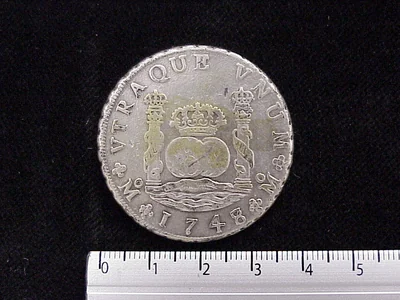
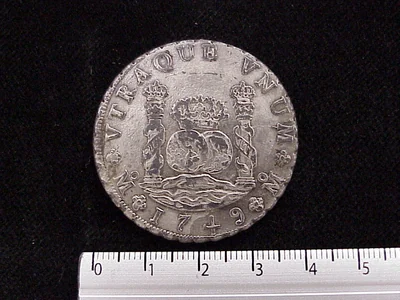
8 reales Plata 0.900 · 8 Reales Coloniales
Frequently asked questions
How much is an 8 Reales Carlos III 1761 worth?
It depends almost entirely on condition. A heavily worn but genuine example is worth roughly 80 to 200 USD, close to its silver value. A clean, well-detailed coin runs 300 to 900 USD, and a certified high-grade Mint State example can bring several thousand USD. Never clean the coin, since that alone can cut the value dramatically.
Is the 8 Reales Carlos III 1761 rare?
In worn grades, no. The Pillar Dollar was struck for world trade and plenty survive in circulated condition. In high grade it is genuinely scarce, because the raised columns and globes wear quickly and few coins kept sharp detail. Rarity and collector demand are both concentrated in the best-preserved examples.
How do I tell if my 8 Reales Carlos III 1761 is genuine?
Check the specs first: it should weigh 26.95 grams and measure 38 mm, with a decorated (laureate) edge, not a smooth one. Real .900 silver gives a long, high-pitched ring when tapped gently. For anything you believe is above worn condition, professional grading from NGC or PCGS is the definitive way to confirm authenticity and grade.
Where can I sell an 8 Reales Carlos III 1761?
For a high-grade or certified coin, a specialist coin auction house gets the best price. For worn to mid-grade pieces, reputable coin dealers can appraise and pay on the spot, so get more than one offer. Selling directly to collectors also works well. Always show clear photos of both sides plus the edge and confirm the weight, and never sell for melt value if the design detail is still strong.
Conversation
0 comments
Sources
Images for informational and educational purposes, attributed to their original source. Reference values; the real price depends on the grade, the specific variant and demand.
Loading comments…