
8 Escudos Fernando VII 1811 Gold Coin: Value & Real Prices
The 8 Escudos Fernando VII 1811 Gold Coin: Value & Real Prices is worth between $51,327 and $86,446 MXN depending on its grade of preservation.
Prices updated: August 2026
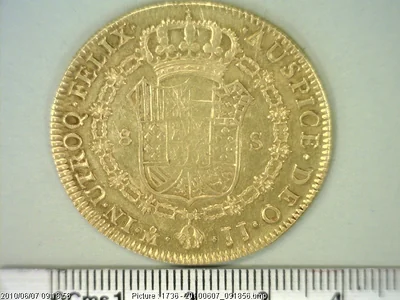
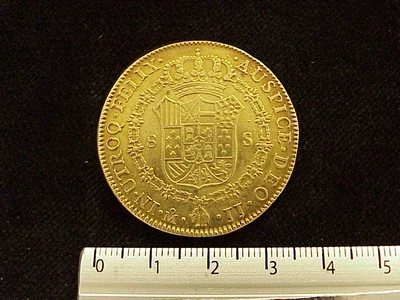
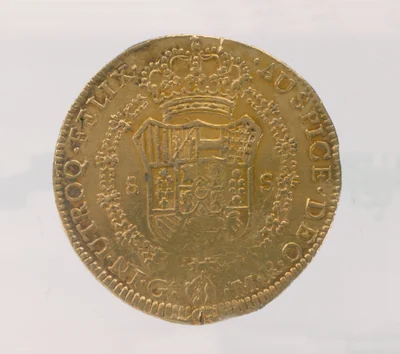
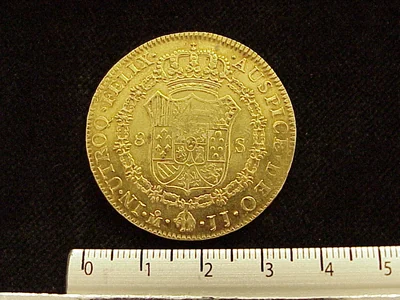
Viceroyalty · Mexico City Mint · Assayer JJ
Viceroyalty · Mexico City Mint · Assayer JJ
The 8 Escudos Fernando VII 1811 Gold Coin: Value & Real Prices is worth between $51,327 and $86,446 MXN depending on its grade of preservation.
Prices updated: August 2026
How much is the 8 Escudos Fernando VII 1811 Gold Coin: Value & Real Prices worth?
The estimated value of the 8 Escudos Fernando VII 1811 Gold Coin: Value & Real Prices ranges from $51,327 (circulated, XF) up to $86,446 (official blister pack), with $73,675 as a reference for an uncirculated (UNC) piece. The estimate is based on the official mintage and the historical behavior of the family.
The real price depends on four factors: the grade of preservation (a circulated piece is worth the low end of the range; an uncirculated one, or one still in its official blister pack, the high end), the finish (satin vs mirror/proof), the rarity within the series based on the mintage, and the metal spot price on the day of the deal when the piece is silver or gold. Check the value-by-grade table above and compare with equivalent pieces before buying or selling.
Where to buy or sell this coin?
Browse the national directory of numismatic shops or the community forum to trade directly with other collectors.
Description
If you inherited or found an 1811 Mexican 8 Escudos, you own a genuinely valuable coin. This is not one of those old coins worth a few dollars. It contains almost an ounce of gold, so it starts with a hard floor at melt value, and rare, high-grade examples sell for thousands of dollars at auction in 2026.
Here is the fast answer: the 1811 Mexico City 8 Escudos is worth its gold content at minimum (currently well over 1,500 USD depending on the spot price of gold), and considerably more if it grades well or has strong eye appeal. Certified high-grade pieces have brought several thousand dollars at major US auctions.
What you actually have
The 8 Escudos was the largest gold coin of colonial Mexico, often called a "gold doubloon" by English speakers. The 1811 issue was struck at the Mexico City Mint (Casa de Moneda de México) during the reign of Fernando VII of Spain, when Mexico was still New Spain under the Spanish Crown.
The hard specs, which matter for both value and authenticity:
- Metal: Gold, 0.875 fine (21 karat)
- Weight: 26.99 grams
- Diameter: 37.4 mm
- Edge: Diagonal reeded
- Mint: Mexico City
- Assayer: JJ (the initials you should see on the coin)
- Denomination: 8 Escudos
At 26.99 grams of 0.875 gold, the coin contains roughly 0.759 troy ounces of pure gold. That is your bullion floor. Even a worn, common example is worth close to that melt figure, which is why no 1811 8 Escudos is ever "just a few dollars."
What it is worth in 2026
Value splits into two layers: the gold underneath and the collector premium on top.
| Condition | What drives it | Approximate value (USD) |
|---|---|---|
| Heavily worn / damaged | Gold content only | Melt value (~1,500+ depending on spot) |
| Circulated, problem-free | Gold plus modest premium | 1,600 to 2,200 |
| High grade (AU) | Strong collector demand | 2,500 to 4,000+ |
| Certified Mint State | Rarity plus grade | Several thousand and up |
These are honest ranges, not fixed prices. Colonial Spanish-Mexican gold trades actively at Heritage Auctions and Stack's Bowers, where certified NGC and PCGS examples routinely clear well into four figures. The exact number depends on the grade, the assayer combination, the strike, and the daily price of gold.
One point worth stressing: a coin graded and sealed by NGC or PCGS is worth meaningfully more than the same coin loose in a drawer, because buyers pay for certainty on both authenticity and grade.
Is it rare?
Rare enough to command a premium, but not a unique museum piece. The 1811 date was struck during a turbulent period, and 8 Escudos gold saw genuine circulation and heavy attrition, so surviving problem-free examples are legitimately scarce. It is the combination of gold value, age, and survival rate that keeps demand steady, not any single record-breaking sale.
Be skeptical of anyone claiming a specific mintage figure for this issue. Precise, verified mintage numbers for individual colonial dates are often not documented. If you see a firm number quoted online, treat it as an estimate.
The myth to avoid
A common belief is that any colonial gold coin is automatically worth tens of thousands of dollars. That is not how this market works. Value is anchored by gold content first, then adjusted up by grade and eye appeal. A cleaned, scratched, or holed 8 Escudos loses most of its collector premium and falls back toward melt. Condition is everything above the gold floor.
How to tell if yours is genuine
Gold counterfeits are the main concern, and the specs are your first defense:
- Weigh it. A genuine piece weighs 26.99 grams. Most fakes come in underweight or in a lower gold fineness, so a precise scale often exposes them immediately.
- Measure it. Diameter should be 37.4 mm.
- Check the edge. It should show diagonal reeding, not a smooth or crudely cut edge.
- Look for the assayer initials (JJ) and sharp, correct lettering.
- Get it certified. For a coin in this value range, submission to NGC or PCGS is the definitive answer on both authenticity and grade. It is worth the fee.
Counterfeit colonial gold does circulate, so if you are buying rather than selling, never pay without seeing clear photos of the obverse, reverse, and edge, plus the seller's weight.
Where to sell it
Because this is a precious-metal coin with real collector value, sell where the buyer can verify it and pay a fair price:
- A verified numismatic dealer from the Pesoteca shop directory, who can appraise it on the spot.
- The Pesoteca buy and sell forum, among collectors who understand what an 8 Escudos is.
- Established US auction houses (Heritage, Stack's Bowers) for a certified high-grade piece, where you reach serious bidders.
Before selling, photograph the obverse, reverse, and edge, and compare your grade to the ranges above. Do not dump a gold coin on the first social-media buyer who offers cash.
This piece belongs to the Colonial Escudos gold series and the broader Colonial / Viceroyalty era. You can also browse other Mexican 8 Escudos coins and other coins dated 1811.
Got one in a drawer and not sure of the grade? Post clear photos of both sides and the edge in the Pesoteca forum and let collectors help you pin down what it is worth.
Historical context
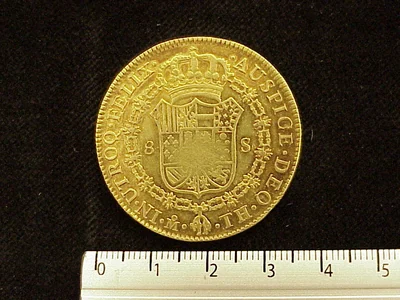
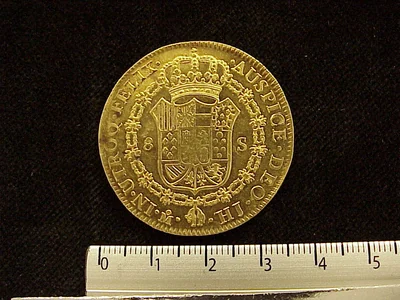
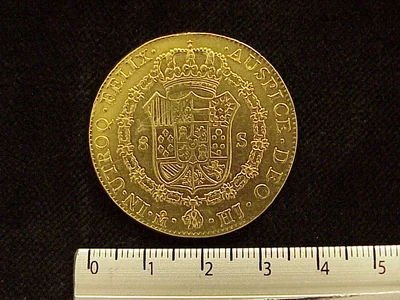
Eight escudos, Fernando VII, 1811, Mexico mint, assayer JJ, Krause KM#160. Sister variant of the example with the HJ signature from the same year, both produced at the capital mint in 1811 but by the hands of different assayers. The HJ-JJ change within the same year documents personnel rotation in the workshop. The ounce weighs 27.06 grams with 0.875 fineness. The imaginary bust of Fernando VII (KM#160) is retained because the king was still a prisoner in France. In 1811 the Mexican War of Independence was going through its first crisis: Hidalgo was captured in March and executed in July. José María Morelos was beginning to organize the insurgency in the south. Felix María Calleja led the royalist counteroffensive with victories at Aculco, Puente de Calderón, and Zitacuaro. The JJ 1811 piece is collectible for the uniqueness of its signature and for the irreproducible historical context.
This piece belongs to the era
Colonial / Virreinato →Explore all the Mexican coins of this era, their historical context and how they connect to the monetary system of the period.
Value range of this piece
Market estimate: $51,327 - $86,446 MXN depending on the grade of preservation (typical range between a circulated and an uncirculated piece).
See the full breakdown by grade (VG, F, VF, EF, AU, MS-60, MS-63, MS-65) for the whole series →
Other denominations from 1811
Escudos Coloniales (oro) · Oro 0.875 (21k)
Same denomination, other years
8 escudos Oro 0.875 (21k) · Escudos Coloniales (oro)
Frequently asked questions
How much is an 1811 8 Escudos Fernando VII worth?
At minimum it is worth its gold content, roughly 0.759 troy ounces of pure gold, which is well over 1,500 USD depending on the spot price. Problem-free circulated examples run about 1,600 to 2,200 USD, and certified high-grade pieces reach several thousand dollars at US auctions. Grade and eye appeal drive everything above the gold floor.
Is the 1811 8 Escudos rare?
It is scarce rather than ultra-rare. This colonial gold coin circulated heavily and many examples were lost or damaged, so problem-free survivors command a real premium. Verified mintage figures for individual colonial dates are often undocumented, so treat any specific number you see online as an estimate, not fact.
How can I tell if my 8 Escudos is genuine?
Start with the specs: a real coin weighs 26.99 grams, measures 37.4 mm, and has a diagonal reeded edge, with JJ assayer initials. Most gold fakes are underweight or lower fineness, so an accurate scale usually exposes them. For a coin worth this much, certification by NGC or PCGS is the definitive proof of authenticity and grade.
Where can I sell an 1811 8 Escudos?
Sell through a verified dealer from the Pesoteca shop directory, the Pesoteca buy and sell forum, or an established US auction house like Heritage or Stack's Bowers for a certified high-grade piece. Photograph the obverse, reverse, and edge first, and never sell to the first cash buyer on social media.
Conversation
0 comments
Sources
Images for informational and educational purposes, attributed to their original source. Reference values; the real price depends on the grade, the specific variant and demand.
Loading comments…