
8 Escudos Fernando VII 1810 Gold Coin: Value Guide
The 8 Escudos Fernando VII 1810 Gold Coin: Value Guide is worth between $51,365 and $86,510 MXN depending on its grade of preservation.
Prices updated: August 2026
Viceroyalty · Mexico City Mint · Assayer HJ
Viceroyalty · Mexico City Mint · Assayer HJ
The 8 Escudos Fernando VII 1810 Gold Coin: Value Guide is worth between $51,365 and $86,510 MXN depending on its grade of preservation.
Prices updated: August 2026
How much is the 8 Escudos Fernando VII 1810 Gold Coin: Value Guide worth?
The estimated value of the 8 Escudos Fernando VII 1810 Gold Coin: Value Guide ranges from $51,365 (circulated, XF) up to $86,510 (official blister pack), with $73,730 as a reference for an uncirculated (UNC) piece. The estimate is based on the official mintage and the historical behavior of the family.
The real price depends on four factors: the grade of preservation (a circulated piece is worth the low end of the range; an uncirculated one, or one still in its official blister pack, the high end), the finish (satin vs mirror/proof), the rarity within the series based on the mintage, and the metal spot price on the day of the deal when the piece is silver or gold. Check the value-by-grade table above and compare with equivalent pieces before buying or selling.
Where to buy or sell this coin?
Browse the national directory of numismatic shops or the community forum to trade directly with other collectors.
Description
If you inherited an 1810 8 Escudos of Fernando VII, you are holding roughly three-quarters of an ounce of gold, minted in Mexico City the same year the war for independence began. Even in worn condition it carries real bullion value. The difference between a few hundred dollars and several thousand comes down to grade and authenticity, not age alone.
What this coin actually is
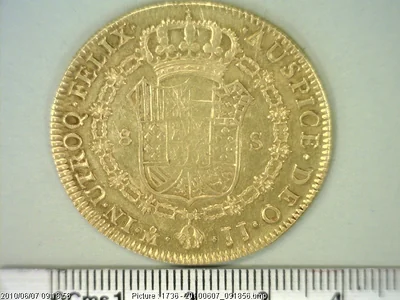
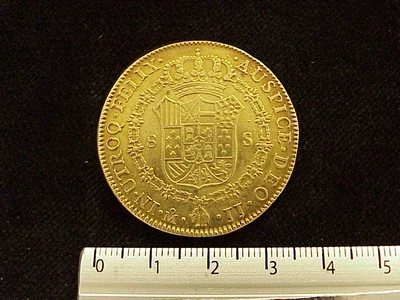
The 8 Escudos was the largest gold denomination of the Spanish colonial system, the piece English speakers historically called a "doubloon." This one bears the bust of Fernando VII, king of Spain, and was struck at the Casa de Moneda de México (the Mexico City mint) in 1810, the year of the Grito de Dolores that opened Mexico's war of independence.
The specs matter for value, so keep them handy:
| Feature | Specification |
|---|---|
| Metal | Gold, 0.875 fine (21 karat) |
| Weight | 27.01 grams |
| Diameter | 37 mm |
| Gold content | roughly 0.76 troy oz pure gold |
| Edge | diagonally reeded |
| Mint | Mexico City (Casa de Moneda) |
| Assayer mark | HJ |
| Year | 1810 (single year for this type) |
Because it is a precious-metal coin, it has a price floor. About 0.76 troy ounces of gold means the melt value alone tracks the international gold spot price. That is the number no collector or dealer will pay below, and it moves with the gold market every day.
What it is worth in USD
There is no single sticker price. Value climbs with condition:
- Worn, heavily circulated: value hovers near gold melt, which by itself is well over a thousand dollars given the gold content. Damage, cleaning, or mount marks pull it down toward pure metal value.
- Lightly circulated, good detail: a numismatic premium over melt, commonly in the low thousands of USD.
- Uncirculated or certified high grade (MS): these command a strong collector premium, reaching several thousand dollars and up for the best-preserved examples with clean surfaces and full strike detail.
Colonial 8 Escudos of this era, when certified by NGC or PCGS in Mint State, routinely sell in the four-figure range at U.S. auction houses like Heritage and Stack's Bowers, with exceptional pieces going higher. A raw, uncertified coin sells at a discount because the buyer is absorbing the authenticity risk.
The myth: "it's from 1810, so it's priceless"
Age is not the driver here. Plenty of 200-year-old coins are common. What supports the 8 Escudos is a real combination: substantial gold content, historical association with the start of Mexican independence, and genuine scarcity in high grade. A beat-up example is worth its gold plus a modest premium, not a fortune. Do not expect "millions" numbers you see on clickbait pages. The realistic ceiling for a strong certified example is thousands of dollars, and only the finest known pieces push beyond that.
How to tell if yours is genuine
Gold fakes are the main hazard, and most of them fail on the basics.
- Weigh it. A genuine coin is 27.01 grams. Counterfeits are typically struck in lower-purity gold or base metal and miss the target weight. A cheap jeweler's scale settles most cases.
- Measure it. 37 mm diameter, diagonally reeded edge. Off measurements are a red flag.
- Check the assayer mark. This type carries the HJ assayer initials. Wrong or missing marks warrant caution.
- Get it certified. For any coin worth more than a few hundred dollars, submission to NGC or PCGS is the definitive answer. Certification confirms authenticity and locks in a grade, which is what serious buyers pay for.
When buying online, always ask the seller for photos of the edge and the actual weight before paying. Marketplaces with loose seller vetting are where most fakes circulate.
Mintage and varieties
The exact mintage for this specific 1810 issue is not cleanly documented, which is normal for colonial-era coinage. 1810 is the only year this exact type was struck under these conditions, so there are no year variants within it. Die varieties (minor differences in letter position or striking) exist and are distinguished by expert graders. For most inheritors, the practical value question is grade and authenticity, not micro-varieties.
Where to sell it in the U.S.
For a gold colonial coin, sell where buyers understand what it is:
- Certified auction houses (Heritage, Stack's Bowers) for pieces worth four figures or graded high. You reach serious collectors and get competitive bidding.
- Established coin dealers who handle world gold. Get more than one offer.
- A verified numismatic shop from the Pesoteca directory if you want an in-person appraisal.
- The Pesoteca buy-and-sell forum](/foro/compra-venta) to reach collectors directly.
Before you sell, photograph the obverse, reverse, and edge, and know your melt value that day so no one lowballs you below the gold content. Avoid dumping it to the first Facebook buyer.
This piece belongs to the Colonial Escudos gold series and the broader Colonial / Viceroyalty era. See also other Mexican 8 Escudos and more coins from 1810.
Think your 1810 8 Escudos might be certified-grade material, or want a second opinion on authenticity? Post clear photos of both sides and the edge in the Pesoteca forum and let collectors weigh in before you sell.
Historical context
Eight escudos, Fernando VII, 1810, Mexico City mint, assayer HJ, Krause KM#160. Founding year: in the early morning of September 16, 1810, Miguel Hidalgo gave the Grito de Dolores in Guanajuato and began the Mexican War of Independence. The piece was struck under viceregal authority loyal to Fernando VII, with an imaginary bust because the king was still imprisoned in Bayonne. In Mexico, Francisco Javier Venegas governed as viceroy from September 1810, coinciding almost exactly with the insurgent outbreak. The onza weighs 27.06 grams with 0.875 fineness. Milled production with a standardized round planchet. The obverse shows the ideal portrait of Fernando VII and the reverse the crowned royal shield. The assayers' HJ signature continues in the field. Pieces from 1810 are collectible for the unrepeatable historical context: they are the actual coin that circulated when Independence broke out.
This piece belongs to the era
Colonial / Virreinato →Explore all the Mexican coins of this era, their historical context and how they connect to the monetary system of the period.
Value range of this piece
Market estimate: $51,365 - $86,510 MXN depending on the grade of preservation (typical range between a circulated and an uncirculated piece).
See the full breakdown by grade (VG, F, VF, EF, AU, MS-60, MS-63, MS-65) for the whole series →
Same denomination, other years
8 escudos Oro 0.875 (21k) · Escudos Coloniales (oro)
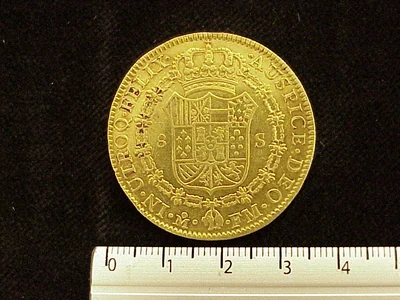
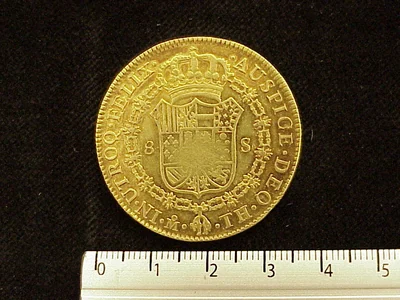
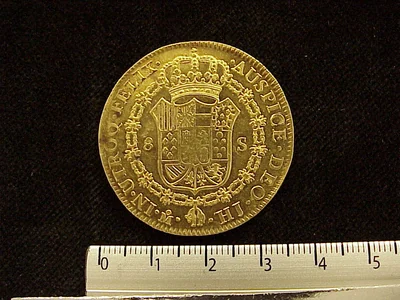
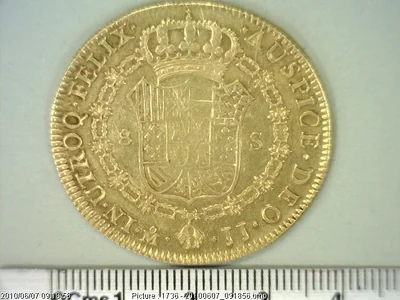
Frequently asked questions
How much is an 1810 8 Escudos Fernando VII worth?
It depends heavily on grade. Because it contains about 0.76 troy ounces of gold, even a worn example is worth well over a thousand dollars at melt. Lightly circulated pieces bring a premium into the low thousands, and certified Mint State examples sell for several thousand dollars and up at auction. For a precise figure, get it graded by NGC or PCGS.
Is the 1810 8 Escudos rare?
It is genuinely scarce in high grade, which is where the collector premium lives. Circulated examples exist but are still substantial gold coins. The exact mintage is not officially documented, typical for colonial coinage. Rarity plus gold content, not age alone, is what supports the price.
Where can I sell an 1810 8 Escudos in the U.S.?
Sell through a certified auction house like Heritage or Stack's Bowers for high-grade or four-figure pieces, or an established world-gold coin dealer. You can also use a verified shop from the Pesoteca directory or the Pesoteca buy-and-sell forum. Always know the day's melt value first so you are not offered less than the gold content.
How do I tell if my 8 Escudos is genuine?
Start with the specs: 27.01 grams and 37 mm diameter with a diagonally reeded edge. Most fakes miss the weight because they use lower-purity gold or base metal. Confirm the HJ assayer mark. For anything worth more than a few hundred dollars, certification by NGC or PCGS is the definitive proof of authenticity and grade.
Conversation
0 comments
Sources
Images for informational and educational purposes, attributed to their original source. Reference values; the real price depends on the grade, the specific variant and demand.
Loading comments…