
1811 Mexican 8 Escudos Fernando VII Gold Coin
The 1811 Mexican 8 Escudos Fernando VII Gold Coin is worth between $51,308 and $86,414 MXN depending on its grade of preservation.
Prices updated: August 2026
Viceroyalty · Mexico City Mint · Assayer HJ
Viceroyalty · Mexico City Mint · Assayer HJ
The 1811 Mexican 8 Escudos Fernando VII Gold Coin is worth between $51,308 and $86,414 MXN depending on its grade of preservation.
Prices updated: August 2026
How much is the 1811 Mexican 8 Escudos Fernando VII Gold Coin worth?
The estimated value of the 1811 Mexican 8 Escudos Fernando VII Gold Coin ranges from $51,308 (circulated, XF) up to $86,414 (official blister pack), with $73,648 as a reference for an uncirculated (UNC) piece. The estimate is based on the official mintage and the historical behavior of the family.
The real price depends on four factors: the grade of preservation (a circulated piece is worth the low end of the range; an uncirculated one, or one still in its official blister pack, the high end), the finish (satin vs mirror/proof), the rarity within the series based on the mintage, and the metal spot price on the day of the deal when the piece is silver or gold. Check the value-by-grade table above and compare with equivalent pieces before buying or selling.
Where to buy or sell this coin?
Browse the national directory of numismatic shops or the community forum to trade directly with other collectors.
Description
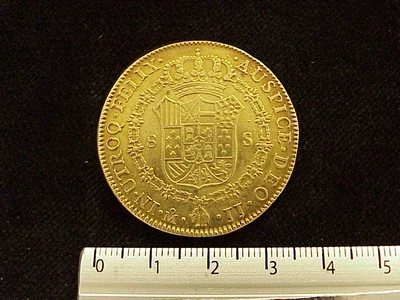
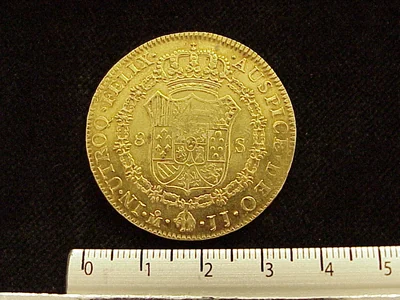
If you inherited an 1811 Mexican 8 Escudos gold coin, here is the honest answer: it is almost certainly worth real money, mostly because of what it is made of. This is a large gold coin, 26.98 grams of 0.875 fine (21 karat) gold, which puts a hard floor under its value at the international gold price. In 2026, that metal content alone is worth well over 1,000 USD, and a genuine, well-preserved example can bring several times that.
What you actually have
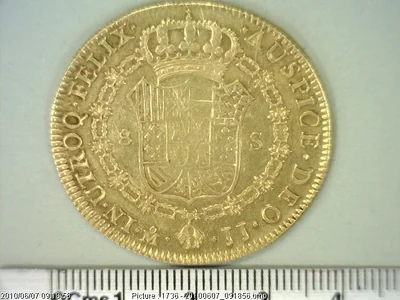
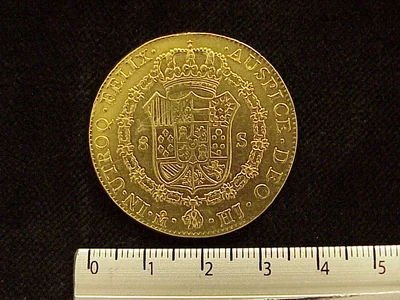
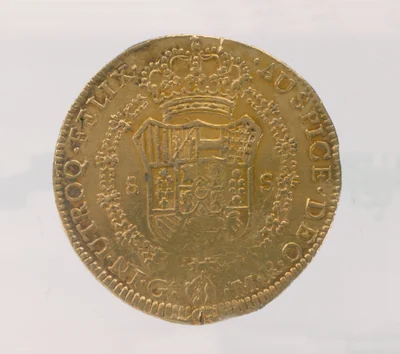
The 8 Escudos was the largest gold denomination of the Spanish colonial system. Yours was struck in 1811 at the Mexico City Mint (Casa de Moneda de México) during the reign of King Fernando VII of Spain, when Mexico was still the colony of New Spain. It carries the assayer initials HJ. These coins are the classic "gold doubloon" type that collectors around the world chase.
Specifications, exactly as they should measure:
| Feature | Specification |
|---|---|
| Denomination | 8 Escudos (gold) |
| Year | 1811 |
| Gold content | 0.875 fine (21 karat) |
| Weight | 26.98 grams |
| Diameter | 37 mm |
| Edge | Diagonal reeded |
| Mint | Mexico City (Casa de Moneda de México) |
| Assayer | HJ |
Actual pure gold content works out to about 23.6 grams (roughly 0.76 troy ounces). That number matters more than almost anything else for a circulated piece.
How much is it worth in USD
Think of the value in two layers.
Melt value (the floor). Because it holds about 0.76 oz of pure gold, the coin can never be worth less than that gold. At recent gold prices, that alone is comfortably above 1,400 USD. Even a worn, damaged example still commands its metal.
Numismatic value (the upside). A genuine 8 Escudos with good detail and eye appeal sells well above melt. Circulated but honest examples of Fernando VII 8 Escudos types commonly trade in the 1,500 to 3,000 USD range at auction. Sharp, problem-free pieces and those certified in high grades by NGC or PCGS can reach several thousand dollars, and scarce mint-and-assayer combinations climb higher. Because the 1811 mintage is not cleanly documented and survivors are limited, the specific date can add a premium over the more common years.
The honest range: from roughly its gold value on the low end to several thousand USD for a certified, high-grade coin. The exact figure depends on grade, originality, and whether it has been cleaned or damaged.
What drives the price
- Grade and originality. Original surfaces matter. A cleaned coin (harsh, shiny, hairline scratches under a light) loses a large share of its collector premium and drifts back toward melt.
- Authenticity. More on this below. Fakes exist and they cap the value at zero if they cannot be verified.
- Date and assayer scarcity. 1811 is a single-year strike for this specific issue, so there are no year sub-varieties, but die varieties and assayer combinations affect price.
- The gold market. This is a bullion-backed coin. When gold rises, the floor rises with it.
How to tell if yours is genuine
Start with the scale and the ruler, because counterfeits almost always fail here.
- Weigh it. A genuine coin weighs 26.98 grams. Gold is dense, and fakes made of lower-fineness gold or base metal come in noticeably light or heavy. If your coin is not close to 26.98 g, be suspicious.
- Measure it. It should be 37 mm across.
- Check the edge. The genuine coin has a diagonal reeded edge. Cast fakes often show a seam, mushy reeding, or a wrong edge entirely.
- Look at the strike. Details should be crisp where the coin has not worn. Soft, blurry lettering across the whole coin is a warning sign of a cast copy.
Many gold counterfeits are produced overseas in lower fineness, which is exactly why weight gives them away. For any piece you plan to buy or sell above bullion value, professional grading by NGC or PCGS is the definitive safeguard. Their slab confirms authenticity, grade, and weight in one step, and it makes the coin far easier to sell.
Where to sell it
Because this is a high-value gold coin, sell where authenticity can be verified and you get a fair, competitive offer:
- A certified auction house (for high-grade or rare examples, this usually brings the strongest prices).
- A reputable coin dealer who handles world gold and will make a written offer.
- NGC or PCGS certification first, then sell the slabbed coin; buyers pay more when they do not have to guess.
Avoid dumping a gold coin to the first buyer on a general marketplace. Always photograph the obverse, reverse, and edge, and share the weight. For buyers and sellers connecting directly, the Pesoteca buy-and-sell forum and the verified dealer directory are safer than an anonymous listing.
Related pages
This coin belongs to the Colonial Escudos gold series and the broader Colonial / Viceroyalty era. You can also browse other Mexican 8 Escudos and more coins from 1811.
Got one in a box of inherited coins and not sure if it is real? Post clear photos of both sides and the edge in the Pesoteca forum and the community will help you check it before you sell.
Historical context
Eight escudos Fernando VII, 1811, Mexico mint, assayer HJ, Krause KM#160. Year of the first phase of the War of Independence: in January, Hidalgo lost the battle of Puente de Calderón against Félix María Calleja and was captured in March at Acatita de Baján. He was executed on July 30, 1811, in Chihuahua. Resistance continued under José María Morelos in the south and Ignacio López Rayón in the center. In Mexico, Venegas remained as viceroy and organized the royalist counteroffensive. The ounce weighs 27.06 grams with 0.875 fineness. It was still struck with the imaginary bust of Fernando VII (KM#160) due to the absence of an official portrait. The signature HJ appears in the field. Pieces from this year carry symbolic weight: they are real currency struck while the war that would decide the political future of the viceroyalty was being fought on that same territory.
This piece belongs to the era
Colonial / Virreinato →Explore all the Mexican coins of this era, their historical context and how they connect to the monetary system of the period.
Value range of this piece
Market estimate: $51,308 - $86,414 MXN depending on the grade of preservation (typical range between a circulated and an uncirculated piece).
See the full breakdown by grade (VG, F, VF, EF, AU, MS-60, MS-63, MS-65) for the whole series →
Other denominations from 1811
Escudos Coloniales (oro) · Oro 0.875 (21k)
Same denomination, other years
8 escudos Oro 0.875 (21k) · Escudos Coloniales (oro)
Frequently asked questions
How much is an 1811 8 Escudos Fernando VII gold coin worth?
It has a hard floor at its gold value: about 0.76 troy ounces of pure gold, worth well over 1,400 USD in {{AÑO}}. Circulated genuine examples commonly sell for 1,500 to 3,000 USD, and certified high-grade coins from NGC or PCGS can reach several thousand dollars. Grade, originality, and authenticity decide where in that range yours lands.
Is the 1811 8 Escudos rare?
It is scarce. The exact 1811 mintage for this issue is not cleanly documented, and surviving examples are limited, which supports a premium over melt. It was struck only in 1811 for this type, so there are no year sub-varieties, though die varieties and the HJ assayer combination can affect value. A certified coin in high grade is the rarest and most valuable form.
How can I tell if my 1811 8 Escudos is genuine?
Weigh and measure it first: a real coin is 26.98 grams and 37 mm, with a diagonal reeded edge. Fakes made from lower-fineness gold almost always fail on weight. Check for crisp strike detail and no casting seam. For any coin worth more than its metal, NGC or PCGS certification is the definitive proof of authenticity and grade.
Where can I sell an 1811 8 Escudos gold coin?
Sell where value can be verified: a reputable coin dealer who handles world gold, or a certified auction house for high-grade pieces. Getting it slabbed by NGC or PCGS first usually raises the price and speeds the sale. Photograph the obverse, reverse, and edge and share the weight. The Pesoteca dealer directory and buy-and-sell forum connect you with serious buyers rather than anonymous listings.
Conversation
0 comments
Sources
Images for informational and educational purposes, attributed to their original source. Reference values; the real price depends on the grade, the specific variant and demand.
Loading comments…