
8 Escudos Fernando VI 1753: Gold Coin Value
The 8 Escudos Fernando VI 1753: Gold Coin Value is worth between $51,327 and $86,446 MXN depending on its grade of preservation.
Prices updated: August 2026
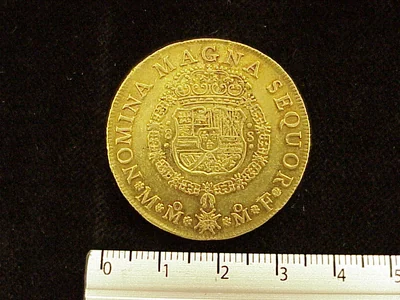
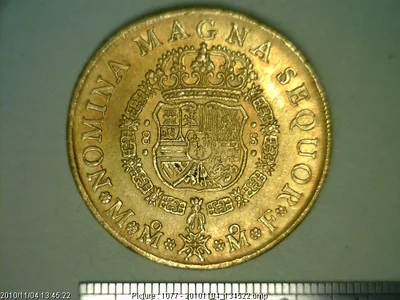
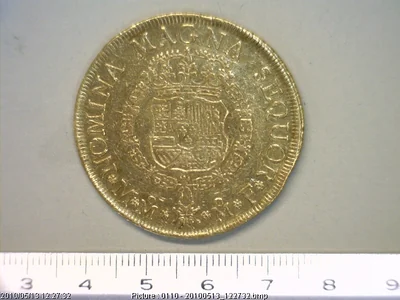
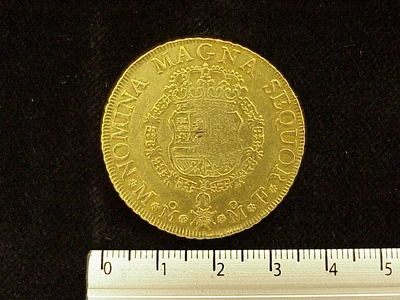
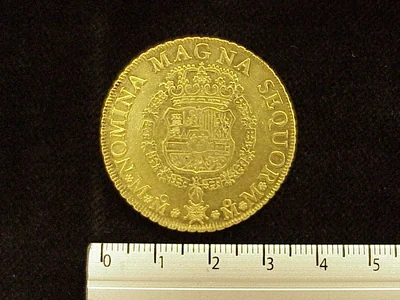
Third type; without denomination; draped bust.
Third type; without denomination; draped bust.
The 8 Escudos Fernando VI 1753: Gold Coin Value is worth between $51,327 and $86,446 MXN depending on its grade of preservation.
Prices updated: August 2026
How much is the 8 Escudos Fernando VI 1753: Gold Coin Value worth?
The estimated value of the 8 Escudos Fernando VI 1753: Gold Coin Value ranges from $51,327 (circulated, XF) up to $86,446 (official blister pack), with $73,675 as a reference for an uncirculated (UNC) piece. The estimate is based on the official mintage and the historical behavior of the family.
The real price depends on four factors: the grade of preservation (a circulated piece is worth the low end of the range; an uncirculated one, or one still in its official blister pack, the high end), the finish (satin vs mirror/proof), the rarity within the series based on the mintage, and the metal spot price on the day of the deal when the piece is silver or gold. Check the value-by-grade table above and compare with equivalent pieces before buying or selling.
Where to buy or sell this coin?
Browse the national directory of numismatic shops or the community forum to trade directly with other collectors.
Description
If you inherited a heavy gold coin dated 1753 with the name FERDIN VI (Fernando VI) on it, you are holding one of the most valuable colonial pieces ever struck in Mexico. An 8 Escudos in gold, called an onza in its day, carries nearly a full ounce of gold and sells from roughly 2,000 USD for a worn, common example up to well over 20,000 USD for a rare date or high grade. In 2026, demand for colonial Spanish-American gold remains strong.
What you actually have
The 8 Escudos was the largest gold denomination of the Spanish colonial system. This one comes from the reign of Fernando VI (Ferdinand VI of Spain), dated 1753, struck at the Mexico City mint, which was the empire's main precious-metal facility at the time.
Here are the hard specs, and you should verify yours against them because fakes of this piece are common:
| Feature | Specification |
|---|---|
| Denomination | 8 Escudos (gold onza) |
| Year | 1753 |
| Metal | Gold (.917 fine, 22 karat) |
| Weight | 26.99 g (about 0.79 troy oz of pure gold) |
| Diameter | 36 mm |
| Edge | Reeded and incuse |
| Mint | Mexico City |
| Assayer initials | MF |
| Catalog reference | KM#151 |
| Type | Third type, no denomination shown, draped bust |
The MF initials are the assayer's mark, the official who certified the fineness of the metal. The bust is the "draped bust" (busto con túnica) type. There is no denomination number on the coin itself, which is normal for these.
What it is worth in 2026
Start with the floor. This coin holds about 0.79 troy ounces of pure gold, so even a badly worn or damaged example is worth its melt value, which moves with the gold spot price and typically sits in the low thousands of dollars. No 8 Escudos in genuine gold is ever "worth a few dollars."
Above melt, value depends on grade and eye appeal:
- Circulated, damaged, or mount-marked: essentially melt to a small premium, roughly 2,000 to 3,000 USD.
- Solid circulated (VF to XF): collector premium kicks in, commonly 3,000 to 6,000 USD.
- About Uncirculated to Mint State: these are scarce for a 1753 date and can bring 8,000 to 20,000 USD or more at major auctions.
Colonial 8 Escudos from Mexico City have crossed the auction block regularly at Heritage Auctions and Stack's Bowers, with the strongest results going to sharply struck, problem-free pieces graded by NGC or PCGS. A cleaned coin, a coin with solder marks from old jewelry, or a coin with rim damage loses a large chunk of that premium.
The myth to avoid
Because these coins look ancient and are made of gold, people assume any 1753 gold piece is a museum-level rarity worth a fortune. It is valuable, but it is not a unique object. Thousands of 8 Escudos were struck across the colonial period, and many survive. What separates a 3,000 USD coin from a 20,000 USD coin is grade, strike quality, and whether it is genuine and undamaged, not the date alone.
How to tell if yours is genuine
Counterfeits of colonial gold are everywhere, and some are convincing. Do these checks first:
- Weigh it. Use a jewelry scale. It should read close to 26.99 g. A significantly light coin is a red flag, often a gold-plated base metal fake.
- Measure the diameter. It should be 36 mm. Cast fakes are frequently off.
- Check the edge. The genuine edge is reeded and incuse. A plain or crudely cast edge is a warning sign.
- Study the engraving. Compare the bust style, the mint mark, and the MF assayer initials against verified reference images. Cast copies show mushy detail and sometimes a seam.
- Be suspicious of any offer well below the gold value. If someone is selling a "1753 8 Escudos" for a few hundred dollars, it is not real gold.
For a coin at this value, professional authentication by NGC or PCGS is worth the fee. It confirms the metal, assigns a grade, and makes the coin far easier to sell.
Where to sell it
Do not dump a gold coin worth thousands to the first buyer on Facebook. Your safest routes:
- A verified numismatic dealer from the Pesoteca directory, who can appraise it on the spot and pay for the gold plus the collector premium.
- The Pesoteca buy-and-sell forum, where collectors compete for genuine colonial gold.
Because it is a precious-metal piece, only deal with a buyer who will inspect and weigh the coin in front of you, and get it graded first if you want top dollar. Photograph the front, back, and edge before you talk price. If you think you have a striking error or an unusual variety, post it in the Pesoteca forum so the community can weigh in before you sell.
Have a colonial gold coin in your inheritance? Post clear photos of both sides and the edge in the Pesoteca forum and let collectors tell you what you are really holding.
Historical context
Eight escudos Fernando VI, 1753, Mexico City Mint. The entry describes the piece as the third type without denomination with a bust dressed in a tunic. That year the Concordat with the Holy See was signed in Madrid, reinforcing royal patronage over the Spanish Church and guaranteeing the crown the appointment of most ecclesiastical benefices. It was a central diplomatic achievement of the reign. In New Spain the Count of Revillagigedo continued as viceroy in the final phase of his government. Krause references KM#151 as the third pillar type of Fernando VI in force since 1752. The ounce weighs a theoretical 27.06 grams with fineness 0.916. Produced by mill with a standardized round planchet. The reverse keeps the classic pillar design with crowned Hercules columns and PLVS VLTRA. The assayer's signature is in the field of the capital's workshop. The Real Tribunal de Cuentas of Mexico kept careful record that year of the gold production remitted to the peninsula. The piece is representative of the stable cycle of the mint at the middle of the 18th century when the mill operated with consolidated precision.
This piece belongs to the era
Colonial / Virreinato →Explore all the Mexican coins of this era, their historical context and how they connect to the monetary system of the period.
Value range of this piece
Market estimate: $51,327 - $86,446 MXN depending on the grade of preservation (typical range between a circulated and an uncirculated piece).
See the full breakdown by grade (VG, F, VF, EF, AU, MS-60, MS-63, MS-65) for the whole series →
Same denomination, other years
8 escudos Oro 0.875 (21k) · 8 Escudos Fernando VI
Frequently asked questions
How much is an 8 Escudos Fernando VI 1753 worth?
It holds about 0.79 troy ounces of gold, so even a worn example is worth its melt value, usually in the low thousands of dollars. Solid circulated coins run roughly 3,000 to 6,000 USD, and About Uncirculated to Mint State pieces can bring 8,000 to 20,000 USD or more at major auctions. Grade, strike, and lack of damage drive the price far more than the date.
Is the 1753 8 Escudos rare?
It is valuable but not unique. Thousands of colonial 8 Escudos were struck at the Mexico City mint and many survive. A worn, damaged, or ex-jewelry example is common and trades near its gold value. A sharply struck, problem-free coin graded by NGC or PCGS is the scarce version that commands strong premiums.
How do I tell if my 8 Escudos Fernando VI 1753 is genuine?
Weigh it (should be close to 26.99 g) and measure the diameter (36 mm) against the specs above. Check that the edge is reeded and incuse, and compare the bust style, mint mark, and MF assayer initials to verified images. Cast fakes show mushy detail and sometimes a seam. For a coin this valuable, get it authenticated by NGC or PCGS.
Where can I sell an 8 Escudos Fernando VI 1753?
Use a verified numismatic dealer from the Pesoteca directory, who can appraise and pay on the spot, or the Pesoteca buy-and-sell forum among collectors. Since it is gold, only deal with a buyer who inspects and weighs the coin in front of you, and get it graded first for the best price. Photograph the front, back, and edge before negotiating.
Conversation
0 comments
Loading comments…