
8 Escudos Fernando VI 1750: Gold Coin Value
The 8 Escudos Fernando VI 1750: Gold Coin Value is worth between $51,289 and $86,382 MXN depending on its grade of preservation.
Prices updated: August 2026
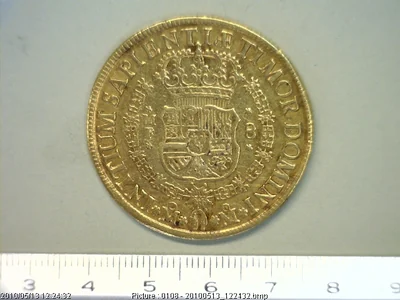
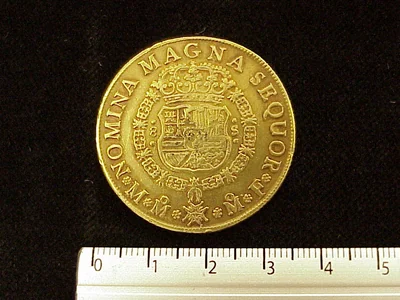
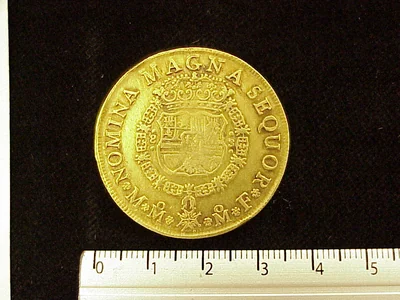
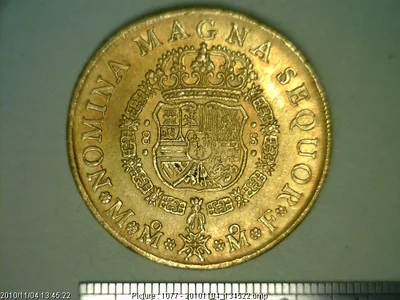
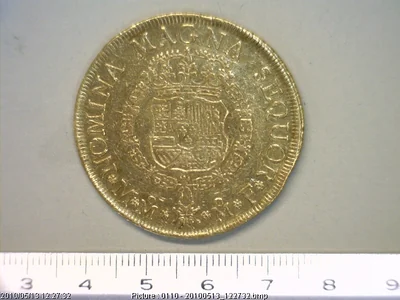
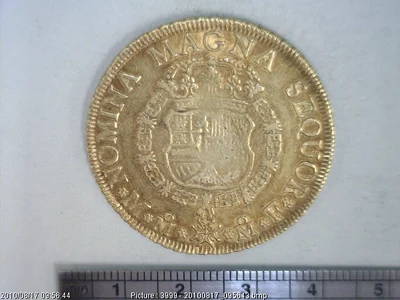
Second type; Cross of the Golden Fleece below fleece; draped bust.
Second type; Cross of the Golden Fleece below fleece; draped bust.
The 8 Escudos Fernando VI 1750: Gold Coin Value is worth between $51,289 and $86,382 MXN depending on its grade of preservation.
Prices updated: August 2026
How much is the 8 Escudos Fernando VI 1750: Gold Coin Value worth?
The estimated value of the 8 Escudos Fernando VI 1750: Gold Coin Value ranges from $51,289 (circulated, XF) up to $86,382 (official blister pack), with $73,621 as a reference for an uncirculated (UNC) piece. The estimate is based on the official mintage and the historical behavior of the family.
The real price depends on four factors: the grade of preservation (a circulated piece is worth the low end of the range; an uncirculated one, or one still in its official blister pack, the high end), the finish (satin vs mirror/proof), the rarity within the series based on the mintage, and the metal spot price on the day of the deal when the piece is silver or gold. Check the value-by-grade table above and compare with equivalent pieces before buying or selling.
Where to buy or sell this coin?
Browse the national directory of numismatic shops or the community forum to trade directly with other collectors.
Description
If you inherited or found an 8 Escudos of Fernando VI dated 1750, you have a genuine gold coin, not a novelty token. It holds 26.97 grams of gold, close to a full troy ounce, so even a worn, damaged example carries a hard floor tied to the gold price. In 2026, that floor alone runs into the low thousands of US dollars, and clean examples sell for far more.
This is one of the few Mexican coins where the melt value already makes it worth real money. What you need to figure out is whether yours is genuine, what condition it's in, and whether it's a common date or something a collector will pay a premium for.
What this coin actually is
The 8 Escudos was the largest gold denomination of the Spanish colonial system. Spanish speakers call it an onza (ounce) because of its weight. It was struck at the Mexico City mint (the Casa de Moneda de México), which was the main precious-metal supplier for the Spanish Empire in the 1700s.
Your piece dates to the reign of Fernando VI (Ferdinand VI of Spain). The 1750 issue is the second type: a bust of the king in a draped robe on one side, and the crowned Spanish arms with the Order of the Golden Fleece (Cruz del Toisón) below on the other. The letters MF are the assayer's initials, the mint official who certified the gold's purity.
Technical specs (check yours against these)
| Feature | Specification |
|---|---|
| Metal | Gold |
| Weight | 26.97 g |
| Diameter | 36 mm |
| Edge | Reeded (milled) |
| Mint | Mexico City |
| Assayer | MF |
| Catalog reference | KM#150 |
If your coin weighs meaningfully less than 26.97 grams or its diameter is off from 36 mm, treat it as suspect until a professional confirms it. Colonial gold is heavily counterfeited.
What it's worth in USD
Value on colonial gold is driven by three things: gold content (the floor), rarity of the date and assayer combination, and grade (condition). Here's the honest picture.
| Condition | Realistic value (USD) |
|---|---|
| Damaged, holed, or heavily worn | Melt value of ~0.78 troy oz of gold |
| Circulated but problem-free | 2,000 to 4,500 |
| Choice, sharp detail (AU) | 4,500 to 8,000 |
| Mint-state, certified | 8,000 and up |
The melt floor moves with the gold market, so it changes daily. At current gold prices, the metal alone in this coin is worth several thousand US dollars. That means no honest buyer will offer you less than melt, and anyone offering far below it is either lowballing you or knows the coin is fake.
Above melt, the premium depends entirely on eye appeal and certification. A raw coin that looks cleaned, polished, or scratched sells near melt. A crisp, original-surface example with strong strike can bring several times the gold value from a collector who wants exactly that date.
The myth to ignore
A lot of sites and social media posts claim any old Spanish colonial gold coin is worth a fortune "because it's from a shipwreck" or "because it's 18th century." Age alone adds little. What matters is whether the specific date and assayer are scarce, and whether the surfaces are original. A 1750 MX 8 Escudos is a known, cataloged type, not a unique rarity. It's valuable because it's gold and because it's collected, not because it's mysterious.
Ignore anyone who tells you it's worth six figures. That's clickbait. Real record prices for high-grade Mexican colonial 8 Escudos land in the mid five figures for the rarest dates and finest condition, not for a standard circulated 1750.
How to tell if yours is genuine
Counterfeits of colonial gold are everywhere, including cast copies and gold-plated base metal. Start with these checks:
- Weigh it on a jeweler's scale. It should read very close to 26.97 g. A light coin is a red flag.
- Measure the diameter with a caliper. Target 36 mm.
- Check the edge. It should be reeded (fine vertical lines). A smooth or crudely filed edge is suspicious.
- Look at the engraving style. Genuine dies show crisp, consistent lettering and a clean bust. Cast fakes look soft, grainy, or have seams.
- Confirm the mint mark and assayer (MF). These must match known genuine examples.
If it passes those and you're serious about selling, get it certified by NGC or PCGS. A slab (a sealed graded holder) removes doubt for buyers and usually raises what you can get.
Where to sell it
Because this is a precious-metal coin worth real money, sell it where you can verify the buyer and the price:
- A verified numismatic dealer from the Pesoteca directory, who can appraise it on the spot and pay at least melt value.
- The Pesoteca buy-and-sell forum, where collectors deal directly and pay premiums for good coins.
Before you sell, photograph the obverse (front), reverse (back), and edge, and compare your coin against the value table above. Don't dump it to the first buyer on Facebook Marketplace, and never sell below the current gold melt value. For more on grading and what condition means for price, see our guide on coin condition and grades and our overview of Mexican colonial coinage.
Got a 1750 8 Escudos and not sure if it's genuine or what date variety you have? Post clear photos of both sides and the edge in the Pesoteca forum and let collectors who handle these coins weigh in before you sell.
Historical context
Eight escudos, Fernando VI, 1750, Mexico mint. A Catholic jubilee year and the midpoint of the 18th century, a symbolic moment of Bourbon stability. New Spain was experiencing the demographic peak that followed recovery from the matlazahuatl epidemic of 1736-1739. Fernando VI continued the neutralist government, and Ensenada was driving fiscal reforms in the peninsula. In Mexico, the Count of Revillagigedo was four years into his viceroyalty, carrying out administrative and military reorganization. The piece follows the second type, with the Golden Fleece beneath the fleece and a draped bust. The ounce weighs a theoretical 27.06 grams at a fineness of 0.916. Produced by mill press on a round planchet. The pillar reverse retained the crowned Pillars of Hercules over the sea with the PLVS VLTRA banners. Krause KM#150 groups the pillar coinage of Fernando VI under this iconographic type. Pieces from 1750 are collectible for the symbolism of the jubilee year and for their place within the most stable five-year block of the Mexican pillar series. The technical and fineness standardization of the gold was fully consolidated after eighteen years of mill-press minting at the capital's mint.
This piece belongs to the era
Colonial / Virreinato →Explore all the Mexican coins of this era, their historical context and how they connect to the monetary system of the period.
Value range of this piece
Market estimate: $51,289 - $86,382 MXN depending on the grade of preservation (typical range between a circulated and an uncirculated piece).
See the full breakdown by grade (VG, F, VF, EF, AU, MS-60, MS-63, MS-65) for the whole series →
Same denomination, other years
8 escudos Oro 0.875 (21k) · 8 Escudos Fernando VI
Frequently asked questions
How much is an 8 Escudos Fernando VI 1750 worth?
It's never worth less than its gold melt value, which is currently several thousand US dollars for its 26.97 g of gold. A problem-free circulated example runs roughly 2,000 to 4,500 USD, and choice or mint-state certified coins bring 4,500 to 8,000 USD or more. Damaged or cleaned pieces sell near melt.
Is the 1750 8 Escudos a rare coin?
It's a cataloged, known type (KM#150), not a one-of-a-kind rarity. Its value comes mainly from its gold content and collector demand, not extreme scarcity. Premiums above melt depend on condition and original surfaces; a crisp, uncleaned example is far more sought after than a worn or polished one.
How can I tell if my 8 Escudos Fernando VI is genuine?
Weigh it (should be close to 26.97 g) and measure the diameter (36 mm) against the specs above. Check for a reeded edge, sharp engraving, and the correct mint mark and MF assayer initials. Colonial gold is heavily counterfeited, so for anything valuable, get it certified by NGC or PCGS.
Where can I sell an 8 Escudos Fernando VI 1750?
Use a [verified dealer from the Pesoteca directory](/tiendas), who can appraise and pay at least melt value on the spot, or the [Pesoteca buy-and-sell forum](/foro/compra-venta) to reach collectors who pay premiums. Photograph both sides and the edge, and never sell below the gold melt value.
Conversation
0 comments
Loading comments…