
8 Escudos Fernando VI 1754 (Mexico Gold): What It's Worth
The 8 Escudos Fernando VI 1754 : What It's Worth is worth between $51,213 and $86,254 MXN depending on its grade of preservation.
Prices updated: August 2026
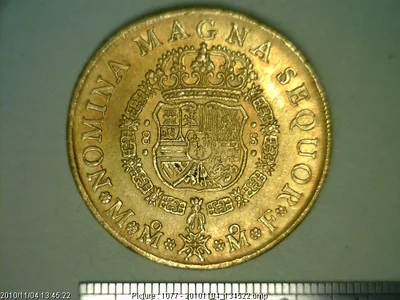
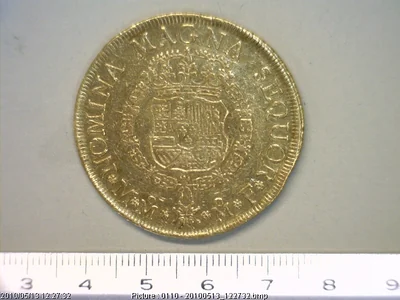
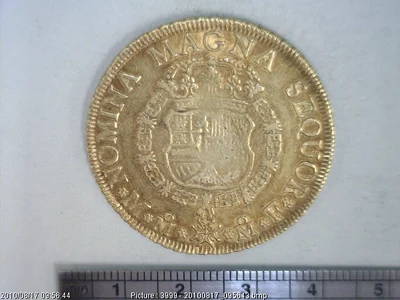
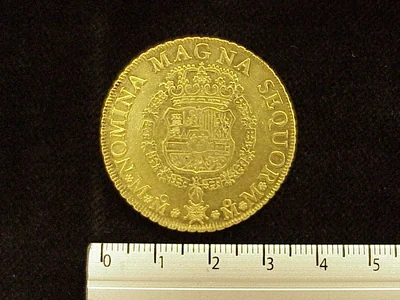
Third type; without denomination; draped bust.
Third type; without denomination; draped bust.
The 8 Escudos Fernando VI 1754 : What It's Worth is worth between $51,213 and $86,254 MXN depending on its grade of preservation.
Prices updated: August 2026
How much is the 8 Escudos Fernando VI 1754 (Mexico Gold): What It's Worth worth?
The estimated value of the 8 Escudos Fernando VI 1754 (Mexico Gold): What It's Worth ranges from $51,213 (circulated, XF) up to $86,254 (official blister pack), with $73,512 as a reference for an uncirculated (UNC) piece. The estimate is based on the official mintage and the historical behavior of the family.
The real price depends on four factors: the grade of preservation (a circulated piece is worth the low end of the range; an uncirculated one, or one still in its official blister pack, the high end), the finish (satin vs mirror/proof), the rarity within the series based on the mintage, and the metal spot price on the day of the deal when the piece is silver or gold. Check the value-by-grade table above and compare with equivalent pieces before buying or selling.
Where to buy or sell this coin?
Browse the national directory of numismatic shops or the community forum to trade directly with other collectors.
Description
If you inherited a heavy gold coin dated 1754 with a Spanish king's bust, you may be holding a Mexico 8 Escudos of Fernando VI. This is real money: the coin contains roughly three-quarters of an ounce of gold, so it never sells below its melt value. In 2026, examples trade from about 2,000 USD for worn, damaged pieces up to well over 20,000 USD for sharp, certified specimens.
Quick answer: what is it worth?
The 8 Escudos was the largest gold denomination of the Spanish colonial system, popularly called an "onza" (ounce). The 1754 Mexico issue (catalog reference KM#151) is a genuinely scarce coin, not a common bullion piece, so grade drives everything.
- Heavily worn or damaged (used as jewelry, holed, cleaned): roughly 1,800 to 3,000 USD, close to gold value.
- Circulated but honest (VF to XF): about 3,000 to 8,000 USD.
- High grade / mint state, certified by NGC or PCGS: 10,000 USD and up, with the best examples exceeding 20,000 USD.
Gold content sets the floor. At 26.93 grams of .875 fine gold, the coin holds about 0.757 troy ounces of pure gold. Even a beat-up example is worth its metal, which is why you should never accept an offer below current melt.
What you actually have
| Detail | Specification |
|---|---|
| Coin | 8 Escudos, Fernando VI |
| Date | 1754 |
| Mint | Mexico City (the "Mo" mint mark) |
| Assayer | MF (initials of the official who certified the gold fineness) |
| Metal | Gold |
| Weight | 26.93 g |
| Diameter | 36 mm |
| Fineness | .875 (87.5% gold) |
| Edge | Reeded and incuse |
| Catalog | KM#151 |
| Type | Third type, bust with drapery, no denomination shown |
The portrait shows Fernando VI in a draped bust. The coin carries no stated denomination on its face, which is normal for the type; collectors identify it by design, weight, and diameter. The MF you see near the shield is the assayer mark, the officer responsible for guaranteeing the metal met standard at the Mexico City mint, then the main gold and silver producer of the Spanish Empire.
Why this coin has real value (and why age isn't the reason)
Most old coins are worth little. This one is different for concrete reasons:
- Gold weight. Nearly three-quarters of an ounce of gold gives it a hard price floor.
- Genuine scarcity. Colonial 8 Escudos were struck in modest numbers and many were melted over the centuries. Survivors in collectible grade are limited.
- Collector demand. Spanish colonial gold from the Mexico City mint is a serious, well-followed series among US and international collectors.
What does NOT add value: the fact that it's "very old." Age alone means nothing. A worn, cleaned, or holed example is worth far less than a sharp original one of the same date.
Beware: this coin is heavily counterfeited
High-value gold coins attract fakes, and colonial 8 Escudos are among the most copied. Before you buy or sell:
- Weigh it on a jewelry scale. It should be very close to 26.93 g.
- Measure the diameter with calipers. It should be about 36 mm.
- Check the edge. It should be reeded and incuse, not smooth or crudely cut.
- Study the engraving. Counterfeits often show soft, mushy detail in the bust and shield, wrong lettering style, or a mint mark and assayer that don't match the type.
Any offer far below the gold value is a red flag, either for a fake or a scam. When in doubt, have it authenticated by NGC or PCGS before money changes hands.
Where to sell it (and where not to)
Because this is a precious-metal coin, deal only with someone who will inspect the piece and its weight in person, and verify before you pay.
- A verified numismatic dealer from the Pesoteca directory can appraise it on the spot.
- The Pesoteca buy-and-sell forum connects you directly with collectors.
- Photograph the obverse, reverse, and edge before listing, and compare your coin's grade to the ranges above.
Avoid dumping it to the first bidder on social media or a pawn shop that only pays scrap gold. That leaves the collector premium on the table. If you're not sure what you have, our guide to identifying old Mexican coins and the Spanish colonial coinage overview can help you place it.
Have a 1754 8 Escudos, or an entire box of inherited coins you can't identify? Post clear photos of both sides and the edge on the Pesoteca forum and let the community weigh in before you sell.
Historical context
Eight escudos, Fernando VI, 1754, Mexico City mint. The record lists the third type without denomination, with a bust dressed in a tunic. In July of that year the Marquis of Ensenada, Fernando VI's chief minister, fell from power after the intrigue orchestrated by the royal confessor Francisco de Rávago and the English ambassador Benjamin Keene. It was a major court coup that reorganized Spanish domestic politics. In New Spain the Count of Revillagigedo continued as viceroy, already in the final stretch before leaving office in 1755. The ounce weighs 27.06 grams with a fineness of 0.916. Produced by mill press with a round planchet. The pillar reverse kept its classic iconography without substantive changes. The assayer's signature appears in the field of the piece. Krause KM#151 is the stable reference for the final stretch of Fernando VI's reign at the Mexico City Mint. Pieces of this year are collectible for the peninsular political context that reorganized the Spanish court and for belonging to the final block of the Mexican Fernando VI pillar series.
This piece belongs to the era
Colonial / Virreinato →Explore all the Mexican coins of this era, their historical context and how they connect to the monetary system of the period.
Value range of this piece
Market estimate: $51,213 - $86,254 MXN depending on the grade of preservation (typical range between a circulated and an uncirculated piece).
See the full breakdown by grade (VG, F, VF, EF, AU, MS-60, MS-63, MS-65) for the whole series →
Same denomination, other years
8 escudos Oro 0.875 (21k) · 8 Escudos Fernando VI
Frequently asked questions
How much is an 8 Escudos Fernando VI 1754 worth?
It depends almost entirely on grade. Worn, cleaned, or damaged examples sell near their gold value, roughly 1,800 to 3,000 USD. Honest circulated coins run about 3,000 to 8,000 USD, and sharp certified specimens can exceed 20,000 USD. The gold content (26.93 g at .875 fine, about 0.757 troy ounces) sets a firm price floor.
Is the 1754 8 Escudos a rare coin?
Yes, in collectible grade. Colonial 8 Escudos were struck in modest numbers and many were melted over the centuries, so surviving examples in good condition are genuinely scarce. This is a collector coin, not common bullion, which is why grade drives the price so heavily.
Where can I sell my 8 Escudos Fernando VI 1754?
Use a [verified dealer from the Pesoteca directory](/tiendas), who can appraise it in person, or the [Pesoteca buy-and-sell forum](/foro/compra-venta) to reach collectors directly. Since it's a gold coin, only deal with buyers who inspect the piece and its weight. Avoid selling to a pawn shop that pays scrap gold only, as that ignores the collector premium.
How can I tell if my 8 Escudos Fernando VI 1754 is genuine?
Weigh it (should be about 26.93 g) and measure the diameter (about 36 mm) against the specs above. Check that the edge is reeded and incuse, and look closely at the bust and shield engraving, plus the mint mark and MF assayer initials. Fakes are common on this coin. Any offer far below gold value is a warning sign, and NGC or PCGS certification settles authenticity for good.
Conversation
0 comments
Loading comments…