
50 Centavos 2002 (Mexico): What It's Worth
Prices updated: August 2026
Centavos aluminum bronze 2002.
Centavos aluminum bronze 2002.
Design
Banxico
Reverse
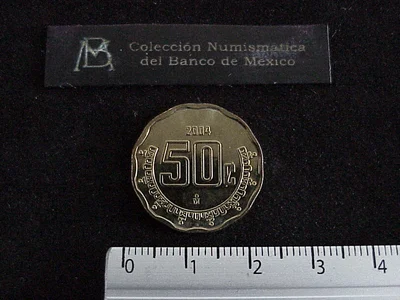
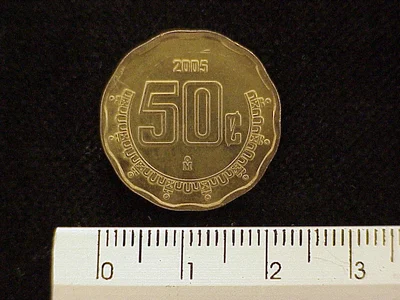
Reverse of the 50 Aluminum Bronze 2002 piece. Detail of the die cataloged by Banxico in its Numismatic Collection.
Obverse
Obverse with the Mexican National Coat of Arms and the legend "ESTADOS UNIDOS MEXICANOS" per the official convention. Struck by the Mexico City Mint under Banxico decree.
How much is the 50 Centavos 2002 (Mexico): What It's Worth worth?
The market value of the 50 Centavos 2002 (Mexico): What It's Worth is not yet documented with enough data to give a firm range. Weigh and measure your piece, compare it against the specifications, and check the forum for a second opinion.
The real price depends on four factors: the grade of preservation (a circulated piece is worth the low end of the range; an uncirculated one, or one still in its official blister pack, the high end), the finish (satin vs mirror/proof), the rarity within the series based on the mintage, and the metal spot price on the day of the deal when the piece is silver or gold. Check the value-by-grade table above and compare with equivalent pieces before buying or selling.
Where to buy or sell this coin?
Browse the national directory of numismatic shops or the community forum to trade directly with other collectors.
Description
If you found a 2002 Mexican 50 centavos coin, here is the honest answer: circulated, it is worth about its face value, roughly 3 US cents. An uncirculated example with full golden luster might bring 2 to 5 US dollars from a collector. This is a common circulation coin, not a rare find.
What is a 50 centavos coin?
"Centavos" are cents. Fifty centavos is half a Mexican peso, the fractional coin used to make change in everyday transactions. The 2002 issue is a small golden-colored coin struck in aluminum-bronze, the alloy Mexico adopted for its lower denominations after the 1993 monetary reform. It was minted by the Casa de Moneda de México, the Mexican Mint, one of the oldest mints in the Americas.
The design is standard for the series. The obverse (front) carries the Mexican national coat of arms, an eagle devouring a serpent on a cactus. The reverse (back) shows the face value, "50 CENTAVOS," with the date.
Technical specifications
| Spec | Detail |
|---|---|
| Denomination | 50 centavos (half peso) |
| Year | 2002 |
| Metal | Aluminum-bronze |
| Weight | 4.39 grams |
| Diameter | 22 mm |
| Edge | Plain (smooth) |
| Mint | Casa de Moneda de México |
Use these numbers to check authenticity. A genuine 2002 50 centavos weighs 4.39 grams and measures 22 mm. If yours is off, you may have a fake or a damaged piece.
What is it actually worth in 2026?
Value here comes down to one thing: condition. The date is not rare. Millions circulated for years, passing through countless hands, which is why worn examples are everywhere.
- Circulated (worn, dull): face value, roughly 3 US cents. Not worth selling individually.
- Uncirculated (full golden luster, sharp coat of arms): typically 2 to 5 US dollars to a collector building a year-by-year set.
- Certified high grade (MS66 and up from NGC or PCGS): can reach a bit more, but the certification often costs more than the coin.
This is a cheap coin to acquire but a demanding one to find in top grade, since most examples show wear. The aluminum-bronze also tones and spots easily, so a piece with intact color is genuinely harder to locate than the mintage suggests.
The myth: "it's old, so it's valuable"
Age does not equal value. A 2002 coin is barely two decades old and was made in large quantities. What drives real value in Mexican coins is genuine rarity (low mintage or few survivors), strong collector demand, high grade, and precious metal content. This coin has none of the first three in a big way, and aluminum-bronze has no bullion value like silver or gold. If you want Mexican coins that actually command real money, look at silver pieces like the Onza Libertad or gold pieces like the Centenario.
Mint errors: worth checking, rarely a jackpot
Genuine striking errors (off-center strikes, die rotation, double strikes) can multiply a coin's value if they are verifiable factory errors. The catch: most "errors" people post online are post-mint damage, dings, corrosion, or wear, not mint mistakes. If you think you have a real error, get a second opinion before assuming it is worth money.
How to tell if yours is genuine
- Weigh it. A jewelry scale should read 4.39 grams.
- Measure it. A caliper should read 22 mm across.
- Check the relief. Genuine coins have crisp, raised detail. Flat or mushy design is a red flag.
- Check the color. Aluminum-bronze is uniformly golden. Blotchy or oddly distributed color can signal a fake or heavy corrosion.
Counterfeits of a low-value circulation coin are uncommon simply because there is no profit in faking a coin worth cents, but it is still worth confirming the basics.
Where to sell it
Be realistic: a single circulated 50 centavos is not worth mailing anywhere. If you have an uncirculated example or a full year-by-year set, options include a verified coin dealer, a collector forum, or online marketplaces. Photograph the obverse, reverse, and edge in good light, and compare condition before you price it. Do not dump it on the first social media buyer.
Have a 2002 50 centavos with unusual luster or a possible error? Post clear photos in the Pesoteca forum and let collectors weigh in on the grade before you sell.
Historical context
Context of the fifty-centavo piece of the year 2002
This fifty-centavo coin (KM#549) was struck by the Mexico City Mint in 2002, under the presidency of Vicente Fox Quesada. It is part of the family of circulating coins in aluminum bronze with nickel that Banxico issued between 1992 and 2009, with a 22 mm diameter and a weight of 3.10 g.
The year in Mexico. It is the year the peso crossed 10 to the dollar for the first time since the 1994-1995 crisis. President Fox announced the construction of the new airport in Texcoco, a project that was canceled after protests by ejido farmers of San Salvador Atenco in October. That year, according to INEGI's INPC, annual inflation closed at 5.70% and the Bank of Mexico's FIX exchange rate ended the year at 10.31 pesos per dollar.
How it circulated. In 2002 these pieces circulated in a country with moderate economic growth. The Metro fare rose to 2 pesos and the pieces were still common change in transit and commerce. Toll booths accepted them in partial payments.
Numismatic note. The 2002 die is from a regular strike. In the Banxico catalog it is recorded as a year with renewed dies to maintain the sharpness of the engraving. The obverse design is Banxico's official National Coat of Arms and the reverse shows the face value alongside the year of minting. From year to year the design remains identical and only the engraved date changes, so the visible difference is minimal. Internal die variations, when they exist, are documented in the Bank of Mexico catalog.
This piece belongs to the era
Nuevos Pesos y actualidad →Explore all the Mexican coins of this era, their historical context and how they connect to the monetary system of the period.
Value range of this piece
Value range without enough data for this piece.
See the full breakdown by grade (VG, F, VF, EF, AU, MS-60, MS-63, MS-65) for the whole series →
Same denomination, other years
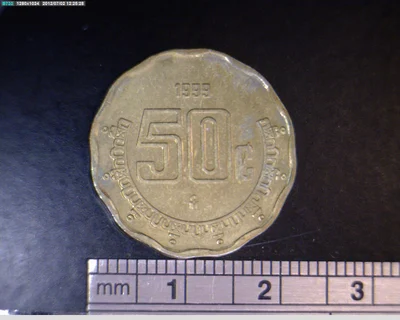
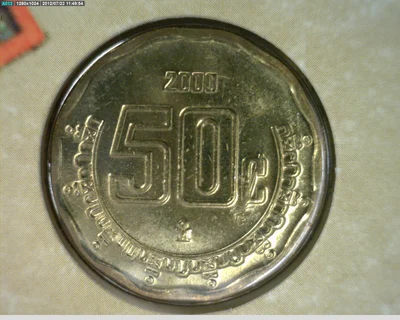
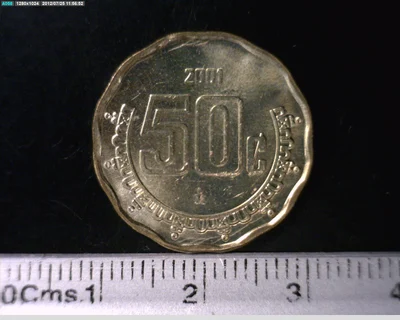
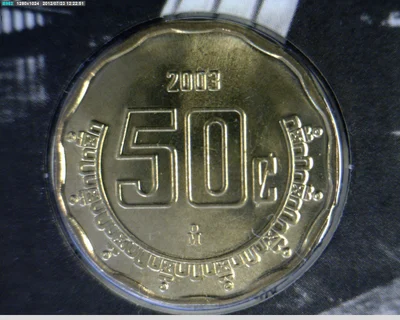
50 centavos Aluminio-bronce · 50 Centavos Bronce Aluminio
Frequently asked questions
How much is a 2002 Mexican 50 centavos worth?
Circulated, it is worth about face value, roughly 3 US cents. An uncirculated example with full golden luster and a sharp coat of arms typically brings 2 to 5 US dollars from a collector building a set. The date is common, so condition is what matters.
Is the 2002 50 centavos coin rare?
No. It is a common circulation coin minted in large quantities and used for years. Worn examples are everywhere. What is genuinely harder to find is a top-grade uncirculated piece with intact golden color, since aluminum-bronze tones and spots easily.
Where can I sell my 2002 50 centavos?
For a single circulated coin, it is not worth the shipping. For an uncirculated example or a full year set, try a verified coin dealer, a collector forum, or an online marketplace. Photograph the front, back, and edge, and check condition before pricing. Avoid selling to the first social media buyer.
How do I know if my 2002 50 centavos is genuine?
Weigh it (should be 4.39 grams) and measure it (should be 22 mm) with a jewelry scale and caliper. Genuine coins have crisp raised detail and a uniform golden color. Flat relief, wrong weight, or blotchy color point to a fake or a damaged coin.
Conversation
0 comments
Loading comments…