
50 Centavos 2000 (Aluminum-Bronze): What It's Worth
Prices updated: August 2026
Centavos aluminum bronze 2000.
Centavos aluminum bronze 2000.
Design
Banxico
Reverse
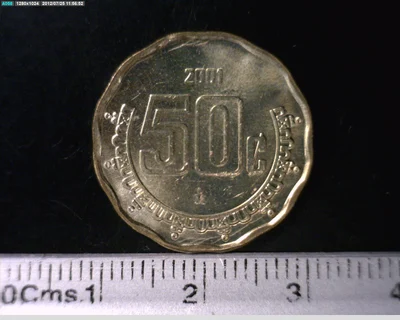
Reverse of the 50 Aluminum Bronze 2000 piece. Detail of the die cataloged by Banxico in its Numismatic Collection.
Obverse
Obverse with the Mexican National Coat of Arms and legend "ESTADOS UNIDOS MEXICANOS" per official convention. Minted by the Mexican Mint under Banxico decree.
How much is the 50 Centavos 2000 (Aluminum-Bronze): What It's Worth worth?
The market value of the 50 Centavos 2000 (Aluminum-Bronze): What It's Worth is not yet documented with enough data to give a firm range. Weigh and measure your piece, compare it against the specifications, and check the forum for a second opinion.
The real price depends on four factors: the grade of preservation (a circulated piece is worth the low end of the range; an uncirculated one, or one still in its official blister pack, the high end), the finish (satin vs mirror/proof), the rarity within the series based on the mintage, and the metal spot price on the day of the deal when the piece is silver or gold. Check the value-by-grade table above and compare with equivalent pieces before buying or selling.
Where to buy or sell this coin?
Browse the national directory of numismatic shops or the community forum to trade directly with other collectors.
Description
If you found a small gold-colored Mexican coin marked "50 Centavos" dated 2000, here is the honest answer: in worn, circulated condition it is worth its face value, roughly a few US cents. This is a common circulation coin, not a rarity. A crisp uncirculated example can bring a modest premium among collectors, but nobody is getting rich off this one.
We say that plainly because online rumors love to turn ordinary pocket change into "hidden treasure." The 50 centavos of 2000 is a workhorse coin that Mexico struck by the millions for everyday use. Value here comes almost entirely from condition, not from age or the year 2000 by itself.
What you actually have
This is a 50 centavos piece in aluminum-bronze, the alloy that gives it that distinctive golden tone. Specs, exactly as struck at the Casa de Moneda de México (the Mexican Mint):
- Metal: aluminum-bronze (a copper alloy, no silver or gold, so no bullion value)
- Weight: 4.39 g
- Diameter: 22 mm
- Edge: plain (smooth, no reeding)
- Type: regular circulation coin, not a commemorative
The front (obverse) shows the Mexican national coat of arms, the eagle devouring a serpent. The back (reverse) carries the large "50" value. This design family came out of Mexico's 1993 monetary reform, the "new peso" system, and the small centavo denominations got the golden aluminum-bronze while the higher values used a two-tone bimetallic construction.
What it's worth in 2026
| Condition | What it looks like | Approximate value (USD) |
|---|---|---|
| Circulated (worn) | Dull, scratched, years of handling | Face value, a few cents |
| Extra fine | Light wear, most detail sharp | Under 1 dollar |
| Uncirculated (UNC) | Full original golden luster, crisp relief, no wear | Roughly 1 to 3 dollars to a collector |
Those are collector-to-collector figures for a normal example. The coin was minted in large numbers and is easy to find, so a worn one has no premium over its face value. The only versions that climb are pristine uncirculated pieces with untouched golden luster, and even those stay in the low single digits of dollars.
Genuine mint errors are the exception
The one thing that can multiply the value is a verified striking error: an off-center strike, a die rotation, a genuine double strike, or a documented variety. If real and authenticated, those can be worth many times face value.
Here is the catch, and most sellers get this wrong: the overwhelming majority of "errors" people post online are not mint errors at all. They are post-mint damage, dents, corrosion, acid stains, or wear that happened after the coin left the press. That damage adds nothing and usually lowers value. A true error happens at the moment of striking and has a specific, repeatable signature.
How to check what yours is worth
- Weigh and measure it. Use a jewelry scale and a caliper. It should hit 4.39 g and 22 mm. Wrong weight or diameter, flat relief, or oddly distributed color are red flags for a fake or an altered piece.
- Judge the condition honestly. Hold it under good light. Full golden luster and sharp, clean relief mean an uncirculated grade and a small premium. Any dullness or smoothing means it grades as circulated.
- Photograph obverse, reverse, and edge. Clear photos are what any buyer or appraiser needs, and what our forum members use to weigh in.
- Do not clean it. Cleaning a coin scratches the surface and destroys collector value. Leave it as is.
Where to sell it
For a coin in this value range, keep it simple and safe. A verified numismatic shop from the Pesoteca shop directory can appraise it on the spot with no middleman markup. Between collectors, the Pesoteca buy-and-sell forum is the honest route. If you think you have a real error, post it in the Pesoteca forum first and let the community confirm before you sell. Skip dumping it on social media to the first bidder.
Did you inherit a whole box of these golden centavos? Post a photo of the batch in our forum and we will help you spot which ones, if any, are worth more than face value.
Historical context
Context of the fifty-centavos piece from the year 2000
This fifty-centavos coin (KM#549) was minted by the Mexican Mint in 2000, under the presidency of Ernesto Zedillo Ponce de León. It is part of the family of circulating coins in aluminum-bronze with nickel alloy that Banxico issued between 1992 and 2009, with 22 mm in diameter and 3.10 g in weight.
The year in Mexico. It is the year of the change of party in Los Pinos. On July 2, 2000 Vicente Fox Quesada of the PAN won the presidential election and ended 71 years of PRI governments. The new president took office on December 1, although these pieces were minted under the Zedillo administration. That year, according to INEGI's INPC, annual inflation closed at 8.96% and the Bank of Mexico's FIX exchange rate closed the year at 9.57 pesos per dollar.
How it circulated. In 2000 these pieces circulated in a context of relative stability. Inflation closed in single digits for the first time since 1994. They served for tips, city bus fares and change at the market. The Metro ticket was still 2 pesos, four fifty-centavos coins covered it.
Numismatic note. The 2000 die is the last mass minting of the Zedillo cycle. Circulated pieces are abundant in the market and are usually found in change boxes kept by individuals. The obverse design is Banxico's official National Coat of Arms and the reverse shows the face value alongside the mint year. Between years the design remains identical and only the engraved date changes, so the visible difference is minimal. Internal die variations, when they exist, are documented in the Bank of Mexico catalog.
This piece belongs to the era
Nuevos Pesos y actualidad →Explore all the Mexican coins of this era, their historical context and how they connect to the monetary system of the period.
Value range of this piece
Value range without enough data for this piece.
See the full breakdown by grade (VG, F, VF, EF, AU, MS-60, MS-63, MS-65) for the whole series →
Same denomination, other years
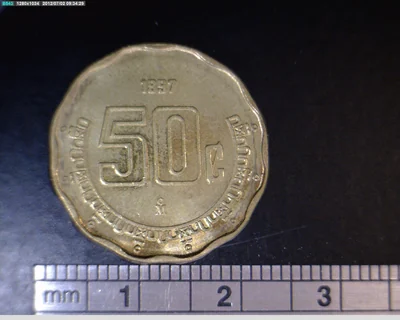
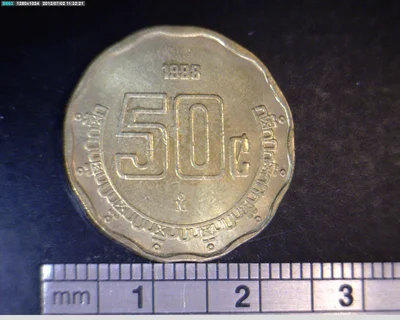
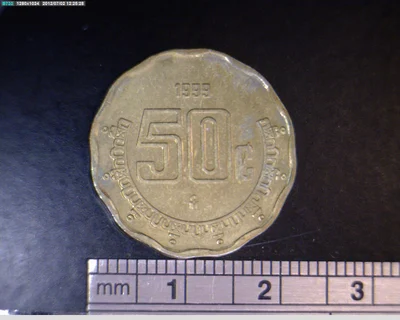
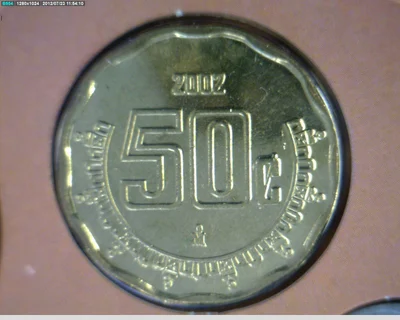
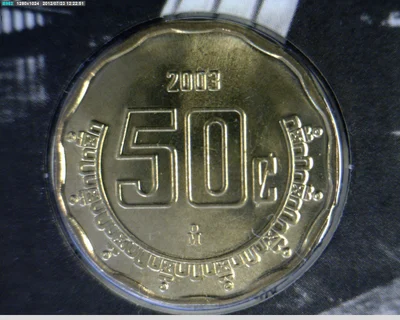
50 centavos Aluminio-bronce · 50 Centavos Bronce Aluminio
Frequently asked questions
How much is a Mexican 50 centavos 2000 coin worth?
In worn, circulated condition it's worth its face value, a few US cents, because it's a common coin struck in large numbers. A genuine uncirculated example with full golden luster brings a small collector premium, roughly 1 to 3 dollars. Only verified mint errors go higher.
Is the 50 centavos 2000 rare or valuable?
No, it's a common everyday circulation coin, not rare. Age and the year 2000 don't make it valuable on their own. The only meaningful value comes from top uncirculated condition or an authenticated striking error, and even then the numbers stay modest.
Where can I sell my 50 centavos 2000 coin?
The safest options are a verified numismatic shop from the [Pesoteca directory](/tiendas), which appraises it on the spot, or the [Pesoteca buy-and-sell forum](/foro/compra-venta) between collectors. Photograph the obverse, reverse, and edge, and check the value range above before selling. Avoid rushing a sale to the first bidder on social media.
How can I tell if my 50 centavos 2000 is genuine?
Weigh it on a jewelry scale (should be 4.39 g) and measure the diameter with a caliper (22 mm), then compare to the specs above. Fakes usually show wrong weight or diameter, flat relief, or unevenly distributed color. When in doubt, post clear photos in the Pesoteca forum for a second opinion.
Conversation
0 comments
Loading comments…