
Mexican 10 Centavos 1973 (Cupronickel): Value Guide
Prices updated: August 2026
Centavos cupronickel 1973.
Centavos cupronickel 1973.
Design
Banxico
Reverse
Reverse of the 10 Cupronickel 1973 piece. Die detail cataloged by Banxico in its Numismatic Collection.
Obverse
Obverse with the Mexican National Coat of Arms and the legend "ESTADOS UNIDOS MEXICANOS" per official convention. Struck by the Mexican Mint under Banxico decree.
How much is the Mexican 10 Centavos 1973 (Cupronickel): Value Guide worth?
The market value of the Mexican 10 Centavos 1973 (Cupronickel): Value Guide is not yet documented with enough data to give a firm range. Weigh and measure your piece, compare it against the specifications, and check the forum for a second opinion.
The real price depends on four factors: the grade of preservation (a circulated piece is worth the low end of the range; an uncirculated one, or one still in its official blister pack, the high end), the finish (satin vs mirror/proof), the rarity within the series based on the mintage, and the metal spot price on the day of the deal when the piece is silver or gold. Check the value-by-grade table above and compare with equivalent pieces before buying or selling.
Where to buy or sell this coin?
Browse the national directory of numismatic shops or the community forum to trade directly with other collectors.
Description
If you inherited a jar of old Mexican coins and pulled out a small 10 centavos dated 1973, here is the honest answer: in worn condition it is worth a few cents, not a fortune. This is a common circulation coin. But a crisp, uncirculated example or a genuine mint error can be worth a few dollars to a collector. Here is exactly what drives the value and how to check yours.
Quick answer: what is a 1973 10 Centavos worth in 2026?
The 1973 10 centavos is a cupronickel coin made for everyday use, so tens of millions were struck and most survivors are worn. A circulated piece is worth roughly 0.10 to 0.50 USD, essentially its value as a curiosity. An uncirculated coin with full luster and sharp detail can bring 2 to 5 USD from the right buyer, and certified high grades or verified striking errors can go higher. This is not a rare coin, and no honest dealer will pay you real money for a worn one.
What this coin actually is
This is a 10 centavos piece from Mexico's decimal system. "Centavos" are the fractional units of the peso (100 centavos make 1 peso), the same way cents work with the dollar. It belongs to Mexico's modern pre-1992 coinage, before the currency was revalued.
The technical specs stay useful because counterfeiters usually get them wrong:
| Spec | Detail |
|---|---|
| Denomination | 10 centavos |
| Year | 1973 |
| Metal | Cupronickel (copper-nickel alloy) |
| Weight | 1.52 grams |
| Diameter | 15 mm |
| Edge | Smooth (plain) |
| Mint | Casa de Moneda de México |
It is cupronickel, not silver. That matters because readers often ask "is it silver?" hoping for melt value. There is no precious metal here, so there is no bullion floor. The only value comes from collector demand for condition or errors.
The obverse carries the Mexican national coat of arms (the eagle on a cactus devouring a serpent) with the legend "ESTADOS UNIDOS MEXICANOS," the official name of the country. The reverse shows the denomination and date.
Why it is not worth much
Three things drive coin value: real rarity, demand, and grade. This coin fails the first two. It was minted in large numbers for circulation, millions of examples exist, and there is no strong collector chase for the date. Age alone does not create value, and 1973 is recent by numismatic standards. A 50-year-old coin that everyone still has in a drawer is not rare.
Where value does appear:
- Grade. An uncirculated coin, never spent, with original mint luster, is worth more than a worn one. If yours came sealed in an original Banxico mint set or blister pack, keep it that way, packaging adds a premium.
- Errors. Genuine mint errors such as off-center strikes, die rotation, or double strikes can multiply the value of an otherwise ordinary coin. Be careful: most "errors" people post online are post-mint damage (dings, corrosion, scratches), not factory errors. Damage lowers value; a real error raises it.
How to check what yours is worth
- Grade it honestly. Look at wear on the high points of the eagle and the lettering. Sharp detail and shine mean a higher grade. Our coin grading guide walks you through the scale.
- Verify it is genuine. Weigh it on a jewelry scale (should be 1.52 g) and measure the diameter (15 mm) with calipers. Fakes usually miss on weight, diameter, flat relief, or wrong color.
- Compare to real sales. Check what similar-grade pieces actually sold for, not what someone is asking on social media.
- Get a second opinion on possible errors. If you think you have a real striking error, post clear photos of the obverse, reverse, and edge in the Pesoteca forum so collectors can weigh in before you assume it is valuable.
Where to sell it
For a common coin like this, do not overthink it, but do not give it away either. A verified coin shop from the Pesoteca directory can appraise it on the spot with no middleman markup. Between collectors, the Pesoteca buy-and-sell forum is the better route for uncirculated or error pieces. Photograph both sides and the edge, and check the value ranges on this page before you sell. Avoid dumping it to the first bidder on a Facebook group.
This coin is part of the broader Mexican Centavos series, so if you have a full run of dates, the set together may interest a collector more than any single piece.
Have a 1973 10 centavos you think might be an error, or a full jar of centavos you want identified? Post your photos in the Pesoteca forum and let the community tell you what you actually have.
Historical context
Centavo coins form the base of the Mexican monetary system. Banxico has modified their diameters, materials, and alloys several times over the last few decades to optimize striking costs. The 10-centavo Cupronickel piece struck in 1973 belongs to the Banxico Numismatic Collection catalog documented on its official site.
For Mexican collectors, centavo pieces gain value when they capture a change of material, a die error, or an atypically low mintage. Banxico publishes the annual mintages in CM10 from the year 2000 on. For earlier pieces the data may not be available. This entry follows the PSM System convention, one ID per distinct physical piece, not per shared design.
This piece belongs to the era
México Moderno (pre-1992) →Explore all the Mexican coins of this era, their historical context and how they connect to the monetary system of the period.
Value range of this piece
Value range without enough data for this piece.
See the full breakdown by grade (VG, F, VF, EF, AU, MS-60, MS-63, MS-65) for the whole series →
Same denomination, other years
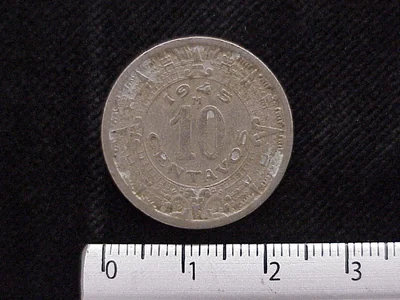
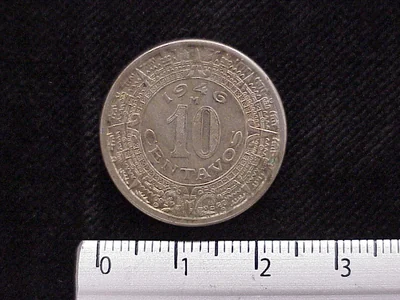
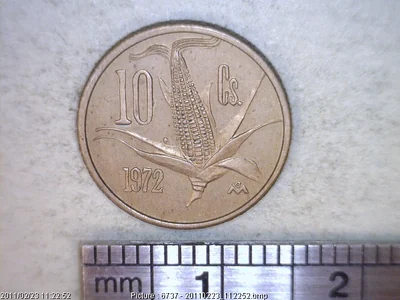
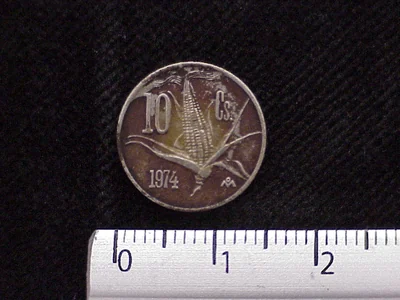
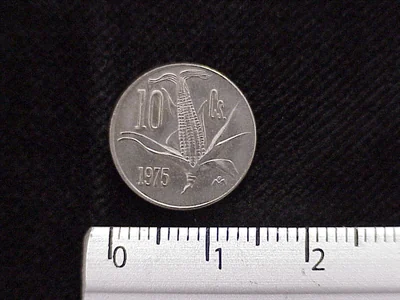
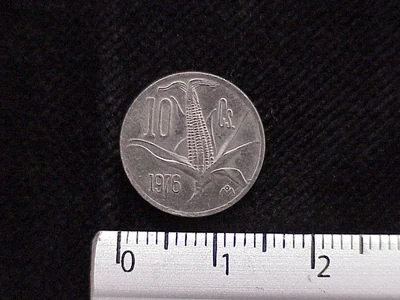
10 centavos Cuproníquel · Centavos Mexicanos
Frequently asked questions
How much is a 1973 Mexican 10 centavos worth?
In worn, circulated condition it is worth about 0.10 to 0.50 USD, mostly as a curiosity. An uncirculated example with full luster can bring 2 to 5 USD, and certified high grades or verified mint errors can go higher. It contains no silver, so there is no melt value.
Is the 1973 10 centavos rare?
No. It was struck in large numbers for everyday circulation, and millions of examples survive. Age alone does not make it valuable. The only pieces that command a premium are uncirculated coins, sealed mint sets, or genuine striking errors.
Where can I sell a 1973 10 centavos?
A verified coin shop from the Pesoteca directory (/tiendas) can appraise it in person, or you can list it in the Pesoteca buy-and-sell forum (/foro/compra-venta) among collectors. Photograph the obverse, reverse, and edge, and check the value ranges on this page before selling. Avoid selling to the first bidder on social media.
How can I tell if my 1973 10 centavos is genuine?
Weigh it (should be 1.52 grams) and measure the diameter (should be 15 mm) using a jewelry scale and calipers, then compare to the specs above. Counterfeits usually have the wrong weight or diameter, flat relief, or off-color surfaces.
Conversation
0 comments
Sources
- Ejemplar de la Coleccion Numismatica Banco de Mexico . inv. 15169
- Ejemplar de la Coleccion Numismatica Banco de Mexico . inv. 15171
- Ejemplar de la Coleccion Numismatica Banco de Mexico . inv. 15170
Images for informational and educational purposes, attributed to their original source. Reference values; the real price depends on the grade, the specific variant and demand.
Loading comments…