
1945 Mexico 10 Centavos (Cupronickel): Value & Worth
Prices updated: August 2026
Centavos cupronickel 1945.
Centavos cupronickel 1945.
Design
Banxico
Reverse
Reverse of the 10 Cupronickel 1945 piece. Die detail cataloged by Banxico in its Numismatic Collection.
Obverse
Obverse with the Mexican National Coat of Arms and legend "ESTADOS UNIDOS MEXICANOS" per official convention. Struck by the Mexican Mint under Banxico decree.
How much is the 1945 Mexico 10 Centavos (Cupronickel): Value & Worth worth?
The market value of the 1945 Mexico 10 Centavos (Cupronickel): Value & Worth is not yet documented with enough data to give a firm range. Weigh and measure your piece, compare it against the specifications, and check the forum for a second opinion.
The real price depends on four factors: the grade of preservation (a circulated piece is worth the low end of the range; an uncirculated one, or one still in its official blister pack, the high end), the finish (satin vs mirror/proof), the rarity within the series based on the mintage, and the metal spot price on the day of the deal when the piece is silver or gold. Check the value-by-grade table above and compare with equivalent pieces before buying or selling.
Where to buy or sell this coin?
Browse the national directory of numismatic shops or the community forum to trade directly with other collectors.
Description
If you inherited or found a 1945 Mexican 10 centavos in cupronickel, here is the honest answer: in circulated condition it is worth a few US cents to about 1 dollar. A clean, uncirculated example can bring a few dollars. This is a common coin, not a rarity, and no version of it is worth a fortune.
We say that up front because a lot of sites hint that any old Mexican coin might be a jackpot. It usually is not. Value on this piece comes down to one thing: condition. Below is what yours is realistically worth and how to check it.
What this coin actually is
This is a 10 centavos (ten cents of a Mexican peso), struck in 1945 at the Casa de Moneda de México, the Mexican Mint. It belongs to the modern Mexican centavos series and carries the standard national obverse.
- Metal: Cupronickel (a copper-nickel alloy, no silver, no gold)
- Weight: 1.52 grams
- Diameter: 15 millimeters
- Edge: Plain (smooth)
- Obverse: The Mexican coat of arms (an eagle on a cactus with a serpent) and the legend "ESTADOS UNIDOS MEXICANOS" (United Mexican States, the country's official name)
- Reverse: The denomination and date
Because it contains no precious metal, there is no melt value to fall back on. Its worth is purely collector-driven, and demand for this date is low because it was made in large numbers.
What a 1945 10 centavos is worth in USD
The range is narrow. The gap between a worn coin and a pristine one is small in dollar terms, but it is real.
| Condition | Description | Approx. value (USD) |
|---|---|---|
| Circulated (worn) | Details soft, scratches, common finds | Under 0.50 |
| Fine / Very Fine | Moderate wear, clear design | 0.50 to 1.50 |
| Uncirculated (no wear) | Full detail, mint luster | 2 to 6 |
| Certified high grade (MS64+) | Graded by NGC or PCGS | 10 to 25 |
These are collector prices between hobbyists. A dealer buying from you will pay less, since they need resale margin. Do not expect a windfall on a single common-date coin.
Is it rare?
No. The 1945 10 centavos was a regular circulation issue, so millions passed through people's hands. Rarity in coins comes from low mintage, low survival, or scarce varieties, and this date has none of those working in its favor.
Where small money does show up is in genuine mint errors: off-center strikes, die rotation, doubled dies. If verified by a grading service, these can multiply the value. Be careful, though. Most "errors" people post online are post-mint damage: dings, corrosion, or wear, not factory mistakes. When in doubt, get a second opinion before you get excited.
How to tell if yours is genuine
Counterfeiting a low-value coin like this is uncommon, but here is how to confirm it:
- Weigh it. A jeweler's scale should read close to 1.52 grams.
- Measure it. The diameter should be 15 millimeters with a caliper.
- Check the detail. Real strikes have crisp relief. Flat, mushy design or wrong coloring is a red flag.
- Look at the edge. It should be plain and smooth.
A fake usually gets the weight or diameter wrong, or shows soft, blurry lettering. For anything you think might be an error or unusually valuable, submission to NGC or PCGS settles the question.
Where to sell it
For a common coin like this, your best options are:
- A verified coin dealer. Use the Pesoteca dealer directory to find one by city. They appraise on the spot, no inflated markups.
- The Pesoteca buy-and-sell forum, where you deal directly with collectors.
Before you sell, photograph the obverse, reverse, and edge, and compare your coin to the value table above. For a single low-value piece it is often worth waiting until you have a small group of coins to sell together. If you want to understand grading first, read our guide to coin condition grades and browse the full Mexican centavos series to see how yours fits in.
Have a 1945 10 centavos you think might be an error or a high grade? Post clear photos in the Pesoteca forum and let the community weigh in before you sell.
Historical context
Cent coins form the base of the Mexican monetary system. Banxico has modified their diameters, materials and alloys several times over the past decades to optimize minting costs. The 10-cent Cupronickel piece struck in 1945 belongs to the Banxico Numismatic Collection catalog documented on its official site.
For Mexican collectors, cent pieces gain value when they capture a change of material, a die error or an atypically low mintage. Banxico publishes annual mintages in CM10 since the year 2000. For earlier pieces the data may not be available. This entry follows the convention of the PSM System, one ID per distinct physical piece, not per shared design.
This piece belongs to the era
México Moderno (pre-1992) →Explore all the Mexican coins of this era, their historical context and how they connect to the monetary system of the period.
Value range of this piece
Value range without enough data for this piece.
See the full breakdown by grade (VG, F, VF, EF, AU, MS-60, MS-63, MS-65) for the whole series →
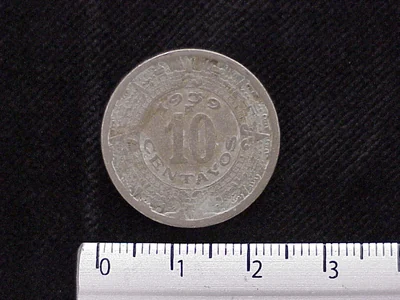
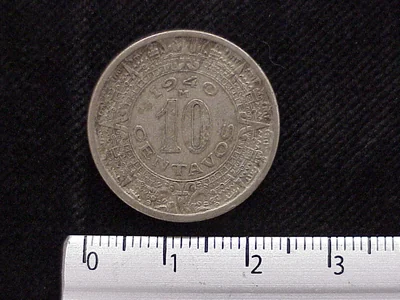
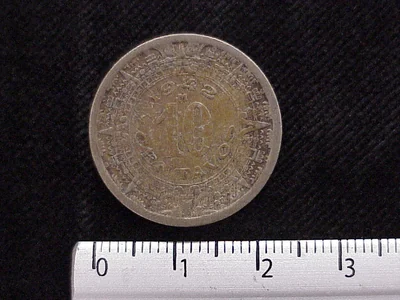
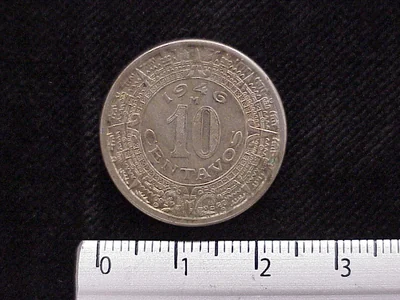
Same denomination, other years
10 centavos Cuproníquel · Centavos Mexicanos
Frequently asked questions
How much is a 1945 Mexican 10 centavos worth?
In circulated condition it is worth under 1 USD. A clean uncirculated example runs about 2 to 6 dollars, and a certified high-grade coin (MS64 or better) can reach 10 to 25 dollars. It contains no silver, so there is no melt value backing it.
Is the 1945 10 centavos rare?
No. It was a regular circulation issue struck in large numbers, so millions survive. It is a common date. The only versions worth notably more are verified mint errors, which are uncommon and must be authenticated by NGC or PCGS.
Where can I sell a 1945 Mexican 10 centavos?
A verified dealer from the [Pesoteca directory](/tiendas) will appraise it in person, or you can list it in the [buy-and-sell forum](/foro/compra-venta) among collectors. Photograph both sides and the edge, and check the value table first. For a single low-value coin, it is often better to sell it with a larger group.
How do I know if my 1945 10 centavos is genuine?
Weigh it (should be about 1.52 grams) and measure it (15 millimeters) with a jeweler's scale and caliper. Genuine coins have crisp relief and a plain, smooth edge. Wrong weight, wrong size, or flat, blurry detail points to a fake.
Conversation
0 comments
Sources
- Ejemplar de la Coleccion Numismatica Banco de Mexico . inv. 12239
- Ejemplar de la Coleccion Numismatica Banco de Mexico . inv. 12238
- Ejemplar de la Coleccion Numismatica Banco de Mexico . inv. 12240
- Ejemplar de la Coleccion Numismatica Banco de Mexico . inv. 12241
Images for informational and educational purposes, attributed to their original source. Reference values; the real price depends on the grade, the specific variant and demand.
Loading comments…