
Mexican 10 Centavos 1974 (Cupronickel): What It's Worth
Prices updated: August 2026
Centavos cupronickel 1974.
Centavos cupronickel 1974.
Design
Banxico
Reverse
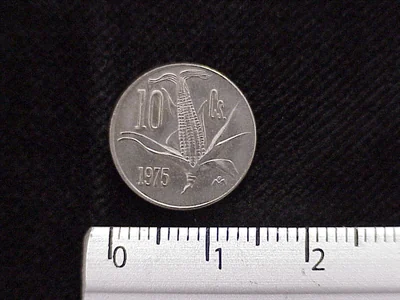
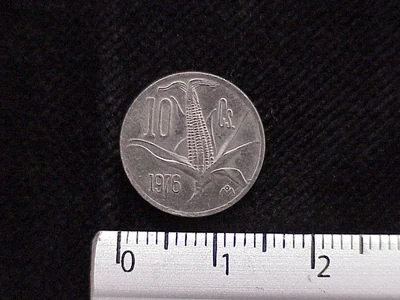
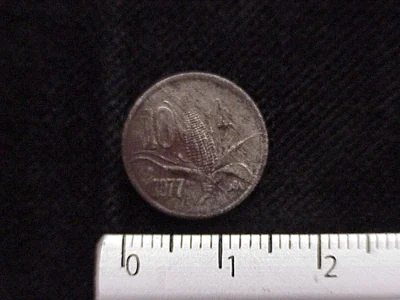
Reverse of the 10-centavo cupronickel 1974 piece. Detail of the die cataloged by Banxico in its Numismatic Collection.
Obverse
Obverse with the Mexican National Coat of Arms and legend "ESTADOS UNIDOS MEXICANOS" per official convention. Struck by the Mexican Mint under Banxico decree.
How much is the Mexican 10 Centavos 1974 (Cupronickel): What It's Worth worth?
The market value of the Mexican 10 Centavos 1974 (Cupronickel): What It's Worth is not yet documented with enough data to give a firm range. Weigh and measure your piece, compare it against the specifications, and check the forum for a second opinion.
The real price depends on four factors: the grade of preservation (a circulated piece is worth the low end of the range; an uncirculated one, or one still in its official blister pack, the high end), the finish (satin vs mirror/proof), the rarity within the series based on the mintage, and the metal spot price on the day of the deal when the piece is silver or gold. Check the value-by-grade table above and compare with equivalent pieces before buying or selling.
Where to buy or sell this coin?
Browse the national directory of numismatic shops or the community forum to trade directly with other collectors.
Description
If you found a 1974 Mexican 10 centavos coin, here is the honest answer: in worn condition it is worth a few cents, basically face value to a US collector. The value only climbs if you have one in near-perfect, uncirculated condition, and even then we are talking a few dollars, not a fortune. This is a common circulation coin, not a rarity.
Quick answer: how much is a 1974 10 centavos worth?
Most 1974 10 centavos coins are worth between 10 and 50 US cents. A crisp, uncirculated example with full original shine can reach a few dollars among collectors. There is no known scenario where an ordinary 1974 10 centavos sells for hundreds or thousands. Anyone telling you otherwise is repeating a myth.
The reason is simple. Mexico minted these in large numbers and they circulated heavily. Millions passed through hands, buses, and corner stores across the 1970s. Common survival plus low demand equals low value.
What this coin actually is
The 10 centavos is a small fraction of the Mexican peso (100 centavos make one peso). This 1974 issue was struck by the Casa de Moneda de México, the Mexican Mint, one of the oldest mints in the Americas.
| Feature | Detail |
|---|---|
| Denomination | 10 centavos |
| Year | 1974 |
| Metal | Cupronickel (copper-nickel alloy) |
| Weight | 1.52 grams |
| Diameter | 15 mm |
| Edge | Plain (smooth) |
| Mint | Casa de Moneda de México |
Cupronickel gives the coin a silvery tone when new. It is not silver, and it has no precious-metal melt value. Over time the surface dulls to a grayish color. If yours looks dark and worn, that is normal wear, not damage that adds value.
Value by condition
With common coins like this, condition is everything. Because it circulated so much, finding one without wear is the hard part, and that is exactly what a collector pays for.
| Condition | Approximate value (USD) |
|---|---|
| Circulated (worn) | 0.10 to 0.30 |
| Lightly circulated | 0.30 to 0.75 |
| Uncirculated with original shine | 1 to 4 |
The coins that bring the top of that range keep their original luster and show sharp, clean detail in the design. A dull, scratched piece from your change jar sits at the bottom.
The "it's old, so it's worth money" myth
Age does not equal value. A 1974 coin is only about 50 years old, and it was produced in massive quantities. Old and common is still common. What actually drives coin value is genuine rarity (low mintage or few survivors), collector demand, condition, and precious-metal content. This coin scores low on all four.
If you inherited a box of these, the realistic outcome is that they are a fun starter set, not a payout. A complete year-by-year set of this series in good grade is still a reasonable, low-cost entry point for anyone building a collection of 20th-century Mexican circulation coinage. That is the real appeal here.
What about error coins?
Genuine mint errors (off-center strikes, die rotation, double strikes, real varieties) can multiply the value of an otherwise common coin. The catch: most "errors" people post online are post-mint damage. Dings, corrosion, and scratches from decades in circulation are not mint errors and add nothing.
If you think you have a real error, do not clean the coin. Photograph both sides and the edge clearly and get a second opinion before assuming it is valuable.
How to tell if yours is genuine
Counterfeits of a low-value coin like this are rare because there is no profit in faking it. Still, to confirm:
- Weigh it on a jewelry scale. It should be close to 1.52 grams.
- Measure the diameter with a caliper. It should be 15 mm.
- Check the strike. Genuine pieces have crisp relief and even color. Flat, mushy detail or blotchy coloring is a red flag.
Fakes usually miss on weight, diameter, or detail sharpness.
Where to sell it
For a coin in this value range, keep it simple:
- A verified numismatic shop from the Pesoteca directory can appraise it on the spot.
- The Pesoteca buy-and-sell forum connects you directly with collectors, which matters most if you have a full set or a genuine error.
- If you are in Mexico, common circulation pieces sometimes turn up in bank change or at the Mint directly.
Before you sell, photograph the front, back, and edge, and compare your coin's condition to the value table above so you know what a fair number looks like. Do not dump a set to the first buyer on social media.
Related pages worth checking
If you have a mixed lot, compare against other Mexican circulation coins in our catalog, read the buy-and-sell forum for current offers, and post photos in the main Pesoteca forum if you want a second opinion on grade or a possible error.
Have a jar of old Mexican coins you cannot identify? Post clear photos in the Pesoteca forum and let the community tell you which ones are keepers and which are just face value.
Historical context
Centavo coins form the base of the Mexican monetary system. Banxico has changed their diameters, materials, and alloys several times over recent decades to optimize minting costs. The 10-centavo cupronickel piece struck in 1974 belongs to the Banxico Numismatic Collection catalog documented on its official site.
For Mexican collectors, centavo pieces gain value when they capture a change of material, a die error, or an atypically low mintage. Banxico has published annual mintages in CM10 since the year 2000. For earlier pieces the data may not be available. This entry follows the convention of the PSM System, one ID per distinct physical piece, not per shared design.
This piece belongs to the era
México Moderno (pre-1992) →Explore all the Mexican coins of this era, their historical context and how they connect to the monetary system of the period.
Value range of this piece
Value range without enough data for this piece.
See the full breakdown by grade (VG, F, VF, EF, AU, MS-60, MS-63, MS-65) for the whole series →
Other denominations from 1974
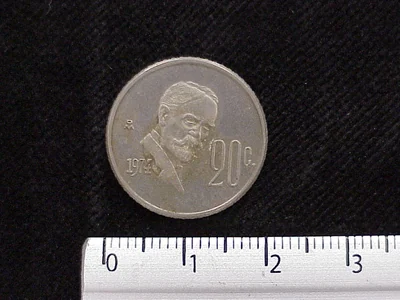
Centavos Mexicanos · Cuproníquel
Same denomination, other years
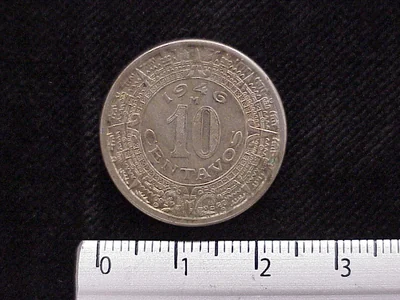
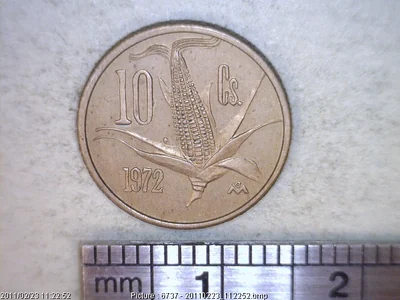
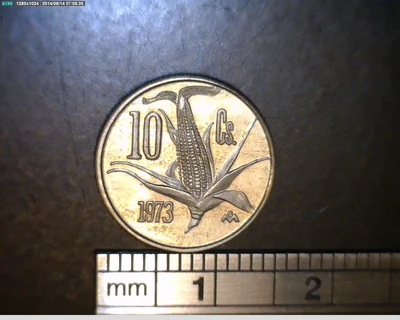
10 centavos Cuproníquel · Centavos Mexicanos
Frequently asked questions
How much is a 1974 Mexican 10 centavos worth?
In worn, circulated condition it is worth about 10 to 30 US cents. A lightly circulated piece runs 30 to 75 cents, and a truly uncirculated example with full original shine can reach 1 to 4 US dollars. It is a common coin, so do not expect a large payout unless you have a genuine mint error.
Is the 1974 10 centavos rare?
No. It was struck in large numbers by the Casa de Moneda de México and circulated heavily throughout the 1970s. Worn examples are extremely common. The only hard-to-find version is an uncirculated coin that kept its original luster and sharp detail, and even that is worth only a few dollars.
Where can I sell a 1974 Mexican 10 centavos?
The safest options are a verified numismatic shop from the Pesoteca directory, which can appraise it on the spot, or the Pesoteca buy-and-sell forum where collectors trade directly. Photograph the front, back, and edge, and check the value range in this guide first. Avoid selling to the first random buyer on social media.
How can I tell if my 1974 10 centavos is genuine?
Weigh it (it should be about 1.52 grams) and measure the diameter (15 mm) with a jewelry scale and caliper, then compare to the specs above. Genuine coins have crisp relief and even coloring. Wrong weight or diameter, flat detail, or blotchy color point to a fake, though counterfeits of this low-value coin are uncommon.
Conversation
0 comments
Sources
- Ejemplar de la Coleccion Numismatica Banco de Mexico . inv. 12264
- Ejemplar de la Coleccion Numismatica Banco de Mexico . inv. 12265
- Ejemplar de la Coleccion Numismatica Banco de Mexico . inv. 12266
- Ejemplar de la Coleccion Numismatica Banco de Mexico . inv. 15173
- Ejemplar de la Coleccion Numismatica Banco de Mexico . inv. 15172
Images for informational and educational purposes, attributed to their original source. Reference values; the real price depends on the grade, the specific variant and demand.
Loading comments…