
1810 Mexican 8 Reales with Countermarks: Value & How to Sell
The 1810 Mexican 8 Reales with Countermarks: Value & How to Sell is worth between $710 and $2,990 MXN depending on its grade of preservation.
Prices updated: August 2026
Independence · Assayer HJ
Independence · Assayer HJ
The 1810 Mexican 8 Reales with Countermarks: Value & How to Sell is worth between $710 and $2,990 MXN depending on its grade of preservation.
Prices updated: August 2026
How much is the 1810 Mexican 8 Reales with Countermarks: Value & How to Sell worth?
The estimated value of the 1810 Mexican 8 Reales with Countermarks: Value & How to Sell ranges from $710 (circulated, XF) up to $2,990 (official blister pack), with $2,161 as a reference for an uncirculated (UNC) piece. The estimate is based on the official mintage and the historical behavior of the family.
The real price depends on four factors: the grade of preservation (a circulated piece is worth the low end of the range; an uncirculated one, or one still in its official blister pack, the high end), the finish (satin vs mirror/proof), the rarity within the series based on the mintage, and the metal spot price on the day of the deal when the piece is silver or gold. Check the value-by-grade table above and compare with equivalent pieces before buying or selling.
Where to buy or sell this coin?
Browse the national directory of numismatic shops or the community forum to trade directly with other collectors.
Description
If you inherited or found an 1810 Mexican 8 Reales with strange stamps punched into it, here is the honest answer: most circulated examples trade in the low hundreds of US dollars, but the countermarks (resellos in Spanish) can push the right piece into the thousands. The metal alone gives it a floor: this is real 0.900 silver, not a token.
The 8 Reales was the Spanish colonial silver dollar, minted in New Spain (colonial Mexico). The 1810 date is significant. That was the year the Mexican War of Independence began, so coins from that year carry historical weight beyond their silver content. What makes yours unusual are the countermarks: extra stamps applied after the coin was struck, often by another government or authority, to authorize the coin to circulate in a different country or era. Those stamps can add real value, or almost nothing, depending on what they are.
What your 1810 8 Reales is actually worth in 2026
Value depends on three things: the base coin's grade, whether the countermark is genuine and identifiable, and where the countermark came from. A plain 1810 8 Reales in worn, circulated condition typically sells in the range of 40 to 150 US dollars, mostly reflecting its silver. An identifiable, sought-after countermark can multiply that. Rare host-date and countermark combinations in high grade have sold for well over 1,000 US dollars at major auctions.
The reason countermarked coins are tricky: some countermarks are prized by specialist collectors (certain Asian chop marks, specific national revalidation stamps), while others are essentially graffiti that lowers eye appeal. There is no single flat price. That is why a certified example or an expert opinion matters so much for this coin.
| Coin | Year | Condition | Typical value (USD) |
|---|---|---|---|
| 8 Reales, no countermark | 1810 | Circulated (Fine/VF) | 40 to 150 |
| 8 Reales, common countermark | 1810 | Circulated | 100 to 400 |
| 8 Reales, rare/identified countermark | 1810 | VF to XF | 400 to 1,500+ |
| 8 Reales, high grade certified | 1810 | AU/UNC | 1,000 to several thousand |
These are market ranges, not guarantees. The exact number for your coin comes down to which mint mark, which assayer, and which countermark it carries.
The specs that prove it is genuine
Here are the numbers your coin must match:
- Metal: 0.900 fine silver
- Weight: 25.8 grams
- Diameter: 38 mm
- Edge: varies by mint; original colonial 8 Reales had a decorated (not smooth) edge on many issues, so check yours carefully
- Assayer initials: the letters near the design (this issue references assayer HJ) identify who certified the silver
If your coin weighs noticeably less than 25.8 grams or measures far off 38 mm, treat it as suspect. A real silver 8 Reales gives a clear, ringing tone when balanced on a fingertip and tapped gently. Cast fakes sound dull and short. That said, sophisticated counterfeits exist for coins this valuable, and countermarks are sometimes faked onto genuine host coins to inflate the price. For anything that might be worth more than a few hundred dollars, professional grading from NGC or PCGS is the only real protection.
The myth: "an 1810 coin must be worth a fortune"
Age does not equal value. The 8 Reales was minted in enormous quantities across the colonial period and circulated worldwide, so a common date in worn condition is not rare. What drives the price of your piece is the countermark and the grade, not simply the year on the face. Do not assume "1810" plus "old" equals a jackpot. Most examples you will actually find are worth double or triple their melt value, not thousands.
The genuine six-figure Mexican rarities are a different category entirely (certain early republic and gold issues), and this is not one of them by default. A specific, verified countermark in top grade is where the upside lives.
How to check and sell yours
- Weigh and measure it. Confirm 25.8 grams and 38 mm before anything else.
- Photograph both sides and the edge in good light, including a close-up of the countermark. The countermark is the whole story for this coin.
- Identify the countermark. This is where you need help. Post clear photos in the Pesoteca forum and let collectors who know colonial resellos weigh in.
- Get it certified if it looks genuine and clean. NGC and PCGS grade and authenticate countermarked colonial coins, which both proves it is real and sets a market value.
- Sell through the right channel. For a coin like this, a specialist matters. Established auction houses (Heritage, Stack's Bowers) handle certified colonial silver well. For direct sale, use a verified dealer from the Pesoteca shop directory or the buy-and-sell forum. Avoid dumping it to the first bidder on a general marketplace, where countermarked coins are routinely underpriced or faked.
Want a straight answer on what your specific piece is worth? Post the weight and clear photos of both sides and the countermark in the Pesoteca forum and get it identified before you sell anything.
Historical context
This piece belongs to the category of counterstamps and countermarks applied over already-struck pieces of eight (reales de a ocho), a practice used by both insurgents and royalists during the War of Independence.
The government of New Spain in 1810 was headed by Francisco Javier Venegas, who received the outbreak of Hidalgo's insurgency on September 16.
The piece belongs to the category of counterstamps and countermarks, punches applied over already-struck pieces of eight to officially revalidate them, move them to another jurisdiction, or mark them with an insurgent or royalist symbol. Each counterstamp carries a political reading: Morelos's crowned M, the seal of Zongolica, the M.V.A., and other families documented by colonial catalogs.
The declared origin of minting is: counterstamp over a previously struck piece of eight. The initials HJ accompanying the counterstamp identify the official or commander who authorized the re-marking of the earlier piece.
The colonial catalogs trace this piece within the families of the Mexico City piece of eight, with prices that respond to rarity by year and assayer's signature.
Year of the Grito de Dolores on September 16, the formal start of the Mexican War of Independence.
This piece belongs to the era
Colonial / Virreinato →Explore all the Mexican coins of this era, their historical context and how they connect to the monetary system of the period.
Value range of this piece
Market estimate: $710 - $2,990 MXN depending on the grade of preservation (typical range between a circulated and an uncirculated piece).
See the full breakdown by grade (VG, F, VF, EF, AU, MS-60, MS-63, MS-65) for the whole series →
Other denominations from 1810
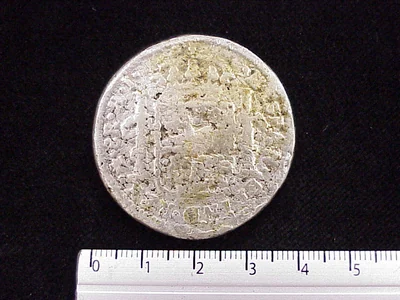
8 Reales Coloniales · Plata 0.900
Same denomination, other years
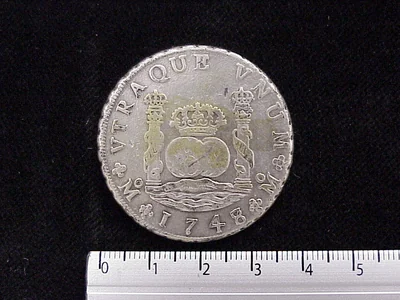
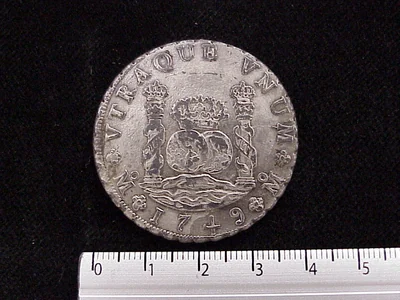
8 reales Plata 0.900 · 8 Reales Coloniales
Frequently asked questions
How much is an 1810 Mexican 8 Reales with countermarks worth?
It depends heavily on the countermark and the grade. A plain, circulated 1810 8 Reales usually sells for 40 to 150 US dollars, mostly for its silver content. A genuine, identifiable countermark can push it to 400 dollars or more, and rare countermark-and-grade combinations have sold for over 1,000 US dollars. For a precise figure, get your specific piece identified and, if valuable, certified by NGC or PCGS.
How do I tell if my 1810 8 Reales is genuine silver?
It should weigh 25.8 grams and measure 38 mm, in 0.900 fine silver. If your coin is well off those numbers, treat it as suspect. Real silver rings with a clear, sustained tone when balanced on a fingertip and tapped; fakes sound dull and short. Because countermarks are sometimes faked onto real coins, professional grading from NGC or PCGS is the safest way to confirm authenticity on a valuable example.
Is the 1810 8 Reales with countermarks rare?
The base 8 Reales is not rare on its own; it was minted in huge numbers and circulated worldwide. What can be rare is the specific countermark. Some countermarks are prized by specialist collectors and command real premiums, while others add little. Rarity here is about the stamp and the grade, not just the 1810 date.
Where can I sell an 1810 Mexican 8 Reales with countermarks?
For a coin this specialized, use a channel that understands colonial silver. Established auction houses like Heritage or Stack's Bowers handle certified pieces well. For direct sale, use a verified dealer from the [Pesoteca shop directory](/tiendas) or the [buy-and-sell forum](/foro/compra-venta). Photograph both sides and the edge, get the countermark identified first, and avoid selling to the first bidder on a general marketplace.
Conversation
0 comments
Sources
Images for informational and educational purposes, attributed to their original source. Reference values; the real price depends on the grade, the specific variant and demand.
Loading comments…