
8 Reales Fernando VII 1808 (Mexico City Mint): Value Guide
The 8 Reales Fernando VII 1808 : Value Guide is worth between $740 and $3,115 MXN depending on its grade of preservation.
Prices updated: August 2026
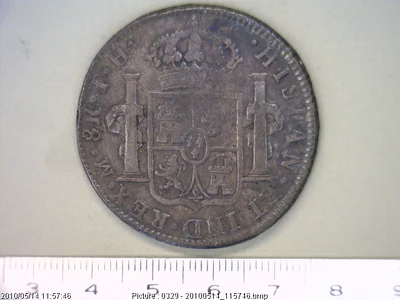
Viceroyalty · Mexico City Mint · Assayer TH
Viceroyalty · Mexico City Mint · Assayer TH
The 8 Reales Fernando VII 1808 : Value Guide is worth between $740 and $3,115 MXN depending on its grade of preservation.
Prices updated: August 2026
How much is the 8 Reales Fernando VII 1808 (Mexico City Mint): Value Guide worth?
The estimated value of the 8 Reales Fernando VII 1808 (Mexico City Mint): Value Guide ranges from $740 (circulated, XF) up to $3,115 (official blister pack), with $2,251 as a reference for an uncirculated (UNC) piece. The estimate is based on the official mintage and the historical behavior of the family.
The real price depends on four factors: the grade of preservation (a circulated piece is worth the low end of the range; an uncirculated one, or one still in its official blister pack, the high end), the finish (satin vs mirror/proof), the rarity within the series based on the mintage, and the metal spot price on the day of the deal when the piece is silver or gold. Check the value-by-grade table above and compare with equivalent pieces before buying or selling.
Where to buy or sell this coin?
Browse the national directory of numismatic shops or the community forum to trade directly with other collectors.
Description
If you inherited an 1808 8 reales with the bust of Fernando VII, here is the honest answer: it is a real silver coin with a value floor set by its metal, and a much higher ceiling if it is well preserved or certified. In worn condition expect roughly 40 to 150 USD. Sharp, uncirculated, and slabbed examples can reach several hundred to a few thousand dollars.
This is a Spanish colonial coin, struck in Mexico City while it was the Viceroyalty of New Spain, not the modern Republic of Mexico. That colonial pedigree is part of why collectors want it. It belongs to the 8 Reales Coloniales series, the famous "pieces of eight" that circulated worldwide.
What you actually have
- Denomination: 8 reales (the largest silver denomination of the era)
- Year: 1808 (single year of issue for this type)
- Ruler: Fernando VII of Spain
- Mint: Mexico City (Ceca México)
- Assayer: TH (the initials of the mint's assayer, marked on the coin)
- Metal: Silver, 0.900 fine (90% pure)
- Weight: 26.88 grams
- Diameter: 40 mm
- Edge: incuse (patterned, recessed lettering on the rim)
That weight and diameter matter. A genuine piece must be very close to 26.88 grams and 40 mm. If yours is lighter, thinner, or magnetic, you likely have a replica or a cast copy, which are common for this popular type.
How much is it worth
Value comes from three things: silver content, condition (grade), and whether the piece has been authenticated. At 26.88 grams of 0.900 silver, the coin contains just over 0.77 troy ounces of pure silver, which sets a floor near current spot value. Everything above that floor is collector premium.
| Condition | What it looks like | Approx. value (USD) |
|---|---|---|
| Heavily worn | Design flat, date barely readable | 30 to 60 |
| Circulated (VF) | Design clear, moderate wear | 60 to 150 |
| Lightly circulated (XF/AU) | Sharp detail, minor rub | 150 to 400 |
| Uncirculated / certified MS | Full detail, no wear, slabbed | 400 to several thousand |
These are working ranges, not fixed quotes. A colonial 8 reales in a certified NGC or PCGS holder at a high grade can command a strong premium, especially with clean surfaces and an attractive strike. Damage (holes, scratches, harsh cleaning, mount marks) drops value fast, sometimes back to melt.
The myth to kill first
"It's over 200 years old, so it must be worth a fortune." Age alone does not do it. Millions of 8 reales were struck across the colonial period, and they are far from rare as a type. What separates a 40 USD coin from a multi-thousand-dollar coin is grade and authentication, not the date on the front. Plenty of listings online quote fantasy prices; the real money is in high, certified grades and problem-free surfaces.
How to tell if yours is genuine
- Weigh and measure it. Target 26.88 grams and 40 mm. Off numbers are a red flag.
- Check for magnetism. Silver is not magnetic. If it sticks to a magnet, it is not silver.
- The ping test. Real silver rings with a long, high-pitched tone when balanced on a fingertip and tapped gently. Fakes sound dull and short.
- Look at the edge. This type has incuse (recessed pattern) edge lettering. A plain or seam-lined edge points to a cast copy.
- Get it slabbed. For any coin you think is worth more than a few hundred dollars, certification by NGC or PCGS is the definitive check. It confirms authenticity and locks in the grade that buyers pay for.
Use the coin grading guide to place your coin on the scale before you decide to sell or certify.
Where to sell it
For US sellers, your best options are established coin dealers, major auction houses (Heritage and Stack's Bowers both handle Mexican colonial silver), and eBay for mid-range pieces. Certified coins sell faster and closer to their true value because buyers trust the holder.
If you are near a network of Mexican collectors, a verified numismatic shop from the Pesoteca directory can appraise it on the spot, and the Pesoteca buy-and-sell forum connects you with collectors directly. Whatever channel you use, photograph the obverse, reverse, and edge, and confirm the weight. Never sell to the first lowball offer on social media.
Think you have one worth grading? Post clear photos in the Pesoteca forum and let collectors weigh in before you sell.
Historical context
This piece belongs to the reign of Ferdinand VII of Spain (1808-1833). Son of Charles IV. In 1808 he was forced to abdicate in favor of Napoleon, and was held captive until 1814. Under his reign almost all the American colonies were lost.
The government of New Spain in 1808 was in the hands of José de Iturrigaray, deposed in September by the so-called coup of Gabriel de Yermo.
The numismatic type of the piece is bust, introduced in 1772 under Charles III. The obverse shows the portrait of the king in the neoclassical style and the reverse the crowned royal shield with the Order of the Golden Fleece. The edge is laureate or corded and all examples were struck on a screw press, with Latin legends spelling out the monarch's titles and dignities.
The Mexico mint had migrated to the bust standard in 1772. Under Charles III and Charles IV the highest annual production of minted silver of the viceroyalty was recorded, fueling trade with the Philippines via the Manila Galleon and the payment of the subsidy (situado) to the Antilles. The assayer's initials declared on the piece are TH, an official of the Royal Treasury charged with certifying the silver fineness (0.930 and later 0.903) per the viceregal standard.
The Krause catalog references this piece under KM#110, useful for cross-checking the entry against international auction listings.
Year of the Abdications of Bayonne, when Napoleon forced Charles IV and Ferdinand VII to abdicate in favor of his brother Joseph I.
This piece belongs to the era
Colonial / Virreinato →Explore all the Mexican coins of this era, their historical context and how they connect to the monetary system of the period.
Value range of this piece
Market estimate: $740 - $3,115 MXN depending on the grade of preservation (typical range between a circulated and an uncirculated piece).
See the full breakdown by grade (VG, F, VF, EF, AU, MS-60, MS-63, MS-65) for the whole series →
Other denominations from 1808
8 Reales Coloniales · Plata 0.900
Same denomination, other years
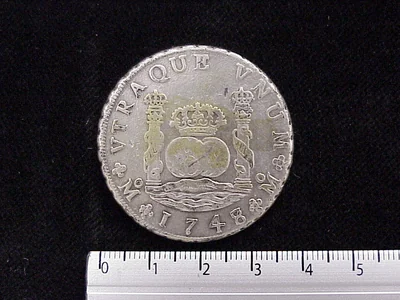
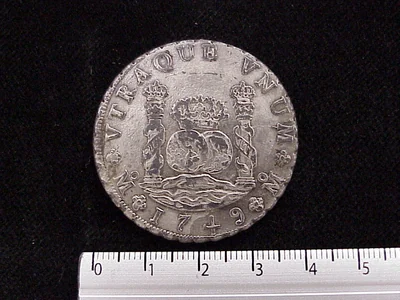
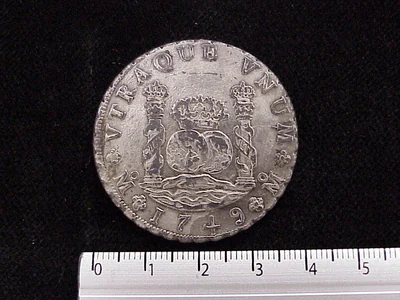
8 reales Plata 0.900 · 8 Reales Coloniales
Frequently asked questions
How much is an 1808 Fernando VII 8 reales worth?
It depends heavily on condition. Worn, circulated examples typically bring 30 to 150 USD, driven largely by silver content. Sharp lightly circulated pieces run 150 to 400 USD, and certified uncirculated (MS) coins can reach several hundred to a few thousand dollars. For a precise figure, have it graded by NGC or PCGS.
Is the 1808 8 reales rare?
As a type, no. Large numbers of colonial 8 reales were struck, so the date alone does not make it rare or valuable. What is genuinely scarce is a high-grade, problem-free, certified example. Grade and authentication drive the premium far more than the year.
How do I tell if my 8 reales is genuine?
It should weigh 26.88 grams and measure 40 mm. Silver is not magnetic, so it should not stick to a magnet. The ping test helps too: real silver rings with a long, high-pitched tone. Look for incuse (recessed) edge lettering. For valuable pieces, NGC or PCGS certification is the definitive confirmation.
Where can I sell an 1808 8 reales?
Established coin dealers, major auction houses like Heritage and Stack's Bowers, and eBay for mid-range coins are the main US options. You can also use a [verified numismatic shop](/tiendas) or the [Pesoteca buy-and-sell forum](/foro/compra-venta). Photograph the obverse, reverse, and edge, and confirm the weight before selling.
Conversation
0 comments
Sources
Images for informational and educational purposes, attributed to their original source. Reference values; the real price depends on the grade, the specific variant and demand.
Loading comments…