
8 Reales Felipe IV 1646 (Silver Cob): Value & Prices
The 8 Reales Felipe IV 1646 : Value & Prices is worth between $706 and $4,457 MXN depending on its grade of preservation.
Prices updated: August 2026
The 8 Reales Felipe IV 1646 : Value & Prices is worth between $706 and $4,457 MXN depending on its grade of preservation.
Prices updated: August 2026
How much is the 8 Reales Felipe IV 1646 (Silver Cob): Value & Prices worth?
The estimated value of the 8 Reales Felipe IV 1646 (Silver Cob): Value & Prices ranges from $706 (circulated, XF) up to $4,457 (official blister pack), with $3,093 as a reference for an uncirculated (UNC) piece. The estimate is based on the official mintage and the historical behavior of the family.
The real price depends on four factors: the grade of preservation (a circulated piece is worth the low end of the range; an uncirculated one, or one still in its official blister pack, the high end), the finish (satin vs mirror/proof), the rarity within the series based on the mintage, and the metal spot price on the day of the deal when the piece is silver or gold. Check the value-by-grade table above and compare with equivalent pieces before buying or selling.
Where to buy or sell this coin?
Browse the national directory of numismatic shops or the community forum to trade directly with other collectors.
Description
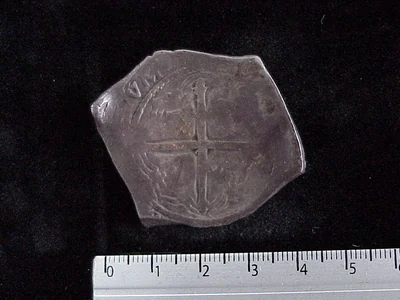
If you inherited an oddly shaped, roughly cut silver coin stamped 1646, you likely have a Mexican 8 Reales cob from the reign of Felipe IV. In 2026, worn examples trade from around 150 to 400 USD, while sharp pieces with a clear date and assayer mark can reach several thousand. The value comes from the readable date and strike, not the age alone.
What you actually have
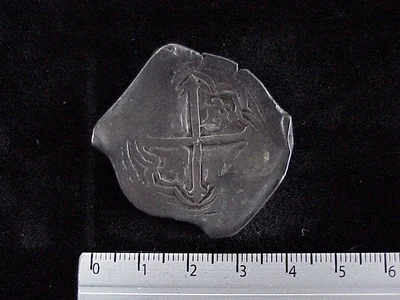
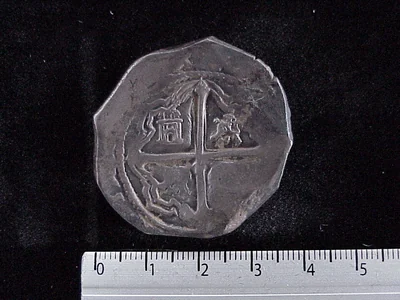
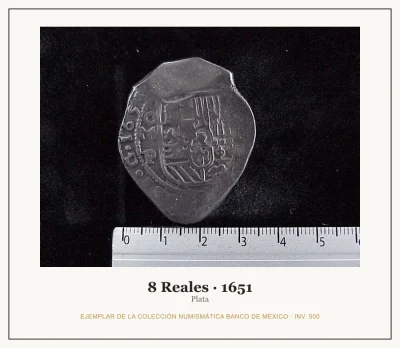
The 1646 8 Reales is a macuquina, the Spanish term for a cob: a hand-struck silver coin made in the Casa de Moneda (Mint) of Mexico City. Workers cut a chunk of silver, adjusted it to the legal weight, then struck it with a hammer and die. That process is why no two are identical and why the edges look chopped and irregular.
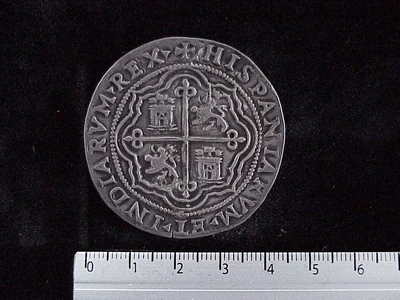
This is the coin the English-speaking world knew as the piece of eight, the silver dollar of global trade in the 1600s. It circulated everywhere from Manila to London.
Technical specs (keep these exact)
| Spec | Value |
|---|---|
| Denomination | 8 Reales |
| Ruler | Felipe IV (reigned 1621 to 1665) |
| Date | 1646 |
| Mint | Mexico City (Casa de Moneda) |
| Weight | 25.64 grams |
| Silver fineness | .900 (90% silver) |
| Diameter | 43 millimeters |
| Type | Hand-struck silver cob (macuquina) |
At .900 fineness and 25.64 grams, the coin holds roughly 0.74 troy ounces of pure silver. That gives it a melt floor: even the most worn, damaged example is worth at least the value of its silver content, which moves with the spot price. As collectible coins, though, genuine cobs almost always sell well above melt.
What drives the price
Age is not what makes this coin valuable. Millions of pieces of eight were struck across the 1600s, so scarcity depends on condition and legibility, not the calendar.
Three things move the number up:
- A readable date. Many cobs were struck off-center or on undersized planchets, so the year is missing entirely. A coin where 1646 is clearly visible is worth a real premium over a dateless one.
- A visible assayer mark. The mark of the mint official who verified the silver helps pin the coin to a specific issue and adds value when identifiable.
- Strike and relief. A cob with sharp cross, shield, and pillars details commands far more than a flat, corroded blob of the same weight.
Real-world value ranges (USD)
| Condition | Typical range (USD) |
|---|---|
| Heavily worn, dateless or corroded | 120 to 300 |
| Legible date, moderate wear | 300 to 900 |
| Sharp strike, clear date and assayer | 1,000 to 3,000+ |
| Certified high-grade or shipwreck-provenance | Several thousand |
Certified Spanish-colonial cobs with documented shipwreck recovery (from wrecks like the Atocha or the 1715 Fleet) can carry a premium for the provenance and the certificate, independent of grade.
The myth: "it's 375 years old, it must be worth a fortune"
Old does not mean rare. A worn, dateless 8 Reales cob is a common item in the colonial-silver market and sells for a few hundred dollars. The pieces that break into the thousands are the well-struck, dated, attributable examples. Do not assume yours is the rare one until an expert confirms the date, assayer, and authenticity.
How to tell if yours is genuine
Counterfeit and cast copies of Spanish cobs are everywhere, and precious-metal fakes are common because the melt value is real.
- Weigh it. Use a jewelry scale. A genuine full-weight 8 Reales is about 25.64 grams. Significantly light means it was clipped, holed, or fake.
- Measure it. Around 43 millimeters across at the widest point.
- Look at the strike. Real cobs show crisp, hand-struck detail, not the soft, mushy surfaces of a cast copy. Casting seams on the edge are a red flag.
- Check the design elements. The shield, cross, and mint and assayer marks should match documented 1646 Mexico types. Style errors give away many fakes.
- Be suspicious of bargains. Any offer far below the silver value is almost certainly a fake or a scam.
For a coin this valuable and this often faked, professional grading and authentication (NGC or PCGS) is worth the cost. A certified, slabbed cob sells faster and higher.
Errors and varieties
Genuine mint errors (off-center strikes, die rotation, double strikes, and recognized varieties) can multiply the value when verified. Most "errors" people spot on social media are post-mint damage: dents, corrosion, and scratches, not factory flaws. If you think yours has a real error, post clear photos in the Pesoteca forum and let experienced collectors weigh in.
Where to sell it
Sell where buyers know Spanish-colonial silver and will value it in person:
- A verified dealer from the Pesoteca shop directory can appraise it on the spot and quote a fair price.
- The Pesoteca buy-and-sell forum connects you directly with collectors who want cobs.
Before you sell, photograph the obverse, reverse, and edge in good light, note the weight, and compare against the ranges above. Never dump it on the first Facebook offer, and never sell to anyone who won't let you verify the piece and its weight first.
Got a 1646 cob or another colonial 8 Reales sitting in a drawer? Post your photos and weight in the Pesoteca forum and get a read on the date, assayer, and real value before you decide what to do with it.
Historical context
This piece belongs to the reign of Felipe IV of Spain (1621-1665). King during the Thirty Years' War and the separation of Portugal. His royal favorite was the Count-Duke of Olivares.
The government of New Spain in 1646 was in the hands of Garcia Sarmiento de Sotomayor, Count of Salvatierra, during the mining boom of New Spain.
The numismatic type of the piece is cob (macuquina), also called hammer-cut coin. The planchets were snipped with shears from a silver bar and struck between hand-held dies, so no cob has an edge or a perfectly circular shape. It circulated as a benchmark trade coin across the entire Atlantic for more than two centuries.
The Mexico City Mint (crowned Mo mark) operated from 1535 as the first mint in the Americas. Throughout the 17th century it struck cobs almost without interruption, being the main point of issue for struck silver in the Spanish empire. The dies were signed by the assayer of the Mexico City Mint active in the period, an official charged by the Royal Treasury with certifying that the silver fineness met the viceregal standard.
Colonial catalogs track this piece within the families of the Mexico City Piece of Eight, with prices that respond to rarity by year and assayer signature.
A year of tensions between the Count of Salvatierra and the Royal Audiencia over fiscal control.
This piece belongs to the era
Colonial / Virreinato →Explore all the Mexican coins of this era, their historical context and how they connect to the monetary system of the period.
Value range of this piece
Market estimate: $706 - $4,457 MXN depending on the grade of preservation (typical range between a circulated and an uncirculated piece).
See the full breakdown by grade (VG, F, VF, EF, AU, MS-60, MS-63, MS-65) for the whole series →
Other denominations from 1646
8 Reales Coloniales · Plata 0.900
Same denomination, other years
8 reales Plata 0.900 · 8 Reales Coloniales
Frequently asked questions
How much is an 8 Reales Felipe IV 1646 worth?
It depends almost entirely on condition and legibility. A worn or dateless example runs roughly 120 to 300 USD, close to its silver value. A coin with a clear 1646 date and moderate wear brings 300 to 900 USD, and a sharp strike with visible date and assayer mark can reach 1,000 to over 3,000 USD. Certified high-grade or shipwreck-provenance pieces go higher.
Is the 1646 8 Reales cob rare?
Not as a type. Millions of pieces of eight were struck in the 1600s, so a worn, dateless one is common. What is scarce, and valuable, is a well-struck example with a clearly readable 1646 date and an identifiable assayer mark. Legibility and condition drive rarity here, not the age.
Where can I sell my 8 Reales Felipe IV 1646?
Sell through a verified dealer in the [Pesoteca shop directory](/tiendas), who can appraise it in person, or list it in the [Pesoteca buy-and-sell forum](/foro/compra-venta) among collectors. Because it is precious metal, deal only with someone who lets you show the piece and verify its weight before payment. Photograph the obverse, reverse, and edge, and check the ranges on this page first.
How do I know if my 1646 8 Reales is genuine?
Weigh it (about 25.64 grams) and measure it (about 43 millimeters) and compare to the specs above. Genuine cobs show crisp hand-struck detail with no casting seams on the edge, and the shield, cross, mint, and assayer marks should match documented 1646 Mexico types. Fakes are common because the silver is real, so be suspicious of any offer far below melt value, and consider NGC or PCGS certification.
Conversation
0 comments
Loading comments…