
8 Reales Felipe IV 1645 (Silver Cob): Value & Prices
The 8 Reales Felipe IV 1645 : Value & Prices is worth between $748 and $4,724 MXN depending on its grade of preservation.
Prices updated: August 2026
The 8 Reales Felipe IV 1645 : Value & Prices is worth between $748 and $4,724 MXN depending on its grade of preservation.
Prices updated: August 2026
How much is the 8 Reales Felipe IV 1645 (Silver Cob): Value & Prices worth?
The estimated value of the 8 Reales Felipe IV 1645 (Silver Cob): Value & Prices ranges from $748 (circulated, XF) up to $4,724 (official blister pack), with $3,278 as a reference for an uncirculated (UNC) piece. The estimate is based on the official mintage and the historical behavior of the family.
The real price depends on four factors: the grade of preservation (a circulated piece is worth the low end of the range; an uncirculated one, or one still in its official blister pack, the high end), the finish (satin vs mirror/proof), the rarity within the series based on the mintage, and the metal spot price on the day of the deal when the piece is silver or gold. Check the value-by-grade table above and compare with equivalent pieces before buying or selling.
Where to buy or sell this coin?
Browse the national directory of numismatic shops or the community forum to trade directly with other collectors.
Description
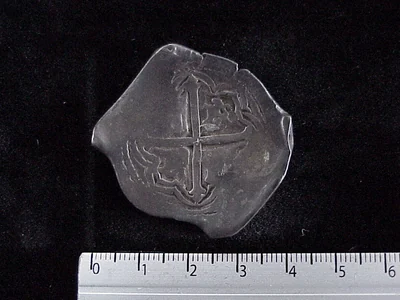
If you inherited a heavy, crudely struck silver coin dated 1645 with a Spanish shield, you likely have an 8 Reales of Felipe IV from the Mexico City Mint. In 2026, a genuine example is worth from roughly 200 USD in worn condition to several thousand USD for a well-struck, well-preserved piece. This is a real colonial silver coin, not a common pocket-change relic.
Here is the honest picture: value depends almost entirely on strike quality, how much of the design is visible, and authenticity. These are 17th-century "cob" coins, hand-hammered and irregular by design, so most survivors are crude and off-center. A clear date and a legible mint mark are what separate a 200 USD coin from a 2,000 USD coin.
What you actually have
This is an 8 Reales (eight reales, the classic "piece of eight") struck at the Casa de Moneda de México, the Mexico City Mint, during the reign of King Felipe IV of Spain. The Spanish real was the base unit; eight of them made one of these large silver pieces. For over two centuries the Mexican 8 reales was the most widely circulated trade coin on Earth, and Mexico City was its biggest producer, which is why so many turn up in old collections and estate boxes.
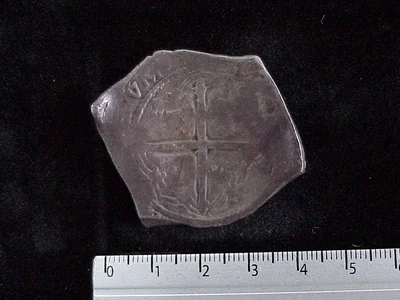
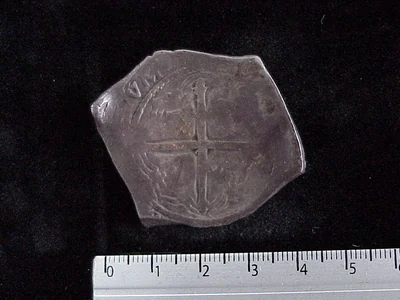
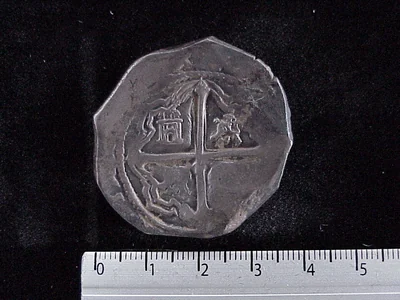
The letter P near the design is the assayer's initial, the mint official who certified the silver's fineness. On colonial cobs, the mint mark, the assayer initial, and the date are the three details collectors check first.
Technical specs (verify yours against these)
| Feature | Detail |
|---|---|
| Denomination | 8 Reales |
| Ruler | Felipe IV of Spain |
| Date | 1645 |
| Mint | Mexico City (Casa de Moneda de México) |
| Assayer | P |
| Metal | Silver |
| Weight | 27.18 g |
| Diameter | 40 mm |
| Edge | Plain (no lettering) |
| Catalog reference | KM# 388 |
Because it is silver at roughly 27 grams, this coin has a hard floor at its melt value, currently in the range of 20 to 25 USD depending on the silver spot price. No genuine 1645 8 Reales is worth less than its metal. The real value sits well above melt for anything identifiable.
What it's worth in 2026
Cob coinage prices swing wide because condition and strike vary so much. As a working guide:
| Condition | Typical value (USD) |
|---|---|
| Heavily worn / partial date, corroded | 150 to 300 |
| Clear date and mint mark, honest wear | 400 to 900 |
| Strong strike, full shield, problem-free | 1,000 to 3,000 |
| Certified high grade or shipwreck-pedigree | 3,000 and up |
Pieces recovered from documented shipwrecks (with a salvage certificate and lot pedigree) often command premiums because the provenance is verifiable. Auction houses like Heritage and Stack's Bowers regularly move Spanish colonial cobs, and prices track grade and eye appeal more than raw age.
The myth to kill
Being from 1645 does not automatically make it a fortune. These were struck by the hundreds of thousands, and worn, corroded, or clipped examples are common. "It's almost 400 years old" is not a value driver by itself. What drives price is a clear date, legible mint mark and assayer, a well-centered strike, and no corrosion or mount damage. A crusty coin where you can barely read the date is a low-hundreds coin, not a museum piece.
How to check what yours is worth
- Weigh and measure it. Use a jewelry scale and a caliper. A genuine piece should be near 27.18 g and 40 mm. Coins far below weight are worn, clipped, or fake.
- Read the details. Look for the date, the Mexico mint mark, and the assayer P. The more legible these are, the higher the value.
- Photograph both sides and the edge. The edge should be plain. Clear, in-focus photos are what any appraiser or buyer needs.
- Get it authenticated. Colonial silver is heavily counterfeited, including cast copies and modern strikes. For anything you think is above a few hundred dollars, grading and authentication by NGC or PCGS protects you and raises the resale price.
Where to sell it
Sell where the buyer shows you the coin, weighs it in front of you, and prices it on grade, not on a lowball flat rate. A verified numismatic shop from the Pesoteca directory will appraise it on the spot. Collector-to-collector, the Pesoteca buy-and-sell forum reaches people who understand cobs and pay for the good ones. Avoid dumping it to the first bidder on social media, and never sell a silver coin below its metal value.
If you want to compare it with other Spanish colonial silver, browse related pieces in Pesoteca before you set a price.
What does the date look like on yours, clear or worn? Post your photos in the Pesoteca forum and let collectors weigh in on grade and value.
Historical context
This piece belongs to the reign of Felipe IV of Spain (1621-1665). King during the Thirty Years' War and the secession of Portugal. His favorite was the Count-Duke of Olivares.
The government of New Spain in 1645 was in the hands of Garcia Sarmiento de Sotomayor, Count of Salvatierra, during the so-called peak period of Zacatecas mining.
The numismatic type of the piece is a cob, also called a hammer-cut coin. The planchets were clipped with shears from a silver bar and struck between hand dies, so no cob has a perfectly circular edge or shape. It circulated as the benchmark trade coin across the entire Atlantic for more than two centuries.
The Mexico City mint (crowned Mo mark) operated from 1535 as the first mint in the Americas. Throughout the 17th century it struck cobs almost without interruption, being the main point of issue for struck silver in the Spanish empire. The dies were signed by the Mexico City mint assayer active in the period, an official charged by the Royal Treasury with certifying that the silver fineness met the viceregal standard.
Colonial catalogs trace this piece within the Mexico City eight-reales families, with prices that respond to rarity by year and assayer signature.
A year in which Zacatecas recorded a peak in silver production that fed the Mexico City mint.
This piece belongs to the era
Colonial / Virreinato →Explore all the Mexican coins of this era, their historical context and how they connect to the monetary system of the period.
Value range of this piece
Market estimate: $748 - $4,724 MXN depending on the grade of preservation (typical range between a circulated and an uncirculated piece).
See the full breakdown by grade (VG, F, VF, EF, AU, MS-60, MS-63, MS-65) for the whole series →
Other denominations from 1645
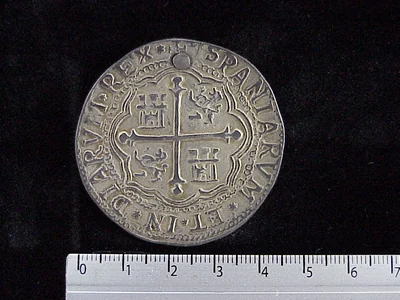
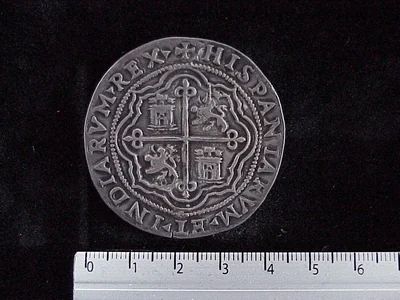
8 Reales Coloniales · Plata 0.900
Same denomination, other years
8 reales Plata 0.900 · 8 Reales Coloniales
Frequently asked questions
How much is an 8 Reales Felipe IV 1645 worth?
In {{AÑO}}, a genuine 1645 Mexico 8 Reales in silver runs from about 150 to 300 USD when heavily worn, 400 to 900 USD with a clear date and mint mark, and 1,000 to 3,000 USD or more for a strong strike or certified high grade. As silver, it never falls below its melt value of roughly 20 to 25 USD.
Is the 8 Reales Felipe IV 1645 rare?
These trade coins were struck in large numbers, so the coin itself is not rare. What is rare is a well-centered, well-struck example with a fully legible date, Mexico mint mark, and assayer P, plus no corrosion. Those command the high end. Shipwreck coins with documented provenance are also more sought after.
Where can I sell an 8 Reales Felipe IV 1645?
The safest options are a [verified numismatic shop from the Pesoteca directory](/tiendas), which appraises it on the spot, or the [Pesoteca buy-and-sell forum](/foro/compra-venta) among collectors. Photograph the obverse, reverse, and edge, check the value range above first, and never sell silver below its metal value.
How can I tell if my 8 Reales Felipe IV 1645 is genuine?
Weigh and measure it against the specs above (27.18 g, 40 mm) using a jewelry scale and caliper. Check the engraving style, the Mexico mint mark, and the assayer P; colonial silver is heavily counterfeited. Be suspicious of any coin far under weight or any offer well below the metal value. For high-value pieces, get NGC or PCGS authentication.
Conversation
0 comments
Loading comments…