
1821 Gold 8 Escudos (Guadalajara Mint): Value Guide
The 1821 Gold 8 Escudos : Value Guide is worth between $50,224 and $71,371 MXN depending on its grade of preservation.
Prices updated: August 2026
Independence · Guadalajara Mint · Assayer FS
Independence · Guadalajara Mint · Assayer FS
The 1821 Gold 8 Escudos : Value Guide is worth between $50,224 and $71,371 MXN depending on its grade of preservation.
Prices updated: August 2026
How much is the 1821 Gold 8 Escudos (Guadalajara Mint): Value Guide worth?
The estimated value of the 1821 Gold 8 Escudos (Guadalajara Mint): Value Guide ranges from $50,224 (circulated, XF) up to $71,371 (official blister pack), with $63,681 as a reference for an uncirculated (UNC) piece. The estimate is based on the official mintage and the historical behavior of the family.
The real price depends on four factors: the grade of preservation (a circulated piece is worth the low end of the range; an uncirculated one, or one still in its official blister pack, the high end), the finish (satin vs mirror/proof), the rarity within the series based on the mintage, and the metal spot price on the day of the deal when the piece is silver or gold. Check the value-by-grade table above and compare with equivalent pieces before buying or selling.
Where to buy or sell this coin?
Browse the national directory of numismatic shops or the community forum to trade directly with other collectors.
Description
If you inherited a heavy gold coin dated 1821 with a Spanish colonial design, you may be holding an 8 Escudos. The good news: even the most worn example is worth well over 1,000 USD for its gold content alone. A sharp, certified piece can bring several thousand. Here is what actually drives the number.
Quick answer: what a 1821 8 Escudos is worth
This coin contains about 23.1 grams of pure gold (26.41 grams total at .875 fineness). At current gold prices, that puts the floor, the melt value, somewhere around 1,400 to 1,700 USD depending on the spot market on any given day. That is the number below which no informed buyer will let it go, because the gold itself is worth that much.
Above that floor, the price climbs with condition (grade), eye appeal, and whether the coin is certified by a major grading service. A well-preserved, professionally graded example of an early independence-era 8 Escudos can trade in the 2,000 to 5,000 USD range, and scarce mint-and-date combinations in top grade go higher.
What this coin actually is
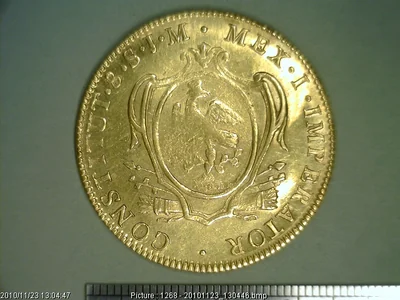
The 8 Escudos was the largest Spanish colonial gold denomination, sometimes called a "doubloon" in English. Yours was struck in 1821, the year of Mexican independence, at the Guadalajara mint (marked with a small G or Ga), with assayer initials FS.
Key specifications, which are also your first authenticity test:
- Weight: 26.41 grams
- Diameter: 37 millimeters
- Metal: gold, .875 fine (21 karat)
- Edge: reeded (grooved)
- Pure gold content: about 23.1 grams (roughly 0.74 troy ounces)
1821 is a transition year. Some 8 Escudos of this date still carry the bust of the Spanish king (Ferdinand VII), struck under royalist authority even as the country was breaking away. That royalist-issue context is what collectors mean when they call this the "Realista" type.
Value by condition
| Condition | What it looks like | Approximate value (USD) |
|---|---|---|
| Heavily worn (Good to Fine) | Design soft, still full weight | 1,400 to 1,800 (near melt) |
| Circulated (Very Fine to XF) | Clear detail, honest wear | 1,800 to 3,000 |
| About Uncirculated / Mint State | Sharp, minimal wear, certified | 3,000 to 6,000+ |
These are guide ranges, not fixed prices. Guadalajara-mint gold of this period is scarcer than Mexico City gold, and certified examples with strong strike and original surfaces bring the higher end. A coin that has been cleaned, polished, or mounted in jewelry loses a large share of its numismatic premium and often drops back toward melt.
Is it rare?
Gold 8 Escudos from provincial mints like Guadalajara in the independence era exist in far smaller numbers than the common Mexico City issues. Exact mintage records for many of these emissions are incomplete or were never fully documented, which is itself a signal that survivors are limited. Rarity here depends heavily on the specific mint mark and assayer combination, so two coins both dated 1821 can be worth very different money. That is exactly the kind of distinction a professional grader confirms.
The myth to ignore
"It's from 1821, it must be worth a fortune." Age alone does not make a coin valuable. What makes this piece worth money is that it is a large gold coin, so it has a hard metal floor, plus a genuine collector premium for the scarcer mint and grade. A common, worn example is a gold coin first and a collectible second. Do not expect "millions" numbers you see on clickbait pages; the honest ceiling for typical examples is in the low thousands of dollars.
How to tell if yours is genuine
Gold fakes, often coming out of overseas workshops, almost always fail on the physical numbers. Use these checks:
- Weigh it. A genuine coin is 26.41 grams. A low-karat or base-metal fake will read light or heavy. A jeweler's scale settles most cases in seconds.
- Measure it. 37 millimeters diameter, reeded edge. Wrong size or a smooth edge is a red flag.
- Look at the edge. Cast copies often show a seam or mushy reeding.
- Get it certified. For a coin worth over 1,000 USD, professional grading by NGC or PCGS is the definitive answer. It confirms authenticity and locks in the grade that determines value.
This piece belongs to the broader colonial gold Escudos series, and comparing yours to graded examples in that series is the fastest way to place its grade.
Where to sell it (and get a fair price)
Because this is a precious-metal coin, you have a built-in floor and real buyers. Best options:
- A verified numismatic dealer from the Pesoteca shop directory, who can appraise and pay on the spot.
- The Pesoteca buy-and-sell forum, where serious collectors trade directly.
- Established coin shows and reputable auction houses if the coin grades high and the mint variety is scarce.
Before you sell anything: photograph the front, back, and edge, weigh it, and check the value ranges on this page. Never take the first offer on a general marketplace, and never sell to a buyer who will not verify weight and authenticity in front of you. A quick professional appraisal often pays for itself many times over on a coin like this.
Not sure which mint mark or assayer combination you have? Post clear photos of both sides and the edge in the Pesoteca forum and let collectors help you pin down exactly what it is worth.
Historical context
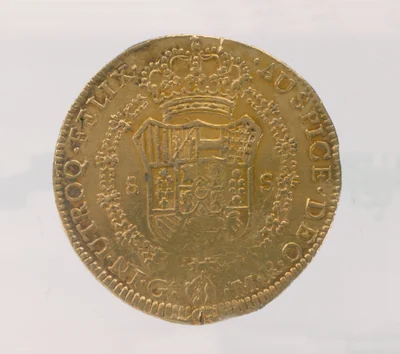
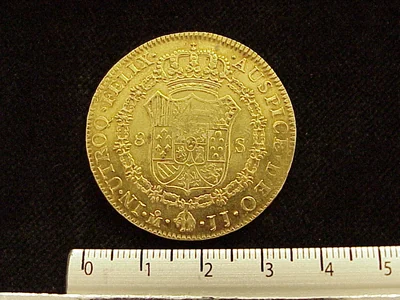
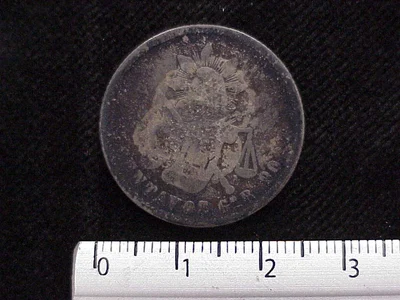
Royalist eight escudos of Fernando VII struck in 1821 at the Guadalajara mint, assayer FS, Krause KM#161.1. The year of the consummation of Mexico's Independence: on February 24 the Plan de Iguala was proclaimed by Agustín de Iturbide and Vicente Guerrero, on August 24 the Treaties of Córdoba were signed between Iturbide and Juan O'Donojú, and on September 27 the Trigarante troops entered Mexico City. The piece was struck while the royalist administration still nominally operated in Guadalajara. The FS signature of the assayer is characteristic of this mint in its final stretch before becoming a mint of the new country. The ounce weighs 27.06 grams with 0.875 fineness. Krause KM#161.1 is the Guadalajara variant of the Fernando VII laureate-bust type. Pieces from this year are material testimony of the last moment of colonial gold: they are royalist coinage struck while the country was ceasing to be one.
This piece belongs to the era
Primer Imperio Mexicano →Explore all the Mexican coins of this era, their historical context and how they connect to the monetary system of the period.
Value range of this piece
Market estimate: $50,224 - $71,371 MXN depending on the grade of preservation (typical range between a circulated and an uncirculated piece).
See the full breakdown by grade (VG, F, VF, EF, AU, MS-60, MS-63, MS-65) for the whole series →
Same denomination, other years
8 escudos Oro 0.875 (21k) · Escudos Coloniales (oro)
Frequently asked questions
How much is a 1821 gold 8 Escudos worth?
It is worth at least its gold content, roughly 1,400 to 1,700 USD depending on the spot price, since it holds about 23.1 grams of pure gold. Circulated examples run 1,800 to 3,000 USD, and sharp, certified pieces from the scarcer Guadalajara mint can reach 3,000 to 6,000 USD or more. Condition and certification drive the difference.
Is the 1821 8 Escudos rare?
Provincial-mint gold from the independence era, like this Guadalajara issue, is much scarcer than the common Mexico City gold coins. Exact mintages were often not fully documented, so survivors are limited. Value swings a lot by mint mark and assayer, so a professional grading service is the reliable way to confirm which variety you have.
How can I tell if my 8 Escudos is genuine?
Start with the physical specs: 26.41 grams, 37 millimeters, reeded edge, .875 gold. Fakes almost always fail on weight or diameter, and cast copies often show an edge seam. For a coin worth over 1,000 USD, submit it to NGC or PCGS for certification, which confirms both authenticity and grade.
Where can I sell a 1821 8 Escudos?
Use a verified dealer from the Pesoteca shop directory for an on-the-spot appraisal, or the Pesoteca buy-and-sell forum to reach collectors directly. Because it is a gold coin, sell only to a buyer who verifies weight and authenticity in front of you, and photograph both sides and the edge before you list it.
Conversation
0 comments
Sources
Images for informational and educational purposes, attributed to their original source. Reference values; the real price depends on the grade, the specific variant and demand.
Loading comments…