
8 Escudos Fernando VII 1815 Gold Coin: Value & Prices
The 8 Escudos Fernando VII 1815 Gold Coin: Value & Prices is worth between $51,384 and $86,542 MXN depending on its grade of preservation.
Prices updated: August 2026
Viceroyalty · Mexico City Mint · Assayer HJ
Viceroyalty · Mexico City Mint · Assayer HJ
The 8 Escudos Fernando VII 1815 Gold Coin: Value & Prices is worth between $51,384 and $86,542 MXN depending on its grade of preservation.
Prices updated: August 2026
How much is the 8 Escudos Fernando VII 1815 Gold Coin: Value & Prices worth?
The estimated value of the 8 Escudos Fernando VII 1815 Gold Coin: Value & Prices ranges from $51,384 (circulated, XF) up to $86,542 (official blister pack), with $73,757 as a reference for an uncirculated (UNC) piece. The estimate is based on the official mintage and the historical behavior of the family.
The real price depends on four factors: the grade of preservation (a circulated piece is worth the low end of the range; an uncirculated one, or one still in its official blister pack, the high end), the finish (satin vs mirror/proof), the rarity within the series based on the mintage, and the metal spot price on the day of the deal when the piece is silver or gold. Check the value-by-grade table above and compare with equivalent pieces before buying or selling.
Where to buy or sell this coin?
Browse the national directory of numismatic shops or the community forum to trade directly with other collectors.
Description
If you inherited or found an 8 Escudos gold coin dated 1815 with Fernando VII on it, you have something real. This is not a common pocket-change piece. It carries almost an ounce of gold and genuine collector demand, so even a worn example is worth well over a thousand dollars in 2026, and a sharp, certified one can climb into several thousand.
What this coin actually is
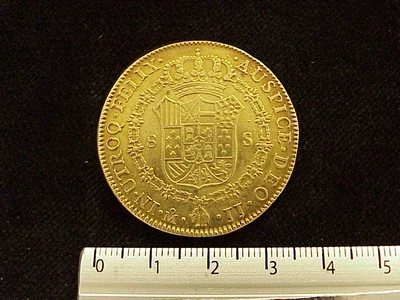
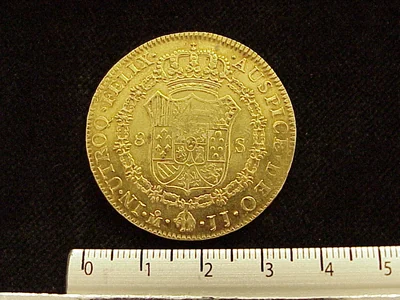
The 8 Escudos was the largest gold denomination struck in colonial Mexico. This one comes from the last stretch of Spanish rule over New Spain, minted at the Mexico City mint (Casa de Moneda de México) in 1815 under King Fernando VII of the Bourbon dynasty. Collectors and dealers sometimes call these big gold pieces "doubloons."
Hard specs, which matter for both value and authentication:
- Metal: gold, 0.875 fine (21 karat)
- Weight: 27.02 grams
- Diameter: 37 mm
- Edge: diagonally reeded
- Mint: Mexico City (mint mark Mo)
- Assayer: HJ
- Denomination: 8 Escudos
At 27.02 grams of 0.875 gold, the coin contains roughly 0.76 troy ounces of pure gold. That gold content sets a hard price floor: no matter how worn, this coin is never worth less than its melt value. That floor alone puts it well above 1,000 US dollars at current gold prices.
What it's worth in 2026
Value on a coin like this runs on two engines: the gold inside it (the floor) and the collector premium on top (condition, eye appeal, and whether it's certified).
| Condition | Approximate value (USD) | Notes |
|---|---|---|
| Heavily worn / damaged | melt value, roughly 1,700 to 2,000 | driven mostly by gold content |
| Circulated, honest wear | around 2,000 to 3,500 | typical for an inherited piece |
| Sharp, lightly circulated | 3,500 to 6,000+ | strong detail, original surfaces |
| Certified high grade (NGC/PCGS) | 6,000 to 10,000+ | premium pieces at auction |
These ranges track how Fernando VII 8 Escudos from the Mexico City mint trade at major houses like Heritage Auctions and Stack's Bowers. Exact hammer prices swing with the gold spot and the specific date and assayer combination, so treat the table as a guide, not a fixed quote. A raw coin you haven't verified sits at the low end; a piece slabbed by NGC or PCGS in a high grade sits at the top.
The single biggest lever you control is certification. Two identical-looking coins, one raw and one graded, can differ by thousands of dollars. If you think yours is sharp, that's the move.
The myth: "a coin this old must be worth a fortune"
Age alone does not make a coin valuable. Plenty of 200-year-old copper and low-grade silver coins are worth a few dollars. What makes your 8 Escudos worth real money is the gold, plus steady demand from collectors of Mexican and Spanish colonial gold. It is not a million-dollar coin, and any listing claiming that for a standard 1815 8 Escudos is either a spectacular error variety (rare and expensive to prove) or a scam. The honest ceiling for a normal high-grade example is in the low five figures, not the millions.
How to tell if yours is genuine
Gold fakes almost always fail on the numbers, so start with a scale.
- Weigh it. A genuine piece weighs 27.02 grams. Counterfeits, especially the gold-plated and low-fineness copies coming out of overseas workshops, rarely match both the weight and the diameter.
- Measure it. It should be 37 mm across. Off by a millimeter or two is a red flag.
- Check the edge. The edge should be diagonally reeded, not smooth or filed. A smooth or mismatched edge is a common tell on cast fakes.
- Look for the mint mark and assayer. Mexico City (Mo) and assayer initials HJ should be present and clean, not mushy.
- Get it certified. For a coin in this price range, third-party grading from NGC or PCGS is the definitive answer. It confirms authenticity, locks in the grade, and raises resale value all at once. The grading fee is small compared to what a slabbed coin gains at sale.
If you plan to spend real money buying one, always ask the seller for photos of the obverse, reverse, and edge, plus the exact weight before you pay.
Where to sell it (and get a fair price)
Because this is a precious-metal coin, only deal with buyers who let you see and verify the piece first.
- Verified coin dealers in the Pesoteca shop directory will appraise it on the spot, by city, without a middleman markup.
- The Pesoteca buy/sell forum (foro de compra-venta) connects you directly with collectors of Mexican gold, who often pay more than a walk-in dealer.
- Major auction houses (Heritage, Stack's Bowers) are worth it for a certified high-grade example, where competitive bidding gets you the top price.
Before you list it anywhere, photograph the obverse, reverse, and edge, and compare against the value ranges above. Do not dump it on the first Facebook offer, and be cautious on open marketplaces where fakes circulate most.
This piece belongs to the Colonial Escudos (gold) series and the broader Colonial / Viceroyalty era. You can also browse other Mexican 8 Escudos and coins from 1815.
Got one in a drawer and not sure what grade it's in? Post clear photos of both sides and the edge in the Pesoteca forum and let collectors who handle these regularly weigh in before you sell.
Historical context
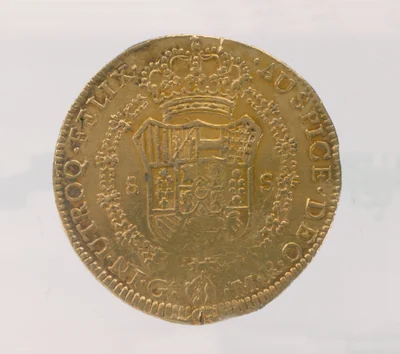
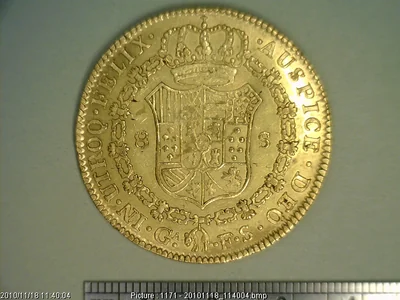
Eight escudos, Fernando VII, 1815, Mexico City mint, assayer HJ, Krause KM#161. The HJ signature returns after the use of JJ in 1811-1814, a sign of rotation or availability of assayers at the capital workshop. In 1815 the Mexican War of Independence suffered a symbolic blow: José María Morelos was captured on November 5 at Tezmalaca and executed on December 22 in San Cristóbal Ecatepec. The insurgency entered a dispersed guerrilla phase led by Vicente Guerrero, Pedro Ascencio, and Manuel Mier y Terán, among others. In Mexico, Calleja continued as viceroy until 1816. The ounce weighs 27.06 grams with a fineness of 0.875. Produced by mill press with a round planchet. The obverse shows the bust of Fernando VII and the reverse the crowned royal coat of arms with the HJ signature. Krause KM#161 is maintained for the final stretch of the reign before Independence was consummated in 1821.
This piece belongs to the era
Colonial / Virreinato →Explore all the Mexican coins of this era, their historical context and how they connect to the monetary system of the period.
Value range of this piece
Market estimate: $51,384 - $86,542 MXN depending on the grade of preservation (typical range between a circulated and an uncirculated piece).
See the full breakdown by grade (VG, F, VF, EF, AU, MS-60, MS-63, MS-65) for the whole series →
Same denomination, other years
8 escudos Oro 0.875 (21k) · Escudos Coloniales (oro)
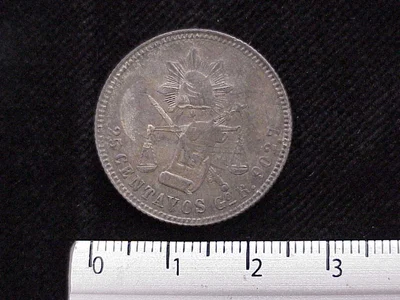
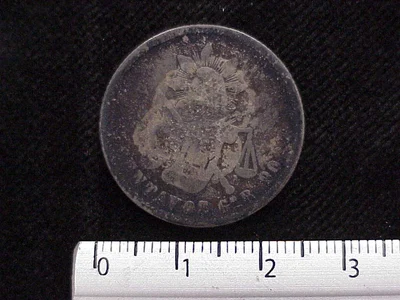
Frequently asked questions
How much is an 8 Escudos Fernando VII 1815 worth?
Because it holds about 0.76 troy ounces of gold, this coin has a floor near 1,700 to 2,000 US dollars even when heavily worn. A normal circulated example runs roughly 2,000 to 3,500 dollars, and a sharp coin certified by NGC or PCGS can bring 6,000 to over 10,000 dollars at auction.
Is the 1815 8 Escudos rare?
It is scarce rather than ultra-rare. Standard examples show up regularly at major auctions, so the coin is more collectible than one-of-a-kind. Value is driven by condition and gold content, not extreme rarity, though a verified mint error can multiply the price.
Where can I sell my 8 Escudos Fernando VII 1815?
Use a verified dealer from the Pesoteca shop directory for an on-the-spot appraisal, the Pesoteca buy/sell forum to reach collectors directly, or a major house like Heritage or Stack's Bowers for a certified high-grade coin. Always let the buyer verify weight and edge before you agree on a price.
How do I know if my 8 Escudos is genuine?
Weigh it (27.02 grams) and measure it (37 mm); fakes rarely match both. Check for a diagonally reeded edge and a clean Mexico City mint mark with assayer HJ. For a coin worth this much, certification by NGC or PCGS is the definitive test and also boosts resale value.
Conversation
0 comments
Sources
Images for informational and educational purposes, attributed to their original source. Reference values; the real price depends on the grade, the specific variant and demand.
Loading comments…