
8 Escudos Fernando VI 1748 Gold Coin: Value & Real Prices
The 8 Escudos Fernando VI 1748 Gold Coin: Value & Real Prices is worth between $51,251 and $86,318 MXN depending on its grade of preservation.
Prices updated: August 2026
Viceroyalty · Mexico City Mint · Assayer MF
Viceroyalty · Mexico City Mint · Assayer MF
The 8 Escudos Fernando VI 1748 Gold Coin: Value & Real Prices is worth between $51,251 and $86,318 MXN depending on its grade of preservation.
Prices updated: August 2026
How much is the 8 Escudos Fernando VI 1748 Gold Coin: Value & Real Prices worth?
The estimated value of the 8 Escudos Fernando VI 1748 Gold Coin: Value & Real Prices ranges from $51,251 (circulated, XF) up to $86,318 (official blister pack), with $73,566 as a reference for an uncirculated (UNC) piece. The estimate is based on the official mintage and the historical behavior of the family.
The real price depends on four factors: the grade of preservation (a circulated piece is worth the low end of the range; an uncirculated one, or one still in its official blister pack, the high end), the finish (satin vs mirror/proof), the rarity within the series based on the mintage, and the metal spot price on the day of the deal when the piece is silver or gold. Check the value-by-grade table above and compare with equivalent pieces before buying or selling.
Where to buy or sell this coin?
Browse the national directory of numismatic shops or the community forum to trade directly with other collectors.
Description
If you inherited or found a 1748 8 Escudos with Fernando VI on it, here is the short answer: this is a genuine gold coin from colonial Mexico, and even the most worn examples carry real bullion value. Better-preserved, certified pieces sell for thousands of dollars. This is one of the Mexican coins that is actually worth money, for reasons we explain below.
What you actually have
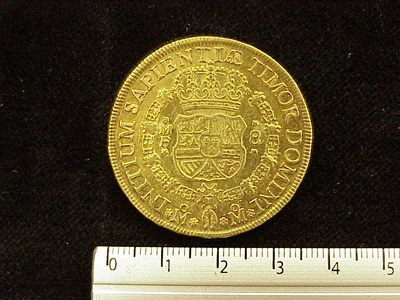
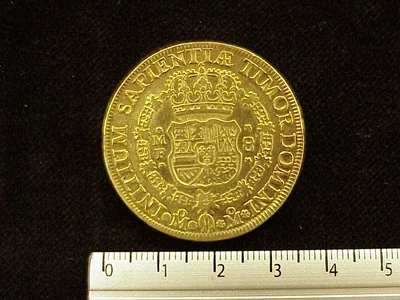
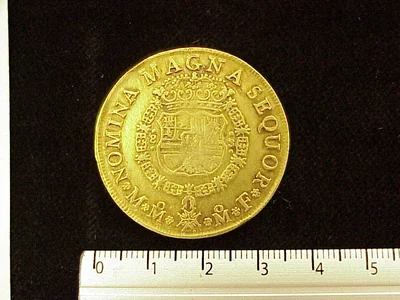
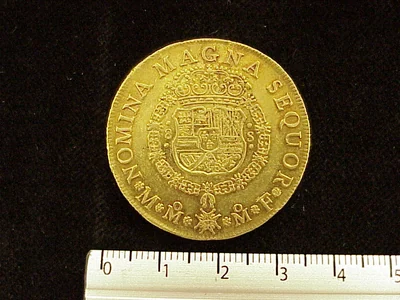
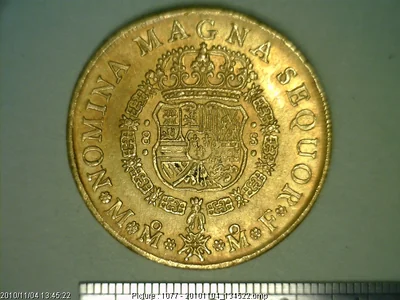
The 8 Escudos was the largest gold denomination struck under Spanish colonial rule in Mexico. Yours dates to 1748, minted at the Casa de Moneda in Mexico City during the reign of Fernando VI of the Bourbon dynasty. The assayer's mark is MF.
Key specs, keep these exact, they are how you confirm authenticity:
- Metal: gold, 0.875 fineness (21 karat)
- Weight: 26.95 grams
- Diameter: 36 mm
- Edge: reeded (milled)
- Mint: Mexico City, assayer MF
- Year: 1748
At 26.95 grams of 0.875 gold, this coin contains roughly 23.6 grams (about 0.76 troy ounces) of pure gold. That is your floor. No matter the condition, the coin is worth at least its melt value at the current gold spot price, and at today's levels that alone runs well over 1,500 USD in raw metal. A colonial 8 Escudos is never "just a few dollars."
What drives the value above melt
Three things push a 1748 8 Escudos past its bullion floor:
Condition (grade). A heavily worn, damaged coin sells close to melt. A sharp, original example with clear detail on Fernando VI's portrait and the shield reverse can bring a large premium over gold value. Certified high grades multiply the price.
Certification. A coin graded by NGC or PCGS (the two US grading services collectors trust) sells for far more than one with only a seller's own estimate. Certification also settles the authenticity question, which matters a lot for a coin this valuable.
Historical demand. Colonial Mexican gold has a steady collector base in both the US and Europe. Portrait 8 Escudos of the Bourbon kings are a recognized series, so there is always a buyer.
Real price ranges
Official mintage figures for this specific 1748 issue are not documented, which is common for colonial gold and part of why these pieces carry a scarcity premium. Rather than invent a number, here is the honest range by condition.
| Condition | What it looks like | Approximate value (USD) |
|---|---|---|
| Worn / damaged | Heavy wear, scratches, near melt | 1,600 to 2,200 |
| Circulated, problem-free | Readable detail, no major damage | 2,500 to 5,000 |
| High grade, uncertified | Sharp detail, original surfaces | 5,000 to 10,000 |
| Certified NGC/PCGS, high grade | Graded, guaranteed genuine | 10,000+ |
Ranges move with the gold price and with the strength of the colonial gold market in any given year. Exceptional 18th-century Mexican 8 Escudos have crossed well into five figures at Heritage and Stack's Bowers auctions, so if yours looks sharp, get it evaluated before selling.
The myth to ignore
Because colonial coins are old, people assume any 1748 piece is automatically worth a fortune. Age alone does not do that. Value here comes from the gold content plus condition and certification, not from the date. A worn example is worth its metal, not a rare-coin jackpot. Be equally skeptical of anyone claiming a wildly high figure without a grade to back it up.
How to tell if yours is genuine
Counterfeits of gold coins, often struck in lower-fineness alloys and frequently sourced from overseas, almost always fail on the numbers:
- Weigh it. A real coin is 26.95 grams. A fake in a cheaper alloy will miss this, usually coming in light or with the wrong density for its size.
- Measure it. 36 mm diameter, reeded edge. Check the edge is properly milled, not smooth or crudely cut.
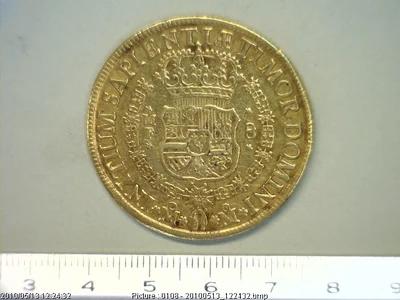
- Check the details. Look for the MF assayer mark and correct legends. Fakes often show soft or wrong lettering.
- Get it certified. For a coin worth thousands, NGC or PCGS certification is the only definitive proof. It pays for itself by unlocking the higher price tier.
Minor die varieties exist (letter positions, small striking differences) that only expert graders distinguish. For most owners, the coin is the coin; certification handles the rest.
Where to sell it
This is a high-value gold coin, so sell where authenticity and price are protected:
- A verified numismatic dealer from the Pesoteca directory can appraise and buy it on the spot.
- The Pesoteca buy/sell forum connects you directly with collectors of colonial gold.
- For top examples, US auction houses (Heritage, Stack's Bowers) reach the widest buyer pool for certified colonial pieces.
Before you sell, photograph the obverse, reverse, and edge, and confirm the weight. Do not dump a gold coin on the first casual offer, and be cautious on open marketplaces where counterfeits circulate.
Want to know if yours sits near melt or in the certified premium tier? Post clear photos and the weight on the Pesoteca forum and let collectors who handle colonial gold weigh in.
Related: Escudos Coloniales (gold) series, the Colonial / Viceroyalty era, other Mexican 8 Escudos, and more 1748 coins.
Historical context
Eight escudos, Fernando VI, 1748, Mexico mint, assayer MF, Krause KM#150. The year 1748 is historically key: the Treaty of Aix-la-Chapelle was signed in October, closing the War of the Austrian Succession and returning peace to Europe after eight years of conflict. Fernando VI maintained the policy of Spanish neutrality as the hallmark of his reign. In New Spain, Francisco de Guemes y Horcasitas, Count of Revillagigedo, continued as viceroy. Krause distinguishes KM#150 from KM#149 (1747) by a type variation within the same reign, a sign of die or iconography adjustment on the reverse. The ounce weighs a theoretical 27.06 grams with 0.916 fineness. Milled with a standardized round planchet. The pillar reverse was retained with the crowned Pillars of Hercules and the PLVS VLTRA bands. The MF signature remains the mark of the assayers of the capital workshop.
This piece belongs to the era
Colonial / Virreinato →Explore all the Mexican coins of this era, their historical context and how they connect to the monetary system of the period.
Value range of this piece
Market estimate: $51,251 - $86,318 MXN depending on the grade of preservation (typical range between a circulated and an uncirculated piece).
See the full breakdown by grade (VG, F, VF, EF, AU, MS-60, MS-63, MS-65) for the whole series →
Same denomination, other years
8 escudos Oro 0.875 (21k) · Escudos Coloniales (oro)
Frequently asked questions
How much is the 1748 8 Escudos Fernando VI worth?
It ranges from roughly 1,600 USD for a worn coin (near its gold melt value) to well over 10,000 USD for a sharp, NGC or PCGS certified example. Because it contains about 0.76 troy ounces of pure gold, it always has a bullion floor no matter the condition. Grade and certification decide how far above that floor it sells.
Is the 1748 8 Escudos rare?
Exact mintage for this issue was never officially documented, which is typical for colonial gold and adds to its scarcity premium. Surviving pieces in high grade are genuinely scarce and command strong collector demand. Worn examples are more common and trade closer to their gold value.
How can I tell if my 1748 8 Escudos is genuine?
Weigh and measure it first: a real coin is 26.95 grams, 36 mm, with a reeded edge. Counterfeits are often struck in lower-grade alloys and fail on weight or density. Confirm the MF assayer mark and correct legends. For a coin worth thousands, NGC or PCGS certification is the definitive proof of authenticity.
Where can I sell a 1748 8 Escudos gold coin?
Use a verified numismatic dealer for an on-the-spot appraisal, the Pesoteca buy/sell forum to reach collectors directly, or a US auction house like Heritage or Stack's Bowers for top certified examples. Photograph the obverse, reverse, and edge, confirm the weight, and never accept the first lowball offer on a gold coin.
Conversation
0 comments
Sources
Images for informational and educational purposes, attributed to their original source. Reference values; the real price depends on the grade, the specific variant and demand.
Loading comments…