
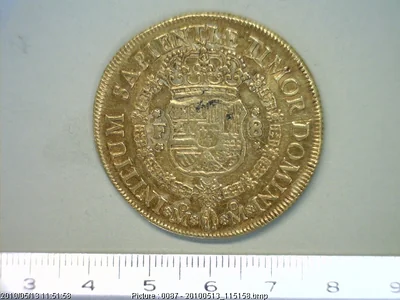
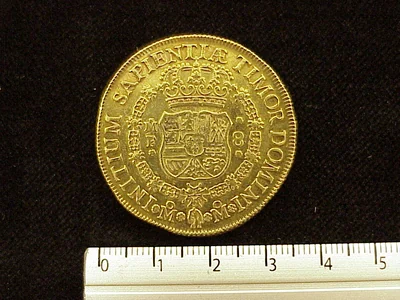
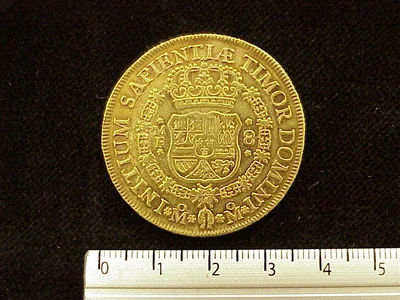
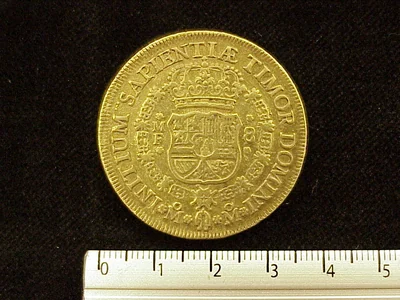
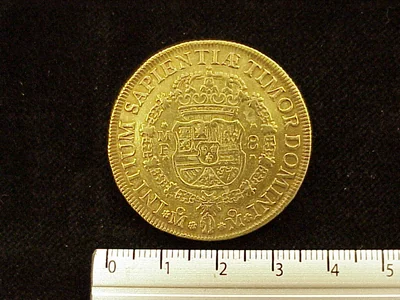
8 Escudos Gold Coin, Felipe V, 1735 (Mexico Mint)
The 8 Escudos Gold Coin, Felipe V, 1735 is worth between $51,365 and $86,510 MXN depending on its grade of preservation.
Prices updated: August 2026
The 8 Escudos Gold Coin, Felipe V, 1735 is worth between $51,365 and $86,510 MXN depending on its grade of preservation.
Prices updated: August 2026
How much is the 8 Escudos Gold Coin, Felipe V, 1735 (Mexico Mint) worth?
The estimated value of the 8 Escudos Gold Coin, Felipe V, 1735 (Mexico Mint) ranges from $51,365 (circulated, XF) up to $86,510 (official blister pack), with $73,730 as a reference for an uncirculated (UNC) piece. The estimate is based on the official mintage and the historical behavior of the family.
The real price depends on four factors: the grade of preservation (a circulated piece is worth the low end of the range; an uncirculated one, or one still in its official blister pack, the high end), the finish (satin vs mirror/proof), the rarity within the series based on the mintage, and the metal spot price on the day of the deal when the piece is silver or gold. Check the value-by-grade table above and compare with equivalent pieces before buying or selling.
Where to buy or sell this coin?
Browse the national directory of numismatic shops or the community forum to trade directly with other collectors.
Description
If you inherited a heavy gold coin dated 1735 with a Spanish king's portrait or a cross-and-shield design, you may have a Felipe V 8 escudos struck at the Mexico City mint. This is a genuinely valuable piece. It carries almost 0.76 troy ounces of gold, which alone puts its floor in the low thousands of dollars, and a nice example can bring far more.
These coins, called "onzas" in the colonial Spanish system, were the highest denomination in circulation. That makes them scarce, sought after, and, unfortunately, heavily counterfeited. Here is what a real 1735 8 escudos is worth in 2026 and how to check yours.
What you actually have
The 1735 8 escudos belongs to the reign of Felipe V (second period). It was minted in Mexico City, which was the main silver and gold supplier of the Spanish Empire at the time. The letters MF on the coin are the assayer's initials, the official who certified the metal's fineness.
Key specs, exactly as cataloged:
| Specification | Detail |
|---|---|
| Denomination | 8 Escudos (gold "onza") |
| Year | 1735 |
| Mint | Mexico City |
| Assayer | MF |
| Metal | Gold, .875 fineness (21 karat) |
| Weight | 27.01 g |
| Gold content | approx. 23.6 g pure gold (about 0.76 troy oz) |
| Diameter | 37 mm |
| Edge | Diagonal reeded |
| Catalog reference | KM#748 |
How much is a 1735 8 escudos worth?
Start with the metal. At .875 fineness and 27.01 g, the coin holds roughly 0.76 troy ounces of pure gold. That gold content sets the absolute floor: even a worn, damaged example is worth its melt value, which runs into the thousands of dollars depending on the gold price on the day you check.
But collectors pay well above melt for a genuine, well-preserved colonial 8 escudos. Value climbs sharply with grade (how much original detail survives), strike quality, and whether a service like NGC or PCGS has authenticated and graded it.
As a working range:
- Heavily worn or damaged: near melt value, in the low thousands of dollars.
- Circulated with clear detail: several thousand dollars, driven by demand for early Mexico-mint gold.
- High grade or certified Mint State: five figures is realistic for the right coin.
Early 18th-century Mexico-mint gold in strong grades regularly clears well past melt at Heritage and Stack's Bowers auctions. The exact number for your coin depends on condition and authentication, so get it graded before you assume a figure.
Is it rare?
Rare enough to matter. The 8 escudos was the top denomination, so far fewer were struck and survived than smaller silver coins. A single mint year like 1735 with the MF assayer is a specific, collectible combination. But "rare" does not mean priceless. The value is anchored by its gold and lifted by grade and demand, not by age alone.
The counterfeit problem, read this first
Because these coins are worth real money, they are among the most faked Mexican pieces on the market. Before you get excited or spend anything, verify the basics:
- Weigh it. Use a jewelry scale. A genuine coin should be very close to 27.01 g. A lightweight coin is a red flag.
- Measure it. Diameter should be about 37 mm, with a diagonal reeded edge.
- Study the engraving. Compare the mint mark, assayer initials (MF), and the style of the design against known genuine examples. Modern fakes often get the lettering and portrait style subtly wrong.
- Be suspicious of a bargain. Any offer well below the coin's gold value is almost certainly a fake or a scam.
The only way to be certain on a coin this valuable is third-party authentication. Send it to NGC or PCGS, or take it to a verified dealer who will examine it in person. Do not clean it, cleaning destroys value.
Where to sell it (and get a fair price)
Do not dump a gold coin on the first social-media buyer. Your safest options:
- A verified numismatic dealer from the Pesoteca shop directory, who can appraise it on the spot and buy without a middleman's markup.
- The Pesoteca buy-and-sell forum, where collectors trade among themselves.
Because this is a precious-metal coin, only deal with someone who will show or inspect the piece and confirm its weight in front of you. Photograph the obverse, reverse, and edge, note the grade, and check the value range above before you agree to any price.
Want a second opinion before you sell? Post clear photos on the Pesoteca forum and let collectors weigh in on authenticity and grade first.
Historical context
Eight escudos Philip V second period, 1735, Mexico mint. First full year of the interim viceregal administration of Juan Antonio de Vizarrón y Eguiarreta, archbishop of Mexico and viceroy from 1734. In Spain, Ensenada was arriving at court, and in Naples Charles was establishing himself as king, the future Charles III. The onza weighs 27.06 grams with the 0.916 fineness typical of the early Mexican columnario. Produced by mill press with a round blank, a technique introduced in 1732 after two centuries of cob (macuquina). The reverse shows the pair of crowned Pillars of Hercules over the sea with the PLVS VLTRA banners, declarative iconography of the Spanish overseas empire. The obverse bears the crowned royal shield with the legend PHILIP V DEI GRATIA. The edge was protected with mechanical guarding or an inscription that hindered clipping. Pieces of 1735 form part of the launch of the Mexican columnario under an unusual viceroy, an archbishop with dual civil and ecclesiastical command for six years. The technical and gold fineness standardization was consolidated only three years after the mint's reform.
This piece belongs to the era
Colonial / Virreinato →Explore all the Mexican coins of this era, their historical context and how they connect to the monetary system of the period.
Value range of this piece
Market estimate: $51,365 - $86,510 MXN depending on the grade of preservation (typical range between a circulated and an uncirculated piece).
See the full breakdown by grade (VG, F, VF, EF, AU, MS-60, MS-63, MS-65) for the whole series →
Same denomination, other years
8 escudos Oro 0.875 (21k) · 8 Escudos Felipe V Segunda Epoca
Frequently asked questions
How much is a 1735 Felipe V 8 escudos gold coin worth?
It holds about 0.76 troy ounces of gold, so even a worn example is worth its melt value in the low thousands of dollars. Circulated coins with clear detail bring several thousand dollars, and high-grade or certified examples can reach five figures. Grade and authentication drive the final number, so have it appraised before assuming a price.
Is the 1735 8 escudos a rare coin?
It's genuinely scarce. As the highest denomination in the colonial Spanish system, far fewer 8 escudos were struck and survived than smaller silver coins. The specific 1735 date with the MF assayer is a collectible combination. That said, its value comes mostly from the gold content plus grade and demand, not from age alone.
Where can I sell a 1735 Felipe V 8 escudos?
Use a verified dealer from the [Pesoteca directory](/tiendas), who can appraise and buy it in person, or the [Pesoteca buy-and-sell forum](/foro/compra-venta) to reach collectors directly. Since it's a gold coin, deal only with buyers who inspect the piece and confirm its weight. Photograph both sides and the edge and check the value range before agreeing to a price.
How can I tell if my 1735 8 escudos is genuine?
Weigh it (should be near 27.01 g) and measure it (about 37 mm with a diagonal reeded edge) using a jewelry scale and caliper. Compare the mint mark, MF assayer initials, and engraving style against known genuine coins, since fakes are common. For certainty on a coin this valuable, get it authenticated by NGC or PCGS. Be very suspicious of any price below its gold value.
Conversation
0 comments
Loading comments…