
8 Escudos Carlos IV 1794: Gold Coin Value & Prices
The 8 Escudos Carlos IV 1794: Gold Coin Value & Prices is worth between $51,384 and $86,542 MXN depending on its grade of preservation.
Prices updated: August 2026
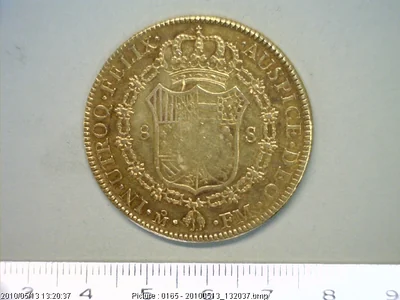
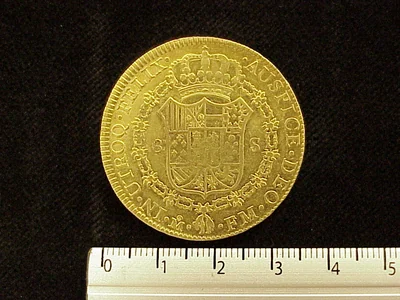
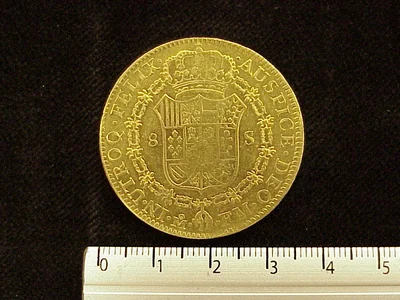
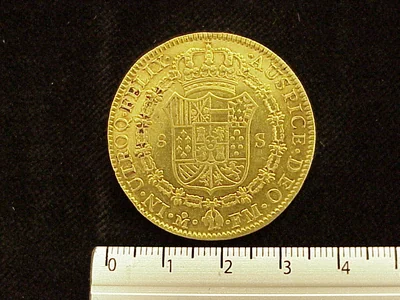
Third type; bust and Charles IIII legend.
Third type; bust and Charles IIII legend.
The 8 Escudos Carlos IV 1794: Gold Coin Value & Prices is worth between $51,384 and $86,542 MXN depending on its grade of preservation.
Prices updated: August 2026
How much is the 8 Escudos Carlos IV 1794: Gold Coin Value & Prices worth?
The estimated value of the 8 Escudos Carlos IV 1794: Gold Coin Value & Prices ranges from $51,384 (circulated, XF) up to $86,542 (official blister pack), with $73,757 as a reference for an uncirculated (UNC) piece. The estimate is based on the official mintage and the historical behavior of the family.
The real price depends on four factors: the grade of preservation (a circulated piece is worth the low end of the range; an uncirculated one, or one still in its official blister pack, the high end), the finish (satin vs mirror/proof), the rarity within the series based on the mintage, and the metal spot price on the day of the deal when the piece is silver or gold. Check the value-by-grade table above and compare with equivalent pieces before buying or selling.
Where to buy or sell this coin?
Browse the national directory of numismatic shops or the community forum to trade directly with other collectors.
Description
If you inherited or found a heavy gold coin dated 1794 with a man's profile and a crowned shield, you have a 8 Escudos of Carlos IV, struck at the Mexico City Mint. The short answer on value in 2026: this coin has a hard floor from its gold content alone, roughly 0.76 troy ounces of pure gold, and genuine examples in collectible grades trade from about 2,000 USD into the low five figures depending on condition and rarity.
This is real gold money from Spanish colonial Mexico, not a novelty. Let's cover what it is, what it's worth, how to spot a fake, and where to sell it without getting shortchanged.
What you actually have
The "8 escudos" was the largest gold denomination in circulation under the Spanish crown, commonly called an onza (an ounce). Collectors in the US often call these "gold doubloons." This specific piece was minted in Mexico City during the reign of Carlos IV (Charles IV), who ruled from 1788 to 1808.
Exact specifications, keep these numbers, they matter for both value and authentication:
- Weight: 27.02 grams
- Diameter: 36.98 mm
- Fineness: .875 gold (21 karat), the colonial standard
- Pure gold content: roughly 23.6 grams, about 0.76 troy ounces
- Edge: diagonal reeding
- Obverse: laureate bust of the king, with a Latin legend naming him king by the grace of God
- Reverse: the crowned coat of arms of the House of Bourbon, with the collar of the Order of the Golden Fleece (Toisón de Oro)
Because it holds close to a full troy ounce of gold, this coin can never be worth less than its melt value. That's your safety net.
What it's worth in USD
Value is driven by two things stacked together: the gold inside (a floor that moves with the gold market) and the numismatic premium (rarity, condition, and demand from collectors).
| Condition | Typical range (USD) | Notes |
|---|---|---|
| Damaged, mounted, or cleaned | ~1,700 to 2,200 | Trades near melt value of the gold |
| Circulated, honest wear (VF) | ~2,200 to 3,500 | Bust and shield readable, no damage |
| Sharp, minimal wear (AU) | ~3,500 to 6,000 | Strong detail, original surfaces |
| Uncirculated (Mint State) | ~6,000 to 15,000+ | Scarce; certified examples bring the top |
These are guide ranges, not fixed quotes. The gold floor alone (about 0.76 oz) means even a beat-up genuine coin is worth well over 1,500 USD in most gold markets. A coin that has been cleaned, polished, or pulled off a piece of jewelry loses most of its collector premium and drops toward that melt floor, so never clean or "shine up" one of these.
The factors that decide where your coin lands: the sharpness of the bust and the shield, whether the legends are fully readable, whether the surfaces are original (not cleaned or scratched), and the specific assayer's initials and mint mark. Some date-and-assayer combinations are scarcer than others, which is why certification matters.
How to tell if it's genuine
Gold coins this valuable attract counterfeits, so verify before you celebrate or before you pay.
- Weigh it. Use a jeweler's scale. A genuine coin weighs 27.02 grams. A significant miss (light or heavy) is a red flag.
- Measure it. Diameter should be 36.98 mm. Use calipers.
- Check the details. Look at the engraving style, the Mexico City mint mark (an "o" over "M"), and the assayer initials. Fakes often botch the lettering or the fine detail in the bust.
- Be suspicious of a "deal." Any coin offered far below the value of its gold content is almost certainly fake or stolen.
If you want certainty, submit it to a third-party grading service. A coin in an NGC or PCGS certified holder is authenticated and graded, which both protects you and raises what a buyer will pay.
Where to sell it (and get a fair price)
Gold this old should not be sold to the first Facebook buyer or dumped at a pawn shop that only weighs the metal.
- A verified coin dealer. Use the Pesoteca shop directory to find a numismatic dealer by city who can appraise it in person and pay a fair number, not a walk-in gold-buyer lowball.
- The Pesoteca buy-and-sell forum. Selling directly to collectors on the forum often beats a dealer's buy price, since collectors pay for the coin, not just the gold.
Before you sell: photograph the obverse, reverse, and edge in good light, note the weight, and compare against the range in the table above. For a piece worth several thousand dollars, getting it certified first usually pays for itself.
About mint "errors"
Genuine mint errors (off-center strikes, die rotation, doubled strikes) can raise value on any coin. But most "errors" people spot on colonial gold are post-mint damage: bumps, corrosion, or the effects of being worn as jewelry. That damage lowers value, it doesn't add it. If you think you have a true error, post clear photos to the Pesoteca forum and let the community weigh in before you assume it's a jackpot.
Have a 1794 Carlos IV 8 escudos in hand and want a read on grade and value? Post your photos and the weight on the Pesoteca forum, the community can help you pin down what yours is worth.
Historical context
Eight escudos Carlos IV, 1794, Mexico City Mint. The record notes the third type with a bust and Carlos IIII legend. A year of transition in the viceroyalty: the second Count of Revillagigedo ended his tenure on July 12 and was succeeded by Miguel de la Grua Talamanca, Marquis of Branciforte, brother-in-law of the favorite Manuel Godoy. It was a downward political transition. Branciforte would govern until 1798 with a reputation for venality and corruption in marked contrast to his enlightened predecessor, and his period is remembered for the construction of the equestrian monument to Carlos IV, the so-called Caballito by Manuel Tolsa. In Europe the War of the Convention against France continued. The ounce weighs 27.06 grams with 0.875 fineness. Produced by mill press with a round planchet. The reverse shows the crowned royal coat of arms, and the assayer's signature appears in the field. The piece is a testimony to the change in viceregal governing style in the last stretch of the 18th century, from enlightened reformism to court favoritism. Pieces from 1794 document the start of the Branciforte era and its singular political context.
This piece belongs to the era
Colonial / Virreinato →Explore all the Mexican coins of this era, their historical context and how they connect to the monetary system of the period.
Value range of this piece
Market estimate: $51,384 - $86,542 MXN depending on the grade of preservation (typical range between a circulated and an uncirculated piece).
See the full breakdown by grade (VG, F, VF, EF, AU, MS-60, MS-63, MS-65) for the whole series →
Same denomination, other years
8 escudos Oro 0.875 (21k) · 8 Escudos Carlos IV
Frequently asked questions
How much is a 1794 Carlos IV 8 escudos gold coin worth?
It has a gold floor of roughly 0.76 troy ounces (about 1,700 USD or more depending on the gold market). Genuine collectible examples typically bring 2,200 to 3,500 USD with honest wear, 3,500 to 6,000 USD when sharp, and 6,000 to 15,000+ USD in uncirculated, certified grades.
Is the 1794 Carlos IV 8 escudos rare?
It's a genuinely scarce and highly sought colonial gold coin, more available in worn grades and truly rare in uncirculated condition. Value depends heavily on grade plus the specific mint mark and assayer initials. Certified Mint State examples command the strongest prices.
Where can I sell my 1794 Carlos IV 8 escudos?
Sell through a verified dealer in the [Pesoteca shop directory](/tiendas) for an in-person appraisal, or directly to collectors on the [Pesoteca buy-and-sell forum](/foro/compra-venta), who often pay more than a gold-only buyer. Photograph the obverse, reverse, and edge, and check the value ranges here before selling. Avoid pawn shops that only pay melt.
How do I know if my 1794 Carlos IV 8 escudos is real?
Weigh it (27.02 grams) and measure it (36.98 mm) with a jeweler's scale and calipers, then compare against the specifications above. Check the engraving, the Mexico City mint mark, and the assayer initials, since fakes are common on gold this valuable. For certainty, have it authenticated by NGC or PCGS, and be wary of any coin priced below its gold content.
Conversation
0 comments
Loading comments…