
Mexican 50 Centavos 1993 (Aluminum-Bronze): Value Guide
Prices updated: August 2026
Centavos aluminum bronze 1993.
Centavos aluminum bronze 1993.
Design
Banxico
Reverse
Reverse of the 50 Bronze Aluminum 1993 piece. Detail of the die cataloged by Banxico in its Numismatic Collection.
Obverse
Obverse with the Mexican National Coat of Arms and the legend "ESTADOS UNIDOS MEXICANOS" per official convention. Struck by the Mexico Mint under Banxico decree.
How much is the Mexican 50 Centavos 1993 (Aluminum-Bronze): Value Guide worth?
The market value of the Mexican 50 Centavos 1993 (Aluminum-Bronze): Value Guide is not yet documented with enough data to give a firm range. Weigh and measure your piece, compare it against the specifications, and check the forum for a second opinion.
The real price depends on four factors: the grade of preservation (a circulated piece is worth the low end of the range; an uncirculated one, or one still in its official blister pack, the high end), the finish (satin vs mirror/proof), the rarity within the series based on the mintage, and the metal spot price on the day of the deal when the piece is silver or gold. Check the value-by-grade table above and compare with equivalent pieces before buying or selling.
Where to buy or sell this coin?
Browse the national directory of numismatic shops or the community forum to trade directly with other collectors.
Description
If you found a 1993 Mexican 50 centavos coin and hope it's worth a fortune, here's the honest answer up front: in circulated condition it's worth a few cents to about 1 USD. This is a common circulation coin, not a rarity. The value only climbs if you have it in flawless uncirculated condition or in the original mint packaging.
Most people who inherit a jar of Mexican coins find pieces exactly like this one. They're interesting to hold, but they are not the coins that break auction records. Below is what yours actually sells for and how to spot the rare exceptions.
What this coin is
This is a 50 centavos piece (half of one Mexican peso) minted in 1993 during Mexico's "Nuevos Pesos" era, when the currency was revalued. It belongs to the aluminum-bronze 50 centavos series produced by the Casa de Moneda de México (the Mexican Mint) under Banco de México authority.
Specifications, exactly as issued:
| Feature | Detail |
|---|---|
| Denomination | 50 centavos |
| Year | 1993 |
| Metal | Aluminum-bronze |
| Weight | 4.39 grams |
| Diameter | 22 mm |
| Edge | Plain (smooth) |
| Finish | Satin |
| Mint | Casa de Moneda de México |
The front (obverse) shows the Mexican national coat of arms (the eagle on a cactus devouring a serpent) with the legend "ESTADOS UNIDOS MEXICANOS," the official name of the country. The back (reverse) carries the denomination.
One thing to note right away: this coin contains no silver and no gold. It's a common alloy. That means there's no metal melt value to fall back on, unlike Mexican silver coins such as the Onza Libertad (the country's one-ounce silver bullion coin). Its worth is purely collector demand, and for a 1993 circulation piece that demand is low.
What the 1993 50 centavos is actually worth
Value tracks condition. Coin collectors grade on a scale from heavily worn to perfect uncirculated. Here's the realistic picture:
| Condition | Approximate value (USD) |
|---|---|
| Circulated (worn, from pocket change) | Under 0.25 USD |
| Good uncirculated (no wear, some marks) | 0.50 to 2 USD |
| Choice/gem uncirculated (near flawless) | 3 to 10 USD |
| Original Banxico mint set / blister | Depends on the full set |
A worn 1993 50 centavos you found in a drawer is worth pennies. The only way it climbs meaningfully is if it's a pristine, never-circulated example, ideally still in the original Banco de México packaging, or if it has a genuine, verified mint error.
Don't expect a life-changing number here. If a website tells you a standard 1993 50 centavos is worth thousands, that's clickbait. The date and mintage are common.
The exception: real mint errors
The one path to serious money on a coin like this is a genuine minting error: an off-center strike, a die rotation, a double strike, or a documented variety. Verified errors can multiply a common coin's value many times over.
Here's the catch, and it's a big one. Most "errors" people post online are not errors at all. They're post-mint damage: dings, scratches, corrosion, or wear that happened after the coin left the mint. That kind of damage lowers value, it doesn't raise it. A true error happened during striking and follows recognizable patterns. If you think you have one, get a second opinion before you get excited.
How to check what yours is worth
- Weigh and measure it. Use a jewelry scale and a caliper. A genuine 1993 50 centavos weighs 4.39 grams and measures 22 mm. Wrong weight or diameter is a red flag for a fake or an altered piece.
- Judge the condition honestly. Look for wear on the highest points of the design. Any smoothing means it circulated. Compare against our coin grading guide.
- Photograph both sides and the edge in good light. You'll need clear photos to get any accurate appraisal.
- Get it appraised or graded. For a common coin, a numismatic shop can tell you in minutes. If you believe you have an error or a top-grade example, professional grading (NGC or PCGS) may be worth the fee, but only if the upside justifies it.
Where to sell it
For a coin in this value range, keep it simple and avoid getting lowballed:
- A verified coin dealer from the Pesoteca shop directory can value it on the spot, no middleman markup.
- The Pesoteca buy-and-sell forum connects you directly with collectors.
- If it's still legal tender circulation coinage, a bank may simply exchange it at face value, which for a common example is often the fairest outcome.
Avoid dumping it to the first bidder on social media. Check the grade and the price ranges above first so you know what you're holding.
Got a jar of these and not sure which ones matter? Post clear photos of your 1993 50 centavos, especially anything that looks off-center or doubled, on the Pesoteca forum and let the community weigh in before you sell.
Historical context
Context of the fifty-centavo piece from 1993
This fifty-centavo coin (KM#549) was struck by the Mexico Mint in 1993, under the presidency of Carlos Salinas de Gortari. It is part of the family of circulating coins in bronze and aluminum-nickel alloy that Banxico issued between 1992 and 2009, with a 22 mm diameter and 3.10 g weight.
The year in Mexico. It is the year the New Peso formally came into force, on January 1, 1993. That year Congress also approved the constitutional reform that granted autonomy to the Bank of Mexico, published in the DOF on August 20, 1993. That year, according to the INEGI CPI, annual inflation closed at 8.01% and the Bank of Mexico FIX exchange rate closed the year at 3.12 pesos per dollar.
How it circulated. In 1993 the pieces coexisted with N$ banknotes and still with the last issues of the old peso being withdrawn. The N$ abbreviation appears on the coins until 1995. In informal commerce and public transit they were the most common change.
Numismatic note. This year's dies correspond to the second batch of dies of the New Peso project. The minimal engraving variations of the year are documented in the Banxico catalog and are almost invisible to the naked eye. The obverse design is Banxico's official National Coat of Arms and the reverse shows the face value alongside the year of minting. From year to year the design stays identical and only the engraved date changes, so the visible difference is minimal. Internal die variations, when they exist, are documented in the Bank of Mexico catalog.
This piece belongs to the era
Nuevos Pesos y actualidad →Explore all the Mexican coins of this era, their historical context and how they connect to the monetary system of the period.
Value range of this piece
Value range without enough data for this piece.
See the full breakdown by grade (VG, F, VF, EF, AU, MS-60, MS-63, MS-65) for the whole series →
Same denomination, other years
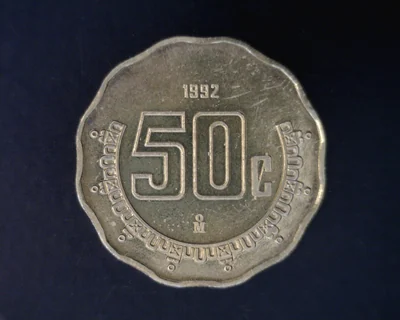
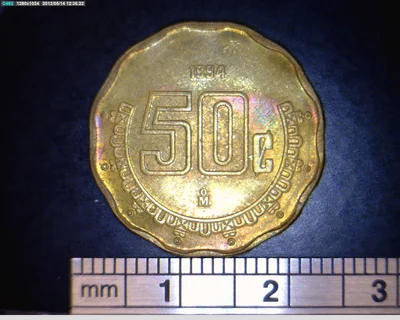
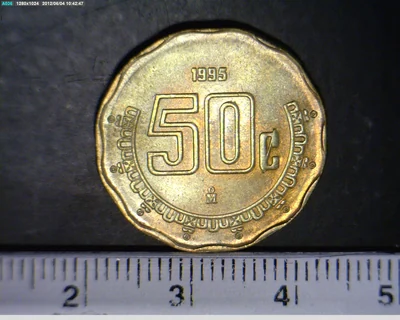
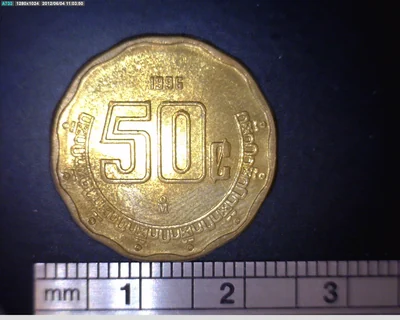
50 centavos Aluminio-bronce · 50 Centavos Bronce Aluminio
Frequently asked questions
How much is a 1993 Mexican 50 centavos worth?
In circulated condition, under 0.25 USD. A clean uncirculated example runs about 0.50 to 2 USD, and a near-flawless gem can reach 3 to 10 USD. This is a common circulation coin with no silver or gold content, so its value comes entirely from collector demand, which is low for standard 1993 pieces.
Is the 1993 50 centavos rare or valuable?
No, it's a common circulation coin. The only versions worth real money are pristine uncirculated examples, coins still in original Banco de México packaging, or pieces with a genuine, verified mint error. A worn everyday example is worth pennies.
Where can I sell my 1993 Mexican 50 centavos?
A verified dealer from the [Pesoteca shop directory](/tiendas) can value it immediately, or you can list it on the [Pesoteca buy-and-sell forum](/foro/compra-venta) with collectors. Photograph the front, back, and edge, and check the price ranges on this page first. Avoid selling to the first social-media bidder.
How can I tell if my 1993 50 centavos is genuine?
Check the weight and diameter with a jewelry scale and a caliper. A real one weighs 4.39 grams and measures 22 mm. Fakes usually have the wrong weight or size, flat relief, or uneven coloring. Compare against the specifications on this page.
Conversation
0 comments
Sources
- Ejemplar de la Coleccion Numismatica Banco de Mexico . inv. 18564
- Ejemplar de la Coleccion Numismatica Banco de Mexico . inv. 18565
- Ejemplar de la Coleccion Numismatica Banco de Mexico . inv. 18566
- Ejemplar de la Coleccion Numismatica Banco de Mexico . inv. 18567
- Ejemplar de la Coleccion Numismatica Banco de Mexico . inv. 18563
Images for informational and educational purposes, attributed to their original source. Reference values; the real price depends on the grade, the specific variant and demand.
Loading comments…